

 Vista previa
 Compartir
 Compartir
 Ver detalles
 Guía
Guía

 Descargar
 Ver artículos similares
 Radiografía
 Presentación de diapositivas
 Estadísticas
Saint George
 Tempera On Panel
- Early Renaissance
 1470
1470- Renaissance
 90.0 x 46.0 cm
 Leer más
Reproducción al óleo hecha a mano
Óleo sobre lienzo pintado a mano en el tamaño y marco de su elección, realizado por encargo por nuestros artistas. ( Cambiar a formato impreso Ver versión en imagen digital)




P118B €10

P118H €10

P118W €10

P438Z €10

P508JH €12

P508YH €12

P805H €10

P805Z €10

P919BZ €10

P919G €10

P919XJ €10

P959ZH €10

P968JZ €12

W106C €8

W218G €10

W218JH €8

W218Y €10

W307PJ €10

W316G €10

W316PJ €8

W316Y €10

W398PJ €8

W4111J €10

W500HY €15

W500JH €15

W692G €12

W849H €8

W940BG €15

W953PJ €8




Elija entre nuestros tamaños predefinidos que respetan las proporciones originales de la obra.

Escriba el ancho y el alto que necesite para adaptarse a su marco o a su pared. Al ser una obra pintada a mano, para un tamaño con una forma distinta, el artista puede pintar un poco más alrededor de la imagen o recortar un poco; usted elige. Le enviaremos una maqueta digital para su aprobación antes de comenzar la pintura. La imagen que se muestra en esta página no refleja el resultado real; solo la maqueta lo hace.
Tras realizar el pedido, el equipo de OriginalUniqueArt.com enviará un correo electrónico al cliente para solicitar instrucciones y proporcionarle una vista previa del boceto.
Envío a todo el mundo () en 3-4 semanas en lugar de las 5 semanas estándar. (25 octubre). Sin comprometer la calidad.

Envío exprés gratuito a todo el mundo

Lienzo de lino de alta calidad

Seguro de envío completo

Garantía de reembolso de impuestos aduaneros

Garantía de fidelidad cromática exacta

Política de devolución de 100 días (solo por defectos)

Garantía de devolución del 100% del dinero

Oferta por volumen
 La opción de vidrio solo está disponible en tamaños inferiores a 110 cm.

Saint George
Técnica de reproducción
Tamaño de la reproducción
-


Precio total
€ 285
A Heroic Encounter in Gold and Tempera
In the quiet halls of the Isabella Stewart Gardner Museum, there exists a window into a more chivalric age, captured through the masterful hand of Carlo Crivelli. His 1470 masterpiece, Saint George, is not merely a painting but a dramatic stage set in the vibrant, textured language of the Early Renaissance. The scene unfolds with an intense focus on the legendary knight as he confronts the forces of darkness. Mounted upon a powerful horse that leans into the frame, Saint George embodies the quintessential warrior-saint, his armor gleaming with a meticulousness that suggests both physical weight and spiritual purity. Crivelli invites the viewer to step into a world where the boundaries between the earthly and the divine are blurred by the shimmering presence of gold and the sharp, decisive lines of a master storyteller.
The technique employed in this work is a testament to the enduring beauty of the tempera on panel method. Crivelli, a painter who flourished in the Veneto and later the March of Ancona, utilized a style that bridged the gap between the ornate, decorative flourishes of the Late Gothic period and the burgeoning realism of the Renaissance. Every stroke serves a purpose; the artist’s use of trompe l'oeil effects creates a tactile reality where the scales of the dragon and the heavy folds of fabric feel almost touchable. The color palette, dominated by warm ochres, deep browns, and radiant golds, casts a somber yet heroic glow over the composition, ensuring that the eye is constantly drawn to the intricate details of the knight's struggle.
Symbolism and the Triumph of Virtue
Beyond its visual splendor, the painting serves as a profound allegorical narrative. To the Renaissance mind, the battle depicted was far more than a historical or mythological skirmish; it was a cosmic struggle between Christian virtue and the creeping shadows of sin. Saint George, positioned as the defender of the faith, represents the triumph of light over darkness, while the dragon serves as a visceral embodiment of temptation and chaos. The structured, almost geometric composition—with its carefully layered landscape and distant, fortified architecture—provides a sense of divine order amidst the violence of the encounter. This tension between the chaotic movement of the combatants and the rigid, beautiful framework of the painting creates an emotional resonance that continues to captivate collectors and historians alike.
For the discerning collector or interior designer, a high-quality reproduction of this work offers more than just decoration; it brings a sense of historical gravity and sophisticated texture to a space. The piece functions as a focal point of narrative depth, perfect for an environment that values classical elegance and the evocative power of fine art. Whether placed in a study filled with books or a grand living area, the Saint George reproduction serves as a timeless reminder of the enduring human spirit and the exquisite craftsmanship of the Italian Renaissance.
Preguntas y respuestas
¿Es "Saint George" representativo de lo que Carlo Crivelli solía crear?
Los temas recurrentes de Carlo Crivelli incluyen viterbo & veneto influences, late gothic decorative style, religious narrative focus, franciscan patronage themes, anconan artistic center, conservative tempera technique, iconic saint george depiction, crivelli's distinctive vision; "Saint George" se centra en saint george legend, dragon slayer art, medieval narrative, religious iconography, renaissance armor, gold backgrounds, heroic struggle.
¿A qué corriente artística pertenece "Saint George" de Carlo Crivelli?
"Saint George" es una obra de Early Renaissance. El movimiento indica la tradición artística de la que forma parte la obra.
¿Está "Saint George" disponible como una impresión de bellas artes?
"Saint George" está disponible como una impresión de bellas artes sobre lienzo de algodón o papel de lienzo de archivo. Los pedidos se realizan en su página Impresión de bellas artes, en el tamaño de su elección.
Biografía del artista
Vida y Formación Temprana
Carlo Crivelli, pintor del Renacimiento italiano, nació en Venecia alrededor de 1430-35. Provenía de una familia de pintores y recibió su formación artística tanto en Venecia como en Padua. Se cree que su temprana formación estuvo bajo la tutela de Jacobello del Fiore, quien aún estaba activo en 1436. También estudió en la escuela de Vivarini en Venecia.
Estilo Artístico y Carrera
Crivelli pasó sus primeros años en el Véneto, absorbiendo influencias de Vivarini, Squarcione y Mantegna. En 1458, abandonó el Véneto y pasó la mayor parte de su carrera en las Marcas de Ancona, desarrollando un estilo personal distintivo que contrasta con el de su contemporáneo veneciano Giovanni Bellini. Su obra se caracteriza por una sensibilidad decorativa gótica tardía conservadora, marcada por una cualidad lineal, atención al detalle y el uso de técnicas de "trompe l'oeil".
Obras Destacadas y Colaboraciones
- La pintura de Carlo Crivelli "Madonna y Niño en el Trono" (106 x 55 cm, Museo de Bellas Artes, Budapest, Hungría) es un ejemplo primordial de su estilo.
- Colaboró con su hermano menor Vittorio Crivelli en varios proyectos.
- Pietro Alemanno, un pintor que emigró a las Marcas de Ancona desde Alemania/Austria, fue su alumno y colaborador.
Museos y Colecciones
- La Pinacoteca di Brera en Milán, Italia, exhibe varias obras de Crivelli, incluyendo la "Pietà" (128 x 241 cm).
- El Museo San Giovanni en Bragora en Venecia, Italia, tiene una colección de obras de arte de varios períodos y estilos, incluyendo algunas atribuidas a Crivelli.
Legado e Importancia Histórica
Ver las obras de Carlo Crivelli en OriginalUniqueArt.com
Explorar las obras de Jacopo Robusti en OriginalUniqueArt.com
Leer más sobre Carlo Crivelli en Wikipedia
El legado de Crivelli continúa inspirando a entusiastas del arte y académicos por igual, con su obra permaneciendo como un testimonio del poder perdurable de la sensibilidad decorativa gótica tardía conservadora. Su habilidad para combinar elementos góticos tradicionales con técnicas renacentistas lo convierte en una figura única e importante en la historia del arte italiano.

Carlo Crivelli
1435 - 1495 , Italia
Datos clave
- Artistas Que Influyeron:
- Jacobello del Fiore
- Vivarini
- Squarcione
- Mantegna
- Fecha De Muerte: 1495
- Fecha De Nacimiento: 1435
- Lugar De Nacimiento: Venecia, Italia
- Movimiento Artístico: Renacimiento tardío gótico
- Museos Y Colecciones:
- Pinacoteca di Brera
- San Giovanni in Bragora
- Nacionalidad: Italiana
- Nombre Completo: Carlo Crivelli
- Obras Notables:
- Virgen con el Niño en trono
- Pietà
Artículos relacionados

Georges Braque: Las 25 Obras Maestras del Cubismo y su Legado en el Arte Moderno
Descubre las 25 obras maestras de Georges Braque, pionero del cubismo. Explora su innovadora técnica, colores y el legado del arte moderno francés. Reproducciones de alta calidad en OriginalUniqueArt.com. ¡Encuentra tu inspiración!

El Resplandor del Tiempo: Explorando la Técnica y el Legado de la Témpera sobre Tabla
Descubra la fascinante historia y técnica de la témpera sobre tabla. Explore los materiales, el simbolismo y la conservación de esta antigua forma de arte con OriginalUniqueArt.
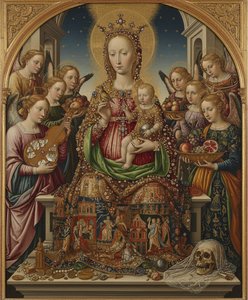
Carlo Crivelli: Mysticism & Materiality in Renaissance Venice
Explore the captivating world of Carlo Crivelli, a Renaissance master blending Gothic detail with profound symbolism. Discover his unique style & lasting influence on Venetian art history.

Georges Seurat: Las 25 Obras Maestras del Pionero Puntillista | OriginalUniqueArt
Descubre las 25 obras maestras de Georges Seurat, el innovador del puntillismo. Explora su técnica única, colores vibrantes y legado artístico en OriginalUniqueArt.com. Reproducciones de arte de museo para tu hogar.
Tempera on Panel: A Procurement Guide to Durable, High-Quality Art for Large-Scale Hospitality Projects
A professional procurement guide for hotel designers on the durability and prestige of tempera on panel. Discover how these high-quality, large-scale artworks offer unmatched longevity and architectural impact for premium hospitality projects and commercial interiors.


