Enviar
 Compartir
 Detalles
 Guía
Guía

 Descargar
 Similares
 Presentación de diapositivas
 Preguntas y respuestas
 Estadísticas
Totem


 Ver más
La obra de arte que se muestra en esta página está protegida por las leyes de propiedad intelectual, lo que significa que no podemos crear ni vender legalmente una reproducción idéntica. Esta protección se hace cumplir en virtud de acuerdos internacionales como el Convenio de Berna y por las leyes nacionales, incluidas aquellas establecidas por el Ley de derechos de autor de los EE. UU. - Título 17.
Este método cumple plenamente con las normativas de derechos de autor, ya que no implica la copia ni la duplicación de la obra protegida. En su lugar, se trata de una reinterpretación creativa: una nueva pintura influenciada por la original, pero que no es idéntica a ella.
Giclée / Impresión de arte
Impresiones giclée o en lienzo de calidad de museo con producción rápida y opciones de acabado flexibles. ( Comprar pintura hecha a mano Cambiar a imagen digital)




































Elija entre nuestros tamaños predefinidos que respetan las proporciones originales de la obra.

Introduzca el ancho y el alto que necesite para adaptarse a su marco o pared. Una impresión solo puede recortarse, nunca hacerse más grande que la imagen original, por lo que un tamaño con una forma distinta perderá parte de la obra. Le enviaremos una maqueta digital para su aprobación antes de realizar cualquier impresión. La imagen que se muestra en esta página no refleja el recorte real; solo la maqueta lo hace.
Envío a todo el mundo () en 2 semanas en lugar de las 4/5 semanas estándar. (7 noviembre)

Envío exprés gratuito a todo el mundo

Lienzo de lino de alta calidad

Seguro de envío total

Garantía de reembolso de aranceles aduaneros

Garantía de fidelidad cromática exacta

Política de devolución de 100 días (solo por defectos)

Garantía de devolución del 100% del dinero

Descuento por cantidad
 La opción de vidrio solo está disponible en tamaños inferiores a 110 cm.

Totem
Giclée / Impresión de arte
Dimensiones de la reproducción
-


Precio total final
€ 72
Barbara Hepworth’s ‘Totem’: A Silent Dialogue with Form and Space
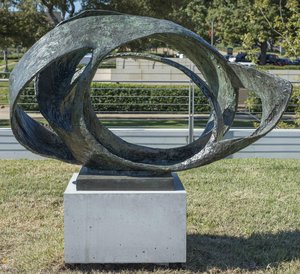
Barbara Hepworth's “Totem,” created in 1960-62, is more than just a sculpture; it’s an invitation to contemplate the fundamental elements of form, space, and human experience. This remarkable piece, crafted from alabaster or marble – materials chosen for their inherent luminosity and tactile quality – stands as a testament to Hepworth's pioneering role in British modernism. The work immediately commands attention with its strikingly vertical orientation, a deliberate choice that draws the eye upwards, suggesting an aspiration towards something beyond the earthly realm. The contrast between this upward thrust and the grounded, angularity of the base creates a dynamic tension, inviting viewers to consider the interplay of stability and movement within the sculpture’s composition.
A Biomorphic Embrace: Form and Technique
Hepworth's signature style is powerfully evident in “Totem.” The form itself is profoundly biomorphic – an organic echo translated into stone. It eschews representational imagery, instead focusing on pure abstraction, exploring the inherent qualities of the material. The sculpture’s surface is remarkably smooth, achieved through a subtractive sculpting technique: Hepworth began with a larger block of stone and meticulously removed material to reveal the desired shape. This process isn't merely about creating an image; it’s about coaxing forth the form already latent within the stone itself. The subtle tonal shifts in the polished surface – from bright highlights to shadowed recesses – are not accidental; they are carefully orchestrated to emphasize the sculpture’s three-dimensionality and create a sense of depth and volume. The precision of the carving, combined with the inherent texture of the alabaster or marble, results in a piece that feels both solid and ethereal.
Symbolic Resonance: Ancestry and Spiritual Connection
The title “Totem” immediately evokes associations with ancient tribal cultures and ancestral figures. While Hepworth herself resisted overly literal interpretations, the sculpture undeniably carries a potent symbolic weight. The vertical element can be seen as representing a connection to the heavens or a spiritual ascent, mirroring the traditional role of totems as guardians and symbols of lineage. The pierced openings within the form aren’t simply decorative; they invite contemplation, creating pockets of negative space that seem to breathe with an inner light. These voids suggest a sense of openness, inviting viewers to project their own interpretations onto the sculpture – perhaps reflecting on personal journeys or universal themes of connection and belonging.
Historical Context: Modernism and Abstraction
“Totem” was created during a pivotal period in Hepworth’s career, aligning with her exploration of abstraction-creation. This movement sought to move beyond representational art, focusing instead on the intrinsic qualities of materials and the fundamental principles of form and space. Hepworth's work, alongside that of artists like Ben Nicholson and Paul Nash, challenged conventional notions of sculpture, embracing a more elemental and expressive approach. The piece reflects the broader shift within 20th-century art towards a rejection of traditional styles and a celebration of modern materials and techniques. It’s a powerful example of how abstraction could be used to convey profound emotional and spiritual ideas.
A Timeless Presence: Emotional Impact and Artistic Legacy
Looking at “Totem” is an experience that transcends mere visual appreciation. There's a quiet serenity, a sense of contemplative stillness that permeates the sculpture’s form. It evokes a feeling of calm, inviting viewers to slow down, breathe deeply, and connect with their own inner landscape. Hepworth’s ability to imbue stone with such emotional resonance is a testament to her extraordinary artistic vision. “Totem” remains a powerful symbol of modernism's enduring legacy – a silent dialogue between form, space, and the human spirit, offering a timeless invitation to contemplation.
Preguntas y respuestas
¿Cómo se combinan la técnica y el movimiento en "Totem"?
En "Totem", la técnica de Sculpture Bronze se funde con el movimiento Abstraction-Création Modernism.
¿Qué tan conocida es la obra "Totem" de Barbara Hepworth?
El nivel de popularidad registrado para "Totem" de Barbara Hepworth es Recognized.
¿Es "Totem" representativo de la temática habitual de Barbara Hepworth?
Entre los temas recurrentes de Barbara Hepworth —abstraction-création, surrealist roots, modern sculpture, formal exploration, biomorphic forms, organic shapes, british modernism, international impact— "Totem" aporta su propio enfoque sobre sculpture, abstraction, stone, organic, form, modernism, biomorphic.
Biografía del artista
Primeros años y educación
Dame Barbara Hepworth, una reconocida escultora e artista inglesa, nació el 10 de enero de 1903 en Wakefield, Yorkshire. Asistió a la Escuela de Arte de Leeds desde 1920 y posteriormente ganó una beca del condado para estudiar en el Royal College of Art (RCA) en Londres desde 1921 hasta que fue galardonada con el diploma en 1924.Carrera artística
- El trabajo de Dame Barbara Hepworth ejemplifica el modernismo, particularmente la escultura moderna. Fue una de las pocas artistas femeninas en lograr prominencia internacional.
- En 1933, cofundó el movimiento artístico Unit One con Ben Nicholson, Paul Nash y otros, buscando unir el surrealismo y la abstracción en el arte británico.
- El trabajo temprano de Hepworth se caracterizó por la abstracción y su participación con el movimiento artístico parisino, Abstraction-Création.
Obras notables y exposiciones
- Oval Form (Trezion), una escultura de bronce, forma parte de la colección del Museo Kimball de Arte en Fort Worth, Estados Unidos. (ver en OriginalUniqueArt)
- Two Forms, una escultura, se exhibe en The Hepworth Wakefield en Wakefield, Reino Unido. (ver en OriginalUniqueArt)
- Totem, una escultura de mármol, también forma parte de la colección de The Hepworth Wakefield. (ver en OriginalUniqueArt)
Legado y colecciones de museos
Barbara Hepworth's work is widely recognized, with her sculptures and paintings forming part of various museum collections worldwide. The Hepworth Wakefield, named after the artist, houses numerous masterpieces from renowned artists, including Hepworth's own works. (descubra más sobre The Hepworth Wakefield en OriginalUniqueArt)Conclusión
Dame Barbara Hepworth's pioneering work in modern British sculpture has left an indelible mark on the art world. Her legacy continues to inspire artists and art enthusiasts alike, with her works remaining a testament to her innovative spirit and artistic genius. más sobre Barbara Hepworth en Wikipedia
Barbara Hepworth
1903 - 1975 , Reino Unido
Datos clave
- Artistas Influyentes: ['Abstracción-Creación']
- Fecha De Nacimiento: 10 de enero de 1903
- Legado Artístico: Inspiró a artistas y entusiastas.
- Lugar De Nacimiento: Wakefield, Reino Unido
- Movimiento Artístico: Modernismo, Escultura moderna
- Nacionalidad: Británica
- Nombre Completo: Barbara Hepworth
- Nombres Alternativos: Dame Barbara Hepworth
- Obras Notables:
- Oval Form (Trezion)
- Two Forms
- Totem
Artículos relacionados

The Enduring Form: Exploring Themes & Techniques in Sculpture Across Historical Periods
Explore the rich history of sculpture from ancient masterpieces to contemporary innovations. Discover key techniques, influential artists & investment potential for discerning art collectors.
Timeless Grandeur: Exploring the Eternal Beauty and Art-Historical Legacy of Marble Sculpture
Explore the profound legacy of marble sculpture, from Classical antiquity to Neoclassical mastery. A definitive guide for elite collectors and designers seeking to integrate the luminous, eternal beauty of stone into sophisticated, high-end architectural spaces.
Barbara Hepworth: A Sculptural Dialogue with Form, Space & the Human Condition
Explore the profound world of Barbara Hepworth's sculpture. Discover her artistic evolution, iconic forms, and lasting influence on modern art. A guide for collectors & enthusiasts.

Esculturas de Bronce Legendarias: 10 Obras Maestras que Transformaron el Arte | OriginalUniqueArt
Descubre las 10 esculturas de bronce más legendarias que revolucionaron el arte. Explora la historia de Rodin, Degas y otros maestros del bronce. Encuentra reproducciones de alta calidad e inspiración para tu hogar en OriginalUniqueArt.com.

The Enduring Allure of Marble in Art History: From Classical Sculpture to Modern Abstraction
Explore the captivating history of marble sculpture from ancient Greece to modern art. Discover renowned artists like Canova & Michelangelo, carving techniques, and investment insights at OriginalUniqueArt.