
 Ver en contexto
 Enviar
 Compartir
 Detalles
 Guía
Guía

 Descargar
 Similares
 Radiografía
 Presentación de diapositivas
 Q&A
Q&A Estadísticas
Gertrud Schönberg

- 21.0 x 18.0 cm


 Ver más
Giclée / Impresión de arte
Impresiones giclée o en lienzo de calidad de museo con producción rápida y opciones de acabado flexibles. ( Comprar pintura hecha a mano Cambiar a imagen digital)




P118B €10

P118H €10

P118W €10

P438Z €10

P508JH €12

P508YH €12

P805H €10

P805Z €10

P919BZ €10

P919G €10

P919XJ €10

P959ZH €10

P968JZ €12

W106C €8

W218G €10

W218JH €8

W218Y €10

W307PJ €10

W316G €10

W316PJ €8

W316Y €10

W398PJ €8

W4111J €10

W500HY €15

W500JH €15

W692G €12

W849H €8

W940BG €15

W953PJ €8




Elija entre nuestros tamaños predefinidos que respetan las proporciones originales de la obra.

Introduzca el ancho y el alto que necesite para adaptarse a su marco o pared. Una impresión solo puede recortarse, nunca hacerse más grande que la imagen original, por lo que un tamaño con una forma distinta perderá parte de la obra. Le enviaremos una maqueta digital para su aprobación antes de realizar cualquier impresión. La imagen que se muestra en esta página no refleja el recorte real; solo la maqueta lo hace.
Envío a todo el mundo () en 2 semanas en lugar de las 4/5 semanas estándar. (3 noviembre)

Envío exprés gratuito a todo el mundo

Lienzo de lino de alta calidad

Seguro de envío total

Garantía de reembolso de aranceles aduaneros

Garantía de fidelidad cromática exacta

Política de devolución de 100 días (solo por defectos)

Garantía de devolución del 100% del dinero

Descuento por cantidad
 La opción de vidrio solo está disponible en tamaños inferiores a 110 cm.

Gertrud Schönberg
Giclée / Impresión de arte
Dimensiones de la reproducción
-


Precio total final
€ 71
A Glimpse of Early Twenties Radiance
This captivating portrait, titled Gertrud Schönberg, immediately draws the viewer into a moment suspended in time. The subject, a woman with luminous blonde hair, is rendered with an almost ethereal quality. Her head is tilted gently, suggesting a thoughtful pause or perhaps a shared secret whispered just out of sight. The artist has masterfully placed her face at the very heart of the composition, ensuring that the viewer’s gaze meets hers directly, even as she seems to look beyond the frame. This direct yet indirect engagement gives the piece an immediate intimacy, making the observer feel like an invited confidant.
Palette and Atmosphere: The Warm Embrace of Yellow
What elevates this painting from a mere likeness to a vibrant experience is its striking use of color. The pervasive yellow background acts not just as a backdrop, but as an emotional field—a warm, radiant aura that bathes the entire scene in golden light. This choice imbues the work with palpable energy and optimism. Complementing this warmth are the subtle details, such as the delicate necklace adorning her neck, which catches the light and adds a touch of refined elegance to her ensemble. The overall effect is one of buoyant vitality, perfectly capturing the effervescence often associated with the early 20th century.
Context and Compositional Depth
While Gertrud Schönberg commands the central focus, the inclusion of two other figures—one subtly positioned on the left and another on the right—suggests that this portrait is part of a larger narrative tapestry. These peripheral presences anchor the main subject within a social context, hinting at conversations unfolding or an event taking place just beyond our view. This compositional structure adds layers of mystery; one wonders about the relationship between these figures and what moment in their shared experience the artist chose to immortalize for us.
Artistic Echoes and Enduring Appeal
Painted around 1930, this work sits at a fascinating crossroads of artistic history. While the background suggests the vibrant energy of the interwar period, the technique speaks to a skilled hand capable of capturing both portraiture's formality and modern life's spontaneity. For collectors and designers alike, this piece offers more than just decoration; it offers an emotional anchor—a burst of captured sunlight for any room. Reproducing such a work allows one to bring home not just paint on canvas, but the feeling of that bright, hopeful moment from nearly a century ago.
Preguntas y respuestas
¿En qué tamaño se recomienda imprimir "Gertrud Schönberg"?
Se recomienda imprimir "Gertrud Schönberg" en un tamaño de Small. Otros tamaños están disponibles con las mismas proporciones.
¿Se puede reproducir legalmente "Gertrud Schönberg" de Arnold Schoenberg, que se encuentra en Arnold Schönberg Center?
La obra original "Gertrud Schönberg" se encuentra en Arnold Schönberg Center y es en el dominio público: sus derechos de autor han expirado.
¿Para qué estancia se recomienda "Gertrud Schönberg" de Arnold Schoenberg?
Una reproducción de "Gertrud Schönberg" queda muy bien en un Lounge.
Biografía del artista
Early Life and Musical Beginnings
Arnold Schoenberg, born September 13, 1874, in Vienna, Austria, embarked on a musical journey shaped by humble origins—his father operated a shoe shop. Despite this modest upbringing, Schoenberg possessed an innate passion for music that propelled him to largely self-educate himself within the realm of composition and theory. His formative years witnessed a synthesis of Brahmsian and Wagnerian styles, as evidenced in his early works like “Verklärte Nacht” (1899), establishing him as a prominent figure within the second Viennese School alongside Alban Berg and Anton Webern. This school championed innovation and challenged established musical conventions.Notable Compositions and Musical Innovations
Schoenberg’s compositional output solidified his reputation as one of the most influential figures in 20th-century classical music. Pieces such as “String Quartet No. 2” (1907–1908) and “Erwartung” (1909) exemplify his pioneering exploration of atonality—a radical departure from tonal harmony—marking a pivotal moment in musical history. Furthermore, "Pierrot Lunaire" (1912), with its groundbreaking use of Sprechstimme (speech-song), pushed the boundaries of vocal expression and cemented Schoenberg's position as a visionary composer.The Viennese School and Serialism
Schoenberg’s influence extended far beyond his immediate contemporaries, shaping the aesthetic sensibilities of subsequent generations of composers. He spearheaded the development of serialism—a systematic method of composition based on mathematical sequences—which revolutionized musical thinking and provided a framework for exploring new sonic possibilities. This approach fundamentally altered how music was conceived and produced during the interwar period.Emigration to America and Later Artistic Pursuits
Facing increasing persecution from Nazi authorities in 1933, Schoenberg reluctantly resigned from the Prussian Academy of Arts, labeling his music as “degenerate.” He sought refuge in the United States, accepting a professorship at UCLA (1936–1944), where facilities bear his name—a testament to his enduring legacy. During this period, he continued to experiment with film music and revisited tonal composition, culminating in "Chamber Symphony No. 2" (1939). Notably, “Ode to Napoleon” (1942) served as a satirical critique of fascist ideology, inspired by Byron’s poetry.Legacy and Recognition
Post-war Vienna honored Schoenberg with citizenship, though he succumbed to illness shortly thereafter. His String Trio (1946), reflecting his frail condition, stands as a poignant reminder of his artistic dedication. Recognizing the profound impact of the Holocaust, Schoenberg commemorated its victims in “Survivor from Warsaw” (1947). Finally, the Israel Conservatory and Academy of Music elected him honorary president in 1951—a fitting culmination to a remarkable life devoted to musical innovation and intellectual rigor. His contributions continue to inspire musicians and scholars alike, ensuring his place as an icon of modern classical music.
Arnold Schoenberg
1874 - 1951 , Austria
Datos clave
- Artistic Movement Or Style: Técnica dodecafónica; Expresionismo
- Artists Or Movements Influenced By This Artist:
- Anton Webern
- Alban Berg
- Artists Who Influenced This Artist:
- Johannes Brahms
- Richard Wagner
- Date Of Birth: 13 septiembre 1874
- Date Of Death: 1951
- Full Name: Arnold Schoenberg
- Nationality: Austríaco-americano
- Notable Artworks:
- Suite, op. 29
- Música Teclística
- Cuarteto de cuerda nº 2
- Place Of Birth: Vienna, Austria
Artículos relacionados
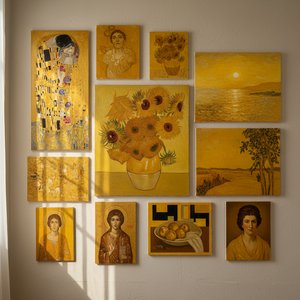
Los 10 cuadros más famosos dominados por el ocre amarillo: Arte y decoración atemporal
Descubre los 10 cuadros más famosos con tonos ocres amarillos. Explora la historia de Van Gogh, Monet y otros artistas clave del impresionismo y postimpresionismo. Encuentra reproducciones de arte de museo en .
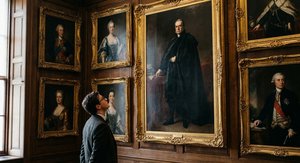
The Grandeur of Presence: Exploring Representations of Stately Bearing in Western Portraiture
Explore the art of stately bearing in Western portraiture with expert analysis of Renaissance & Baroque masterpieces. Discover symbolism, techniques, and the legacy of iconic portraits – a guide for discerning collectors.
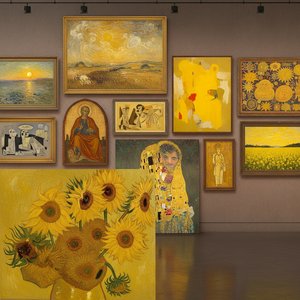
Los 10 cuadros más famosos dominados por el 'amarillo cromo': Arte y decoración
Descubre los 10 cuadros más emblemáticos dominados por el 'amarillo cromo': Van Gogh, Monet y otros maestros. Historia del arte, técnicas y decoración con lienzos impresionistas. ¡Explora la colección completa en OriginalUniqueArt.com!

The Enduring Legacy of Formal Portraiture: Power, Identity & Artistic Exploration
Explore the rich history of formal portraiture & its enduring power to capture identity and shape perception. Discover investment-worthy artworks, expert appraisals, and custom reproduction services at OriginalUniqueArt.
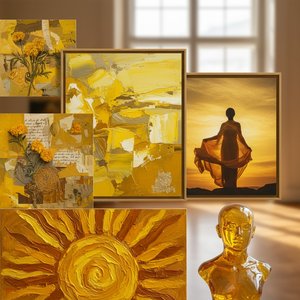
The Golden Hue: Exploring Symbolism & Emotion in Yellow Art
Explore the rich symbolism & emotional power of yellow in art history! From Van Gogh to Kandinsky, discover how artists used this vibrant hue. Expert analysis & high-quality reproductions at OriginalUniqueArt.


