

 Ver en contexto
 Enviar
 Compartir
 Detalles
 Guía
Guía

 Descargar
 Similares
 Radiografía
 Presentación de diapositivas
 Q&A
Q&A Estadísticas
George III (1738–1820)
 Oil On Canvas
- WallArt
- Neoclassicism
 214.0 x 150.0 cm
 Hospital Real de Chelsea
 Ver más
Giclée / Impresión de arte
Impresiones giclée o en lienzo de calidad de museo con producción rápida y opciones de acabado flexibles. ( Comprar pintura hecha a mano Cambiar a imagen digital)




P118B €10

P118H €10

P118W €10

P438Z €10

P508JH €12

P508YH €12

P805H €10

P805Z €10

P919BZ €10

P919G €10

P919XJ €10

P959ZH €10

P968JZ €12

W106C €8

W218G €10

W218JH €8

W218Y €10

W307PJ €10

W316G €10

W316PJ €8

W316Y €10

W398PJ €8

W4111J €10

W500HY €15

W500JH €15

W692G €12

W849H €8

W940BG €15

W953PJ €8




Elija entre nuestros tamaños predefinidos que respetan las proporciones originales de la obra.

Introduzca el ancho y el alto que necesite para adaptarse a su marco o pared. Una impresión solo puede recortarse, nunca hacerse más grande que la imagen original, por lo que un tamaño con una forma distinta perderá parte de la obra. Le enviaremos una maqueta digital para su aprobación antes de realizar cualquier impresión. La imagen que se muestra en esta página no refleja el recorte real; solo la maqueta lo hace.
Envío a todo el mundo () en 2 semanas en lugar de las 4/5 semanas estándar. (28 octubre)

Envío exprés gratuito a todo el mundo

Lienzo de lino de alta calidad

Seguro de envío total

Garantía de reembolso de aranceles aduaneros

Garantía de fidelidad cromática exacta

Política de devolución de 100 días (solo por defectos)

Garantía de devolución del 100% del dinero

Descuento por cantidad
 La opción de vidrio solo está disponible en tamaños inferiores a 110 cm.

George III (1738–1820)
Giclée / Impresión de arte
Dimensiones de la reproducción
-


Precio total final
€ 71
A Regal Portrait: Allan Ramsay’s George III
Allan Ramsay's portrait of King George III, completed around 1761-2, is more than just a likeness; it’s a carefully constructed embodiment of power, authority, and the nascent complexities of the British monarchy. This masterful work, rendered in oil on canvas, transcends mere representation to become a window into the era's political climate and artistic sensibilities – specifically, the rise of Neoclassicism within portraiture. The painting immediately commands attention with its dramatic lighting, a key element that draws the viewer’s eye directly to the King’s face, imbuing him with an almost palpable sense of presence.
Ramsay, a leading figure in 18th-century Scottish art, expertly employs linear perspective to create a sense of depth and spatial arrangement. The throne, rendered as a robust square, anchors the composition while the draped fabric behind George III flows into a dark, indistinct background – a deliberate choice that serves to highlight the subject’s importance and elevate his status. The use of geometric shapes—squares for the throne, rectangles for the robes—contrasts with the more organic curves of the King's face, suggesting a balance between rigid formality and human warmth.
A Study in Neoclassical Detail
Examining the brushwork reveals Ramsay’s meticulous technique. Layered glazes build up color depth and luminosity, particularly noticeable in the rich textures of the royal robes – a testament to his ability to capture the sheen of velvet and the weight of heavy fabrics. The artist skillfully renders skin tones with subtle variations, avoiding overly smooth surfaces; instead, he introduces a slight roughness that lends a sense of realism and immediacy. The careful attention to detail extends to the rendering of the King’s attire: the intricate embroidery, the gleaming gold accents, and the precise folds of his garments all speak to the immense wealth and power associated with the monarchy.
The painting's palette is restrained yet sophisticated, dominated by deep reds, blues, and browns – colors traditionally linked with royalty and authority. The lighting, originating from a strong left-hand source, casts dramatic shadows that sculpt George III’s features, emphasizing his brow, cheekbones, and the solemnity of his expression. This chiaroscuro effect not only adds visual interest but also contributes to the overall sense of gravitas and dignity.
Symbolism and Historical Context
George III reigned from 1760 until his death in 1820, a period marked by significant political and military upheaval. The portrait itself is deeply symbolic, reflecting the King’s role as head of state during a time of considerable change. The crown, prominently displayed, represents sovereignty and divine right – concepts that were increasingly challenged during George III's reign. The robes, rich in color and ornamentation, symbolize his wealth and status, while the scepter and orb further reinforce his authority.
Ramsay’s work was commissioned during a pivotal moment in British history—the early years of George III’s rule. The King's reign coincided with the Seven Years’ War and the subsequent American Revolution, events that profoundly shaped the course of British history. The portrait, therefore, can be interpreted as an attempt to project an image of stability and strength at a time of considerable uncertainty. It is also important to note that this particular painting was one of many commissioned by the King, reflecting his desire to solidify his position and assert his authority.
A Legacy of Elegance
Allan Ramsay’s portrait of George III stands as a remarkable achievement of Neoclassical portraiture. It is a testament to the artist's technical skill, his understanding of symbolism, and his ability to capture the essence of a historical figure. Reproductions of this iconic image continue to resonate with viewers today, offering a glimpse into the grandeur and complexities of 18th-century Britain. The painting’s enduring appeal lies not only in its aesthetic beauty but also in its ability to evoke a sense of history, power, and timeless elegance.
Preguntas y respuestas
¿Qué representa "George III (1738–1820)" de Allen Ramsay?
Los temas presentes en "George III (1738–1820)" de Allen Ramsay incluyen royal portraiture, 18th century britain, george iii, king, neoclassical art, scottish nobility, portrait painting, regal authority, los cuales resumen la temática de la obra.
¿Qué uso y espacio se recomiendan para "George III (1738–1820)" de Allen Ramsay?
Se recomienda "George III (1738–1820)" de Allen Ramsay para Statement, idealmente en un/a Living Room. El uso y el espacio juntos ayudan a determinar dónde encaja mejor una reproducción.
¿Qué elementos de la obra de Allen Ramsay se encuentran en "George III (1738–1820)"?
Dentro de la producción de Allen Ramsay, "George III (1738–1820)" se enmarca en el estilo Neoclassicism, junto a los temas de classical ideals, roman influence, royal power, british identity, political authority, monarchy, ramsay's aristocratic portraits, scottish nobility depiction.
Biografía del artista
Allan Ramsay: Una Vida de Elegancia y Arte
Primeros Años y Formación
Nacido en Edimburgo, Escocia el 13 de octubre de 1713, Allan Ramsay emergió como un destacado pintor retratista escocés cuya obra capturaba la elegancia y la refinada del arte de su época. Su viaje artístico comenzó a los veinte años cuando viajó a Londres para estudiar bajo la tutela del pintor sueco Hans Hysing, seguido de instrucción en la Academia de St. Martin's Lane. Esta formación inicial le proporcionó una base sólida en técnica y composición.
Influencias Italianas y Desarrollo Artístico
El desarrollo artístico de Ramsay tomó un giro significativo con sus viajes a Roma y Nápoles, donde pasó tres años (1736-1738) trabajando bajo la tutela de Francesco Solimena y Imperiali (Francesco Fernandi). Estos maestros italianos influyeron profundamente en su estilo, fomentando una mayor comprensión de los principios clásicos y mejorando sus habilidades para capturar la semejanza y el carácter. Absorbió la estética rococó predominante mientras también desarrolló una apreciación por los ideales neoclásicos.
Una Carrera Floreciente y Obras Notables
Al regresar a Gran Bretaña en 1738, Ramsay rápidamente estableció una exitosa carrera como retratista. Su capacidad para representar a sus sujetos con precisión y gracia pronto le valió una distinguida clientela. Algunas de sus obras más notables incluyen:
- La Reina Carlota (1744-1818) con sus dos hijos mayores (Colección Real, Londres): Una representación regia que muestra la presencia maternal de la Reina.
- Mary Degg, Lady Robert Manners (Galería Nacional de Escocia, Edimburgo): Un retrato elegante que demuestra la habilidad de Ramsay para capturar la belleza aristocrática.
- Retrato de cabeza de Duncan Forbes of Culloden: Esta obra temprana llamó la atención del Duque de Argyll y más tarde se incluyó en las notas bancarias del Banco Nacional de Escocia.
Nombramiento Real y Apogeo
Un momento crucial en la carrera de Ramsay llegó en 1761 con su nombramiento como Principal Pintor Ordinario de George III. Esta prestigiosa posición consolidó su estatus entre los élites artísticas y aseguró un flujo constante de encargos de la familia real y la alta sociedad. Se convirtió en *el* retratista de la era georgiana.
Vida Tardía y Legado
La vida tardía de Ramsay vio una transición hacia los intereses literarios, reflejando sus amplios intereses intelectuales. Sin embargo, tragedias personales – una dislocación accidental de su brazo derecho y el fallecimiento de su segunda esposa en 1782 – impactaron su salud y productividad. Murió en 1784.
A pesar de estos desafíos, Ramsay dejó un legado perdurable como uno de los pintores retratistas más celebrados de Escocia. Como Samuel Johnson señaló, “Me encanta Ramsay. No encontrarás a ningún hombre cuya conversación sea tan instructiva, llena de información y elegancia como la de Ramsay”. Sus obras continúan siendo admiradas por su habilidad técnica, estética refinada e insights sobre la sociedad del siglo XVIII.
Significado Histórico
La contribución de Allan Ramsay se extiende más allá de su talento artístico. Jugó un papel crucial en la configuración de la cultura visual de Escocia durante un período de importantes cambios sociales y políticos. Sus retratos proporcionan valiosos conocimientos sobre las vidas, la moda y los valores de la nobleza y la gentry escoceses. Sus obras se pueden encontrar en lugares como el ayuntamiento de Ayr y la Galería Nacional de Retratos de Escocia.
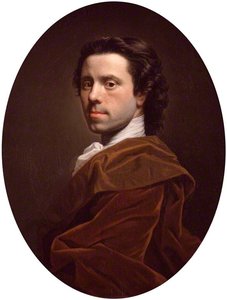
Allen Ramsay
1713 - 1784 , United Kingdom
Datos clave
- Artistic Movement Or Style: Rococó y Neoclásico
- Artists Or Movements Influenced By This Artist: ['Samuel Johnson']
- Artists Who Influenced This Artist:
- Hans Hysing
- Francesco Solimena
- Date Of Birth: 1713-10-13
- Full Name: Allan Ramsay
- Nationality: Escocés
- Notable Artworks:
- La Reina Carlota con sus dos hijos mayores
- Mary Degg, Lady Robert Manners
- Retrato de cabeza de Duncan Forbes
- Place Of Birth: Edimburgo, Reino Unido
Artículos relacionados

Allen Ramsay: Portraiture, Patronage & Shaping Georgian Identity
Explore the life & work of Allen Ramsay, pivotal portraitist to George III. Discover his Rococo style, influence on Georgian society, and lasting legacy in British art history. Learn about his key works & patronage.

Georges Braque: Las 25 Obras Maestras del Cubismo y su Legado en el Arte Moderno
Descubre las 25 obras maestras de Georges Braque, pionero del cubismo. Explora su innovadora técnica, colores y el legado del arte moderno francés. Reproducciones de alta calidad en OriginalUniqueArt.com. ¡Encuentra tu inspiración!

Neoclassical Portraiture: The Timeless Elegance of Order, Grace, and Academic Mastery
Explore the refined world of Neoclassical portraiture. Discover the mastery of line, light, and order through an expert exploration of academic art history, from Jacques-Louis David to Jean-Antoine Houdon. Immerse yourself in the timeless elegance of classical realism.

Georges Seurat: Las 25 Obras Maestras del Pionero Puntillista | OriginalUniqueArt
Descubre las 25 obras maestras de Georges Seurat, el innovador del puntillismo. Explora su técnica única, colores vibrantes y legado artístico en OriginalUniqueArt.com. Reproducciones de arte de museo para tu hogar.

Majesty on Canvas: A Definitive Guide to Iconic Royal Portraits Through Art History
Explore the profound history of royal portraiture. From Baroque grandeur to Victorian elegance, discover how master artists captured power and lineage on canvas through the timeless medium of oil painting.


