Menú
Text size

() ·

A painting made for you, by hand

Reproducción al óleo hecha a mano

Óleo sobre lienzo pintado a mano en el tamaño y marco de su elección, realizado por encargo por nuestros artistas. ( Cambiar a impresiones Cambiar a imagen digital)

Descripción del objeto

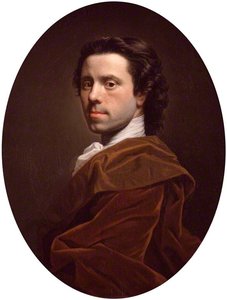
Admire Allan Ramsay’s regal portrait of George III! This neoclassical masterpiece showcases dramatic lighting & meticulous detail on canvas. Explore royal authority & 18th-century elegance.

Biografía del artista

Explore Allan Ramsay's (1713-1784) elegantes retratos de la sociedad y la nobleza escocesas. Descubra su estilo Rococó, su técnica magistral y sus obras icónicas como la Reina Carlota.

from ·

Chapter 1

How large should it be?

Slide to change the size; the wall on the left shows it at its real scale. The proportions of the original are kept.

Tamaño estándar
a medida
CM
INCH

Elija entre nuestros tamaños predefinidos que respetan las proporciones originales de la obra.

ancho
altura

Indique el ancho y el alto que necesite para adaptarse a su marco o pared. Al tratarse de una obra pintada a mano, si requiere un tamaño con una proporción distinta, el artista puede pintar un poco más alrededor de la imagen o recortarla ligeramente; usted elige. Le enviaremos una maqueta digital para su aprobación antes de comenzar la pintura. La imagen que se muestra en esta página no refleja el resultado real; solo la maqueta lo hace.

Chapter 2

How should it arrive?

Choose the edges of the stretched canvas

Choose your frame

Corner sample of the WhiteWrap canvas edge finish, stretched on madera maciza bars
White €1
Corner sample of the BlurSideWrap canvas edge finish, stretched on madera maciza bars
Blurside €1
Corner sample of the ExtendedWrap canvas edge finish, stretched on madera maciza bars
Extended €1
Corner sample of the P118B picture frame: poliestireno moldeado, 5 cm wide and 3 cm thick
P118B €10
Corner sample of the P118H picture frame: poliestireno moldeado, 5 cm wide and 3 cm thick
P118H €10
Corner sample of the P118W picture frame: poliestireno moldeado, 5 cm wide and 3 cm thick
P118W €10
Corner sample of the P438Z picture frame: poliestireno moldeado, 5.5 cm wide and 3.5 cm thick
P438Z €10
Corner sample of the P508JH picture frame: poliestireno moldeado, 7 cm wide and 3.5 cm thick
P508JH €12
Corner sample of the P508YH picture frame: poliestireno moldeado, 7 cm wide and 3.5 cm thick
P508YH €12
Corner sample of the P805H picture frame: poliestireno moldeado, 5 cm wide and 3.5 cm thick
P805H €10
Corner sample of the P805Z picture frame: poliestireno moldeado, 5 cm wide and 3.5 cm thick
P805Z €10
Corner sample of the P919BZ picture frame: poliestireno moldeado, 7 cm wide and 3.5 cm thick
P919BZ €10
Corner sample of the P919G picture frame: poliestireno moldeado, 7 cm wide and 3.5 cm thick
P919G €10
Corner sample of the P919XJ picture frame: poliestireno moldeado, 7 cm wide and 3.5 cm thick
P919XJ €10
Corner sample of the P959ZH picture frame: poliestireno moldeado, 5 cm wide and 3 cm thick
P959ZH €10
Corner sample of the P968JZ picture frame: poliestireno moldeado, 6 cm wide and 4 cm thick
P968JZ €12
Corner sample of the W106C picture frame: madera maciza, 5 cm wide and 3 cm thick
W106C €8
Corner sample of the W218G picture frame: madera maciza, 5 cm wide and 3 cm thick
W218G €10
Corner sample of the W218JH picture frame: madera maciza, 5 cm wide and 3 cm thick
W218JH €8
Corner sample of the W218Y picture frame: madera maciza, 5 cm wide and 3 cm thick
W218Y €10
Corner sample of the W307PJ picture frame: madera maciza, 6 cm wide and 3 cm thick
W307PJ €10
Corner sample of the W316G picture frame: madera maciza, 6 cm wide and 3 cm thick
W316G €10
Corner sample of the W316PJ picture frame: madera maciza, 6 cm wide and 3 cm thick
W316PJ €8
Corner sample of the W316Y picture frame: madera maciza, 6 cm wide and 3 cm thick
W316Y €10
Corner sample of the W398PJ picture frame: madera maciza, 5 cm wide and 3 cm thick
W398PJ €8
Corner sample of the W4111J picture frame: madera maciza, 6.5 cm wide and 3.5 cm thick
W4111J €10
Corner sample of the W500HY picture frame: madera maciza, 7 cm wide and 5 cm thick
W500HY €15
Corner sample of the W500JH picture frame: madera maciza, 7 cm wide and 5 cm thick
W500JH €15
Corner sample of the W692G picture frame: madera maciza, 8 cm wide and 4 cm thick
W692G €12
Corner sample of the W849H picture frame: madera maciza, 5 cm wide and 3 cm thick
W849H €8
Corner sample of the W940BG picture frame: madera maciza, 7.5 cm wide and 4.5 cm thick
W940BG €15
Corner sample of the W953PJ picture frame: madera maciza, 6 cm wide and 3.5 cm thick
W953PJ €8
Corner sample of the H24-GOLD picture frame: madera tallada con estuco, 10 cm wide and 6 cm thick
H24-GOLD €30
Corner sample of the H24-SILVER picture frame: madera tallada con estuco, 10 cm wide and 6 cm thick
H24-SILVER €30
Corner sample of the H36-GOLD picture frame: madera tallada con estuco, 15 cm wide and 6.5 cm thick
H36-GOLD €45
Corner sample of the H36-SILVER picture frame: madera tallada con estuco, 15 cm wide and 6.5 cm thick
H36-SILVER €45

Moulding: . Overall size with the frame: .

Chapter 3

Who paints it, and should anything change?

Examples of what can be changed: Replace face with customer photo; Add pet (e.g., replace cat with dog); Include hidden message in background; Change background landscape or elements.
After order, OriginalUniqueArt.com team will email client for instructions and provide a mockup preview

Envío a todo el mundo () en 3-4 semanas en lugar de las 5 semanas estándar. (29 octubre). Sin comprometer la calidad.

Chapter 4

The finishing touches

A nameplate, as in a museum?

Detalles de la placa de bronce grabada

This elegant plaque features the artist's name and the title of the artwork, finely engraved for a timeless presentation.

It is made from bronze with a refined, elegant finish. The text is precisely laser-engraved for a sharp and permanent result. Measuring 9x2 cm, the plaque is compact yet easy to read. It's built to be durable and scratch-resistant, offering a professional, museum-quality look. Mounting is simple thanks to the included adhesive backing.

Detalles de la placa de acrílico transparente

The plaque includes essential engraved details such as the artist's name, the title of the artwork, the date it was created, the type of media used-like oil on canvas or watercolor-a brief description of the piece, and a QR code that links to the complete artwork information.

It is crafted from clear acrylic, offering a sleek, modern appearance. The text is UV-engraved in black to ensure strong visual contrast. With a size of 10x15 cm, it ensures optimal readability. It comes equipped with two metal hooks for secure wall mounting. The plaque is designed to be weather-resistant, making it suitable for various environments, and it includes interactive features that work seamlessly with smartphone scanning.

Detalles de la placa de acrílico negro

This elegant plaque includes engraved information such as the artist's name, the title of the artwork, the date it was created, the type of media used (like oil on canvas or watercolor), a short description of the artwork, and a QR code for quick access to more information.

The plaque itself is made from refined black acrylic with a premium finish. The text is laser-engraved in white for high contrast and readability. Its size is 10x15 cm, designed to be easy to read. It comes with two metal hooks for professional mounting. The design is sleek and fits any interior style. It is also weather-resistant and durable, with built-in digital integration for mobile compatibility.

A protective varnish?

When do you need it?

Chapter 5

Your painting, as you ordered it

George III (1738–1820)

Técnica de reproducción

Dimensiones de la reproducción

-

Selección de artistas premium

Mayor nivel de detalle, delicadeza y tiempo de producción adicional

-

Enmarcado de reproducción

-

-

Para obras de arte o reproducciones que midan más de 105 cm (aproximadamente 41 pulgadas) en cualquiera de sus lados, el marco se enviará como un kit desmontado. Este método garantiza una entrega segura y evita daños durante el transporte.

Se requiere montaje profesional: este no es un producto para hacer usted mismo (DIY).
El kit debe ser ensamblado y el lienzo tensado por un enmarcador profesional con experiencia, utilizando cola para madera (no incluida), una tenaza para tensar lienzos y sargentos para mantener los bastidores alineados mientras la cola se seca. Un montaje incorrecto o una tensión desigual del lienzo pueden dañar la obra de arte de forma permanente y no están cubiertos por nuestra garantía.

  • Se incluyen todos los listones de madera maciza, cortados con precisión según las medidas.

  • Se ensambla con los tornillos incluidos, además de cola para madera para las uniones de las esquinas, la cual no se incluye y debe ser proporcionada por su enmarcador.

  • Se requieren herramientas profesionales que no están incluidas: un alicate para tensar lienzos (tensor) y abrazaderas para mantener los bastidores alineados mientras se seca el pegamento.

Importante:
Las uniones de las esquinas requieren cola para madera, los listones deben sujetarse con prensas hasta que la cola esté completamente seca, y para tensar el lienzo en el bastidor ensamblado se requiere una pinza para tensar lienzos. Ninguno de estos elementos está incluido en el kit. Por favor, contacte con un profesional del enmarcado con experiencia antes de realizar un pedido de este tamaño.

Cartela

-

-

Barniz protector

Barniz brillante (realza los colores y protege contra la luz y la humedad)

-

Personalizar mi obra

Ejemplos de lo que se puede personalizar: sustituir el rostro por una foto del cliente; añadir una mascota (por ejemplo, cambiar un gato por un perro); incluir un mensaje oculto en el fondo; cambiar el paisaje o los elementos del fondo.

-

Envío urgente

Envío a todo el mundo () en 3 o 4 semanas, en lugar de las 5 semanas habituales. (29 octubre). Sin comprometer la calidad.

-

Envío urgente

Envío internacional () en 5 semanas. (5 noviembre).

Incluido

Precio total final

€ 264

Precio total € 264

La opción de vidrio solo está disponible en tamaños inferiores a 110 cm.

Included with every order

  • Envío exprés gratuito a todo el mundo
  • Lienzo de lino de alta calidad
  • Seguro de envío total
  • Garantía de reembolso de aranceles aduaneros
  • Garantía de fidelidad cromática exacta
  • Política de devolución de 100 días (solo por defectos)
  • Garantía de devolución del 100% del dinero
  • Descuento por cantidad

A Regal Portrait: Allan Ramsay’s George III

Allan Ramsay's portrait of King George III, completed around 1761-2, is more than just a likeness; it’s a carefully constructed embodiment of power, authority, and the nascent complexities of the British monarchy. This masterful work, rendered in oil on canvas, transcends mere representation to become a window into the era's political climate and artistic sensibilities – specifically, the rise of Neoclassicism within portraiture. The painting immediately commands attention with its dramatic lighting, a key element that draws the viewer’s eye directly to the King’s face, imbuing him with an almost palpable sense of presence.

Ramsay, a leading figure in 18th-century Scottish art, expertly employs linear perspective to create a sense of depth and spatial arrangement. The throne, rendered as a robust square, anchors the composition while the draped fabric behind George III flows into a dark, indistinct background – a deliberate choice that serves to highlight the subject’s importance and elevate his status. The use of geometric shapes—squares for the throne, rectangles for the robes—contrasts with the more organic curves of the King's face, suggesting a balance between rigid formality and human warmth.

A Study in Neoclassical Detail

Examining the brushwork reveals Ramsay’s meticulous technique. Layered glazes build up color depth and luminosity, particularly noticeable in the rich textures of the royal robes – a testament to his ability to capture the sheen of velvet and the weight of heavy fabrics. The artist skillfully renders skin tones with subtle variations, avoiding overly smooth surfaces; instead, he introduces a slight roughness that lends a sense of realism and immediacy. The careful attention to detail extends to the rendering of the King’s attire: the intricate embroidery, the gleaming gold accents, and the precise folds of his garments all speak to the immense wealth and power associated with the monarchy.

The painting's palette is restrained yet sophisticated, dominated by deep reds, blues, and browns – colors traditionally linked with royalty and authority. The lighting, originating from a strong left-hand source, casts dramatic shadows that sculpt George III’s features, emphasizing his brow, cheekbones, and the solemnity of his expression. This chiaroscuro effect not only adds visual interest but also contributes to the overall sense of gravitas and dignity.

Symbolism and Historical Context

George III reigned from 1760 until his death in 1820, a period marked by significant political and military upheaval. The portrait itself is deeply symbolic, reflecting the King’s role as head of state during a time of considerable change. The crown, prominently displayed, represents sovereignty and divine right – concepts that were increasingly challenged during George III's reign. The robes, rich in color and ornamentation, symbolize his wealth and status, while the scepter and orb further reinforce his authority.

Ramsay’s work was commissioned during a pivotal moment in British history—the early years of George III’s rule. The King's reign coincided with the Seven Years’ War and the subsequent American Revolution, events that profoundly shaped the course of British history. The portrait, therefore, can be interpreted as an attempt to project an image of stability and strength at a time of considerable uncertainty. It is also important to note that this particular painting was one of many commissioned by the King, reflecting his desire to solidify his position and assert his authority.

A Legacy of Elegance

Allan Ramsay’s portrait of George III stands as a remarkable achievement of Neoclassical portraiture. It is a testament to the artist's technical skill, his understanding of symbolism, and his ability to capture the essence of a historical figure. Reproductions of this iconic image continue to resonate with viewers today, offering a glimpse into the grandeur and complexities of 18th-century Britain. The painting’s enduring appeal lies not only in its aesthetic beauty but also in its ability to evoke a sense of history, power, and timeless elegance.

Preguntas y respuestas

¿Qué tan intensos son los colores de "George III (1738–1820)"?

La paleta cromática de "George III (1738–1820)" presenta una saturación de Subtle Color y una intensidad de Monochromatic.

¿Qué estado de ánimo y emoción se entrelazan en "George III (1738–1820)"?

El estado de ánimo que transmite "George III (1738–1820)" de Allen Ramsay es Elegant, y su tono emocional es Nostalgic.

¿Qué tan armoniosos son los colores de "George III (1738–1820)" de Allen Ramsay?

La armonía cromática de "George III (1738–1820)" se describe como Strong Color Unity.

In numbers

  • 29frames to choose from
  • standard sizes, in its own proportions
  • 5weeks to paint and deliver it
Allen Ramsay

Allen Ramsay

1713 - 1784, United Kingdom

Datos clave

  • Artistic Movement Or Style: Rococó y Neoclásico
  • Artists Or Movements Influenced By This Artist: ['Samuel Johnson']
  • Artists Who Influenced This Artist:
    • Hans Hysing
    • Francesco Solimena
  • Date Of Birth: 1713-10-13
  • Full Name: Allan Ramsay
  • Nationality: Escocés
  • Notable Artworks:
    • La Reina Carlota con sus dos hijos mayores
    • Mary Degg, Lady Robert Manners
    • Retrato de cabeza de Duncan Forbes
  • Place Of Birth: Edimburgo, Reino Unido

Biografía del artista

Allan Ramsay: Una Vida de Elegancia y Arte

Primeros Años y Formación

Nacido en Edimburgo, Escocia el 13 de octubre de 1713, Allan Ramsay emergió como un destacado pintor retratista escocés cuya obra capturaba la elegancia y la refinada del arte de su época. Su viaje artístico comenzó a los veinte años cuando viajó a Londres para estudiar bajo la tutela del pintor sueco Hans Hysing, seguido de instrucción en la Academia de St. Martin's Lane. Esta formación inicial le proporcionó una base sólida en técnica y composición.

Influencias Italianas y Desarrollo Artístico

El desarrollo artístico de Ramsay tomó un giro significativo con sus viajes a Roma y Nápoles, donde pasó tres años (1736-1738) trabajando bajo la tutela de Francesco Solimena y Imperiali (Francesco Fernandi). Estos maestros italianos influyeron profundamente en su estilo, fomentando una mayor comprensión de los principios clásicos y mejorando sus habilidades para capturar la semejanza y el carácter. Absorbió la estética rococó predominante mientras también desarrolló una apreciación por los ideales neoclásicos.

Una Carrera Floreciente y Obras Notables

Al regresar a Gran Bretaña en 1738, Ramsay rápidamente estableció una exitosa carrera como retratista. Su capacidad para representar a sus sujetos con precisión y gracia pronto le valió una distinguida clientela. Algunas de sus obras más notables incluyen:

  • La Reina Carlota (1744-1818) con sus dos hijos mayores (Colección Real, Londres): Una representación regia que muestra la presencia maternal de la Reina.
  • Mary Degg, Lady Robert Manners (Galería Nacional de Escocia, Edimburgo): Un retrato elegante que demuestra la habilidad de Ramsay para capturar la belleza aristocrática.
  • Retrato de cabeza de Duncan Forbes of Culloden: Esta obra temprana llamó la atención del Duque de Argyll y más tarde se incluyó en las notas bancarias del Banco Nacional de Escocia.

Nombramiento Real y Apogeo

Un momento crucial en la carrera de Ramsay llegó en 1761 con su nombramiento como Principal Pintor Ordinario de George III. Esta prestigiosa posición consolidó su estatus entre los élites artísticas y aseguró un flujo constante de encargos de la familia real y la alta sociedad. Se convirtió en *el* retratista de la era georgiana.

Vida Tardía y Legado

La vida tardía de Ramsay vio una transición hacia los intereses literarios, reflejando sus amplios intereses intelectuales. Sin embargo, tragedias personales – una dislocación accidental de su brazo derecho y el fallecimiento de su segunda esposa en 1782 – impactaron su salud y productividad. Murió en 1784.

A pesar de estos desafíos, Ramsay dejó un legado perdurable como uno de los pintores retratistas más celebrados de Escocia. Como Samuel Johnson señaló, “Me encanta Ramsay. No encontrarás a ningún hombre cuya conversación sea tan instructiva, llena de información y elegancia como la de Ramsay”. Sus obras continúan siendo admiradas por su habilidad técnica, estética refinada e insights sobre la sociedad del siglo XVIII.

Significado Histórico

La contribución de Allan Ramsay se extiende más allá de su talento artístico. Jugó un papel crucial en la configuración de la cultura visual de Escocia durante un período de importantes cambios sociales y políticos. Sus retratos proporcionan valiosos conocimientos sobre las vidas, la moda y los valores de la nobleza y la gentry escoceses. Sus obras se pueden encontrar en lugares como el ayuntamiento de Ayr y la Galería Nacional de Retratos de Escocia.

Datos clave

  • Movement: Neoclassical
  • Artistic style: Portraiture
  • Subject or theme: Royal portrait
  • Influences: Classical ideals
  • Dimensions: 214 x 150 cm

Test de conocimientos artísticos

Cada pregunta tiene una única respuesta correcta.

Pregunta 1:
What is the primary artistic style evident in Allan Ramsay’s portrait of George III?
Pregunta 2:
The lighting in the portrait is most notably characterized by:
Pregunta 3:
According to the description, what type of perspective is used in the composition?
Pregunta 4:
What material is primarily used for the throne depicted in the portrait?
Pregunta 5:
Allan Ramsay was commissioned to paint this portrait by which figure?

More about this painting

Ver en contexto Vista previa en RA Cambiar a impresiones Cambiar a imagen digital Enviar
Detalles Guía Añadir a favoritos Descargar Similares Radiografía Presentación de diapositivas Q&A Estadísticas