Ver en contexto
 Enviar
 Compartir
 Detalles
 Guía
Guía

 Descargar
 Similares
 Radiografía
 Presentación de diapositivas
 Estadísticas
La Cour de Ferme


 Ver más
Reproducción al óleo hecha a mano
Óleo sobre lienzo pintado a mano en el tamaño y marco de su elección, realizado por encargo por nuestros artistas. ( Cambiar a impresiones Cambiar a imagen digital)




P118B €10

P118H €10

P118W €10

P438Z €10

P508JH €12

P508YH €12

P805H €10

P805Z €10

P919BZ €10

P919G €10

P919XJ €10

P959ZH €10

P968JZ €12

W106C €8

W218G €10

W218JH €8

W218Y €10

W307PJ €10

W316G €10

W316PJ €8

W316Y €10

W398PJ €8

W4111J €10

W500HY €15

W500JH €15

W692G €12

W849H €8

W940BG €15

W953PJ €8




Elija entre nuestros tamaños predefinidos que respetan las proporciones originales de la obra.

Indique el ancho y el alto que necesite para adaptarse a su marco o pared. Al tratarse de una obra pintada a mano, si requiere un tamaño con una proporción distinta, el artista puede pintar un poco más alrededor de la imagen o recortarla ligeramente; usted elige. Le enviaremos una maqueta digital para su aprobación antes de comenzar la pintura. La imagen que se muestra en esta página no refleja el resultado real; solo la maqueta lo hace.
Tras realizar el pedido, el equipo de OriginalUniqueArt.com enviará un correo electrónico al cliente para solicitar instrucciones y proporcionarle una vista previa del boceto.
Envío a todo el mundo () en 3-4 semanas en lugar de las 5 semanas estándar. (26 octubre). Sin comprometer la calidad.

Envío exprés gratuito a todo el mundo

Lienzo de lino de alta calidad

Seguro de envío total

Garantía de reembolso de aranceles aduaneros

Garantía de fidelidad cromática exacta

Política de devolución de 100 días (solo por defectos)

Garantía de devolución del 100% del dinero

Descuento por cantidad
 La opción de vidrio solo está disponible en tamaños inferiores a 110 cm.

La Cour de Ferme
Técnica de reproducción
Dimensiones de la reproducción
-


Precio total final
€ 285
La Cour de Ferme: Un Reflejo Tranquilo del Alma Rural Francesa
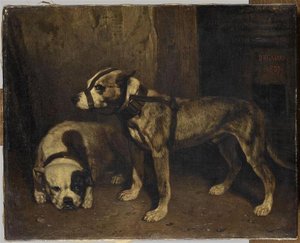
“La Cour de Fer,” o “El Patio de Hierro”, pintada por Alexandre Gabriel Decamps en 1850, es mucho más que una simple representación de un escenario rural. Es una ventana a la vida cotidiana, al silencio contemplativo y a la belleza discreta del campo francés. Decamps, un pionero de las visiones orientalistas, captura con maestría la atmósfera de una casa de campo en el corazón de Francia, ofreciendo al espectador una experiencia visual que evoca nostalgia y serenidad. La obra se distingue por su realismo meticuloso, pero también por una sutil pincelada romántica que le otorga un aire de melancolía y profundidad emocional.
La composición central de la pintura atrae inmediatamente al ojo hacia el amplio portal abierto en la parte trasera del patio. Este punto focal, rodeado de muros robustos de piedra, establece una clara división entre el espacio interior y exterior, sugiriendo privacidad y un mundo propio. La escena se organiza con cuidado: a la izquierda, una puerta parcialmente abierta invita a la imaginación, mientras que a la derecha, una ventana cerrada, con sus persianas, simboliza el refugio y la introspección. Un perro, posado en primer plano, parece observar el paisaje con curiosidad y calma, añadiendo un elemento de familiaridad y vida cotidiana a la escena.
La Danza de los Colores y las Formas
El paleta cromática de “La Cour de Fer” es notablemente terrosa, dominada por tonos ocres, grises, beiges y marrones. Esta elección deliberada evoca la textura de la piedra, la madera envejecida y el suelo irregular del patio, creando una sensación tangible de autenticidad. Las sutiles variaciones dentro de estos colores profundizan la profundidad y la textura de la pintura, mientras que los toques de rojo-anaranjado en las tejas del techo añaden un punto focal vibrante y un toque de calidez. La utilización de líneas verticales fuertes, provenientes de los muros y edificios, refuerza la sensación de encierro y estabilidad, contrastando con las diagonales creadas por el portal abierto, que introducen dinamismo y movimiento en la composición.
La forma de la obra se caracteriza por figuras geométricas: edificios rectangulares, ventanas cuadradas y el espacio del patio mismo. Sin embargo, también encontramos formas orgánicas, como la vegetación que crece cerca del portal y la silueta del perro, aportando un toque natural y vivo a la escena. La técnica pictórica de Decamps es evidente en las pinceladas visibles, que sugieren una aplicación deliberada de la pintura para crear textura y volumen en las superficies.
Un Viaje al Corazón del Romanticismo
La obra se inscribe dentro del movimiento romántico, no solo por su enfoque en un momento de quietud y contemplación, sino también por su capacidad para evocar emociones sutiles. La luz natural que ilumina el patio, proveniente probablemente de arriba y ligeramente detrás del espectador, crea sombras y resalta los detalles arquitectónicos. Esta iluminación estratégica contribuye a la atmósfera melancólica y reflexiva de la pintura. La elección de un tema cotidiano – un patio de una casa de campo – se eleva a través de la habilidad de Decamps para capturar su esencia y transmitir un sentimiento de paz y simplicidad.
Además, el significado simbólico es palpable: las puertas cerradas y las ventanas con persianas sugieren privacidad y espacios ocultos. El perro, como compañero silencioso, refuerza la idea de la vida rural y la conexión con la naturaleza. “La Cour de Fer” no es solo una representación visual; es un retrato del alma francesa, un testimonio de la belleza en lo simple y un recordatorio de la importancia de encontrar la tranquilidad en los lugares más inesperados. Las reproducciones de alta calidad disponibles a través de OriginalUniqueArt.com permiten apreciar cada detalle y matiz de esta obra maestra, transportando al espectador a un rincón tranquilo del campo francés.
Preguntas y respuestas
¿A qué estilo pertenece "La Cour de Ferme"?
El movimiento asociado con "La Cour de Ferme" de Alexandre Gabriel Decamps es Orientalism. Esta clasificación sitúa la obra entre artistas y obras relacionadas.
¿Qué emoción transmite "La Cour de Ferme" de Alexandre Gabriel Decamps?
"La Cour de Ferme" se asocia con un sentimiento Tranquilo. El tono emocional describe la impresión que transmite la obra.
¿Qué tema y atmósfera combina "La Cour de Ferme" de Alexandre Gabriel Decamps?
"La Cour de Ferme" de Alexandre Gabriel Decamps representa rural france, courtyard, domesticity, dog, shuttered window, earth tones, rustic scene, quiet life, con un ambiente Romántico. El tema y la atmósfera describen juntos la obra.
Biografía del artista
Alexandre Gabriel Decamps (1803-1860): A Pioneer of Orientalist Visions
Alexandre Gabriel Decamps, a name resonating with the vibrant hues of exotic landscapes and the dramatic flair of Romanticism, emerged as a pivotal figure in 19th-century French painting. Born in Paris on March 3, 1803, his artistic journey was one of bold innovation, challenging academic conventions and forging a path toward what would become known as Orientalism. While contemporaries like Delacroix and Ingres also held prominent positions within the French art world, Decamps distinguished himself through an intensely personal style—a blend of meticulous observation, dramatic composition, and a captivating narrative quality that drew viewers into worlds both familiar and utterly foreign. His early recognition as a talented artist foreshadowed a career marked by critical acclaim, culminating in the grand or council medal at the Paris Exhibition of 1855, a testament to his exceptional skill and unique vision. Beyond the canvas, Decamps was a man deeply connected to nature, finding solace and inspiration in the countryside surrounding Paris, where he indulged his passion for animals and field sports—a fondness that would subtly permeate much of his artistic output.Early Life and Artistic Formation
Decamps’s formative years were steeped in Parisian intellectual life, fostering an appreciation for classical ideals alongside a burgeoning fascination with the natural world. His father, Jean-Baptiste Decamps, was a professor of mathematics at École Polytechnique, instilling in Alexandre a disciplined mind and a love for scientific inquiry—a duality that would inform his artistic approach. Despite familial expectations favoring a career in academia, Decamps’s innate talent for painting compelled him to pursue his passion independently, honing his skills through self-study and experimentation. His early works demonstrated an aptitude for capturing atmospheric effects and conveying emotion with remarkable sensitivity, hinting at the stylistic breakthroughs to come.The Influence of Orientalism: Travels and Inspiration
A transformative experience occurred during Decamps’s travels to Egypt in 1831-1832. Unlike many artists of his time who relied on secondhand accounts or idealized depictions, Decamps undertook a meticulous expedition, documenting the landscapes, people, and customs of the Nile Valley with unwavering dedication. This immersive encounter profoundly impacted his artistic sensibilities, fueling his desire to portray Oriental life with unprecedented realism—a departure from prevailing academic conventions that prioritized decorative elegance over psychological depth. The resulting paintings captured not merely what he saw but also the very essence of Egyptian culture, imbued with a palpable sense of atmosphere and emotional resonance.Notable Works: Biblical Narratives and Historical Dramas
Decamps’s artistic output spanned diverse genres, ranging from biblical scenes to historical dramas—each infused with his distinctive stylistic hallmarks. “Joseph Sold by His Brethren,” for example, stands as a masterful illustration of the Old Testament narrative, skillfully grounding it in authentic Egyptian settings while conveying profound psychological insight. Similarly, “The Defeat of the Cimbri” exemplifies Decamps’s ability to handle large-scale compositions with dynamic energy and dramatic flair—capturing the chaos and brutality of battle with unflinching honesty. His meticulous attention to detail and expressive brushwork cemented his reputation as a leading figure in the Barbizon school, influencing generations of painters who sought to emulate his artistic vision.A Legacy of Bold Vision and Artistic Innovation
Alexandre Gabriel Decamps’s contribution to French art history is undeniable—he established Orientalism as a viable aesthetic direction, challenging academic dogma and paving the way for new artistic explorations. His unwavering commitment to realism, combined with his masterful command of composition and color, secured his place among the most influential artists of his era. Recognized by contemporaries like Maxime du Camp as “Christopher Columbus of the Orient,” Decamps’s legacy continues to inspire admiration for his pioneering spirit and enduring artistic achievements. His paintings—particularly “Incendie d'un village italien” and “A Bedouin and a Camel Resting in a Desert”—remain treasured masterpieces, embodying the Romantic ideal of capturing both beauty and truth with uncompromising conviction. They are currently housed in prestigious institutions such as the Musée du Louvre in Paris, ensuring that Decamps’s vision persists across time. Platforms like OriginalUniqueArt.com play an important role in preserving and disseminating his art, offering high-quality reproductions that allow admirers to experience the splendor of his artistic legacy firsthand.
Alexandre Gabriel Decamps
1803 - 1860 , Francia
Datos clave
- Artistic Movement Or Style: Orientalismo
- Artists Or Movements Influenced By This Artist: ['Barbizon School']
- Artists Who Influenced This Artist:
- Delacroix
- Ingres
- Date Of Birth: París, Francia (1803)
- Date Of Death: Fontainebleau, Francia (1860)
- Full Name: Alexandre Gabriel Decamps
- Nationality: Francés
- Notable Artworks:
- José vendido por sus hermanos
- La Defeat de los cimbrios
- El Siglo XIX
- Place Of Birth: París
Artículos relacionados
Alexandre Gabriel Decamps: Pioneering Romantic Visions & Challenging Academic Tradition
Explore the captivating world of Alexandre Gabriel Decamps, a pioneer of Romanticism and Orientalism. Discover his bold style, satirical masterpieces like 'The Experts,' and lasting impact on 19th-century art history.

Émile Jean Horace Vernet: Romantic Realism & Depicting 19th-Century Life
Explore the life & art of Émile Jean Horace Vernet, a master of Romantic Realism. Discover his captivating battle scenes, portraits, and Orientalist works – a window into 19th-century France. Learn about his techniques & enduring legacy.
Orientalism: Exploring the Exotic Allure and Complex Legacy of 19th-Century Masterpieces
Explore the captivating world of 19th-century Orientalist painting. Discover the history, academic mastery, and complex legacy of artists like Gérôme and Lewis through our expert art history guide. Find museum-quality oil reproductions for your collection at OriginalUniqueArt.com.
Bold, Exotic, Iconic: Unveiling the Visual Power and Complex Legacy of Orientalist Art
Uncover the breathtaking allure of Orientalist art. Journey through 19th-century masterpieces shaped by Napoleon’s expeditions and Romanticism. Explore the vibrant colors, dramatic light, and complex historical narratives that define this iconic era of visual storytelling.
El Siglo XIX en el Arte: 10 Obras Maestras para Decorar con Historia y Estilo
Descubre 10 obras maestras del siglo XIX: Monet, Goya y más. Explora el impresionismo, realismo y romanticismo que definieron una época. Encuentra reproducciones de arte exclusivas para decorar tu hogar con estilo en OriginalUniqueArt.com.