Ver en contexto
 Enviar
 Compartir
 Detalles
 Guía
Guía

 Descargar
 Similares
 Radiografía
 Presentación de diapositivas
 Preguntas y respuestas
 Estadísticas
Battle

- 121.0 x 172.0 cm


 Ver más
Giclée / Impresión de arte
Impresiones giclée o en lienzo de calidad de museo con producción rápida y opciones de acabado flexibles. ( Comprar pintura hecha a mano Cambiar a imagen digital)




P118B €10

P118H €10

P118W €10

P438Z €10

P508JH €12

P508YH €12

P805H €10

P805Z €10

P919BZ €10

P919G €10

P919XJ €10

P959ZH €10

P968JZ €12

W106C €8

W218G €10

W218JH €8

W218Y €10

W307PJ €10

W316G €10

W316PJ €8

W316Y €10

W398PJ €8

W4111J €10

W500HY €15

W500JH €15

W692G €12

W849H €8

W940BG €15

W953PJ €8




Elija entre nuestros tamaños predefinidos que respetan las proporciones originales de la obra.

Introduzca el ancho y el alto que necesite para adaptarse a su marco o pared. Una impresión solo puede recortarse, nunca hacerse más grande que la imagen original, por lo que un tamaño con una forma distinta perderá parte de la obra. Le enviaremos una maqueta digital para su aprobación antes de realizar cualquier impresión. La imagen que se muestra en esta página no refleja el recorte real; solo la maqueta lo hace.
Envío a todo el mundo () en 2 semanas en lugar de las 4/5 semanas estándar. (4 noviembre)

Envío exprés gratuito a todo el mundo

Lienzo de lino de alta calidad

Seguro de envío total

Garantía de reembolso de aranceles aduaneros

Garantía de fidelidad cromática exacta

Política de devolución de 100 días (solo por defectos)

Garantía de devolución del 100% del dinero

Descuento por cantidad
 La opción de vidrio solo está disponible en tamaños inferiores a 110 cm.

Battle
Giclée / Impresión de arte
Dimensiones de la reproducción
-


Precio total final
€ 72
The Canvas of Conflict: An Overview
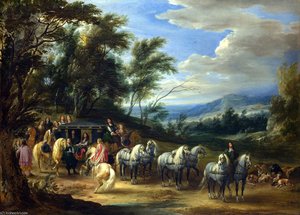
Adam Frans van der Meulen’s “Battle,” painted in 1657, isn't merely a depiction of warfare; it’s a meticulously crafted tableau of power, chaos, and the calculated grandeur of Louis XIV’s France. This monumental oil-on-canvas, currently residing within the hallowed halls of The Hermitage Museum in St. Petersburg, transcends the simple act of recording a battle – it's an active participant in shaping a royal image, a visual testament to military prowess commissioned by the ‘Sun King’ himself. Measuring 121 x 172 cm, the painting immediately commands attention with its dynamic composition and dramatic use of light and shadow, transporting the viewer directly into the heart of the fray.
Van der Meulen, a pivotal figure in the artistic service of Louis XIV, skillfully blended realism with propagandistic intent. He wasn’t simply an observer; he was a designer of spectacle, translating battlefield victories into opulent tapestries and, crucially, this arresting painting. The scene unfolds as a carefully orchestrated drama – a swirling vortex of charging cavalry, clashing swords, and the desperate struggles of infantrymen, all set against a backdrop of a strategically rendered landscape. The sheer scale of the work, combined with its intense detail, speaks to the importance placed on projecting an image of strength and dominance during this period.
A Baroque Symphony of Movement and Detail
The painting’s style firmly anchors it within the Baroque era – a movement characterized by dramatic intensity, elaborate ornamentation, and a heightened sense of realism. Van der Meulen masterfully employs chiaroscuro, the technique of strong contrasts between light and dark, to sculpt the figures and create a palpable sense of depth and immediacy. The foreground explodes with activity: horses rearing in panic, soldiers locked in brutal hand-to-hand combat, their armor gleaming under the simulated sunlight. The artist’s brushwork is remarkably loose and energetic in these areas, mirroring the frenetic energy of the battle itself – a deliberate choice to convey the chaos and urgency of the scene.
Conversely, the background landscape—trees silhouetted against a stormy sky, distant buildings hinting at a fortified town—is rendered with greater control and precision. This contrast serves to emphasize the central action while simultaneously establishing a sense of scale and strategic context. Van der Meulen’s attention to detail is astonishing; you can almost feel the grit beneath your feet, hear the clash of steel, and smell the smoke of battle. The meticulous depiction of armor, weaponry, and horse harnesses speaks not only to his artistic skill but also to his deep understanding of military equipment and tactics.
Symbolism and Royal Propaganda
Beyond its immediate visual impact, “Battle” is laden with symbolic meaning. The composition itself—a tightly packed mass of figures engaged in a decisive struggle—represents the overwhelming power of the French army under Louis XIV. The heroic postures of the mounted officers, often depicted as unflinching and resolute, reinforce the king’s image as a fearless leader. The inclusion of specific details – such as the royal standard prominently displayed – further solidifies this message of authority and legitimacy.
Furthermore, the painting's creation was intrinsically linked to Louis XIV’s ambition to establish France as the dominant power in Europe. By commissioning works like “Battle,” Van der Meulen played a crucial role in shaping public perception of the king and his reign – transforming military victories into symbols of national pride and imperial glory. The painting, therefore, functions not just as an artistic achievement but also as a powerful instrument of propaganda.
A Legacy of Power and Artistic Skill
“Battle” by Adam Frans van der Meulen stands as a remarkable testament to the artist’s skill and his service to the French monarchy. It's a dynamic, emotionally charged depiction of war that transcends its historical context, offering viewers a glimpse into the world of 17th-century military strategy and royal ambition. Reproductions of this masterpiece continue to captivate audiences today, serving as reminders of the enduring power of art to shape perceptions and immortalize moments in history. Its dramatic composition, masterful use of light and shadow, and meticulous attention to detail make it a truly exceptional work of Baroque art.
Preguntas y respuestas
¿Qué representa "Battle" de Adam Frans van der Meulen y qué atmósfera transmite?
"Battle" de Adam Frans van der Meulen representa battle, war, soldiers, cavalry, chaos, action, 17th century, painting, con un ambiente Dramatic. El tema y la atmósfera describen juntos la obra.
¿Cuál es la luminancia de "Battle" de Adam Frans van der Meulen?
"Battle" de Adam Frans van der Meulen tiene una luminancia de Dark. La luminancia describe cuánta luz parecen reflejar los colores.
¿Qué temas aparecen en "Battle" de Adam Frans van der Meulen?
Los temas presentes en "Battle" de Adam Frans van der Meulen incluyen battle, war, soldiers, cavalry, chaos, action, 17th century, painting, los cuales resumen la temática de la obra.
Biografía del artista
Adam Frans van der Meulen: Una Vida al Servicio del 'Rey Sol'
- Nacido: Bruselas, Bélgica (1632)
- Fallecido: 1690
Adam Frans van der Meulen, o Adam-François van der Meulen, fue un pintor y dibujante flamenco reconocido por sus representaciones de campañas militares y conquistas. Nacido en Bruselas el 11 de enero de 1632, se convirtió en una figura significativa tanto en la historia del arte flamenco como en la francesa, particularmente conocido por su papel en dar forma a la imagen de Luis XIV como el 'Rey Sol'.
Vida Temprana y Formación
Van der Meulen era el hijo mayor de siete hijos nacidos de Pieter van der Meulen, un notario, y Maria van Steenwegen. Su temprana formación artística comenzó en 1651 cuando se registró con el Gremio de San Lucas de Bruselas como alumno de Peter Snayers, un destacado pintor de Amberes especializado en escenas de batalla, ataques a convoyes, civiles y escenas de caza. Esta tutoría demostró ser crucial, sentando las bases para su futura carrera.
Al convertirse en maestro del gremio en 1651, Van der Meulen produjo inicialmente obras que reflejaban las de su mentor Snayers: principalmente escaramuzas de caballería y representaciones de retinues cortesanos a caballo. Su habilidad para retratar caballos rápidamente ganó reconocimiento, atrayendo la atención de Francia.
Servicio a Luis XIV: Propagandista y Diseñador de Tapices
En 1664, Van der Meulen fue convocado a París por Jean-Baptiste Colbert, el poderoso Superintendente de Edificios, Artes y Manufacturas. Colbert le encargó inmortalizar los éxitos militares de Luis XIV a través de una serie de tapices: un elemento clave en la imagen propagandística del rey. Charles Le Brun, el pintor de la corte y director de la recién creada Manufactura de los Gobelinos, reclutó a Van der Meulen para ayudar en este ambicioso proyecto.
- Serie de Tapices: Van der Meulen contribuyó significativamente a varias series de tapices, incluyendo "La Historia del Rey", que representaba conquistas militares.
- Colaboraciones: Colaboró frecuentemente con otros artistas flamencos como Adriaen Frans Boudewijns y Abraham Genoels, quienes asistieron en el diseño de paisajes y grabado.
- Serie de Residencias Reales: Van der Meulen también trabajó en la serie "Maison Royales" ('Residencias Reales'), mostrando varios palacios de Luis XIV.
Su salario anual en la Manufactura de los Gobelinos aumentó constantemente, reflejando su creciente importancia. Acompañó a Luis XIV durante campañas militares en Flandes y Borgoña, documentando meticulosamente los eventos a través de dibujos que más tarde informarían sus pinturas.
Estilo Artístico e Influencia
El estilo artístico de Van der Meulen se caracterizó por:
- Escenas de Batalla Dinámicas: Sus representaciones de batallas eran conocidas por su energía y detalle, capturando el caos y la grandeza de la guerra.
- Retratos Precisos de Caballos: Poseía una habilidad notable para retratar caballos con realismo y gracia, una habilidad que le valió un considerable reconocimiento.
- Propósito Propagandístico: Su trabajo sirvió a un propósito propagandístico claro, glorificando el reinado y los logros militares de Luis XIV.
La influencia de Van der Meulen se extendió más allá de su propia producción artística. Impactó significativamente en el desarrollo de la pintura militar en Francia, estableciendo un estilo que enfatizaba el realismo y la acción dramática. Sus diseños para tapices también contribuyeron al florecimiento de la producción de tapices durante el reinado de Luis XIV.
Carrera Posterior y Legado
La carrera de Van der Meulen floreció en Francia. Recibió numerosos honores, incluyendo:
- Privilegio Real: Se le concedió un privilegio real en 1669 para que sus obras fueran grabadas.
- Peintre Ordinaire du Roi: Fue nombrado "Pintor Ordinario del Rey" en 1673.
- Académie Royale de Peinture et de Sculpture: Fue admitido en la Real Academia de Pintura y Escultura sin presentar una obra de recepción, un testimonio de su posición.
Continuó ocupando posiciones prominentes dentro de la academia hasta su muerte en 1690. El legado de Adam Frans van der Meulen se basa en su significativa contribución al arte militar francés y en su papel en dar forma a la imagen de Luis XIV como el poderoso 'Rey Sol'. Sus detalladas representaciones de batallas, paisajes y vida cortesana proporcionan valiosas perspectivas sobre la época y continúan siendo admiradas por su mérito artístico.

Adam Frans van der Meulen
1632 - 1690 , Bélgica
Datos clave
- Artistas Influenciados:
- Karel Breydel
- Jean-Baptiste Martin
- Artistas Que Influyeron: ['Peter Snayers']
- Fecha De Fallecimiento: 1690
- Fecha De Nacimiento: 11 de enero de 1632
- Lugar De Nacimiento: Bruselas, Bélgica
- Movimiento Artístico: Barroco
- Nacionalidad: Flamenco
- Nombre Completo: Adam Frans van der Meulen
- Obras Notables:
- El Paso del Rin en 1672
- Louis XIV en Charleroi
- Nuevo Château de Saint-Germain
Artículos relacionados

Los 10 Maestros del Barroco Holandés: Obras que Definen una Época | OriginalUniqueArt
Descubre los 10 imprescindibles del Barroco holandés: Rembrandt, Vermeer y más. Explora la historia, técnica y belleza de estas obras maestras. Reproducciones de arte en OriginalUniqueArt.com para decorar tu hogar con elegancia.

Renacimiento Flamenco Temprano: 10 Obras Maestras que Cambiaron la Historia del Arte | OriginalUniqueArt
Descubre las 10 obras maestras del Renacimiento Flamenco Temprano. Explora la historia de Jan van Eyck, Robert Campin y más. Reproducciones de arte en OriginalUniqueArt.com para decorar tu hogar con belleza y elegancia. ¡Explora la colección online!

Los 10 Maestros del Primitivo Flamenco: Obras que Definen un Arte Inigualable | OriginalUniqueArt
Descubre los 10 imprescindibles del Primitivo Flamenco: Jan van Eyck, Robert Campin y más. Explora la historia, simbolismo y técnica de estas obras maestras renacentistas tempranas. Encuentra reproducciones de arte de museo en OriginalUniqueArt.com.

Hugo van der Goes: Devotion, Innovation & the Psychological Depth of Early Netherlandish Painting
Explore the revolutionary art of Hugo van der Goes – a master of Early Netherlandish painting renowned for his dramatic realism, psychological depth & profound influence on Renaissance artists. Discover his iconic works and lasting legacy.

Luz y Sombra: Las 25 Mejores Obras Maestras de Rembrandt van Rijn
Explora las 25 obras maestras de Rembrandt y su claroscuro. Encuentra reproducciones de museo en OriginalUniqueArt.com.