Portrait of Wit Stwosz

The 35 Most Famous Wit Stwosz Paintings, a Gallery Selection

Updated November 2026 · ranked by our popularity score (searches, visits and orders for each work) · 35 works by Wit Stwosz in our catalogue

In short

Of all the originals Wit Stwosz left, the most famous is Engelsgruss of St. Lawrence Church in Nuremberg (1518), in the collection of the Nuremberg Municipal Museums, Nuremberg. Close behind it come High Altar of St Mary (detail of the Lamentation) (1477) and High Altar of St Mary (Resurrection) (1477). Our catalog holds 35 works by Wit Stwosz; the gallery has kept the 35 the world admires most, each shown with its date, its museum and its story.

1447 – 1533, Horbach Late gothic baroque Most works: Church of St. Mary

Wit Stwosz's top 10 paintings: the gallery's choice

1
Engelsgruss of St. Lawrence Church in Nuremberg (1518) by Wit Stwosz

Engelsgruss of St. Lawrence Church in Nuremberg

1518 · Wood · Nuremberg Municipal Museums, Nuremberg

In the center of the choir of St. Lorenz Church in Nuremberg, a miracle hangs from the shadows. It is an assemblage of life-sized limewood figures, suspended by a metal chain as if caught in a moment of eternal descent. The wood carries the weight of a divine encounter, the Annunciation, frozen in the quiet tension between heaven and earth. Light catches the curves of the carving, revealing the soft…

3
High Altar of St Mary (Resurrection) (1477) by Wit Stwosz

High Altar of St Mary (Resurrection)

1477 · Wood · Church of St. Mary, Kraków

To stand before the High Altar of St Mary is to witness a moment where the earthly and the divine collide in a breathtaking display of late Gothic mastery. Carved between 1477 and 1489 by the incomparable German sculptor Wit Stwosz (also known as Veit Stoss), this monumental retable is far more than a religious relic; it is a narrative symphony rendered in wood. The altar, which resides in the…

4
High Altar of St Mary (Apostle Peter and Malchus) (1477) by Wit Stwosz

High Altar of St Mary (Apostle Peter and Malchus)

1477 · Church of St. Mary, Kraków

To stand before the High Altar of St Mary is to witness a moment where the boundaries between the earthly and the divine dissolve into the grain of ancient wood. Created by the incomparable Wit Stwosz (also known as Veit Stoss) between 1477 and 1489, this monumental achievement in Kraków’s St Mary’s Basilica is far more than a religious relic; it is a breathtaking triumph of the Late Gothic Baroque…

5
High Altar of St Mary (detail) (1477) by Wit Stwosz

High Altar of St Mary (detail)

1477 · Tempera On Panel

This work is a detail from the High Altar of St Mary (detail) by Wit Stwosz. Known in Poland as Wit Stwosz, the artist created this piece around 1477. It forms part of the larger Veit Stoss Altarpiece, a significant sculptural ensemble located in St Mary's Basilica in Kraków, Poland.

7
Virgin and Child with Pomegranate (1500) by Wit Stwosz

Virgin and Child with Pomegranate

1500 · Engraving · Staatliche Graphische Sammlung, Munich

The artwork presents a monochrome depiction of the Virgin Mary holding the infant Jesus. The composition is centered around these two figures, who are positioned slightly off-center within the frame. Mary stands with her head tilted slightly downwards toward the child in her arms, her drapery flowing dynamically to add movement to the scene. The background remains largely empty, focusing all attention on the central figures. A pomegranate may be…

8
Lamentation (1500) by Wit Stwosz

Lamentation

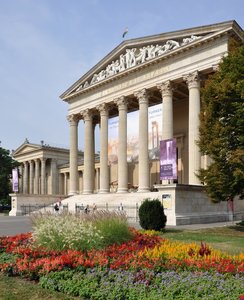
1500 · Engraving · Szépművészeti Múzeum, Budapest

To look upon this work is to witness a moment of profound stillness amidst a storm of grief. The scene depicts the Lamentation, a quiet yet heavy moment where Christ lies supine in the lap of Mary. There is a certain gravity to the composition, a pyramidal structure that draws the eye downward toward the central figure of the deceased. Above them, an angel hovers, suspended in a state of…

9
Annunciation (1517) by Wit Stwosz

Annunciation

1517 · Wood · St Lorenzkirche, Nuremberg

The Annunciation by Wit Stwosz was commissioned in 1517 by Anton II Tucher. Tucher held a high-ranking official position in Nuremberg. This assemblage of life-sized limewood sculptures was completed in 1518. The work was intended to function as a devotional centerpiece for those reciting the rosary or participating in other Marian devotions.

10
Winged Altarpiece (detail) (1523) by Wit Stwosz

Winged Altarpiece (detail)

1523 · Wood · Cathedral, Bamberg

The Winged Altarpiece (detail) by Wit Stwosz presents a quiet moment of stillness. This fragment of a larger sculptural work captures a human figure in a state of profound repose. The subject appears to be a religious or allegorical figure, caught in a private instance of devotion. Every line of the face suggests a soul turned inward, away from the noise of the world and toward a silent, spiritual presence.

The Wit Stwosz selection continues, 11 to 35

Wit Stwosz's famous paintings, period by period

The subjects that held Wit Stwosz's eye

The four subjects that come back most often in these originals, each with its finest example.

The museums that keep Wit Stwosz's originals

The 8 museums that hold the most of the paintings on this page.

Museum City Works by Wit Stwosz Paintings from this list
Church of St. Mary, KrakówChurch of St. Mary Kraków 20 High Altar of St Mary (detail of the Lamentation), High Altar of St Mary (Resurrection), High Altar of St Mary (Apostle Peter and Malchus)
Germanisches Nationalmuseum, NurembergGermanisches Nationalmuseum Nuremberg 4 Young Tobias, Tobias and the Angel, Saint Vitus in a cauldron of oil
St Lorenzkirche, NurembergSt Lorenzkirche Nuremberg 2 Annunciation, Annunciation
Cathedral, BambergCathedral Bamberg 2 Winged Altarpiece (detail), Winged Altarpiece
Nuremberg Municipal Museums, NurembergNuremberg Municipal Museums Nuremberg 1 Engelsgruss of St. Lawrence Church in Nuremberg
Staatliche Graphische Sammlung, MunichStaatliche Graphische Sammlung Munich 1 Virgin and Child with Pomegranate
Szépművészeti Múzeum, BudapestSzépművészeti Múzeum Budapest 1 Lamentation
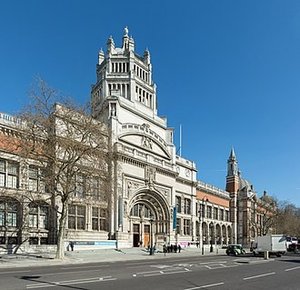
Victoria and Albert Museum, LondonVictoria and Albert Museum London 1 Mary and the Child

Wit Stwosz decade by decade: the original that defines each

Works per decade

Pick a decade to see the original that defines it.

Collectors' questions about Wit Stwosz's paintings

Which work is Wit Stwosz most famous for?Reveal the answer

Engelsgruss of St. Lawrence Church in Nuremberg (1518), Nuremberg Municipal Museums, Nuremberg. High Altar of St Mary (detail of the Lamentation) (1477) and High Altar of St Mary (Resurrection) (1477) come next.

What age was Wit Stwosz when Engelsgruss of St. Lawrence Church in Nuremberg was made?Reveal the answer

71 years old: Engelsgruss of St. Lawrence Church in Nuremberg dates from 1518, and Wit Stwosz was born in 1447.

What are the ten most famous Wit Stwosz paintings?Reveal the answer

Engelsgruss of St. Lawrence Church in Nuremberg, High Altar of St Mary (detail of the Lamentation), High Altar of St Mary (Resurrection), High Altar of St Mary (Apostle Peter and Malchus), High Altar of St Mary (detail), High Altar of St Mary (heads of Joachim and Anne), Virgin and Child with Pomegranate, Lamentation, Annunciation and Winged Altarpiece (detail). The ranking above gives each one's year and museum.

How many paintings did Wit Stwosz leave?Reveal the answer

Our catalog holds 35 works by Wit Stwosz, dated from 1477 to 1525.

In which museums do Wit Stwosz's masterpieces hang?Reveal the answer

Mostly in Church of St. Mary (Kraków), Germanisches Nationalmuseum (Nuremberg) and St Lorenzkirche (Nuremberg). The museum table above lists them all.

In which years did Wit Stwosz paint the most famous works?Reveal the answer

In 1470s: 21 of the 35 works on this page were made then, High Altar of St Mary (detail of the Lamentation) among them.

What are the first and the last famous originals of Wit Stwosz?Reveal the answer

On this page, the earliest is High Altar of St Mary (detail of the Lamentation) (1477) and the latest Christ Child (1525).

Which subjects did Wit Stwosz choose most often?Reveal the answer

Woman (12), Sculpture (8) and Man (6), across the 35 works on this page.

Which technique did Wit Stwosz use most?Reveal the answer

Wood, for 22 of the 35 works on this page.

To which art movement does Wit Stwosz belong?Reveal the answer

Late gothic baroque, judging by the originals on this page.

Which Wit Stwosz works hang at the Church of St. Mary?Reveal the answer

High Altar of St Mary (detail of the Lamentation), High Altar of St Mary (Resurrection) and High Altar of St Mary (Apostle Peter and Malchus): the Church of St. Mary, Kraków holds 20 of the works on this page.

Wit Stwosz: life and work

The Emotional Drama of Wit Stwosz

To stand before the works of Wit Stwosz, or Veit Stoß, is to encounter a profound surge of human emotion captured in wood. This German master sculptor, whose life spanned the tumultuous transition between the late Gothic and the burgeoning Northern Renaissance, did not merely carve figures; he breathed life into them. His artistry was deeply rooted in the dramatic fervor of his time, imbuing his wooden creations with an almost palpable sense of pathos. Though details of his early apprenticeship remain shrouded in the mists of history, it is clear that from his formative years, he absorbed the rigorous discipline of the German workshop tradition, mastering techniques that allowed him to transform solid timber into vessels of spiritual narrative.

Mastery of Material and Movement

Stwosz’s technical brilliance lay in his unparalleled ability to manipulate wood. His signature achievement was the rendering of drapery—the way cloth falls, billows, and clings to a form is treated not as mere covering, but as an active participant in the drama unfolding within the sculpture. This virtuoso carving style has led art historians to coin terms like "late Gothic baroque," recognizing how he infused the rigid structures of earlier styles with a dynamic, almost restless energy. His figures seem caught mid-gesture, their robes swirling as if moved by an unseen divine wind. This emphasis on movement and emotional intensity marks him as a pivotal figure whose work bridged stylistic epochs.

Iconography and Enduring Legacy

While his influence permeated the artistic currents of his era, it is perhaps impossible to discuss Stwosz without acknowledging the monumental altarpiece housed in St. Mary's Basilica in Kraków, Poland. This piece stands as a towering testament to his genius, showcasing the narrative complexity and emotional depth that defined his career. Beyond this masterpiece, surviving works such as The Virgin and Child with St Anne continue to demonstrate his profound understanding of sacred iconography. His ability to imbue religious subjects with such intense human feeling ensured that his legacy resonated far beyond the workshops of Germany.

A Bridge Between Eras

Wit Stwosz’s significance cannot be overstated; he was an artist who navigated a period of immense cultural upheaval. He took the spiritual intensity and detailed naturalism characteristic of the late Gothic period and infused it with a burgeoning Renaissance sense of humanism, all while maintaining a uniquely German emotional fervor. His commitment to capturing the inner life—the yearning, the sorrow, the divine ecstasy—through the tangible medium of wood secured his place as a master craftsman whose vision continues to challenge and move contemporary viewers alike.