Early Life and Education
- Born: January 22, 1862, in Edinburgh, United Kingdom
- Parents: Jessie Cecilia (née Mack) and Dr. William Burn-Murdoch
- Family Background: His father was the first to adopt the hyphenated name "Burn-Murdoch." His elder brother, John Burn-Murdoch, served as a commanding engineer in India.
- Education: Attended local school and studied law at Edinburgh University. Subsequently pursued art studies in Antwerp under Charles Duran and in Paris.
Exploration and Antarctic Expeditions
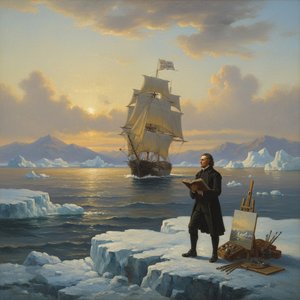
- Early Expedition (1892-1893): Joined William Speirs Bruce's Dundee whaling expedition to the Antarctic as an assistant, serving alongside Bruce.
- "Edinburgh to the Antarctic": Documented his experiences in a book published in 1894, featuring paintings and sketches from the expedition.
- First Artist in Antarctica: Considered by some to be the first "artist in residence" in Antarctica.
- Scottish National Antarctic Expedition (1902-1904): Assisted William Speirs Bruce with this expedition, which surveyed Laurie Island in the South Orkneys. Cape Burn Murdoch on that island is named in his honor.
- Unique Distinction: Claimed to be the first person to play bagpipes in Antarctica.
Artistic Style and Themes
- Painting Focus: Primarily known for landscape paintings, particularly those depicting polar regions and travel scenes.
- Travel Writing Integration: Combined artistic talent with writing skills, documenting his travels extensively in books.
- Influences: While specific influences are not widely documented, his exposure to European art academies (Antwerp and Paris) likely shaped his technical skill. His Scottish heritage is evident in his writings and artistic themes.
- Recurring Themes: Exploration, polar landscapes, wildlife encounters (particularly with polar bears), and a sense of adventure.
Major Works and Contributions
- "Edinburgh to the Antarctic" (1894): A significant work combining text and illustrations documenting his experiences on the Dundee expedition.
- Banner for Castlehill Water Reservoir: Created a large banner depicting prominent figures in Scottish history, though the mural project it was intended for was never realized. Color and monochrome versions of the lithographs were sold.
- Illustrations for "The Evergreen": Contributed illustrations to Patrick Geddes' publication, *The Evergreen*.
- Polar Bear Sketches: Created humorous cartoons featuring polar bears, some used as Christmas cards by the Royal Scottish Geographical Society.
- Donation to Zoological Society of Scotland: Gave a young polar bear to the Zoological Society of Scotland.
Later Life and Legacy
- Travels in India and Burma (1905): Documented his travels in India and Burma, resulting in a published book.
- Fellowship with Royal Scottish Geographical Society: Became a fellow of the society in 1906.
- Death: Died on July 19, 1939, in Edinburgh.
- Historical Significance: Burn Murdoch's work provides valuable visual and written records of early Antarctic exploration and Scottish travel writing. His unique claim to have played the bagpipes in Antarctica adds a memorable element to his legacy. The naming of Cape Burn Murdoch honors his contributions to polar exploration.