
1


Updated November 2026 · ranked by our popularity score (searches, visits and orders for each work) · 24 works by Paul Brason in our catalogue
In short
Of all the originals Paul Brason left, the most famous is Philip William Bryce Lever (1915–2000), 3rd Viscount Leverhulme, KG. Close behind it come Professor Dorothy Wedderburn (1991) and Gerald Grosvenor (b.1951), 6th Duke of Westminster (1995). Our catalog holds 24 works by Paul Brason; the gallery has kept the 24 the world admires most, each shown with its date, its museum and its story.


 Robert G. Beldam (1914–2003), CBE, Honorary Fellow (1995–2003)1995
12
 Canon Maurice Ridgway (1918–2002)1994
13
 David George Vaisey (b.1935)1996 · Bodleian Libraries
14
 Gerald Ball, Garage Proprietor1999 · Girton College
15
 Sir Keith Thomas (b.1933), President (1986–2000)2002
16
 Keith Gilbert Robbins (b.1940), Principal and Vice Chancellor of University of Wales Lampeter, St David's University College (1992–2003)2003
17
 Dr Michael Fopp, Director General of the Royal Air Force Museum2007
18
 Lord Wilson of Tillyorn2007 · Peterhouse
19
 Barry Everitt, Master of Downing College2007 · Paintings Owned by Colleges
20
 Professor Michael Mingos (b.1944), FRS, Principal (1999–2009)2007 · Сент-Едмундс-Холл
21
 Alan and Grace Howard2010 · Paintings Owned by Colleges
22
 Professor Dame Jean Thomas2012 · st Catharine's College
23
 John Hood (b.1942)Bodleian Libraries
24
 Philip William Bryce Lever (1915–2000), 3rd Viscount Leverhulme, Chancellor of the University of Liverpool (1980–1993)
The four subjects that come back most often in these originals, each with its finest example.
#1 Philip William Bryce Lever (1915–2000), 3rd Viscount Leverhulme, KG
 #2 Professor Dorothy Wedderburn
 #8 Brian Robert Morris (1930–2001), Lord Morris of Castle Morris
#16 Keith Gilbert Robbins (b.1940), Principal and Vice Chancellor of University of Wales Lampeter, St David's University College (1992–2003)
The 8 museums that hold the most of the paintings on this page.
| Museum | City | Works by Paul Brason | Paintings from this list |
|---|---|---|---|
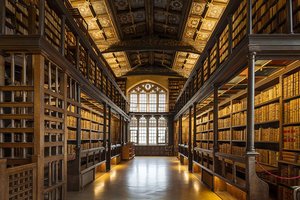 Bodleian Libraries |
Oxford | 2 | David George Vaisey (b.1935), John Hood (b.1942) |
 Paintings Owned by Colleges |
Cambridge | 2 | Barry Everitt, Master of Downing College, Alan and Grace Howard |
 Royal Holloway |
Egham | 1 | Professor Dorothy Wedderburn |
 Chester Town Hall |
Chester | 1 | Gerald Grosvenor (b.1951), 6th Duke of Westminster |
 Merton College |
Oxford | 1 | Dame Jessica Rawson, Warden |
 The University of Reading |
Reading | 1 | Ewan Page |
 Government Art Collection |
London | 1 | Brian Robert Morris (1930–2001), Lord Morris of Castle Morris |
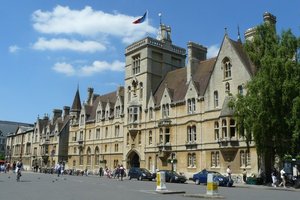 Balliol College |
Oxford | 1 | Baruch S. Blumberg |
Pick a decade to see the original that defines it.
Philip William Bryce Lever (1915–2000), 3rd Viscount Leverhulme, KG. Professor Dorothy Wedderburn (1991) and Gerald Grosvenor (b.1951), 6th Duke of Westminster (1995) come next.
Philip William Bryce Lever (1915–2000), 3rd Viscount Leverhulme, KG, Professor Dorothy Wedderburn, Gerald Grosvenor (b.1951), 6th Duke of Westminster, Dame Jessica Rawson, Warden, Brian Robert Morris (1930–2001) (triptych), Ewan Page, Brian Robert Morris (1930–2001), Baron Morris of Castle Morris, Principal of St David's University College (1980–1991), Brian Robert Morris (1930–2001), Lord Morris of Castle Morris, Sir Emmanuel Kaye and Baruch S. Blumberg. The ranking above gives each one's year and museum.
Our catalog holds 24 works by Paul Brason, dated from 1990 to 2012.
Mostly in Bodleian Libraries (Oxford), Paintings Owned by Colleges (Cambridge) and Royal Holloway (Egham). The museum table above lists them all.
In 1990s: 11 of the 24 works on this page were made then, Professor Dorothy Wedderburn among them.
On this page, the earliest is Ewan Page (1990) and the latest Professor Dame Jean Thomas (2012).
Reflection (4), Portrait (3) and Portraiture (3), across the 24 works on this page.
Contemporary realism, judging by the originals on this page.
David George Vaisey (b.1935) and John Hood (b.1942): the Bodleian Libraries, Oxford holds 2 of the works on this page.

