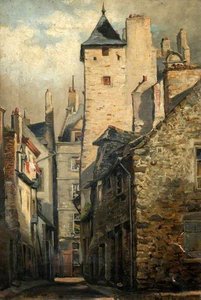
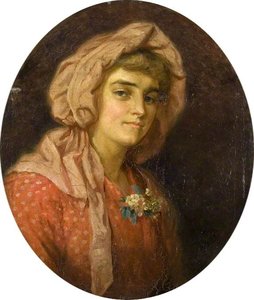
Portrait of Margaret Thomas

The 39 Most Famous Margaret Thomas Paintings, Each One of a Kind

Updated November 2026 · ranked by our popularity score (searches, visits and orders for each work) · 39 works by Margaret Thomas in our catalogue

In short

Girl of Jerusalem (1897) is the Margaret Thomas painting that draws the most eyes. After it, the eye goes to Portrait of an Old Man Holding a Stick (1937) and The Late Patriarch of Syria. Among the 39 works of Margaret Thomas in our catalog, these 39 are the most famous, each a unique original presented with its year, its museum and the reason it endures.

1842 – 1929, Croydon Contemporary realism Most works: Royal West of England Academy

Top 10 paintings by Margaret Thomas, through the gallery's eye

1
Girl of Jerusalem (1897) by Margaret Thomas

Girl of Jerusalem

1897 · Oil On Canvas

The oil painting, titled Girl of Jerusalem, presents a realistic depiction of a young girl positioned centrally within the frame. She is standing upon a stone wall, appearing to be engaged in the simple task of displaying or selling fruit from a basket. The setting suggests a Mediterranean or rural environment, characterized by a weathered wall adorned with climbing vines and foliage that provides a sense of depth to the…

2
Portrait of an Old Man Holding a Stick (1937) by Margaret Thomas

Portrait of an Old Man Holding a Stick

1937 · Oil On Canvas

The artwork is a realistic portrait of an elderly man seated in a chair, captured in a three-quarter view. He is positioned slightly off-center against a dark background that features a partially drawn curtain. The man is depicted with a sense of quiet contemplation and dignity, holding a walking stick that suggests age and perhaps physical limitations. In front of him sits a small table or desk, which holds what…

3
The Late Patriarch of Syria by Margaret Thomas

The Late Patriarch of Syria

Oil

A portrait of an elderly man, characterized by a long, white beard and a contemplative gaze, occupies the center of this composition. He wears a dark turban and traditional robes, his features rendered with a realism that emphasizes the texture of his facial hair and the weight of his attire. The subject does not meet the viewer's eyes, looking instead toward an unseen point to the side, lending the work…

Margaret Thomas's famous paintings, numbers 11 to 39

The subjects that held Margaret Thomas's eye

The four subjects that come back most often in these originals, each with its finest example.

The museums that keep Margaret Thomas's originals

The 6 museums that hold the most of the paintings on this page.

Museum City Works by Margaret Thomas Paintings from this list
Royal West of England Academy, BristolRoyal West of England Academy Bristol 5 Mirrors, Princes Street, Edinburgh, Bouquet
Paintings, LondonPaintings London 1 Snow Garden
Charleston, LewesCharleston Lewes 1 The Captain of the Hockey Team
Arts Council Collection, LondonArts Council Collection London 1 The Chintz Tablecloth
Trinity Hall, CambridgeTrinity Hall Cambridge 1 Limehouse Reach, London
Llyfrgell Genedlaethol Cymru / The National Library of Wales, AberystwythLlyfrgell Genedlaethol Cymru / The National Library of Wales Aberystwyth 1 Kyffin Williams (1918–2006)

Margaret Thomas across the years: the unique originals of each

A long career of 24 years, 1874 to 1897: Margaret Thomas's most famous originals, shown year by year.

Works per year

Pick a year to see its originals.

Margaret Thomas's paintings: questions for the gallery

What is the single most famous work of Margaret Thomas?Reveal the answer

Girl of Jerusalem (1897). Portrait of an Old Man Holding a Stick (1937) and The Late Patriarch of Syria come next.

At what age did Margaret Thomas create Girl of Jerusalem?Reveal the answer

55 years old: Girl of Jerusalem dates from 1897, and Margaret Thomas was born in 1842.

Which ten paintings by Margaret Thomas are the most famous?Reveal the answer

Girl of Jerusalem, Portrait of an Old Man Holding a Stick, The Late Patriarch of Syria, Miss Pilkington, Inside Damascus Gate, Snow Garden, The Captain of the Hockey Team, The Chintz Tablecloth, Limehouse Reach, London and Kyffin Williams (1918–2006). The ranking above gives each one's year and museum.

How many works by Margaret Thomas are known?Reveal the answer

Our catalog holds 39 works by Margaret Thomas, dated from 1874 to 1897.

Where can the most famous Margaret Thomas originals be seen?Reveal the answer

Mostly in Royal West of England Academy (Bristol), Paintings (London) and Charleston (Lewes). The museum table above lists them all.

Which famous Margaret Thomas painting is the earliest, and which the latest?Reveal the answer

On this page, the earliest is Miss Pilkington (1874) and the latest Girl of Jerusalem (1897).

What subjects did Margaret Thomas favour?Reveal the answer

Rural life (2), Victorian era (2) and Portrait (2), across the 39 works on this page.

What materials did Margaret Thomas paint with most?Reveal the answer

Oil On Canvas, for 2 of the 39 works on this page.

Which movement does the work of Margaret Thomas belong to?Reveal the answer

Contemporary realism, judging by the originals on this page.

What Margaret Thomas originals can I see at the Royal West of England Academy?Reveal the answer

Mirrors, Princes Street, Edinburgh and Bouquet: the Royal West of England Academy, Bristol holds 5 of the works on this page.

Margaret Thomas: a portrait of the artist

A Life of Artistic and Literary Adventure

Margaret Thomas, born Margaret Cook in 1842, remains a luminous figure in the annals of Victorian and Edwardian history, representing a rare fusion of artistic sensitivity and an indomitable pioneering spirit. Born in Croydon, Surrey, to the prominent shipowner Thomas Cook, her early years were steeped in the atmosphere of maritime exploration and global connection. This heritage of movement would define her life, as she was relocated to Australia at the age of nine, a transition that placed her at the heart of a burgeoning colonial landscape. Her journey was not merely one of geographical displacement but an evolution of the soul, where the rugged beauty of the Antipodes met the refined sensibilities of her English upbringing.

Her artistic development was marked by a profound connection to the masters of her era. In Melbourne, she found a mentor in the celebrated sculptor Charles Summers, whose guidance provided the technical foundation for her early explorations into form and volume. This period of apprenticeship was transformative; it allowed her to translate the textures of her new environment into tangible art. Her debut at the inaugural exhibition of the Victorian Society of Fine Arts in 1857, featuring a delicate medallion portrait, signaled the arrival of a talent capable of capturing quiet dignity through sculptural precision. As she matured, her focus expanded from the tactile nature of sculpture to the nuanced depths of portrait painting, eventually earning her a prestigious studentship at the Royal Academy in London.

The Mastery of Portraiture and Global Vision

Between 1868 and 1880, Thomas’s presence was felt strongly within the hallowed halls of the Royal Academy in London. Her work during this period reflected a sophisticated command of light and character, as she specialized in portraiture that sought to capture more than just a likeness. She possessed an uncanny ability to imbende her subjects with a sense of psychological depth, making her a respected figure in the international art scene. Her paintings were characterized by a meticulous attention to detail, yet they never lost the emotional resonance that defines great portraiture.

Beyond the canvas, Thomas’s life was an epic of travel and literary achievement. She was not merely an observer of the world but an active chronicler of it. Her travels through Europe and the Middle East were documented with a poet's eye and a writer's precision, blending her visual perceptions with a narrative voice that captured the essence of distant lands. This duality of being both artist and travel writer allowed her to create a multi-sensory legacy, where the imagery of her journeys was immortalized through both ink and oil.
The historical significance of Margaret Thomas lies in her ability to transcend the traditional boundaries imposed upon women of her era. Her achievements can be summarized by several key pillars of her legacy:

  • Artistic Versatility: Her seamless transition from the sculptural techniques learned under Charles Summers to the refined portraiture exhibited at the Royal Academy.
  • Literary Contribution: Her role as a pioneering travel writer, providing much of the era's most evocative accounts of Middle Eastern and European landscapes.
  • Cultural Bridge: Acting as a vital link between the colonial art movements of Australia and the established artistic institutions of Great Britain.
  • Pioneering Spirit: Embodying the Victorian ideal of the "explorer-artist," breaking social molds through her independent travels and professional recognition.

Today, the memory of Margaret Thomas serves as an inspiration to those who seek to merge different disciplines into a singular, cohesive life of expression. Her work remains a testament to a time when art was not just a reflection of the world, but a way to actively discover and define it.