Portrait of Constantin Brâncuși

The 45 Most Famous Constantin Brâncuși Paintings, Each One of a Kind

Updated November 2026 · ranked by our popularity score (searches, visits and orders for each work) · 45 works by Constantin Brâncuși in our catalogue

In short

The Kiss (1912) is the Constantin Brâncuși painting that draws the most eyes. After it, the eye goes to The Kiss (1910) and The cock (1924). Among the 45 works of Constantin Brâncuși in our catalog, these 45 are the most famous, each a unique original presented with its year, its museum and the reason it endures.

1876 – 1957, Hădărămaș Abstract art Most works: MOMA - Museum of Modern Art

Top 10 paintings by Constantin Brâncuși, through the gallery's eye

1
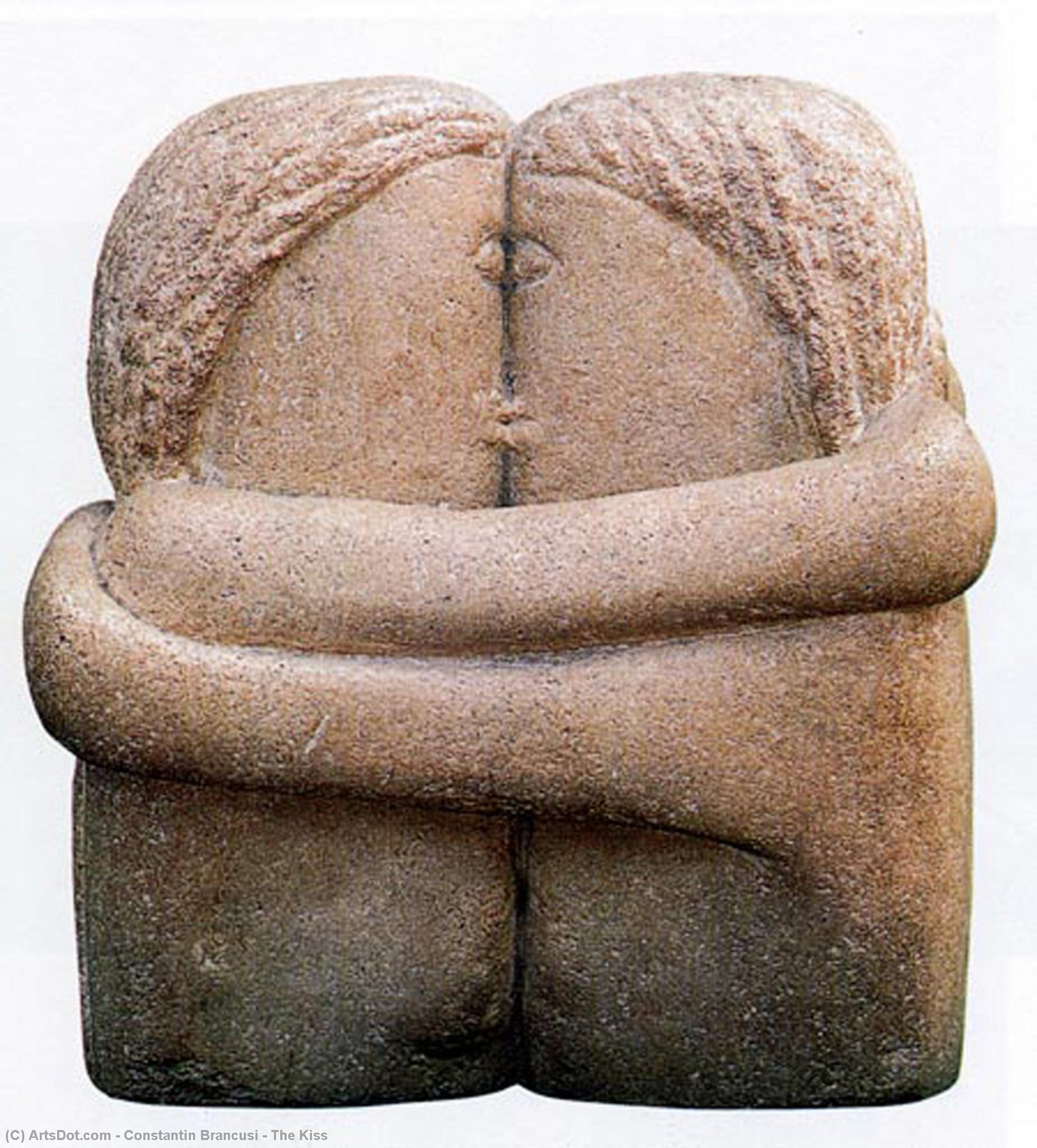
The Kiss (1912) by Constantin Brâncuși

The Kiss

1912 · Stone

Introduction to Expressionism and Constantin Brancusi Expressionism is a modernist movement that emerged in the early 20th century, primarily in Northern Europe. The term was first used by art critic and historian, Wilhelm Worringer, in 1911 to describe the works of artists who were more interested in expressing their inner emotions and experiences than in accurately depicting physical reality. Expressionism developed as a reaction against positivism and other artistic styles…

2
The Kiss (1910) by Constantin Brâncuși

The Kiss

1910 · Carved

In the realm of modern sculpture, few works possess the profound, quiet power of Constantin Brâncuși’s The Kiss. At first glance, the viewer is met with a singular, monumental form—a block of stone that seems to pulse with an internal life. This is not merely a depiction of two lovers; it is a masterful distillation of human connection into its most primal and geometric essence. Brâncuși, a pioneer who sought…

3
The cock (1924) by Constantin Brâncuși

The cock

1924 · Sculpture Bronze · MOMA - Museum of Modern Art, New York City

To stand before Constantin Brâncuși’s The Cock is not merely to view a sculpture; it is to witness the very distillation of motion into immutable form. Created in 1924, this bronze masterpiece transcends the mere depiction of an avian creature. Instead, Brâncuși has captured the exhilarating moment of ascent—the pure, unburdened spirit of flight itself. The work confronts the viewer with a highly abstracted vision, stripping away the superfluous details…

4
Mlle. Pogany II (1920) by Constantin Brâncuși

Mlle. Pogany II

1920 · Gold · MAM Rio, Rio de Janeiro

In the realm of modern sculpture, few works possess the ethereal magnetism of Mlle. Pogany II. Created in 1920 by the Romanian master Constantin Brâncuși, this exquisite piece serves as a profound testament to the power of simplification. At first glance, the viewer is met with a silhouette that seems to transcend the physical weight of its medium, offering instead a fluid, rhythmic grace. While many artists of the early…

5
Bird in Space (1923) by Constantin Brâncuși

Bird in Space

1923 · Bronze · National Gallery of Art, Washington

The creation of Bird in Space by Constantin Brâncuși represents a profound commitment to a single, evolving idea. Known in the artist's native Romanian as Pasărea în văzduh, this series of sculptures emerged from a deep desire to capture movement rather than the physical anatomy of a bird. The original work was created in 1923, marking a significant moment in the artist's pursuit of spiritual abstraction through form.

6
Torso of a Young Girl (1922) by Constantin Brâncuși

Torso of a Young Girl

1922 · Stone

Constantin Brâncuși’s Torso of a Young Girl, created about 1922, presents a white stone sculpture that emphasizes the essential form of the human figure. The work functions as a representation of a young girl's torso, though its contours suggest the presence of a head. This duality creates a tension between anatomical recognition and abstract geometry.

Constantin Brâncuși's famous paintings, numbers 11 to 45

The subjects that held Constantin Brâncuși's eye

The four subjects that come back most often in these originals, each with its finest example.

The museums that keep Constantin Brâncuși's originals

The 3 museums that hold the most of the paintings on this page.

Museum City Works by Constantin Brâncuși Paintings from this list
MOMA - Museum of Modern Art, New York CityMOMA - Museum of Modern Art New York City 1 The cock
MAM Rio, Rio de JaneiroMAM Rio Rio de Janeiro 1 Mlle. Pogany II
National Gallery of Art, WashingtonNational Gallery of Art Washington 1 Bird in Space

Constantin Brâncuși across the decades: one unique original for each

Works per decade

Pick a decade to see the original that defines it.

Constantin Brâncuși's paintings: questions for the gallery

What is the single most famous work of Constantin Brâncuși?Reveal the answer

The Kiss (1912). The Kiss (1910) and The cock (1924) come next.

At what age did Constantin Brâncuși create The Kiss?Reveal the answer

36 years old: The Kiss dates from 1912, and Constantin Brâncuși was born in 1876.

Which ten paintings by Constantin Brâncuși are the most famous?Reveal the answer

The Kiss, The Kiss, The cock, Mlle. Pogany II, Bird in Space, Torso of a Young Girl, The Kiss, Madame LR (Portrait de Mme LR), Bird in Space and Fish. The ranking above gives each one's year and museum.

How many works by Constantin Brâncuși are known?Reveal the answer

Our catalog holds 45 works by Constantin Brâncuși, dated from 1907 to 1943.

Where can the most famous Constantin Brâncuși originals be seen?Reveal the answer

Mostly in MOMA - Museum of Modern Art (New York City), MAM Rio (Rio de Janeiro) and National Gallery of Art (Washington). The museum table above lists them all.

During which period did Constantin Brâncuși create the best-known paintings?Reveal the answer

In 1910s: 16 of the 45 works on this page were made then, The Kiss among them.

Which famous Constantin Brâncuși painting is the earliest, and which the latest?Reveal the answer

On this page, the earliest is The Prayer (1907) and the latest The Seal (1943).

What subjects did Constantin Brâncuși favour?Reveal the answer

Women (5), Body (4) and Stone (3), across the 45 works on this page.

What materials did Constantin Brâncuși paint with most?Reveal the answer

Stone, for 2 of the 45 works on this page.

Which movement does the work of Constantin Brâncuși belong to?Reveal the answer

Abstract art, judging by the originals on this page.

Constantin Brâncuși: a portrait of the artist

The Essence of Form: The Life and Legacy of Constantin Brâncuși

Constantin Brâncuși stands as a monumental figure in the history of modern sculpture, recognized globally for his groundbreaking approach to form and his unwavering dedication to distilling artistic expression into its purest essence. Born in 1876 in Hădărămaș, Romania, Brâncuși embarked on an extraordinary journey from humble beginnings to become one of the foremost innovators of abstract art. His early years were deeply rooted in the textures of Romanian folklore and mythology, a foundation that instilled in him a lifelong appreciation for organic shapes and symbolic representations. This connection to his heritage would later permeate his artistic vision, providing a spiritual depth that distinguished his work from the purely mechanical abstractions of his contemporaries.

The trajectory of Brânuidade's career underwent a profound transformation during his time in Paris between 1906 and 1914. Immersed in the burgeoning avant-garde scene, he engaged with the vibrant energy of the École de Paris, fostering a dialogue that propelled him toward increasingly reductive forms. While his early experimentation included figurative sculpture—notably portraits depicting Romanian peasants that demonstrated a commitment to realism—he soon moved decisively toward a stylistic hallmark of his oeuvre: the pursuit of "spiritual abstraction." Brâncuși famously stated, "I sculpt what I see. But I also sculpt what I dream," a conviction that drove him to prioritize form over ornamentation and to capture universal concepts through simplified geometric shapes.

A Mastery of Material and Symbolism

Brâncuși’s genius lay in his ability to manipulate diverse materials—marble, bronze, and wood—to evoke profound emotional responses. His technique was not merely about carving or casting, but about revealing the soul within the medium. In works such as The Kiss, he achieved a tender depiction of intertwined figures rendered in polished bronze, creating a masterpiece that embodies intimacy and timeless beauty through its block-like, primitive simplicity. This ability to balance weight and grace is equally evident in his more ethereal creations.

His exploration of movement and transcendence reached its zenith in the Bird in Space series. These sculptures, characterized by their upward curves and delicate balance, serve as an aerodynamic representation of avian flight, symbolizing human aspiration and the soul's ascent. Beyond the celestial, Brâncuși also found profound meaning in the terrestrial and the serene. His work White Negress II utilizes minimalist marble to embody duality and serenity, while Sleeping Muse II showcases a mesmerizing bronze form with a golden hue, capturing a sense of profound peace through smooth, uninterrupted lines.

Historical Significance and the Modernist Revolution

The historical significance of Constantin Brâncuși cannot be overstated; he was a pioneer who redefined the very boundaries of what sculpture could be. By stripping away the superfluous, he paved the way for much of 20th-century abstraction. His influence can be traced through several key artistic developments:

  • The Reduction of Form: He moved sculpture away from the narrative and anatomical complexity of Rodin toward a language of pure geometry.
  • Integration of Materiality: His respect for the inherent properties of stone, wood, and metal influenced generations of modernists to treat material as a primary subject.
  • The Concept of the Pedestal: Brâncuși often treated the base of his sculptures as part of the artwork itself, blurring the line between the object and its environment.

Ultimately, Brâncuși’s legacy is one of profound simplification. He did not merely create objects; he created icons of modernism that continue to resonate with their quiet power and spiritual clarity. Through his dedication to the essence of beauty, he transformed the landscape of contemporary art, leaving behind a body of work that remains as vital and evocative today as it was during his lifetime.