Portrait of Charles Angrand

The 21 Most Famous Charles Angrand Paintings, a Gallery Selection

Updated November 2026 · ranked by our popularity score (searches, visits and orders for each work) · 22 works by Charles Angrand in our catalogue

In short

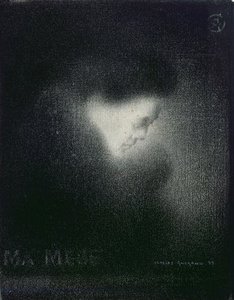
Of all the originals Charles Angrand left, the most famous is My Mother,. Close behind it come Wheat and Le Pont De Pierre In Rouen. Our catalog holds 22 works by Charles Angrand; the gallery has kept the 21 the world admires most, each shown with its date, its museum and its story.

1854 – 1926, Criquetot-l'Orne Neo-impressionism Most works: Musée d'Orsay

Charles Angrand's top 10 paintings: the gallery's choice

5
A Couple In The Street by Charles Angrand

A Couple In The Street

Oil · Musée d'Orsay, Paris

In the heart of a bustling urban landscape, Charles Angrand’s "A Couple In The Street" invites the viewer to step into a transient moment of intimacy amidst the rhythmic chaos of city life. The painting captures a man and a woman navigating a crowded thoroughfare, their proximity suggesting a shared secret or a quiet bond that remains undisturbed by the surrounding throng. As they move through the public sphere, there…

The Charles Angrand selection continues, 11 to 21

The subjects that held Charles Angrand's eye

The four subjects that come back most often in these originals, each with its finest example.

The museums that keep Charles Angrand's originals

The 7 museums that hold the most of the paintings on this page.

Museum City Works by Charles Angrand Paintings from this list
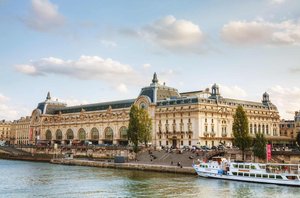
Musée d'Orsay, ParisMusée d'Orsay Paris 1 A Couple In The Street
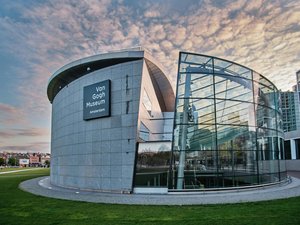
Van Gogh Museum, AmsterdamVan Gogh Museum Amsterdam 1 The Seine, Morning (Saint-Ouen)
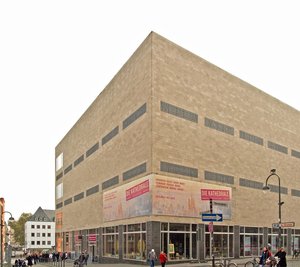
Wallraf-Richartz-Museum, CologneWallraf-Richartz-Museum Cologne 1 House under Olive Trees / Hut in an Orchard
Finnish National Gallery, HelsinkiFinnish National Gallery Helsinki 1 Le Bucheron
Indianapolis Museum of Art, IndianapolisIndianapolis Museum of Art Indianapolis 1 Path In The Country
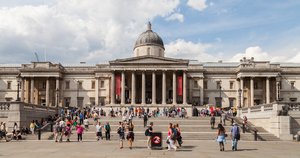
National Gallery, LondonNational Gallery London 1 The Western Railway At Its Exit From Paris
Museum of Fine Arts, HoustonMuseum of Fine Arts Houston 1 The Harvesters

Charles Angrand year by year: the originals that define each

From 1886 to 1903, Charles Angrand worked for 18 years: the selection follows that long career year by year, through its finest originals.

Works per year

Pick a year to see its originals.

Collectors' questions about Charles Angrand's paintings

Which work is Charles Angrand most famous for?Reveal the answer

My Mother,. Wheat and Le Pont De Pierre In Rouen come next.

What are the ten most famous Charles Angrand paintings?Reveal the answer

My Mother,, Wheat, Le Pont De Pierre In Rouen, Le Pont de Pierre, Rouen, A Couple In The Street, The Seine, Morning (Saint-Ouen), House under Olive Trees / Hut in an Orchard, The Seamstresses, Mother And Child and Self Portrait. The ranking above gives each one's year and museum.

How many paintings did Charles Angrand leave?Reveal the answer

Our catalog holds 22 works by Charles Angrand, dated from 1886 to 1903.

In which museums do Charles Angrand's masterpieces hang?Reveal the answer

Mostly in Musée d'Orsay (Paris), Van Gogh Museum (Amsterdam) and Wallraf-Richartz-Museum (Cologne). The museum table above lists them all.

What are the first and the last famous originals of Charles Angrand?Reveal the answer

On this page, the earliest is The Seine, Morning (Saint-Ouen) (1886) and the latest House under Olive Trees / Hut in an Orchard (1903).

Which subjects did Charles Angrand choose most often?Reveal the answer

Mothers (2), Intimate moment (2) and Portraits (2), across the 21 works on this page.

To which art movement does Charles Angrand belong?Reveal the answer

Neo-impressionism, judging by the originals on this page.

Charles Angrand: life and work

A Life Intertwined with Art and Ideals

Charles Théophile Angrand, born in the tranquil Normandy village of Criquetot-l'Orne in 1854, was an artist whose life mirrored the turbulent currents of late 19th and early 20th century France. He wasn’t merely a painter; he was a product of his time—a period defined by artistic revolution, intellectual ferment, and burgeoning political consciousness. Angrand's journey began within a family dedicated to education, his father serving as a schoolmaster, instilling in him perhaps a foundational respect for knowledge and critical thought that would permeate both his art and his life choices. His initial artistic training at the Académie de Peinture et de Dessin in Rouen provided a solid grounding in traditional techniques, but it was a pivotal trip to Paris in 1875—an encounter with a retrospective of Jean-Baptiste-Camille Corot’s work—that truly ignited his artistic passion. The subtle lyricism and atmospheric sensitivity of Corot resonated deeply, shaping Angrand's early aesthetic inclinations towards landscape and an exploration of light and mood. Despite facing rejection from the prestigious École des Beaux-Arts, a common fate for many aspiring artists challenging established norms, he resolutely moved to Paris in 1882, balancing his artistic pursuits with a practical career as a mathematics teacher at Collège Chaptal.

Embracing the Avant-Garde and Neo-Impressionism

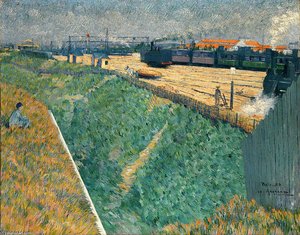
Paris in the 1880s was a crucible of innovation, a magnet for artists seeking to break free from academic constraints. Angrand found himself immersed in this vibrant milieu, frequenting artistic hubs like Café d'Athènes, Café Guerbois, and Le Chat Noir—places where ideas were exchanged, manifestos debated, and new aesthetic directions forged. It was here he cultivated friendships with some of the most influential figures of the era: Georges Seurat, Vincent van Gogh, Paul Signac, Maximilien Luce, and Henri-Edmond Cross. These encounters proved transformative. In 1884, Angrand co-founded the Société des Artistes Indépendants alongside Seurat and Signac—a bold declaration of artistic independence that challenged the authority of the official Salon and paved the way for future avant-garde movements. Initially influenced by Impressionism, Angrand’s style underwent a significant evolution in the mid-1880s as he embraced Neo-Impressionism. Under the guidance of Seurat and Signac, he began to experiment with Pointillism—the meticulous application of tiny dots of pure color intended to blend optically in the viewer's eye. However, Angrand wasn’t a mere imitator; he infused this technique with his own sensibility, employing a more muted palette than his colleagues, skillfully using chromatic nuances to create subtle shadows and atmospheric depth.

A Master of Drawing and Social Commentary

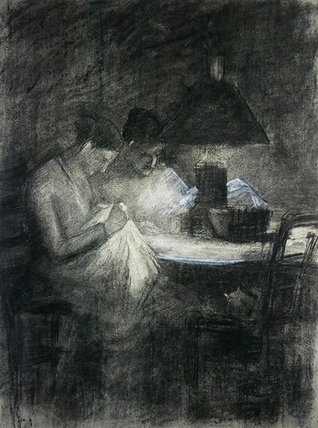
While celebrated for his paintings, Charles Angrand's mastery extended profoundly into the realm of drawing. His conté crayon drawings were particularly lauded by his contemporaries, with Paul Signac himself recognizing them as “masterpieces.” These works demonstrate an exceptional sensitivity to light and shadow, a delicate handling of texture, and a remarkable ability to capture mood and emotion with minimal means. Beyond his purely aesthetic achievements, Angrand was also deeply committed to social and political causes. He actively contributed illustrations to anarchist publications like *Les Temps Nouveaux*, demonstrating a willingness to use his art as a vehicle for expressing his beliefs and challenging the status quo. This engagement with radical politics further distinguished him from many of his contemporaries, adding another layer of complexity to his artistic persona. His association with Van Gogh is also noteworthy; Angrand’s bold brushstrokes and asymmetrical compositions inspired the Dutch master, leading to a proposed exchange of paintings—a testament to the mutual respect and influence shared between these two visionary artists.

Later Years and Enduring Legacy

Following a period dedicated to drawings and pastels in the early 1890s, Angrand returned to painting around 1906, influenced by the evolving styles of Signac and Cross. His later works exhibited larger brushstrokes and more vibrant colors, occasionally venturing towards abstraction—a reflection of the broader artistic trends unfolding at the turn of the century. He spent time in Dieppe before settling in Rouen for his final years, maintaining a dedicated correspondence despite becoming increasingly reclusive. Charles Angrand passed away on April 1, 1926, leaving behind a body of work that continues to captivate and inspire. Today, his paintings and drawings are represented in prominent museum collections worldwide, solidifying his place as an important—though often overlooked—figure in late 19th-century French art. He remains a compelling example of an artist who seamlessly blended aesthetic innovation with intellectual engagement and social consciousness, leaving behind a legacy that resonates far beyond the canvas.

Key Characteristics of His Work

  • Neo-Impressionist Techniques: While embracing Pointillism, Angrand distinguished himself with a more muted palette compared to Seurat and Signac.
  • Drawing Mastery: Angrand's conté crayon drawings were highly acclaimed for their delicate handling of light and shadow.
  • Influence on Van Gogh: His thick brushstrokes and asymmetrical compositions inspired Vincent van Gogh.
  • Anarchist Illustrations: Angrand actively contributed to anarchist publications, demonstrating his commitment to social and political causes.