
baroque vs rococo painting
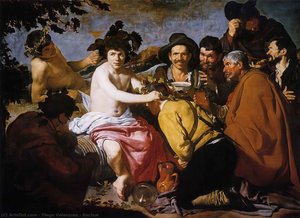 Bachus
, Diego Velázquez
Baroque painting is defined by intense drama, deep shadows, and a sense of monumental grandeur designed to evoke awe. In contrast, Rococo painting is a lighter, more decorative style that emphasizes playfulness, elegance, and pastel colors, shifting the focus from public, religious intensity to private, secular pleasure.
The Baroque era, which dominated the 17th century, often used art as a tool for the Counter-Reformation or to reflect the power of absolute monarchs. We see this in the works of masters like Caravaggio, whose use of light and shadow created a psychological depth that moved away from the calm rationality of the Renaissance. In the Spanish Golden Age, Diego Velázquez captured the vibrancy of life in works like Bachus (1629), currently held in the Museo del Prado, Madrid.
Rococo emerged in Paris around the 1700s as a reaction against the heavy, formal Baroque style of the court of Louis XIV. It moved away from the "monumental" and toward the "intimate." While Baroque art feels massive and sometimes even "coarse" or "absurd" in its scale, Rococo is characterized by:
- Delicacy and grace
- Asymmetry and curved lines
- A preference for the feminine and the pastoral
- A focus on domestic and country scenes
what are the stylistic differences between baroque and rococo
 Diana and Callisto
, Sebastiano Ricci
Baroque style is characterized by explosive motion, tension, and complex, semi-circular compositions that pull the viewer into the scene. Rococo style is more succinct and airy, utilizing slender lines, intricate details, and a sense of "unfinished" or sketch-like brushwork that creates a light, atmospheric unity.
In the workshop, we can see the physical difference in how these movements handle composition. Baroque works, such as Sebastiano Ricci’s Diana and Callisto, often use dynamic arrangements to create a sense of vitality and movement. These compositions are often heavy and voluminous, aiming for a sense of "grandeur" and "excess" that commands the room.
Rococo, however, favors a more relaxed and natural feel. It often incorporates:
- The "Rocaille" motif (shells and pebbles)
- Asymmetrical, twisting vine-like patterns
- A lighter, more "sketchy" application of paint
- A focus on beauty and romanticized grace rather than rhetoric or drama
how do color and lighting change from baroque to rococo
 The Swing
, Jean-Honoré Fragonard
Baroque painting relies heavily on chiaroscuro, using intense contrasts between deep shadows and specific light sources to create volume. Rococo painting abandons these heavy shadows in favor of a luminous, even light and a palette of soft pastels like pink, light blue, and lilac.
When we look at the technical application of pigment, the shift is striking. Baroque artists often worked with a saturated, earthy palette—think of the rich reds, browns, and golds found in the works of Annibale Carracci. This creates a sense of weight and immediate, dramatic presence. The light in a Baroque piece is often used to highlight a specific, high-stakes moment of tension.
Rococo lighting is much more diffused. Instead of the stark, dramatic shadows of the 17th century, Rococo artists like Jean-Honoré Fragonard create an ethereal glow. In his 1775 masterpiece The Swing, the light washes over the landscape, contributing to a sense of:
- Serenity and lightness
- Atmospheric unity rather than sharp description
- A joyful, optimistic mood
what are the main themes in baroque versus rococo art
 Annibale Carracci
. Italian Baroque painter who blended Florentine draftsmanship with Venetian color in grand mythological frescoes for the Palazzo Farnese.
Baroque themes are typically grand, religious, or mythological, often focusing on intense spiritual ecstasy, heroic action, or the brutal realities of life. Rococo themes are primarily secular and intimate, focusing on love, leisure, classical mythology, and the carefree lives of the aristocracy.
The Baroque period was deeply tied to the Church and the state. Many works were commissioned to stir emotion and awe in the faithful, often depicting biblical stories with unflinching honesty or intense psychological depth. This is evident in the works of Rosa, who depicted the "brutal realities" of contemporary events, or the religious intensity found in the works of the Carracci brothers.
Rococo turns the gaze inward toward the private salon. The subject matter shifts from the "masculine" ethics of heroism and civic duty to a "feminine" universe of:
- Fête Galantes (elegant outdoor parties)
- Romantic and erotic escapades
- Pastoral landscapes where nature is harmonious and gentle
- The celebration of eternal youth and beauty
Frequently asked questions
When was Velázquez's Bachus painted?
Velázquez's Bachus was painted in 1629.
When did Rococo painting peak?
Rococo painting peaked in the 1730s.
When were Caravaggio's works painted?
Caravaggio's works were painted around 1593.
What is the origin of the word Rococo?
Rococo is derived from the French words for shell and seashell.
Learn more
- 1599 – 1660Diego Velázquez ArtworksExplore the dramatic depth and masterful technique of one of the Baroque era's greatest legends.


