Landscape (Georges D'Espagnat)
Georges D'Espagnat (1870–1950) made Landscape.

 Preview

 Hand Made Oil Painting
 Send
 Share
 Fact sheet


 Download
 Similars
 X-Ray
 Diaporama
 Q&A

 Stats
Landscape, in brief
- Title
- Landscape
- Artist
- Georges D'Espagnat (1870–1950)
- Artist born in
- Melun, France
- Subject
- landscape
High-resolution images of Landscape
Georges D'Espagnat, Landscape.
Georges D'Espagnat (1870–1950), Landscape. Public domain. Image: OriginalUniqueArt.com.
Questions on Landscape, answered
What subjects appear in "Landscape" by Georges D'Espagnat?
"Landscape" by Georges D'Espagnat depicts: landscape.
Is "Landscape" by Georges D'Espagnat in the public domain?
Regarding copyright, "Landscape" is in the public domain - its copyright has expired.
Who is the artist behind "Landscape"?
"Landscape" was created by Georges D'Espagnat. The information on this page describes Georges D'Espagnat's original work.
What explains the copyright situation of "Landscape" by Georges D'Espagnat?
The copyright status of "Landscape" - in the public domain - its copyright has expired - follows from the artist's death in 1950.
About the artist, Georges D'Espagnat
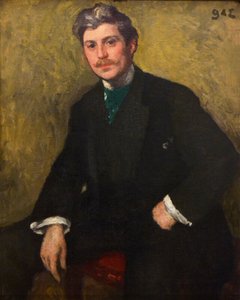
1870–1950, France
Georges D'Espagnat
A Legacy of Light: The Life and Art of Georges D’Espagnat In the vibrant tapestry of late 19th and early 20th-century French art, few figures embody the transition from tradition to modernity as gracefully as Georges D’Espagnat. Born in Melun in 1870, D’Espagnat was destined for a life steeped in the aesthetics of beauty. His father’s establishment of the legendary Durand-Ruel Gallery provided him with an unparalleled window into the evolution of modernism, placing him at the very heart of the Parisian art world. This early exposure allowed him to witness the shifting tides of art history firsthand, fostering a unique perspective that would later allow him to bridge the gap between the rugged realism of the Barbizon School and the luminous, fleeting sensations of Impressionism.
About Georges D'Espagnat Notable works by Georges D'Espagnat
Also by Georges D'Espagnat
 Untitled (A Set of Seven Decorative Panels)1900
 Girl Painting at an Easel1910
 Tuna Vessels Saint-gilles Croix De Vié
 Woman Reading
Essays around Landscape
 Mastering the View: A Study of Composition and Historical Tradition in Landscape ArtMaster the principles of landscape composition and atmospheric perspective. Explore the history of the masters today.
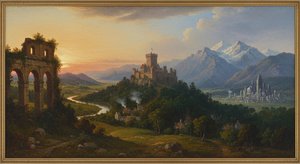 Evocations of Place: A Historical Journey Through Landscape ArtExplore the rich history of landscape art with OriginalUniqueArt. Discover renowned artists, movements like Impressionism & tonalism, and e…
 Masterpieces Unveiled: The Top 25 Artworks at Museum Boijmans Van BeuningenExplore 25 iconic works from Museum Boijmans Van Beuningen, from Van Gogh to Dalí. Discover all masterpieces on OriginalUniqueArt.com.