Arts and Crafts Movement · 1876
(Βιλιαμ Μόρρις, 1876)
Το έργο δημιούργησε ο/η Βιλιαμ Μόρρις (1834–1896). Χρονολογείται στο 1876. Ανήκει στο κίνημα Arts and Crafts Movement. Είναι φτιαγμένο σε Illustration. Αποθηκεύεται στο Національний музей декоративних мистецтв Мадрида στο Μαδρίτη, Ισπανία. Οι διαστάσεις είναι 962 × 57 cm.
- 1876
- Illustration
- 962 × 57 cm
- Національний музей декоративних мистецтв Мадрида, Μαδρίτη

 Προεπισκόπηση σε πραγματική κλίμακα

 Ελαιογραφικό Χειροποίητο Έργο
 Αποστολή
 Κοινοποίηση
 Φύλλο πληροφοριών


 Λήψη
 Παρόμοια αντικείμενα συλλογής
 Ακτινογραφία
 Παρουσίαση
 Ερωτήσεις & Απαντήσεις

 Στατιστικά
, εν συντομία
- Τίτλος
- Καλλιτέχνης
- Βιλιαμ Μόρρις (1834–1896)
- Γεννημένος/η το
- Βαλταμόστοου, Ηνωμένο Βασίλειο
- Ημερομηνία
- 1876
- Μέσο
- Illustration
- Διαστάσεις
- 962 × 57 cm
- Πού εκτίθεται
- Національний музей декоративних мистецтв Мадрида, Μαδρίτη, Ισπανία
- Κίνηση
- Arts and Crafts Movement
- Εποχή
- 19th Century
- Θέμα
- floral design, wallpaper pattern, japonisme influence, organic forms, curved leaves, botanical illustration
Τι απεικονίζει το ;
Identification of the Pimpernel Wallpaper Design
The wallpaper design known as Pimpernel emerged from the mind of William Morris around 1876. This work reflects the vision of the English architect, designer, craftsman and theorist William Morris. It captures a specific moment in the late nineteenth century when the lines between domestic utility and fine art began to blur. The pattern seeks to bring the quiet rhythms of the natural world into the structured interiors of the Victorian era.
William Morris conceived this design as a way to integrate botanical life into the fabric of the home. The Pimpernel pattern is a wallpaper design that relies on the repetition of organic forms. It functions as a visual echo of the garden, translated into a rhythmic sequence of flora. Each line follows the logic of a growing stem or a reaching leaf.
The work exists as a structured arrangement of botanical elements. It is a product of the Arts and Crafts movement, born from a desire to prioritize the hand of the maker. Through this design, the artist sought to find a balance between the wildness of nature and the order of the printed surface. A single petal rests in the stillness of the pattern.
Visual Composition and Floral Motifs
Curvilinear acanthus leaves wind through the space, creating a rhythmic movement across the surface. These forms intertwine with climber willow and honeysuckle branches, forming a dense, interlocking network. The pattern relies on an intricate and detailed arrangement where every leaf and stem finds its place within the organic geometry. It is a quiet, structured growth.
Chrysanthemums and jasmines emerge from the foliage, their shapes softened by the surrounding greenery. Willow branches weave through the composition, adding a sense of layered depth to the botanical scene. The color palette remains restrained, dominated by shades of blue that suggest a calm, shaded garden. Ivory and pale greens provide a delicate contrast to these deeper tones.
Technique and Material Production
The creation of this design relied on the steady hand of the artisan. Using hand-printing techniques, the intricate floral patterns were pressed onto linen fabric. Each movement of the printer required precision to ensure the botanical forms appeared with a remarkable level of realism. The texture of the linen holds the ink, grounding the delicate shapes of the pimpernel and willow in a tangible, physical reality.
This labor-intensive process reflects a deep commitment to traditional artisanal skills. Rather than the sterile repetition of a machine, the work carries the weight of meticulous human effort. Every stem and leaf was placed with a specific intent, honoring the slow rhythm of manual craft. The final result is a surface where the organic lines of nature meet the disciplined touch of the maker.
Artistic Style and Movement Influence
The design belongs to the Arts and Crafts Movement, a reaction against the cold precision of the industrial age. It seeks a return to the hand of the maker. This piece carries a distinct Oriental influence, pulling from the quietude of the Far East to reshape Victorian interiors. The patterns do not shout; they whisper through a lens of Japonisme.
Eastern stylistic conventions dictate the flow of the composition. The work reflects the influence of Japanese design principles, favoring a restrained elegance over heavy ornamentation. It is a translation of distant aesthetics into a local language of line and form. The curvilinear movement of the stems mirrors the serene balance found in Japanese art.
This aesthetic approach creates a bridge between two worlds. The pattern uses the logic of the East to find a new rhythm for the English home. It is a quiet rebellion of nature against the machine. A single leaf rests in perfect, deliberate balance.
Current Location and Museum Collection
The Pimpernel wallpaper design resides within the Nacionálny múzeum dekoratívneho umelí Madrid. This collection preserves the work in Madrid, Spain. It remains a part of the National Museum of Decorative Arts. The physical presence of the piece is defined by its long, narrow scale, measuring 57 x 962 cm.
The museum halls hold this linen fragment. It rests as a quiet specimen of the Arts and Crafts Movement. The blue hues and floral lines exist here, kept within the Spanish institution. A stillness settles over the pattern in its current home.
Σε ποιο μουσείο βρίσκεται το ;
Національний музей декоративних мистецтв Мадрида
Μαδρίτη, Ισπανία
Το κρυμμένο ταίρι του Μαδρίτη: Το Εθνικό Μουσείο Διακοσμητικών Τεχνών Στο ίδιο το κέντρο της παλπονηρούς μεγαπόλεως του Μαδρίτη, κοντά στον idyllικό Πάρκο Ρετίρο, έχει εγκατασταθεί ένα mało γνωστό, αλλά εξαιρετικά πολύτιμο θησαυρόφυλακιο – το Εθνικό Μουσείο Διακοσμητικών Τεχνών. Δεν είναι απλώς ένα ακόμη μουσείο· είναι μια πρόσκληση στη σκέψη, ένα ταξίδι στον χρόνο και μια βαθιά βύθιση στην ιστορία της διακοσμητικής τέχνης που καλύπτει αιώνες όχι μόνο στην Ισπανία, αλλά όλη την Ευρώπη. Ιδρυμένο το 1912 με σκοπό τη διατήρηση του πλούσιου πολιτιστικού κληρονομικού περιεχομένου της χώρας, το μουσείο ξεπερνά τα όρια της απλής διακόσμησης εσωτερικών χώρων, προσφέροντας μια ματιά σε αριστουργήματα, σкетτς και πολιτιστικές αναφορές που αποτελούν μαρτυρίες για την ικανότητα των τεχνιτών και την ισπανική αισθητική μέσα από τα αιώνες.


Εικόνες υψηλής ανάλυσης του

Δημόσιος τομέας: ο καλλιτέχνης απεβίωσε το 1896.
Άλλες διαστάσεις, καρέττες και αναφορά →Βιλιαμ Μόρρις, (1876), Національний музей декоративних мистецтв Мадрида. Δημόσιο περιουσιακό δικαίωμα
Σχετικά με τον καλλιτέχνη, Βιλιαμ Μόρρις

1834–1896, Ηνωμένο Βασίλειο
Βιλιαμ Μόρρις
William Morris: Προσωπογραφία του Καπετάν Thomas Coram και η Αναγέννηση της Αισθητικής Κίνησης Ο William Morris ήταν ένας Βρετανός σχεδιαστής, τεχνίτης, ποιητής και πρωτοπόρος του κοινωνικού σοσιαλισμού που έγραψε ιστορία στην τέχνη και τον πολιτισμό του δευτεροεμφανίζοντος αιώνα. Οι δημιουργίες του για έπιπλα, υφάσματα και γυάλινα παράθυρα καθόρισαν την αισθητική της Βικτωριανής εποχής και άφησαν ανεξίτημο σημάδι στην ιστορία της σύγχρονης τέχνης. Η παιδική του ηλικία ήταν βαθιά επηρεασμένη από το βρετανικό τοπίο γύρω από το σπίτι του και μια αγάπη για τους μύθους της μεσαιωνικής χριστιανολογίας, θέτοντας τις βάσεις για μια διαρκή προσπάθεια να ενσωματωθεί η ομορφιά στην καθημερινότητα και να αναδειχθούν οι αρχές της τέχνης και του χειροτεχνικού έργου έναντι της ταχύτατης βιομηχανικής ανάπτυξης. Οι πρώτες του εκπαιδευτικές εμπειρίες στο Πανεπιστήμιο του Οξφόρδου τον οδήγησαν αρχικά σε ένα θεολογικό μονοπάτι, αλλά ήταν στις ζωντανές ιδεακές κοινότητες του πανεπιστημίου όπου η πραγματική του καλλιτεχνική ταλάντευση άρχισε να αναδύεται.
Σχετικά με τον Βιλιαμ Μόρρις Σημαντικά έργα του Βιλιαμ Μόρρις
Εργασίες του Βιλιαμ Μόρρις
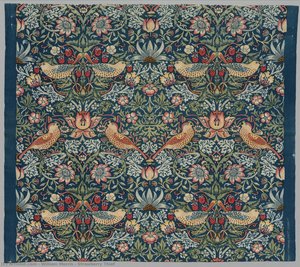 Strawberry Thief1936
 The Little Tree (Hammersmith Rug)1895
 Snakeshead1900
 Design for1881

Μελέτες για το
 Victorian Botanical Art: A Professional Guide to Sourcing Timeless Floral Reproductions for Luxury Hotel InteriorsElevate hospitality interiors with premium Victorian botanical art reproductions. A professional guide for hotel designers on sourcing hand…
 10 Iconic Textile Masterpieces That Redefined the World of ArtJourney through history with 10 legendary textile masterpieces that redefined art. From iconic tapestries to fine fiber arts, explore the s…
 The Art of the Matrix: Exploring the Technical Lineage of Woodcut and IntaglioExplore the technical mastery of woodcut and intaglio through history. Discover the secrets of the artist's matrix today.