Hudson River School · 1847
Prometheus Bound (Τόμας Κόουλ, 1847)
Ο/Η Τόμας Κόουλ (1801–1848) δημιούργησε το Prometheus Bound. Χρονολογείται στο 1847. Ανήκει στο κίνημα Hudson River School. Είναι φτιαγμένο σε Oil. Αποθηκεύεται στο Μουσεία Τέχνης της Σαν Φρανσίσκο στο Σαν Φρανσίσκο, Ηνωμένες Πολιτείες Αμερικής. Οι διαστάσεις είναι 162 × 243 cm.
- 1847
- Oil
- 162 × 243 cm
- Μουσεία Τέχνης της Σαν Φρανσίσκο

 Προεπισκόπηση σε πραγματική κλίμακα

 Ελαιογραφικό Χειροποίητο Έργο
 Αποστολή
 Κοινοποίηση
 Πληροφοριακό φύλλο


 Λήψη
 Παρόμοια αντικείμενα συλλογής
 Ακτινογραφία
 Παρουσίαση
 Ερωτήσεις & Απαντήσεις

 Στατιστικά
Prometheus Bound, εν συντομία
- Τίτλος
- Prometheus Bound
- Καλλιτέχνης
- Τόμας Κόουλ (1801–1848)
- Γεννημένος/η το
- Μπόλτον, Ηνωμένο Βασίλειο
- Ημερομηνία
- 1847
- Μέσο
- Oil
- Διαστάσεις
- 162 × 243 cm
- Πού εκτίθεται
- Μουσεία Τέχνης της Σαν Φρανσίσκο, Σαν Φρανσίσκο, Ηνωμένες Πολιτείες Αμερικής
- Κίνηση
- Hudson River School
- Θέμα
- landscape, prometheus, mythology, mountains, allegory, romanticism
Τι απεικονίζει το Prometheus Bound;
The Weight of Myth: Thomas Cole’s “Prometheus Bound”
Thomas Cole's "Prometheus Bound," painted in 1847, isn’t merely a landscape; it’s a profound meditation on defiance, punishment, and the enduring human spirit. This monumental canvas, now residing within the Fine Arts Museums of San Francisco, transcends its subject matter to become a powerful allegory for the struggles inherent in challenging authority and forging one's own destiny. Cole, a pivotal figure in the Hudson River School movement, masterfully blends Romanticism with an underlying moral urgency, creating an image that continues to resonate deeply with viewers today.
The scene depicts Prometheus, chained to a towering rock formation amidst a desolate, snow-laden mountainscape. The composition is strikingly dramatic – a vast expanse of jagged peaks dominates the background, dwarfing the solitary figure of the Titan and emphasizing his isolation and vulnerability. A vulture circles overhead, a constant reminder of Zeus’s relentless retribution, while a subtle hint of Jupiter, the Roman equivalent of Zeus, watches from above, embodying the cold indifference of divine power. Cole's use of light is particularly masterful; a diffused, almost ethereal glow illuminates the scene, casting long shadows and creating an atmosphere of both grandeur and despair. The color palette—primarily cool blues, grays, and whites—reinforces this sense of bleakness, punctuated by the fiery red underpaint used to render the snow-covered mountains – a deliberate choice that subtly hints at Prometheus’s stolen fire.
A Myth Made Manifest: Exploring the Narrative
The painting draws directly from Aeschylus's Greek tragedy, “Prometheus Bound,” a story of rebellion against the gods. Prometheus, in this narrative, is not simply a titan but a symbol of humanity’s relentless pursuit of knowledge and progress. He steals fire from Mount Olympus, gifting it to mankind – an act of defiance that ultimately earns him eternal torment at the hands of Zeus. Cole doesn't shy away from the brutality of the punishment; the stark depiction of Prometheus’s chains and the looming threat of the vulture vividly convey the weight of his transgression. However, within this scene of suffering, there is also a palpable sense of resilience. Prometheus’s gaze, fixed upon the viewer, exudes an almost defiant serenity—a refusal to succumb to despair.
The inclusion of the chorus, comprised of figures emerging from the depths of the mountains, adds another layer of complexity to the narrative. They represent the forces of nature, witnesses to Prometheus's plight, and perhaps even a subtle acknowledgment of his heroic struggle. Their hesitant approach, marked by curiosity and apprehension, suggests that even those seemingly untouched by divine wrath recognize the significance of Prometheus’s actions.
The Hudson River School: A New American Vision
“Prometheus Bound” is a quintessential example of the Hudson River School's artistic philosophy. Unlike earlier European landscape paintings that often focused on idyllic pastoral scenes, Cole sought to capture the raw power and sublime beauty of the American wilderness. He employed a technique known as “atmospheric perspective,” subtly blurring distant elements to create a sense of depth and vastness. This approach wasn’t simply about replicating reality; it was about conveying an emotional response—a feeling of awe and reverence for nature's grandeur.
Cole’s work also reflects the burgeoning American identity of the mid-19th century, grappling with themes of independence, self-reliance, and the relationship between humanity and the natural world. The painting can be interpreted as a metaphor for America’s own struggle to assert its sovereignty against established powers – a sentiment particularly relevant in the context of westward expansion and the nation's growing tensions with European empires.
A Timeless Masterpiece: Reproduction & Beyond
Reproductions of “Prometheus Bound” offer an exceptional opportunity to bring this powerful image into any setting. The meticulous detail, evocative atmosphere, and profound symbolism ensure that a high-quality reproduction will serve as both a beautiful work of art and a compelling conversation piece. Consider framing the artwork in a manner that complements its dramatic scale and reinforces its thematic resonance – perhaps within a contemporary interior space to juxtapose the ancient myth with modern life.
For those seeking an authentic experience, exploring the original painting at the Fine Arts Museums of San Francisco is highly recommended. It’s a truly immersive encounter with one of America's most significant artistic achievements—a testament to Thomas Cole’s genius and a timeless exploration of human courage in the face of overwhelming adversity.
Σε ποιο μουσείο βρίσκεται το Prometheus Bound;
Μουσεία Τέχνης της Σαν Φρανσίσκο
Σαν Φρανσίσκο, Ηνωμένες Πολιτείες Αμερικής
The History of Fine Arts Museums of San Francisco The Fine Arts Museums of San Francisco began with its establishment in 1871. The institution grew through the opening of the de Young Museum in 1895 and the Legion of Honor in 1924. These two separate entities operated independently for several decades before they were formally merged in 1972 under the leadership of Ian McKibbin White.


Εικόνες υψηλής ανάλυσης του Prometheus Bound

Δημόσιος τομέας: ο καλλιτέχνης απεβίωσε το 1848.
Άλλες διαστάσεις, καρέττες και αναφορά →Τόμας Κόουλ, Prometheus Bound (1847), Μουσεία Τέχνης της Σαν Φρανσίσκο. Δημόσιο περιουσιακό δικαίωμα
Ερωτήσεις για το Prometheus Bound, απαντημένες
Πού μπορώ να δω το πρωτότυπο "Prometheus Bound" του Τόμας Κόουλ;
Το πρωτότυπο έργο "Prometheus Bound" του Τόμας Κόουλ βρίσκεται στο Μουσεία Τέχνης της Σαν Φρανσίσκο, Σαν Φρανσίσκο, Ηνωμένες Πολιτείες Αμερικής. Μια αναπαραγωγή σας επιτρέπει να εκθέσετε το έργο στο σπίτι σας.
Σε ποια χρονιά δημιουργήθηκε το "Prometheus Bound" του Τόμας Κόουλ;
Το έργο "Prometheus Bound" του Τόμας Κόουλ δημιουργήθηκε το έτος 1847.
Με τι τεχνική έχει δημιουργηθεί το "Prometheus Bound";
Ο/Η Τόμας Κόουλ χρησιμοποίησε την τεχνική του/της Oil για το έργο "Prometheus Bound". Η τεχνική αυτή ορίζει τη υλική φύση του πρωτότυπου έργου.
Ποιες είναι οι διαστάσεις του πρωτότυπου "Prometheus Bound" του Τόμας Κόουλ;
Οι διαστάσεις του πρωτότυπου έργου "Prometheus Bound" του Τόμας Κόουλ είναι 243 x 162 cm.
Τι απεικονίζει το "Prometheus Bound" του Τόμας Κόουλ;
Τα θέματα του "Prometheus Bound" είναι τα landscape, prometheus, mythology, mountains, allegory, romanticism, wilderness.
Το έργο "Prometheus Bound" του Τόμας Κόουλ ανήκει στο δημόσιο περιουσιακό αγαθό;
Όσον αφορά τα πνευματικά δικαιώματα, το "Prometheus Bound" ανήκει στο δημόσιο κτήμα - τα δικαιώματα αυτορության έχουν λήξει.
Ποιον καλλιτέχνη αποδίδεται το "Prometheus Bound";
Ο καλλιτέχνης πίσω από το "Prometheus Bound" είναι ο/η Τόμας Κόουλ. Το έργο καταχωρείται υπό το όνομα του/της Τόμας Κόουλ.
Προς ποιο καλλιτεχνικό ρεύμα ανήκει το έργο "Prometheus Bound" του Τόμας Κόουλ;
Το έργο "Prometheus Bound" του Τόμας Κόουλ ανήκει στο καλλιτεχνικό κίνημα Hudson River School. Αυτό το κίνημα παρέχει το στυλιστικό πλαίσιο του έργου.
Ποια φάση της καριέρας του Τόμας Κόουλ αντιπροσωπεύει το "Prometheus Bound";
Στο πλαίσιο της καριέρας του/της Τόμας Κόουλ, το έργο "Prometheus Bound" ανήκει στην περίοδο Late Period. Αυτή η φάση διευκολύνει τη σύγκρισή του με άλλα έργα του/της καλλιτέχνη/της.
Σχετικά με τον καλλιτέχνη, Τόμας Κόουλ

1801–1848, Ηνωμένο Βασίλειο
Τόμας Κόουλ
The Life and Art of Thomas Cole Born on February 1, 1801, in Bolton le Moors, Lancashire, England, Thomas Cole began his life far from the landscapes that would eventually define his name. His family emigrated to the United States in 1818, seeking a new beginning in a land of vast, unmapped territories. In those early years, he was a man of many trades, working as an engraver and later finding steady work as a portrait painter starting in 1822. He was largely self-taught, developing his eye through observation and the study of books rather than formal academic training.
Εργασίες του Τόμας Κόουλ
 Ο Κόμβος
 Το όνειρο του αρχιτέκτονα1840
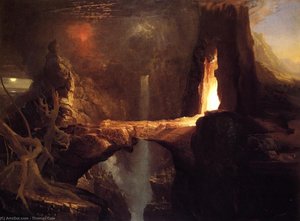 Εξορία. Φεγγαρόφωτο και Πυρ1828
 Προβολή της Φλωρεντίας από το Σαν Μινιάτο1837

Μελέτες γύρω από το Prometheus Bound
 Masterpieces of Light: The Top 25 Artworks by Duccio di BuoninsegnaJourney through the Sienese brilliance of Duccio di Buoninsegna. Explore 25 iconic masterpieces, from the Rucellai Madonna to the Maestà, f…
 Nature's Nation: The Hudson River School and the Art of the American SublimeExplore the spiritual depth of the Hudson River School through its masters. Discover the power of the American Sublime today.
 Οι 10 Κορυφαίοι Δάσκαλοι της Αναγέννησης: Έργα που Άλλαξαν την Ιστορία της Τέχνης | OriginalUniqueArt.grΑνακαλύψτε τα 10 αριστουργήματα της Υψηλής Αναγέννησης! Μιχαήλ Άγγελος, Λεονάρντο ντα Βίντσι & άλλοι. Ιστορίες τέχνης, τεχνικές και έμπνευσ…