
() ·
Ένα έργο ζωγραφικής φτιαγμένο για εσάς, με το χέρι
Χειροποίητη Αναπαραγωγή σε Έλαιο
Χειροποίητη ελαιογραφία σε καμβά στο δικό σας μέγεθος και πλαίσιο, κατά παραγγελία από τους καλλιτέχνες μας. ( Μετάβαση σε Εκτυπώσεις Μετάβαση σε Ψηφιακή Αποτέλεσμα)
Βιογραφικό Καλλιτέχνη
T. Alexander Harrison (1853-1930) was a prominent American marine painter known for his luminous naturalism & impressionistic seascapes. Influenced Proust & captured poetic light on the Brittany coast. Discover his award-winning works like 'The Wave'
 Περισσότερα
από ·
Κεφάλαιο 1
Ποιο μέγεθος θα έπρεπε να έχει;
Ανακινήστε το ρυθμιστικό για να αλλάξετε το μέγεθος· η εικόνα στα αριστερά δείχνει το κάδρο στο πραγματικό του πλάτος. Οι αναλογίες του πρωτοτύπου διατηρούνται.
Επιλέξτε από τις προκαθορισμένες διαστάσεις μας που διατηρούν τις αρχικές αναλογίες του έργου τέχνης.

Πληκτρολογήστε το πλάτος και το ύψος που επιθυμείτε, ώστε να ταιριάζουν στο κάδሮ ή στον τοίχο σας. Ε เนื่องจาก πρόκειται για χειροποίητη ζωγραφική, σε περίπτωση διαστάσεων με διαφορετικό σχήμα, ο καλλιτέχνης μπορεί να ζωγραφίσει λίγο παραπάνω γύρω από το έργο ή να αφαιρέσει ένα μέρος — η επιλογή είναι δική σας. Σας στέλνουμε ένα ψηφιακό mockup για έγκριση πριν ξεκινήσει η δημιουργία του έργου. Η εικόνα που εμφανίζεται σε αυτή τη σελίδα δεν δείχνει το τελικό αποτέλεσμα — μόνο το mockup το αναδεικνύει.
Κεφάλαιο 2
Πώς θα πρέπει να παραδοθεί;
Επιλέξτε τις πλευρές του τεντωμένου καμβά
Επιλέξτε το πλαίσιο σας

Λευκό €1

Αντιστροφή με θολό φινίρισμα €1

Εκτεταμένη περιφέρεια €1

P118B €10

P118H €10

P118W €10

P438Z €10

P508JH €12

P508YH €12

P805H €10

P805Z €10

P919BZ €10

P919G €10

P919XJ €10

P959ZH €10

P968JZ €12

W106C €8

W218G €10

W218JH €8

W218Y €10

W307PJ €10

W316G €10

W316PJ €8

W316Y €10

W398PJ €8

W4111J €10

W500HY €15

W500JH €15

W692G €12

W849H €8

W940BG €15

W953PJ €8

H24-GOLD €30

H24-SILVER €30

H36-GOLD €45

H36-SILVER €45
Με πλαίσιο
Πλαισίωμα: . Συνολικές διαστάσεις με το πλαίσιο: .
Κεφάλο 3
Ποιος το ζωγραφίζει και πρέπει να αλλάξει κάτι;
Μετά την παραγγελία, η ομάδα του OriginalUniqueArt.com θα στείλει email στον πελάτη για οδηγίες και θα παρέχει μια προεπισκόπηση (mockup)
Παγκόσμια Αποστολή () σε 3-4 εβδομάδες αντί για τις συνήθεις 5 εβδομάδες. (13 Νοέμβριος). Χωρίς συμβιβασμούς στην ποιότητα.
Κεφάλαιο 4
Οι τελευταίες πινελιές
Μια πινακίδα με πληροφορίες, όπως σε ένα μουσείο;
Λεπτομέρειες Χάραξης σε Πλακέτα Χαλκού
This elegant plaque features the artist's name and the title of the artwork, finely engraved for a timeless presentation.
It is made from bronze with a refined, elegant finish. The text is precisely laser-engraved for a sharp and permanent result. Measuring 9x2 cm, the plaque is compact yet easy to read. It's built to be durable and scratch-resistant, offering a professional, museum-quality look. Mounting is simple thanks to the included adhesive backing.
Λεπτομέρειες Διαφανούς Ακρυλικής Πλακίδας
The plaque includes essential engraved details such as the artist's name, the title of the artwork, the date it was created, the type of media used-like oil on canvas or watercolor-a brief description of the piece, and a QR code that links to the complete artwork information.
It is crafted from clear acrylic, offering a sleek, modern appearance. The text is UV-engraved in black to ensure strong visual contrast. With a size of 10x15 cm, it ensures optimal readability. It comes equipped with two metal hooks for secure wall mounting. The plaque is designed to be weather-resistant, making it suitable for various environments, and it includes interactive features that work seamlessly with smartphone scanning.
Λεπτομέρειες Πλακίδας Ακρυλικού Μαύρου Χρώματος
This elegant plaque includes engraved information such as the artist's name, the title of the artwork, the date it was created, the type of media used (like oil on canvas or watercolor), a short description of the artwork, and a QR code for quick access to more information.
The plaque itself is made from refined black acrylic with a premium finish. The text is laser-engraved in white for high contrast and readability. Its size is 10x15 cm, designed to be easy to read. It comes with two metal hooks for professional mounting. The design is sleek and fits any interior style. It is also weather-resistant and durable, with built-in digital integration for mobile compatibility.
Προστατευτικό βερνίκι;
Πότε θα το χρειαστείτε;
Κεφάλαιο 5
Το έργο σας, ακριβώς όπως το παραγγείλατε

In Arcadia
Μέσο Αναπαραγωγής
Διαστάσεις Αναπαραγωγής
-

Κορυφαίος Καλλιτέχνης
Περισσότερη λεπτομέρεια, φινέτσα και επιπλέον χρόνος παραγωγής
-

Πλαίσιο Αναπαραγωγής
-
-
Για έργα τέχνης ή αναπαραγωγές με πλευρά υπερβαίνουσα των 105 εκ. (περίπου 41 ίντσες), το πλαίσιο θα αποσταλεί αποσυναρμολογημένο, σε μορφή κιτ. Η μέθοδος αυτή διασφαλίζει την ασφαλή παράδοση και προλαμβάνει τυχόν ζημιές κατά τη μεταφορά.
Απαιτείται επαγγελματικός συναρμολογητής - δεν πρόκειται για προϊόν αυτοσυναρμολογίας (DIY).
Το κιτ πρέπει να συναρμολογηθεί και ο καμβάς να τεντωθεί από έμπειρο επαγγελματία πλαίσιο (framer), με τη χρήση κόλλας ξύλου (δεν περιλαμβάνεται), πένσας για ένταση καμβά και σφιγκτήρων, ώστε να διατηρηθεί η ορθογωνιότητα των δοκών κατά τη διάρκεια της ξędρανσης. Η λανθασμένη συναρμολόγηση ή η ανισόρροπη ένταση του καμβά μπορεί να προκαλέσει μόνιμη ζημιά στο έργο και δεν καλύπτεται από την εγγύησή μας.
 Για έργα τέχνης ή αναπαραγωγές με πλευρά υπερβαίνουσα των 105 εκ. (περίπου 41 ίντσες), το πλαίσιο θα αποσταλεί αποσυναρμολογημένο, σε μορφή κιτ. Η μέθοδος αυτή διασφαλίζει την ασφαλή παράδοση και προλαμβάνει τυχόν ζημιές κατά τη μεταφορά.
Περιλαμβάνονται όλες οι μπάρες από μασίφ ξύλο, κομμένες με ακρίβεια στις διαστάσεις τους.
Συναρμολογείται με τις παρεχόμενες βίδες, καθώς και με κόλλα ξύλου για τις γωνιακές ενώσεις, η οποία δεν περιλαμβάνεται και θα πρέπει να προμηθευτεί από τον τεχνίτη σας.
Απαιτούνται επαγγελματικά εργαλεία που δεν περιλαμβάνονται: μια πένσα για σφίξιμο καμβά (τενωτήρας) και σφιγκτήρες για τη διατήρηση της ορθογωνιότητας των καρέ κατά τη διάρκεια της απορρόφησης της κόλλας.
Σημαντικό:
Οι γωνιακές ενώσεις απαιτούν κόλλα ξύλου, οι σπορ πρέπει να συγκρατούνται με σφιγκτήρες μέχρι να στεγνώσει πλήρως η κόλλα, και για την ένταση του καμβά στο συναρμολογημένο πλαίσιο απαιτείται μια πένσα για ένταση καμβά. Κανένα από αυτά δεν περιλαμβάνεται στο σετ. Παρακαλούμε συμβουλευτείτε έναν έμπειρο επαγγελματία κάδραρχο πριν παραγγείλετε αυτό το μέγεθος.

Πληροφορίες έργου
-
-

Βερνίκι Προστασίας
Γυαλιστερό Βερνίκι (ενισχύει τα χρώματα, προστατεύει από το φως και την υγρασία)
-

Προσαρμογή του έργου μου
Παραδείγματα αλλαγών που είναι δυνατές: Αντικατάσταση προσώπου με φωτογραφία του πελάτη· Προσθήκη κατοικίδιου (π.χ., αντικατάσταση γάτας με σκύλο)· Ενσωμάτωση κρυφού μηνύματος στο φόντο· Αλλαγή τοπίου ή στοιχείων στο φόντο.
-

Επείγουσα παραγγελία
Παγκόσμια Αποστολή () σε 3-4 εβδομάδες αντί για τις συνήθεις 5 εβδομάδες. (13 Νοέμβριος). Χωρίς συμβιβασμούς στην ποιότητα.
-
Αποστολή Express
Παγκόσμια Αποστολή () σε 5 εβδομάδες. (20 Νοέμβριος).
Συμπεριλαμβάνεται
Τελική Τιμή
€ 268
Η επιλογή με γυαλί είναι διαθέσιμη μόνο για μεγέθη κάτω από 110 εκ.
Συμπεριλαμβάνεται σε κάθε παραγγελία
- Δωρεάν γρήγορη διεθνής αποστολή
- Κάμβας από Λινό Υψηλής Ποιότητας
- Πλήρης ασφάλιση μεταφοράς
- Εγγύηση επιστροφής δασμών και φόρων εισαγωγής
- Εγγύηση Απόλυτης Ομοιότητας Χρωμάτων
- Πολιτική Επιστροφής 100 Ημερών (Μόνο σε περίπτωση ελαττωμάτων)
- Εγγύηση επιστροφής 100% των χρημάτων
- Προσφορά για πολλαπλές παραγγελίες


 Προεπισκόπηση σε πραγματική κλίμακα
 Αποστολή
 Κοινοποίηση
 Λεπτομέρειες
 Οδηγός

 Λήψη
Λήψη
 Παρόμοια αντικείμενα συλλογής
 Ακτινογραφία
 Παρουσίαση
 Ερωτήσεις & Απαντήσεις
 Στατιστικά
Με αριθμούς
- 1886το έτος δημιουργίας
- 29επιλογές καρέ
- τυπικές διαστάσεις, στις δικές τους αναλογίες
- 5εβδομάδες για τη δημιουργία και την παράδοση του
Σχετικά με το πρωτότυπο

- 197.0 x 290.0 cm


Thomas Alexander Harrison
1853 - 1930, United States
Γρήγορα στοιχεία για τον/την Thomas Alexander Harrison
- Full Name: Vincent Willem van Gogh
- Nationality: Dutch
- Date Of Birth: 1853
- Date Of Death: 1930
- Place Of Birth: Philadelphia, United States of America
- Notable Artworks:
- Sunflowers
- Bedroom in Arles
- Starry Night
- Wheatfield with Crows
- Artistic Movement Or Style: Post-Impressionism
- Artists Who Influenced This Artist:
- Jean-François Millet
- Charles Bargue
- Artists Or Movements Influenced By This Artist:
- Fauves
- Expressionism
Βιογραφικό Καλλιτέχνη
Early Life and Artistic Foundations
Thomas Alexander Harrison, born in Philadelphia in 1853, emerged as a significant figure in the landscape and marine painting traditions of his time. While details surrounding his early childhood remain somewhat elusive, it is known that he received initial artistic training at the prestigious Pennsylvania Academy of Fine Arts. However, his path wasn’t immediately dedicated to pure artistry; for nearly six years, Harrison worked as a draftsman for a United States government survey expedition meticulously mapping the Pacific coast. This experience, from 1872-1877, proved formative, instilling in him a deep appreciation for the vastness of nature and an analytical eye honed by precise observation—qualities that would later define his artistic style.
In 1879, Harrison embarked on a pivotal journey to Paris, a decision that irrevocably shaped his career. He enrolled at the École nationale supérieure des Beaux-Arts, studying under the renowned academic painter Jean-Léon Gérôme and briefly with Jules Bastien-Lepage. While benefiting from their instruction, Harrison soon found himself chafing against the constraints of traditional academic methods. This dissatisfaction led him to seek inspiration elsewhere, specifically in the coastal regions of Brittany, France.
Brittany and the Luminosity of Impressionism
The rugged coastline of Brittany became Harrison’s artistic sanctuary. In towns like Pont-Aven and Concarneau, he immersed himself in capturing the poetic light and ever-changing moods of the sea. It was here that his signature style began to blossom—a luminous naturalism infused with impressionistic sensibilities. Unlike many of his contemporaries who rigidly adhered to academic conventions, Harrison embraced a more fluid approach, prioritizing the direct observation of nature and the evocative power of color and atmosphere.
His early success at the Paris Salon in 1882 with *Châteaux en Espagne* (Castles in Spain), depicting a daydreaming boy on the beach, signaled his growing recognition. However, it was his large canvas *En Arcadie*, exhibited in 1885, that truly established his reputation. This work, a remarkable study of flesh tones and light, resonated with younger artists and demonstrated Harrison’s mastery of plein-air painting—painting outdoors directly from nature.
Influences and Artistic Development
Harrison's artistic development was influenced by several key factors. His brother, Birge Harrison, also a successful artist, provided both companionship and encouragement. The French Impressionists, with their focus on capturing fleeting moments of light and color, undoubtedly played a role in shaping his aesthetic vision. However, Harrison’s work distinguishes itself through its unique blend of analytical precision—a legacy of his surveying experience—and emotional sensitivity.
He became an integral part of the artist colony at Concarneau, where he shared ideas and techniques with fellow painters like Cecilia Beaux. Her observations suggest that Harrison's engineering background contributed to his methodical approach to painting, allowing him to dissect and reconstruct natural forms with remarkable accuracy. This analytical foundation, combined with his passion for capturing atmospheric effects, resulted in seascapes of exceptional depth and luminosity.
Major Achievements and Recognition
Throughout his career, Harrison consistently garnered critical acclaim and numerous awards for his paintings. His serial depictions of gently breaking waves, such as *The Wave* (circa 1885), became iconic representations of the Breton coastline. This particular work, now held in the collection of the Pennsylvania Academy of the Fine Arts, exemplifies his ability to convey both the power and serenity of the ocean.
Harrison’s paintings were not merely technical exercises; they were imbued with a sense of poetic emotion. He sought to capture the essence of nature—its light, its movement, and its inherent beauty. His work resonated with audiences who appreciated his ability to evoke a feeling of tranquility and wonder. The influence of his art extended beyond the canvas, even capturing the attention of literary figures like Marcel Proust, whose writings suggest an appreciation for Harrison’s evocative depictions of coastal scenes.
Historical Significance and Legacy
Thomas Alexander Harrison occupies a unique position in American art history as a bridge between traditional academic painting and the emerging Impressionist movement. He successfully synthesized these seemingly disparate styles, creating a body of work that is both technically masterful and emotionally resonant. His dedication to plein-air painting helped to popularize this technique among American artists, paving the way for future generations of landscape painters.
Although he spent most of his career in France, Harrison remained deeply connected to his American roots. He exhibited his work widely in both Europe and the United States, contributing significantly to the cross-cultural exchange of artistic ideas. Today, his paintings are held in prominent museum collections around the world, serving as a testament to his enduring legacy as a luminous interpreter of nature’s beauty.
Σχετικά άρθρα

The Arcadian Ideal: Tracing the History and Mythic Roots of Pastoral Landscape Painting
Trace the mythic evolution of pastoral landscapes from Arcadia to Romanticism. Explore this masterclass in art history now.
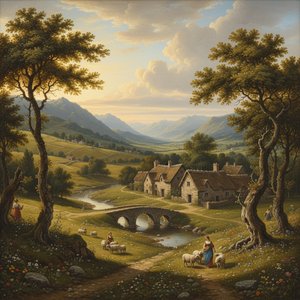
Evoking Arcadia: A Historical & Aesthetic Exploration of Rural Landscape Art
Explore the rich history of pastoral landscape art, from classical Arcadia to Impressionism & beyond. Discover key artists, movements, and how to collect serene rural scenes for your home. Expert insights at OriginalUniqueArt.
Ακαδημαϊκός Ρεαλισμός: 10 Αριστουργήματα που Άλλαξαν την Τέχνη | OriginalUniqueArt.gr
Ανακαλύψτε τα 10 αριστουργήματα του Ακαδημαϊκού Ρεαλισμού! Bouguereau, David & άλλοι μεγάλοι ζωγράφοι. Ιστορίες τέχνης, τεχνικές και έμπνευση για διακόσμηση σπιτιού. Βρείτε πίνακες υψηλής ποιότητας στο OriginalUniqueArt.com

The Arcadian Ideal: Exploring the Enduring Allure of Pastoral Landscape Art
Explore the history of pastoral art from Patinir to Constable. Discover the enduring allure of the Arcadian ideal today.