
 Προεπισκόπηση
 Αποστολή
 Κοινοποίηση
 Λεπτομέρειες
 Οδηγός

 Λήψη
Λήψη
 Παρόμοια αντικείμενα συλλογής
 Ακτινογραφία
 Παρουσίαση
 Στατιστικά
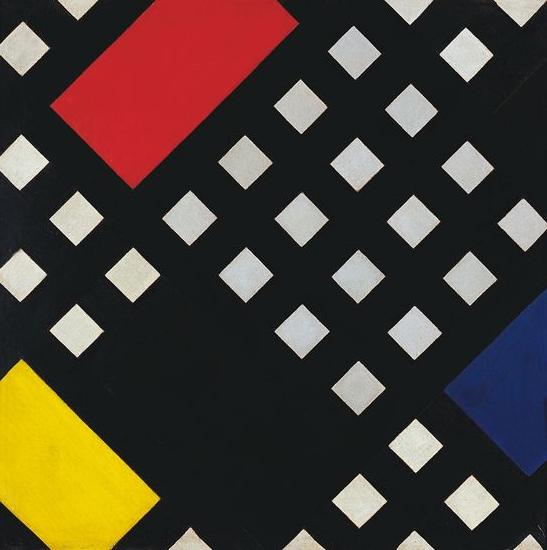
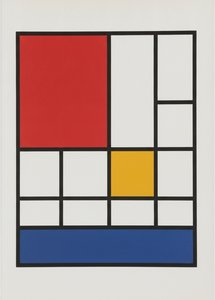
Counter composition XV


 Περισσότερα λεπτομέρεια
Giclée / Εκτυπώσεις Τέχνης
Εκτύπωση giclée ή σε καμβά ποιότητας μουσείου με γρήγορη παραγωγή και ευέλικτες επιλογές φινιρίσματος. ( Αγορά χειροποίητου πίνακα Μετάβαση σε Ψηφιακή Εικόνα)




P118B €10

P118H €10

P118W €10

P438Z €10

P508JH €12

P508YH €12

P805H €10

P805Z €10

P919BZ €10

P919G €10

P919XJ €10

P959ZH €10

P968JZ €12

W106C €8

W218G €10

W218JH €8

W218Y €10

W307PJ €10

W316G €10

W316PJ €8

W316Y €10

W398PJ €8

W4111J €10

W500HY €15

W500JH €15

W692G €12

W849H €8

W940BG €15

W953PJ €8




Επιλέξτε από τις προκαθορισμένες διαστάσεις μας που διατηρούν τις αρχικές αναλογίες του έργου τέχνης.

Πληκτρολογήστε το πλάτος και το ύψος που επιθυμείτε, ώστε να ταιριάζουν στο κάδሮ ή στον τοίχο σας. Μια εκτύπωση μπορεί μόνο να κοπεί και ποτέ να μην γίνει μεγαλύτερη από την εικόνα, επομένως ένα μέγεθος με διαφορετικό σχήμα συνεπάγεται απώλεια ενός μέρους της εικόνας. Σας στέλνουμε ένα ψηφιακό mockup για έγκριση πριν εκτυπώσουμε οτιδήποτε. Η εικόνα που εμφανίζεται σε αυτή τη σελίδα δεν δείχνει την πραγματική κοπή — μόνο το mockup την παρουσιάζει.
Παγκόσμια Αποστολή () σε 2 εβδομάδες αντί για τις συνήθεις 4/5 εβδομάδες. (21 Οκτώβριος)

Δωρεάν γρήγορη διεθνής αποστολή

Κάμβας από Λινό Υψηλής Ποιότητας

Πλήρης ασφάλιση μεταφοράς

Εγγύηση επιστροφής δασμών και φόρων εισαγωγής

Εγγύηση Απόλυτης Ομοιότητας Χρωμάτων

Πολιτική Επιστροφής 100 Ημερών (Μόνο σε περίπτωση ελαττωμάτων)

Εγγύηση επιστροφής 100% των χρημάτων

Έκπτωση για πολλαπλές παραγγελίες
 Η επιλογή με γυαλί είναι διαθέσιμη μόνο για μεγέθη κάτω από 110 εκ.

Counter composition XV
Giclée / Εκτυπώσεις Τέχνης
Διαστάσεις Αναπαραγωγής
-


Συνολικό Κόστος
€ 70
The Geometry of Harmony: Unveiling Theo van Doesburg’s Counter Composition XV
Theo van Doesburg's "Counter Composition XV," painted in 1925, isn’t merely a painting; it’s a distilled essence of the De Stijl movement – a radical declaration of order and universal harmony. This deceptively simple work, executed against a stark white canvas, pulsates with an underlying tension born from the careful orchestration of geometric forms and primary colors. It represents a pivotal moment in 20th-century art, moving beyond representational imagery to explore the very foundations of visual language itself. The piece immediately commands attention not through elaborate detail or narrative, but through its profound sense of balance and its unwavering commitment to abstraction.
At first glance, the composition appears austere – a red rectangle dominating the upper left quadrant, juxtaposed with a blue counterpart in the lower right. However, this initial impression quickly gives way to an appreciation for the intricate grid that underpins the entire work. A network of black and white squares, meticulously arranged, creates a dynamic interplay of movement and stillness, suggesting both order and potential disruption. This isn’t haphazard placement; it's a deliberate choreography designed to evoke a feeling of controlled dynamism – a visual embodiment of De Stijl’s core philosophy.
Deconstructing the Language of Abstraction
The brilliance of "Counter Composition XV" lies in its reduction. Van Doesburg stripped away all extraneous elements, leaving only the fundamental building blocks of form and color: red, yellow, blue, black, and white. This limited palette wasn’t chosen arbitrarily; each hue was selected for its inherent purity and intensity, intended to be experienced without distraction. The application is equally crucial – flat, unmodulated areas devoid of shading or blending. This technique emphasizes the geometric shapes themselves, highlighting their sharp edges and creating a sense of crystalline clarity. It's a testament to the artist’s belief that beauty could be found in simplicity and precision.
The absence of perspective is equally significant. Van Doesburg deliberately rejects traditional spatial representation, opting instead for a two-dimensional plane where shapes are presented as independent entities. Overlapping elements and variations in size subtly suggest depth, but the overall effect is one of flattened planes interacting within a carefully constructed framework. This approach reflects De Stijl’s rejection of illusionism and its embrace of a purely conceptual understanding of space.
Symbolism and the Pursuit of Universal Harmony
Beyond its formal qualities, "Counter Composition XV" carries profound symbolic weight. The geometric forms – rectangles, squares, lines – are not merely decorative; they represent fundamental principles of order, balance, and harmony. The primary colors, stripped of their associations with natural phenomena, become pure expressions of energy and vibration. Van Doesburg believed that through the rigorous application of these abstract elements, artists could create a visual language capable of transcending individual expression and communicating universal truths. The piece is an attempt to build a new aesthetic based on mathematical ratios and geometric relationships – a blueprint for a harmonious world reflected in art.
Theo van Doesburg’s “Counter Composition XV” stands as a powerful testament to the transformative potential of abstraction. It's more than just a painting; it’s an invitation to contemplate the underlying order of the universe and the possibility of creating beauty through pure geometric form. Its stark simplicity, combined with its profound symbolic depth, continues to resonate with viewers today, cementing its place as a cornerstone of modern art.
Ερωτήσεις & Απαντήσεις
Ποια είναι η συνολική ατμόσφαιρα του "Counter composition XV" του Θεό Βαν Ντοσμπέργκ;
Η συνολική ατμόσφαιρα του έργου "Counter composition XV" του Θεό Βαν Ντοσμπέργκ είναι Modern. Η διάθεση αυτή περιγράφει το γενικό κλίμα του έργου.
Πού μπορώ να βρω έναν οδηγό για το "Counter composition XV";
Η σελίδα Οδηγός για το έργο "Counter composition XV" του Θεό Βαν Ντοσμπέργκ προσφέρει ένα εκτυπώσιμο ενημερωτικό φυλλάδιο δύο σελίδων: το έργο τέχνης με τον πίνακα ταυτότητάς του, μια χρονική ζώντα δεκαετίας που το τοποθετεί μέσα στη διάρκεια της ζωής του καλλιτέχνη, άλλα έργα του ίδιου δημιουργού, τη μετρημένη παλέτα χρωμάτων και αναφορές έτοιμες για αντιγραφή σε τέσσερα στυλ.
Ποια χρήση και ποιος χώρος προτείνονται για το "Counter composition XV" του Θεό Βαν Ντοσμπέργκ;
Η χρήση (Statement) και ο χώρος (Living Room) είναι οι δύο προτάσεις που καταγράφονται για το "Counter composition XV" του Θεό Βαν Ντοσμπέργκ.
Βιογραφικό Καλλιτέχνη
The Architect of Abstraction: A Life in Geometric Harmony
Theo van Doesburg, born Christian Emil Marie Küpper on August 30, 1883, in Utrecht, Netherlands, wasn’t merely a painter; he was a revolutionary force who fundamentally reshaped the landscape of modern art. His journey began amidst the lingering echoes of Impressionism and Post-Impressionism, initially mirroring styles reminiscent of Vincent van Gogh – both in their emotional intensity and the way they captured fleeting moments of light and color. However, this early phase served as a crucial prelude, a necessary stepping stone towards the radical transformation that would define his enduring legacy. A pivotal moment arrived in 1913 with his encounter with Wassily Kandinsky’s *Rückblicke*. This text ignited within van Doesburg a profound realization: true artistic expression wasn't about faithfully replicating the external world, but rather channeling an inner, spiritual reality through the pure language of abstraction. It was this conviction that birthed Neoplasticism – more commonly known as De Stijl – a movement he founded and fiercely championed, becoming its most ardent advocate.Forging a New Visual Language: The Principles of De Stijl
De Stijl wasn’t simply an artistic style; it was a comprehensive philosophical manifesto translated into visual form. Van Doesburg believed in stripping art down to its most essential elements – straight lines, right angles, and the primary colors of red, yellow, and blue, alongside black, white, and gray. This austere palette wasn't born from limitation but from a desire for universality—a belief that these fundamental forms resonated with an underlying cosmic order. He envisioned a *total* work of art, extending beyond the canvas to encompass architecture, design, and even everyday objects. Collaboration was key; van Doesburg worked closely with architects like J.J.P. Oud and Gerrit Rietveld, designing stained glass windows, furniture, and entire interiors that embodied the principles of De Stijl. His collaborations extended to fellow artists such as Piet Mondrian, with whom he co-founded the influential journal *De Stijl*, a platform for disseminating their ideas and attracting like-minded creatives. However, despite their shared origins, tensions arose between van Doesburg and Mondrian regarding the rigidity of Neoplasticism. Van Doesburg introduced “Elementarism” in 1926, advocating for diagonal lines and more dynamic compositions – a departure that ultimately led to a schism within the movement, revealing his restless spirit and constant pursuit of artistic evolution. The core tenet of De Stijl was the belief that art should be independent of nature, existing instead as an autonomous system governed by mathematical principles and geometric harmony.Beyond Painting: A Multifaceted Artistic Vision
While celebrated as a painter, Theo van Doesburg’s artistic pursuits were remarkably diverse. He wasn't content to remain solely within the realm of visual arts; he was a prolific writer, poet, and critic, using his pen to articulate the theoretical underpinnings of De Stijl and challenge conventional notions of art. His engagement with Dadaism in the early 1920s further broadened his artistic horizons, leading to experimental works that incorporated collage and typography. This period also saw him teaching at the Bauhaus, where he shared his ideas with a new generation of artists and designers, fostering dialogue about the future of design and architecture. He wasn’t simply lecturing; he was actively participating in the school's innovative environment, experimenting with materials and techniques alongside his students. His designs for interiors and furniture weren't merely aesthetic exercises but attempts to create harmonious living spaces that reflected the principles of De Stijl – a holistic approach to artistic creation aimed at shaping not just objects, but entire environments. A prime example is his collaboration on designing artist residences, showcasing a vision of integrated art and architecture.Key Works & Lasting Influence
- Study for Simultaneous Compositions XXII (1922): This iconic work exemplifies Neoplasticism’s signature geometric forms and limited color palette – a testament to the movement's core principles.
- Composition with half values (1928): Demonstrates van Doesburg’s exploration of tonal variations within the De Stijl aesthetic, showcasing his subtle manipulation of light and shadow.
- Dancers (1917-1918): Represents a transitional phase in his work, blending figurative elements with emerging abstract tendencies – a glimpse into his evolving artistic language.
- Collaboration on *De Stijl* journal: The journal served as a crucial platform for disseminating the movement’s ideas and fostering dialogue among artists and intellectuals, solidifying De Stijl's influence.
- Elementarism (1926): Van Doesburg’s attempt to inject dynamism into Neoplasticism, introducing diagonal lines and a more fluid approach to composition – a bold departure that ultimately led to the movement’s fragmentation.
A Tragic End & A Lasting Legacy
Theo van Doesburg’s life was tragically cut short on March 7, 1931, at the age of 47, in Davos, Switzerland. The circumstances surrounding his death remain somewhat shrouded in mystery, adding a layer of melancholy to his already complex legacy. Despite this untimely end, his impact on modern art is undeniable. De Stijl, though relatively short-lived as a cohesive movement, exerted an enormous influence on subsequent artistic developments, including Bauhaus design, Minimalism, and Constructivism. His work continues to inspire architects, designers, and artists worldwide, reminding us of the power of abstraction and the enduring quest for universal harmony in art and life. His vision of a world shaped by geometric principles remains a potent symbol of modernism’s ambition—a testament to one man's unwavering belief in the transformative potential of pure form.
Θεό Βαν Ντοσμπέργκ
1883 - 1931 , Ολλανδία
Στοιχεία καλλιτέχνη
- Artistic Movement Or Style: De Stijl, Νεοπλαστικισμός
- Artists Or Movements Influenced By This Artist:
- Μπάουχάους
- Μινιμαλισμός
- Εστρετισμός
- Artists Who Influenced This Artist:
- Βαν Γκώγκ
- Κάνινταϊν
- Date Of Birth: 30 Αυγ 1883
- Date Of Death: 7 Μαρ 1931
- Full Name: Θεό Βαν Ντούσμπουργκ
- Nationality: Ολλανδός
- Notable Artworks:
- Μελέτη για Συγχρονικές...
- Σύνθεση με ημιαξόνες
- Χορεύτριες
- Place Of Birth: Βιτερκού, Ολλανδία
Σχετικά άρθρα

Οι Κορυφαίοι 25 Πίνακες του Goya: Έμπνευση για Διακόσμηση & Τέχνη
Ανακαλύψτε τους 25 κορυφαίους πίνακες του Goya! Εξερευνήστε την Ισπανική ζωγραφική, τον Ρομαντισμό και τις Μαύρες Ζωγραφίες. Βρείτε έμπνευση για διακόσμηση & υψηλής ποιότητας αναπαραγωγές τέχνης στο OriginalUniqueArt.com.
De Stijl Unlocked: The Bold Geometry of Modern Design & Pop Impact
Unlock the power of De Stijl. Explore how the bold geometry and primary colors of Mondrian and Van Doesburg revolutionized modern design, from fine art to pop culture impact. Discover how to bring this high-impact, minimalist aesthetic into your contemporary space.
Theo van Doesburg: Pioneering De Stijl & the Evolution of Neo-Plasticism
Explore the revolutionary De Stijl movement & Neo-Plasticism with our expert guide. Discover Piet Mondrian, Theo van Doesburg, and the lasting impact of this influential art style. Learn about collecting & investing in De Stijl masterpieces.
De Stijl: Mastering the Art of Pure Abstraction and Geometric Harmony for the Modern Collector
Explore the profound elegance of De Stijl. Discover how Piet Mondrian and the masters of Neoplasticism utilized geometric harmony and primary colors to redefine modern abstraction. An authoritative guide for the discerning collector seeking timeless, structured beauty.
Pure Harmony: Discover the Bold Geometry and Spiritual Order of De Stijl Art
Explore the profound beauty of De Stijl art. Discover how masters like Piet Mondrian used bold geometry and primary colors to seek universal harmony through Neoplasticism. A deep dive into the spiritual order behind the world's most iconic abstract movements.
