

 Προεπισκόπηση
 Αποστολή
 Κοινοποίηση
 Λεπτομέρειες
 Οδηγός

 Λήψη
Λήψη
 Παρόμοια αντικείμενα συλλογής
 Ακτινογραφία
 Παρουσίαση
 Στατιστικά
Iris (Iris species)
 Acrylic On Canvas
- WallArt
- Post-Impressionism
 1939
1939- 19th Century
 25.0 x 17.0 cm
 Smithsonian American Art Museum
 Περισσότερα λεπτομέρεια
Χειροποίητη Αναπαραγωγή σε Έλαιο
Χειροποίητη ελαιογραφία σε καμβά στο δικό σας μέγεθος και πλαίσιο, κατά παραγγελία από τους καλλιτέχνες μας. ( Μετάβαση σε Εκτυπώσεις Μετάβαση σε Ψηφιακή Εικόνα)




P118B $10

P118H $10

P118W $10

P438Z $10

P508JH $12

P508YH $12

P805H $10

P805Z $10

P919BZ $10

P919G $10

P919XJ $10

P959ZH $10

P968JZ $12

W106C $8

W218G $10

W218JH $8

W218Y $10

W307PJ $10

W316G $10

W316PJ $8

W316Y $10

W398PJ $8

W4111J $10

W500HY $15

W500JH $15

W692G $12

W849H $8

W940BG $15

W953PJ $8




Επιλέξτε από τις προκαθορισμένες διαστάσεις μας που διατηρούν τις αρχικές αναλογίες του έργου τέχνης.

Μπορείτε να ορίσετε δικές σας διαστάσεις ώστε το έργο να ταιριάζει σε ένα συγκεκριμένο πλαίσιο ή χώρο. Εάν το επιλεγμένο μέγεθος δεν συμπίπτει με τις αναλογίες της αρχικής εικόνας, θα περικοψούμε το έργο ή θα επεκτείνουμε τη ζωγραφιά με πρόσθετα χειρόγραφα στοιχεία. Ένα ψηφιακό προσχέδιο θα σας αποσταλεί για έγκριση πριν την έναρξη της παραγωγής.
Παρακαλούμε σημειώστε ότι η προεπισκόπηση στην οθόνη δεν αντικατοπτρίζει την πραγματική περικοπή ή επέκταση. Μόνο το προσχέδιο θα δείξει με ακρίβεια την τελική σύνθεση.
Παρόλο που είναι διαθέσιμα προσαρμοσμένα μεγέθη, συνιστούμε να επιλέξετε μια διάσταση από τη λίστα των προκαθορισμένων μεγεθών για τη διατήρηση των αρχικών αναλογιών.
Μετά την παραγγελία, η ομάδα του OriginalUniqueArt.com θα στείλει email στον πελάτη με οδηγίες και θα παρέχει μια προεπισκόπηση προσχεδίου
Παγκόσμια Αποστολή () σε 3-4 εβδομάδες αντί για τις συνήθεις 5 εβδομάδες. (26 Σεπτέμβριος). Χωρίς συμβιβασμούς στην ποιότητα.

Δωρεάν γρήγορη διεθνής αποστολή

Κάμβας από Λινό Υψηλής Ποιότητας

Πλήρης ασφάλιση μεταφοράς

Εγγύηση επιστροφής δασμών και φόρων εισαγωγής

Εγγύηση Απόλυτης Ομοιότητας Χρωμάτων

Πολιτική Επιστροφής 100 Ημερών (Μόνο σε περίπτωση ελαττωμάτων)

Εγγύηση επιστροφής 100% των χρημάτων

Έκπτωση για πολλαπλές παραγγελίες
 Η επιλογή με γυαλί είναι διαθέσιμη μόνο για μεγέθη κάτω από 110 εκ.

Iris (Iris species)
Τεχνική Αναπαραγωγής
Διαστάσεις Αναπαραγωγής
-


Συνολικό Κόστος
$ 300
A Study in Ephemeral Beauty: Iris by Mary Vaux Walcott
To gaze upon Mary Vaux Walcott's depiction of Iris is to step directly into a sun-dappled moment of quiet natural splendor. This painting, executed in 1939, captures three magnificent purple irises standing proudly amidst a sea of lush, verdant grass. The composition itself is deceptively simple: the flowers are arranged with careful balance—one anchoring the left quadrant, another drawing the eye to the center, and the third completing the harmony on the right. It is a scene that speaks not only of botanical perfection but also of enduring grace.
The Artistry of Observation and Watercolor Mastery
Walcott’s technique here is a testament to her profound skill as a watercolorist. While the subject matter—the vibrant purple blooms against the deep greens—is immediately arresting, it is the delicate handling of light that elevates this piece beyond mere botanical illustration. The artist possesses an almost scientific eye for detail, allowing every petal fold and blade of grass to retain its individual character. Yet, this precision never sacrifices emotion. The watercolor medium itself lends a luminous quality; the colors seem to breathe from the paper, suggesting the moist air and gentle breeze that must have accompanied the painting's creation. For those considering a reproduction for your home or studio, understanding this masterful wash technique is key, as it promises an authentic echo of her original luminosity.
Symbolism and the Spirit of Nature
The iris has long held rich symbolic weight throughout art history, often representing faith, wisdom, and royalty. In Walcott's hands, these meanings are grounded in the tangible beauty of the wild. The grouping of three flowers is a classic artistic motif, suggesting completeness or perhaps a triptych of moods—a moment captured at dawn, noon, and dusk, all within one breath. Furthermore, considering Mary Vaux Walcott’s own life story—her dedication to documenting the natural world—the painting resonates with themes of resilience and enduring beauty found even in wild, untamed settings.
A Touch of Early 20th Century Sentiment
Created in 1939, this work carries the subtle weight of its time. While it celebrates nature’s timeless cycle, the context places it at a moment of profound global anticipation and change. This imbues the piece with a quiet, almost nostalgic sentimentality. It is not merely a pretty picture; it is an act of preservation—an artist staking a claim on perfect beauty before the inevitable passage of time. Owning this artwork, or a high-quality reproduction thereof, allows one to bring that sense of serene, cultivated contemplation into any interior space.
Βιογραφικό Καλλιτέχνη
A Life Blossoming in Watercolor: The World of Mary Vaux Walcott
Born into the refined world of Philadelphia’s Quaker society in 1860, Mary Morris Vaux seemed destined for a life of quiet domesticity. Yet, from an early age, a vibrant artistic spirit stirred within her, ignited by a simple gift – a set of watercolor paints at the tender age of eight. These weren't merely tools for recreation; they were keys unlocking a lifelong passion for capturing the delicate beauty of the natural world, particularly wildflowers. Little could anyone have predicted that this early inclination would blossom into a remarkable career, earning her the affectionate title “the Audubon of Botany.” Her story is not simply one of artistic talent, but also of resilience, scientific curiosity, and a pioneering spirit that defied societal expectations. The weight of familial responsibility fell upon young Mary after her mother’s death in 1880, compelling her to dedicate herself to caring for her father and two younger brothers. This devotion didn't extinguish her creative flame; rather, it fueled a deep connection with the landscapes they explored during their annual summer expeditions to the Canadian Rockies.The Allure of the Rockies: Nature as Muse and Subject
These journeys were transformative. The rugged grandeur of the Canadian Rockies became Mary’s artistic laboratory. Alongside her brothers, she didn't merely observe the landscape; she meticulously documented it – studying mineralogy, charting glacial movements through drawings and photographs, and immersing herself in the intricate details of alpine flora. This wasn’t passive observation but active engagement with the scientific underpinnings of nature. It was during these expeditions that Mary began to hone her skills as a botanical illustrator, initially at the request of botanists eager for accurate depictions of rare species. Her approach was revolutionary for its time: she rendered plants to scale, showcasing their delicate stuctures and vibrant colors with unparalleled precision. Unlike many floral paintings of the era, which often romanticized or stylized their subjects, Walcott’s work prioritized scientific accuracy alongside artistic expression. The vastness of the landscape also fostered a spirit of adventure; in 1900, she became the first woman recorded to summit Mount Stephen, a feat that underscored her physical courage and unwavering determination. Her detailed observations and stunning illustrations provided invaluable insights into the region's geology and ecology, contributing significantly to scientific understanding.A Partnership Forged in Science and Art
Mary’s life took another significant turn in 1914 when she married Charles Doolittle Walcott, then Secretary of the Smithsonian Institution and a renowned paleontologist. This union wasn’t merely a personal connection; it was a meeting of minds deeply committed to scientific exploration. They shared a passion for understanding the natural world, and their collaboration fueled both their artistic and scientific pursuits. Their marriage fostered a unique partnership where art and science intertwined seamlessly. They continued their annual expeditions to the Rockies, with Charles pursuing his geological research while Mary dedicated herself to her botanical paintings. These weren’t separate endeavors but complementary pursuits, each enriching the other. The Smithsonian Institution became a crucial platform for showcasing Mary's work, culminating in the publication of *North American Wild Flowers* in 1925 – a monumental five-volume collection featuring over 400 of her meticulously crafted illustrations. This publication cemented her reputation as a leading botanical artist and earned her the enduring moniker “the Audubon of Botany,” acknowledging the parallel between her detailed floral studies and John James Audubon’s iconic depictions of birds.The Creation of "North American Wild Flowers"
Walcott's dedication to accuracy was paramount. She meticulously measured each plant, often working at a scale of 1:2 or even 1:4, ensuring that the proportions were faithfully represented in her paintings. She didn’t simply capture the outward appearance; she sought to reveal the inner workings of each flower – its intricate veins, delicate petals, and complex reproductive structures. Her illustrations weren't merely decorative; they were scientific documents, providing valuable information for botanists and researchers. The five-volume work was a testament to her tireless efforts and meticulous attention to detail, representing years of painstaking observation and artistic skill. The proceeds from the sale of the books were donated to the Smithsonian Institution, demonstrating her commitment to sharing her knowledge with the wider scientific community.Legacy in Bloom: A Lasting Contribution
Mary Vaux Walcott's influence extends far beyond the beauty of her paintings. Her work represents a unique synthesis of artistic skill, scientific observation, and adventurous spirit. She wasn’t simply documenting flowers; she was capturing their essence, revealing their intricate structures, and celebrating their vital role in the natural world. Her illustrations continue to be valued by both art enthusiasts and botanists alike, serving as invaluable resources for identifying and studying North American flora. Beyond her artistic achievements, Walcott also demonstrated a commitment to public service, serving on the federal Board of Indian Commissioners from 1927 to 1932 and actively advocating for improved conditions on Native American reservations. Upon her death in 1940, she bequeathed a substantial sum to the Smithsonian Institution to support scientific research. A mountain peak in Jasper National Park, Mount Mary Vaux, stands as a lasting tribute to her adventurous spirit and enduring legacy. Her story serves as an inspiration, demonstrating how passion, dedication, and a deep connection with nature can blossom into a life of remarkable achievement.Key Achievements & Recognition
- Pioneering Botanical Illustration: Renowned for her scientifically accurate and artistically exquisite watercolor paintings of wildflowers.
- “The Audubon of Botany”: Affectionately known by this title, recognizing the significance of her work in botanical art.
- *North American Wild Flowers* (1925): Publication of a five-volume collection showcasing over 400 of her illustrations, solidifying her reputation.
- First Woman to Summit Mount Stephen: A testament to her adventurous spirit and physical endurance.
- Contributions to Glacial Geology: Documented glacial recession in the Canadian Rockies alongside her brothers, providing valuable data for climate change studies.
- Philanthropic Legacy: Bequeathed a substantial sum to the Smithsonian Institution to support scientific research.

Μάγδα Βώξ Ουόλκοτ
1860 - 1940 , Ηνωμένες Πολιτείες της Αμερικής
Στοιχεία καλλιτέχνη
- Artistic Movement Or Style: Βοτανική Γλυπτική
- Artists Or Movements Influenced By This Artist: ['Quakers']
- Artists Who Influenced This Artist: ['John James Audubon']
- Date Of Birth: 31 Ιουλίου 1860
- Date Of Death: 22 Αυγούστου 1940
- Full Name: Mary Vaux Walcott
- Nationality: Αμερικανή
- Notable Artworks:
- Άνθη του βουνού
- Gaillardia aristata
- Rosa bourgeauiana
- Place Of Birth: Φιλαδέλφεια, ΗΠΑ
Σχετικά άρθρα
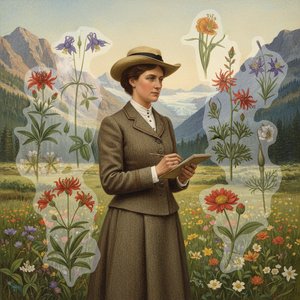
Mary Vaux Walcott: Botanical Precision & Artistic Vision in American Conservation
Discover the exquisite botanical watercolors of Mary Vaux Walcott, celebrated as the 'Audubon of Botany.' Explore her life, art, and lasting impact on American conservation through detailed illustrations & Smithsonian contributions.

Ephemeral Visions: Exploring the Artistic Legacy & Nuances of Watercolor Painting
Explore the captivating world of watercolor painting! Discover its rich history, essential techniques, influential artists & collecting tips from art experts. A comprehensive guide for enthusiasts.

Οι 10 Κορυφαίοι Θρύλοι της Υδατοχρωματικής Τέχνης που Άλλαξαν την Ιστορία | OriginalUniqueArt
Ανακαλύψτε τα 10 αριστουργήματα υδατοχρωμάτων που επαναπροσδιόρισαν την τέχνη! Ιστορίες από Turner, Monet και Cézanne. Βρείτε αναπαραγωγές υψηλής ποιότητας & έμπνευση διακόσμησης στο OriginalUniqueArt.com.

Ephemeral Visions: Exploring the Artistic Legacy & Contemporary Practice of Watercolor Painting
Explore the captivating world of watercolor painting! Discover its rich history, essential techniques, influential artists & collecting tips. A comprehensive guide for art enthusiasts from OriginalUniqueArt.

Ephemeral Visions: Exploring the History & Emotional Resonance of Watercolor Painting
Explore the captivating history of watercolor painting, from ancient techniques to modern masters like Kandinsky & Blake. Discover essential artists, collecting tips & the emotional power of this luminous medium. Expert insights for art enthusiasts.


