Κουβισμός · 1914
Blue Lovers (Μαρκ Σαγκάλ, 1914)
Το έργο Blue Lovers δημιούργησε ο/η Μαρκ Σαγκάλ (1887–1985). Χρονολογείται στο 1914. Ανήκει στο κίνημα Κουβισμός. Είναι φτιαγμένο σε Άνθρακας ελαιώδους βάσης. Οι διαστάσεις είναι 49 × 44 cm.
- 1914
- Άνθρακας ελαιώδους βάσης
- 49 × 44 cm

 Προεπισκόπηση σε πραγματική κλίμακα

 Ελαιογραφικό Χειροποίητο Έργο
 Αποστολή
 Κοινοποίηση
 Φύλλο πληροφοριών


 Λήψη
 Παρόμοια αντικείμενα συλλογής
 Ακτινογραφία
 Παρουσίαση
 Ερωτήσεις & Απαντήσεις

 Στατιστικά
Blue Lovers, εν συντομία
- Τίτλος
- Blue Lovers
- Καλλιτέχνης
- Μαρκ Σαγκάλ (1887–1985)
- Γεννημένος/η το
- Λιοζνά, Λευκορωσία
- Ημερομηνία
- 1914
- Μέσο
- Άνθρακας ελαιώδους βάσης
- Διαστάσεις
- 49 × 44 cm
- Κίνηση
- Κουβισμός
- Εποχή
- Μοντέρνα εποχή
- Θέμα
- αγάπη, αγκαλιάσμα, γαλάζιος ουρανός, ζευγάρι, gesto, σουρεαλισμός
Τι απεικονίζει το Blue Lovers;
Blue Lovers: A Symphony of Color and Emotion
Marc Chagall’s “Blue Lovers,” completed in 1914 during his formative years as a Cubist innovator, transcends mere visual representation; it embodies the very essence of romantic connection. Measuring 49 x 44 cm, this oil painting stands as a cornerstone of Cubism—a stylistic choice that Chagall skillfully employed to convey his profound personal vision and artistic exploration.
- Style: Cubism – Chagall’s embrace of this revolutionary movement distinguishes him from many contemporaries. Unlike Impressionists who sought to capture fleeting moments of light, Cubism dissected objects into geometric fragments, presenting multiple perspectives simultaneously—a technique that challenged conventional artistic norms and paved the way for Surrealist experimentation.
- Technique: Chagall’s masterful brushwork contributes significantly to the painting's emotive power. Thick impasto creates textural surfaces that capture the physicality of the figures and imbue them with palpable warmth. The artist meticulously blended blues—ranging from serene cerulean to deep indigo—to establish a dominant color palette symbolizing tranquility, timelessness, and transcendence.
The Significance of Blue
Chagall’s unwavering fascination with blue is documented throughout his oeuvre, reflecting his belief in its ability to evoke spiritual contemplation. As he famously stated, “Blue symbolizes a space devoid of mass and time,” mirroring the idealized realm where earthly constraints dissolve and lovers merge into one harmonious entity. This sentimentality resonates deeply with Chagall's own relationship with Bella Rosenfield—a tumultuous romance that fueled his artistic creativity until her passing in 1994.
Historical Context: Vitebsk’s Influence
The painting’s genesis occurred in Vitebsk, Belarus—a city brimming with cultural diversity shaped by Orthodox Christianity and Jewish traditions. Chagall's upbringing instilled within him a distinctive aesthetic sensibility characterized by fantastical imagery and vibrant hues—elements that would permeate his subsequent works. The depiction of the couple’s faces pressed together underscores the importance of intimacy and vulnerability in human experience, mirroring themes prevalent in Vitebsk folklore.
Symbolism: Gesture and Light
The painting's composition is meticulously crafted to convey a sense of movement and dynamism—a subtle tremor that captures the fleeting beauty of a moment shared. The couple’s gesture—a tender embrace—represents affection, devotion, and mutual support. Furthermore, Chagall skillfully utilizes light—primarily emanating from an unseen source—to illuminate the figures' faces and create an ethereal atmosphere, symbolizing enlightenment and spiritual illumination.
Legacy: A Masterpiece Preserved
"Blue Lovers" resides within The Museum Staatsgalerie Moderner Kunst (Munich, Germany), cementing Chagall’s place as one of the foremost artists of the 20th century. Alongside “Les yeux” by Maria H., this painting exemplifies Chagall's unparalleled ability to fuse stylistic innovation with heartfelt emotion—a testament to his enduring artistic legacy.
Εικόνες υψηλής ανάλυσης του Blue Lovers
Προστατευόμενο από πνευματικά δικαιώματα: αυτά τα αρχεία προορίζονται για προσωπική χρήση και δεν αποτελούν άδεια αναδημοσίευσης.
Μαρκ Σαγκάλ, Blue Lovers (1914).
Ερωτήσεις για το Blue Lovers, απαντημένες
Σε ποια χρονιά δημιουργήθηκε το "Blue Lovers" του Μαρκ Σαγκάλ;
Το έργο "Blue Lovers" χρονολογείται από το 1914. Η ημερομηνία αυτό το έργο το τοποθετεί μέσα στην καριέρα του/της Μαρκ Σαγκάλ και την εποχή του/της.
Με ποια τεχνική δημιουργήθηκε το "Blue Lovers" του Μαρκ Σαγκάλ;
Το έργο "Blue Lovers" εκτελέστηκε με τη χρήση του/της Άνθρακας ελαιώδους βάσης.
Ποια είναι οι διαστάσεις του πρωτότυπου "Blue Lovers";
Οι διαστάσεις του πρωτότυπου έργου "Blue Lovers" του Μαρκ Σαγκάλ είναι 49 x 44 cm.
Τι απεικονίζει το "Blue Lovers" του Μαρκ Σαγκάλ;
Το έργο "Blue Lovers" του Μαρκ Σαγκάλ απεικονίζει: αγάπη, αγκαλιάσμα, γαλάζιος ουρανός, ζευγάρι, gesto, σουρεαλισμός, γεωμετρία.
Το έργο "Blue Lovers" του Μαρκ Σαγκάλ ανήκει στο δημόσιο περιουσιακό αγαθό;
Όσον αφορά τα πνευματικά δικαιώματα, το "Blue Lovers" ανήκει στο ακόμα προστατευόμενο από δικαιώματα αυτορικού.
Ποιος είναι ο καλλιτέχνης πίσω από το "Blue Lovers";
Ο καλλιτέχνης πίσω από το "Blue Lovers" είναι ο/η Μαρκ Σαγκάλ. Το έργο καταχωρείται υπό το όνομα του/της Μαρκ Σαγκάλ.
Σε ποιο καλλιτεχνικό ρεύμα ανήκει το "Blue Lovers" του Μαρκ Σαγκάλ;
Το έργο "Blue Lovers" ανήκει στο καλλιτεχνικό ρεύμα Κουβισμός, το οποίο ορίζει την καλλιτεχνική παράδοση στην οποία εντάσσεται.
Ποια εποχή της καριέρας του/της Μαρκ Σαγκάλ αντιπροσωπεύει το έργο "Blue Lovers";
Το "Blue Lovers" αντιπροσωπεύει την περίοδο Πρώιμη Περίοδος του Μαρκ Σαγκάλ.
Πόσο είχε ηλικία ο/η Μαρκ Σαγκάλ όταν δημιούργησε το "Blue Lovers" το 1914;
Όταν δημιουργήθηκε το "Blue Lovers" το 1914, ο/η Μαρκ Σαγκάλ - γεννημένος/η το 1887 - ήταν μόλις 27 ετών.
Σχετικά με τον καλλιτέχνη, Μαρκ Σαγκάλ
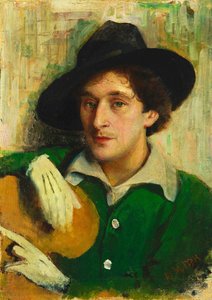
1887–1985, Λευκορωσία
Μαρκ Σαγκάλ
Early Life, Family and Training Marc Chagall enters the world on July 7, 1887, in Vitebsk, Russian Empire, born Moishe Segal. He is the first of nine children in a modest Jewish family. Life is defined by the rhythms of labor and small-scale commerce. His father, Khatskel Segal, works as a herring pickler at a warehouse, while his mother, Feïga-Ita Tchernina, manages a small grocery store.
Εργασίες του Μαρκ Σαγκάλ
 Εγώ και το Χωριό1911
 Λευκή Σταύρωση1938
 Η Γενέθλια1915
 Πάνω στην πόλη1918
Μελέτες για το Blue Lovers
 Belarusian artworks of the 1950s1950s Belarusian art features masterpieces by Marc Chagall, including works like The Prophet. Find museum-quality reproductions on Original…
 Dreaming in Color: The 25 Most Iconic Masterpieces by Marc ChagallStep into the dreamlike world of Marc Chagall. Explore 25 iconic masterpieces, from vibrant surrealist tales to soulful folklore. Find insp…
 Belarusian artworks of the 1960sIconic Belarusian artworks of the 1960s, including masterpieces by Marc Chagall. Explore the full collection online at OriginalUniqueArt.co…