Dutch Golden Age · 1632
Heraklith (Χέρριτ Ντάου, 1632)
Ο/Η Χέρριτ Ντάου (1613–1675) δημιούργησε το Heraklith. Χρονολογείται στο 1632. Ανήκει στο κίνημα Dutch Golden Age. Είναι φτιαγμένο σε Oil On Canvas. Αποθηκεύεται στο Ερμιτάζ στο Σουζ ή Αγία Πετρούπολη, Ρωσία. Οι διαστάσεις είναι 61 × 51 cm.
- 1632
- Oil On Canvas
- 61 × 51 cm
- Ερμιτάζ, Σουζ ή Αγία Πετρούπολη

 Προεπισκόπηση σε πραγματική κλίμακα

 Ελαιογραφικό Χειροποίητο Έργο
 Αποστολή
 Κοινοποίηση
 Πληροφοριακό φύλλο


 Λήψη
 Παρόμοια αντικείμενα συλλογής
 Ακτινογραφία
 Παρουσίαση
 Ερωτήσεις & Απαντήσεις

 Στατιστικά
Heraklith, εν συντομία
- Τίτλος
- Heraklith
- Καλλιτέχνης
- Χέρριτ Ντάου (1613–1675)
- Γεννημένος/η το
- Λέιντεν, Ολλανδία
- Ημερομηνία
- 1632
- Μέσο
- Oil On Canvas
- Διαστάσεις
- 61 × 51 cm
- Πού εκτίθεται
- Ερμιτάζ, Σουζ ή Αγία Πετρούπολη, Ρωσία
- Κίνηση
- Dutch Golden Age
- Εποχή
- Early Modern
- Θέμα
- portrait, scholar, globe, knowledge, wisdom, age
Τι απεικονίζει το Heraklith;
Heraklith: A Portrait of Scholarly Reflection
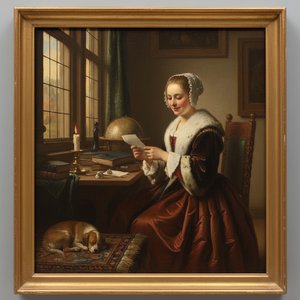
“Heraklith,” painted in 1632 by Gerrit Dou, stands as a testament to the Dutch Golden Age’s fascination with realism and psychological depth. More than just a depiction of an elderly man—likely a scholar or astronomer—it's a carefully constructed tableau designed to convey wisdom, contemplation, and the profound influence of knowledge.
- Subject Matter: The artwork portrays a dignified gentleman seated at a table before him, illuminated by candlelight. His gaze is downward, focused on a globe – a potent symbol representing exploration, scientific inquiry, and an awareness of the vastness of the universe.
- Style & Technique: Dou’s signature ‘fijnschilder’ style—characterized by meticulous detail and masterful chiaroscuro—is evident throughout. The artist employs subtle shading to sculpt the man's face and torso, creating a palpable sense of volume and texture. This technique elevates the portrait beyond mere representation, imbuing it with emotional resonance.
- Composition & Perspective: The oval frame lends an air of formality to the scene, while the shallow perspective draws the viewer’s eye directly to the central figure. Lines delineate facial features and clothing folds, guiding the gaze and reinforcing the composition's balance.
- Color Palette: Dominated by muted browns, creams, and dark reds, the color palette contributes to an atmosphere of solemn dignity. The subdued hues underscore the subject’s intellectual pursuits and evoke a feeling of quiet contemplation.
Exploring Dou’s Mastery of Light & Shadow
Gerrit Dou's unparalleled skill in chiaroscuro—the dramatic interplay between light and shadow—is arguably his most distinctive achievement. As seen prominently in “Heraklith,” this technique isn’t merely decorative; it serves to heighten the emotional impact of the portrait. The candlelight casts a soft glow upon the man’s face, highlighting wrinkles and emphasizing the contours of his features – details that reveal not only physical appearance but also the passage of time and experience.
- Symbolism: Beyond its aesthetic qualities, “Heraklith” carries significant symbolic weight. The globe represents intellectual curiosity and a desire to understand the world around us. It speaks to Dou’s belief in the transformative power of knowledge and invites viewers to consider the profound implications of scientific discovery.
- Historical Context: Painted during the Dutch Golden Age, “Heraklith” reflects the era's burgeoning interest in humanist ideals and its celebration of intellectual achievement. Dou’s work aligns with a broader artistic movement that sought to capture human psychology and emotion with unprecedented accuracy.
A Legacy of Detail & Emotion
"Heraklith" exemplifies Gerrit Dou’s dedication to capturing the essence of his subjects—both physically and psychologically. The artist's meticulous brushwork ensures that every nuance is rendered faithfully, creating a portrait that transcends mere likeness. It’s a piece that invites viewers to pause and contemplate the complexities of human experience, reminding us of the enduring beauty found in quiet reflection and intellectual pursuit.
- Collecting & Inspiration: Reproductions of “Heraklith” offer an opportunity to appreciate Dou's artistic genius and bring a touch of Dutch Golden Age elegance into any interior space. Explore similar artworks at WikiArt.org for further inspiration!
Σε ποιο μουσείο βρίσκεται το Heraklith;
Ερμιτάζ
Σουζ ή Αγία Πετρούπολη, Ρωσία
Origins and History of the Hermitage Museum The Hermitage Museum began in 1764. Its foundation traces back to the acquisition of a collection of 225 paintings from the Berlin merchant Johann Ernst Gotzkowsky. Catherine the Great initiated this collection, establishing the museum's presence in Saint Petersburg, Russia.


Εικόνες υψηλής ανάλυσης του Heraklith

Δημόσιος τομέας: ο καλλιτέχνης απεβίωσε το 1675.
Άλλες διαστάσεις, καρέττες και αναφορά →Χέρριτ Ντάου, Heraklith (1632), Ερμιτάζ. Δημόσιο περιουσιακό δικαίωμα
Ερωτήσεις για το Heraklith, απαντημένες
Σε ποιο μουσείο βρίσκεται το πρωτότυπο έργο "Heraklith";
Το πρωτότυπο έργο "Heraklith" του Χέρριτ Ντάου βρίσκεται στο Ερμιτάζ, Σουζ ή Αγία Πετρούπολη, Ρωσία. Μια αναπαραγωγή σας επιτρέπει να εκθέσετε το έργο στο σπίτι σας.
Πότε δημιουργήθηκε το "Heraklith";
Το έργο "Heraklith" του Χέρριτ Ντάου δημιουργήθηκε το έτος 1632.
Με ποιο υλικό έχει εκτελεστεί το έργο "Heraklith" του Χέρριτ Ντάου;
Ο/Η Χέρριτ Ντάου χρησιμοποίησε την τεχνική του/της Oil On Canvas για το έργο "Heraklith". Η τεχνική αυτή ορίζει τη υλική φύση του πρωτότυπου έργου.
Ποιες είναι οι διαστάσεις του πρωτότυπου "Heraklith" του Χέρριτ Ντάου;
Οι καταγεγραμμένες διαστάσεις του έργου "Heraklith" του Χέρριτ Ντάου είναι 61 x 51 cm. Αναπαραγωγές μπορούν να παραγγηθούν σε άλλες διαστάσεις, διατηρώντας τις ίδιες αναλογίες.
Τι απεικονίζει το "Heraklith" του Χέρριτ Ντάου;
Τα θέματα του "Heraklith" είναι τα portrait, scholar, globe, knowledge, wisdom, age, reflection, chiaroscuro.
Μπορεί η εικόνα του έργου "Heraklith" του Χέρριτ Ντάου να αναπαραχθεί ελεύθερα;
Το έργο "Heraklith" του Χέρριτ Ντάου ανήκει στο δημόσιο κτήμα - τα δικαιώματα αυτορության έχουν λήξει. Η κατάσταση αυτή διέπει τον τρόπο με τον οποίο μπορεί να αναπαραχθεί η εικόνα του έργου.
Ποιον καλλιτέχνη αποδίδεται το "Heraklith";
Το έργο "Heraklith" αποδίδεται στον/στην Χέρριτ Ντάου.
Προς ποιο καλλιτεχνικό ρεύμα ανήκει το έργο "Heraklith" του Χέρριτ Ντάου;
Το έργο "Heraklith" ανήκει στο καλλιτεχνικό ρεύμα Dutch Golden Age, το οποίο ορίζει την καλλιτεχνική παράδοση στην οποία εντάσσεται.
Ποια εποχή της καριέρας του/της Χέρριτ Ντάου αντιπροσωπεύει το έργο "Heraklith";
Το έργο "Heraklith" ανήκει στην περίοδο Mature Period της καριέρας του Χέρριτ Ντάου. Αυτή η ταξινόμηση συνδέει το έργο με την εξέλιξη του καλλιτέχνη.
Σχετικά με τον καλλιτέχνη, Χέρριτ Ντάου

1613–1675, Ολλανδία
Χέρριτ Ντάου
Βιογραφία ενός παραγωγικού ζωγράφου Γκερίτ (Γεράρντ) Ντού, μια κορυφαία μορφή στη ζωγραφική της Ολλανδικής Χρυσής Εποχής, γεννήθηκε στις 7 Απριλίου 1613, στο Λάιντεν της Ολλανδίας. Πέθανε στις 9 Φεβρουαρίου 1675, αφήνοντας πίσω του μια εντυπωσιακή κληρονομιά από εξαιρετικά λεπτομερή και γυαλισμένα έργα που συνεχίζουν να μαγεύουν τους λάτρεις της τέχνης σε όλο τον κόσμο. Καλλιτεχνικό στυλ και εξειδίκευση Το καλλιτεχνικό στυλ του Γκερίτ Ντού χαρακτηρίζεται από μια λεπτομερή και περίτεχνη προσέγγιση, παρουσιάζοντας συχνά σκηνές καθημερινότητας και πίνακες τύπου trompe l'oeil σε μορφή «ακίδας». Η δεξιοτεχνία του στη χρήση του κιαροσκούρο είναι ιδιαίτερα αξιοσημάδετη, όπως φαίνεται στις νυχτερινές σκηνές του φωτισμένες από κεριά.
Εργασίες του Χέρριτ Ντάου
 A Fisherman's Wife1653
 Self-Portrait1640
 An Evening School1655
 Portrait of an old woman reading1635

Μελέτες γύρω από το Heraklith
 Master of Shadows: The Top 25 Iconic Artworks by Gustave DoréExplore Gustave Doré's legendary engravings and dark Romanticism. Discover all masterpieces on OriginalUniqueArt.com.
 Master of Emotion: The 25 Greatest Artworks by Rogier van der WeydenImmerse yourself in the profound emotion of Rogier van der Weyden. Explore 25 iconic Early Netherlandish masterpieces, from intricate textu…
 Gerrit Dou: Intimacy & Light in the Dutch Golden AgeExplore the exquisite world of Gerrit Dou, a master of Dutch Golden Age painting. Discover his intimate genre scenes, signature use of ligh…