Προεπισκόπηση σε πραγματική κλίμακα
 Αποστολή
 Κοινοποίηση
 Λεπτομέρειες
 Οδηγός

 Λήψη
Λήψη
 Παρόμοια αντικείμενα συλλογής
 Ακτινογραφία
 Παρουσίαση
 Q&A
Q&A Στατιστικά
Summer


 Περισσότερα
Giclée / Εκτυπώσεις Τέχνης
Εκτύπωση giclée ή σε καμβά ποιότητας μουσείου με γρήγορη παραγωγή και ευέλικτες επιλογές φινιρίσματος. ( Αγορά χειροποίητου πίνακα Μετάβαση σε Ψηφιακή Αποτέλεσμα)




P118B €10

P118H €10

P118W €10

P438Z €10

P508JH €12

P508YH €12

P805H €10

P805Z €10

P919BZ €10

P919G €10

P919XJ €10

P959ZH €10

P968JZ €12

W106C €8

W218G €10

W218JH €8

W218Y €10

W307PJ €10

W316G €10

W316PJ €8

W316Y €10

W398PJ €8

W4111J €10

W500HY €15

W500JH €15

W692G €12

W849H €8

W940BG €15

W953PJ €8




Επιλέξτε από τις προκαθορισμένες διαστάσεις μας που διατηρούν τις αρχικές αναλογίες του έργου τέχνης.

Εισάγετε το πλάτος και το ύψος που επιθυμείτε, ώστε να ταιριάζουν στο κάδሮ ή στον τοίχο σας. Μια εκτύπωση μπορεί μόνο να υποστεί κοψίμό και ποτέ να μην γίνει μεγαλύτερη από την αρχική εικόνα, επομένως η επιλογή μεγέθους με διαφορετικό σχήμα συνεπάγεται απώλεια ενός μέρους της εικόνας. Σας στέλνουμε ένα ψηφιακό mockup για έγκριση πριν προχωρήσουμε σε οποιαδήποτε εκτύπωση. Η εικόνα που εμφανίζεται σε αυτή τη σελίδα δεν δείχνει την πραγματική κοπή — μόνο το mockup την παρουσιάζει.
Παγκόσμια Αποστολή () σε 2 εβδομάδες αντί για τις συνήθεις 4/5 εβδομάδες. (1 Νοέμβριος)

Δωρεάν γρήγορη διεθνής αποστολή

Κάμβας από Λινό Υψηλής Ποιότητας

Πλήρης ασφάλιση μεταφοράς

Εγγύηση επιστροφής δασμών και φόρων εισαγωγής

Εγγύηση Απόλυτης Ομοιότητας Χρωμάτων

Πολιτική Επιστροφής 100 Ημερών (Μόνο σε περίπτωση ελαττωμάτων)

Εγγύηση επιστροφής 100% των χρημάτων

Προσφορά για πολλαπλές παραγγελίες
 Η επιλογή με γυαλί είναι διαθέσιμη μόνο για μεγέθη κάτω από 110 εκ.

Summer
Giclée / Εκτυπώσεις Τέχνης
Διαστάσεις Αναπαραγωγής
-


Τελική Τιμή
€ 71
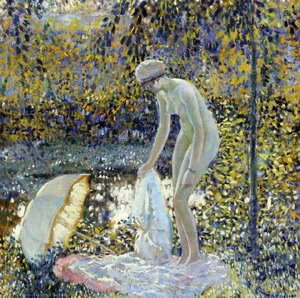
Summer by Frederick Carl Frieseke: A Glimpse of Tranquility
- Artist: Frederick Carl Frieseke
- Year: 1914
- Medium: Oil on Canvas
- Location: MOA Museum of Art, Japan
Frederick Carl Frieseke's "Summer" is a captivating example of American Impressionism, transporting viewers to a serene garden setting. The painting depicts two women immersed in a moment of peaceful intimacy, showcasing Frieseke’s mastery of light and color.
Composition and Artistic Style
"Summer" exemplifies Frieseke's signature style – a harmonious blend of Impressionistic techniques with elements of Realism. The composition centers around two figures: one woman reclining languidly on the ground, her head resting comfortably in the lap of another who is playing a musical instrument. Lush greenery and vibrant flowers form a backdrop, creating an atmosphere of tranquility and escape.
Frieseke’s use of broken brushstrokes and bold colors captures the fleeting effects of light, characteristic of Impressionism. The perspective is subtly flattened, prioritizing atmospheric depth over strict realism. This technique draws the viewer into the scene, evoking a sense of being present in that idyllic garden. Details like birds flitting through the foliage and a nearby chair add layers of visual interest.
Historical Context and Influences
Created in 1914, "Summer" reflects the artistic trends of the early 20th century. Frieseke spent much of his career living and working in France, particularly within the Giverny art colony – home to Claude Monet and other prominent artists. While he maintained a degree of independence from Monet's style, Frieseke was undoubtedly influenced by the broader Impressionist movement and admired artists like Renoir.
The painting’s subject matter—leisurely scenes featuring women in idyllic settings—was popular among American expatriate artists during this period. "Summer" embodies a desire to capture moments of beauty and relaxation, reflecting a shift towards more personal and intimate themes in art.
Symbolism and Emotional Impact
Beyond its aesthetic appeal, “Summer” carries subtle symbolic weight. The abundance of flowers represents nature's vitality and fertility, while the nude figure embodies classical ideals of beauty and grace. The act of playing music suggests harmony and emotional connection between the two women.
The overall effect is one of profound tranquility and sensuality. Frieseke’s skillful use of light and color creates a dreamy atmosphere that invites viewers to escape into a world of peace and serenity. "Summer" evokes feelings of warmth, relaxation, and appreciation for the simple pleasures in life—a timeless masterpiece that continues to resonate with audiences today.
Ερωτήσεις και Απαντήσεις
Ποιο συναισθηματικό ύφος αποπνέει το στυλ της καλλιτεχνικής καμπάνιας Impressionism του έργου "Summer";
Το "Summer" αποπνέει ένα Romantic συναισθηματικό ύφος μέσα στο πλαίσιο του руху Impressionism.
Υπάρχει κάποιο ενημερωτικό φυλλάδιο για το "Summer" του Frederick Carl Frieseke που να απευθύνεται σε φοιτητές;
Για το έργο "Summer" του Frederick Carl Frieseke είναι διαθέσιμη σελίδα Οδηγός: ένα εκτυπώσιμο ενημερωτικό φυλλάδιο για το έργο τέχνης, σχεδιασμένο για μαθητές και χρήση στην τάξη.
Πόσο έντονη είναι η παλέτα χρωμάτων του "Summer";
Το έργο "Summer" του Frederick Carl Frieseke παρουσιάζει κορεσμό με ένταση Muted.
Βιογραφικό Καλλιτέχνη
A Life Bathed in Sunlight: The Artistic Journey of Frederick Carl Frieseke
Born in the small Michigan town of Owosso on April 7, 1874, Frederick Carl Frieseke embarked on a path that would ultimately establish him as one of America’s most celebrated Impressionist painters. His early life, shaped by a move to Florida following his mother's untimely passing and nurtured by an artistically inclined aunt, instilled within him a profound sensitivity to light and form – qualities that would become the defining characteristics of his unique artistic vision. Despite initially being involved in his family’s brick manufacturing business, Frieseke’s true passion lay in the realm of art, ignited by a transformative visit to the 1893 World’s Columbian Exposition in Chicago. This pivotal experience fueled his determination to pursue formal training and ultimately led him to relocate to Paris in 1898 – a decision that irrevocably altered the course of his artistic life. It was in France that Frieseke truly discovered his voice, immersing himself in the vibrant Parisian art scene and absorbing the influences of masters like Whistler, Monet, and Renoir, which would coalesce into his distinctive “decorative impressionism.”The Giverny Influence: A Synthesis of Styles
Paris proved to be more than just a place of study; it became Frieseke’s adopted home, a sanctuary where he could refine his technique and explore his artistic sensibilities with unparalleled freedom. The proximity to Claude Monet's legendary garden at Giverny was particularly influential. In 1906, Frieseke rented a house adjacent to Monet’s estate, becoming part of a thriving artistic community and directly experiencing the magic of capturing light and color in nature. This intimate connection profoundly shaped his style, leading him to develop what is often described as “decorative impressionism.” Unlike some Impressionists who favored spontaneous brushwork, Frieseke meticulously crafted his paintings with a refined elegance – characterized by luminous colors, dappled sunlight filtering through foliage, and an emphasis on graceful female figures. His compositions weren’t merely fleeting impressions; they were carefully constructed scenes of serene beauty, imbued with a sense of intimate tranquility and often featuring rounded forms reminiscent of Pierre-Auguste Renoir. He skillfully blended the vibrant palette and atmospheric effects of Impressionism with the more structured composition and decorative elements of Post-Impressionism, creating works that possessed both immediacy and sophistication.Themes and Techniques: Capturing Light and Femininity
Frieseke’s artistic focus consistently revolved around two central themes: the captivating effects of light and the portrayal of women. He was particularly fascinated by how sunlight transformed ordinary scenes into moments of ethereal beauty, meticulously capturing this interplay in his paintings. His female subjects – often depicted in idyllic gardens or intimate interiors – are not simply portraits but embodiments of grace, sensuality, and quiet contemplation. *Hélène*, painted in 1901, stands as a prime example of this approach – a captivating portrait that masterfully blends realism with Impressionistic beauty and intimate detail. Frieseke’s technique involved layering delicate brushstrokes to create a shimmering effect, evoking the sensation of sunlight dancing on skin and foliage. He frequently incorporated geometric elements – parasols, patterned fabrics – to provide contrast and enhance the visual harmony of his compositions. His dedication to capturing these nuances earned him widespread recognition; *Before the Glass* (1904) was purchased by the French Government and displayed at the Luxembourg Gallery, a testament to his growing reputation.Notable Works and Recognition
Throughout his career, Frieseke garnered numerous accolades that reflected the esteem in which his work was held. He received a silver medal at the St. Louis Exposition in 1904, the Temple Gold Medal from the Pennsylvania Academy of Fine Arts in 1913, and the Grand Prize at the Panama-Pacific International Exposition in 1915. His painting *Torn Lingerie* (1920) achieved particular acclaim, winning two gold medals and the popular prize at the Chicago Art Institute – a remarkable achievement that underscored his enduring appeal to both critics and the public. Frieseke’s work was exhibited extensively throughout Europe and America, solidifying his place as a leading figure in the American Impressionist movement. Despite his growing fame, he remained a committed expatriate, preferring the artistic freedom he found in France and eventually settling in Normandy after World War I, where he continued to paint until his death on August 24, 1939.Legacy and Influence
Frederick Carl Frieseke’s legacy extends far beyond his individual paintings. He played a crucial role in establishing American Impressionism as a distinct artistic movement, demonstrating the potential for capturing light and color with both sensitivity and technical skill. His “decorative impressionism” – characterized by its luminous palette, graceful figures, and carefully constructed compositions – continues to inspire artists today. Frieseke’s work serves as a poignant reminder of the power of art to transport us to idyllic realms bathed in sunlight and filled with grace, solidifying his place as one of America's most beloved Impressionist painters.
Frederick Carl Frieseke
1874 - 1939 , Ηνωμένες Πολιτείες της Αμερικής
Γρήγορα στοιχεία
- Artistic Movement Or Style: Αμερικανική Εμπνευστικότητα
- Artists Or Movements Influenced By This Artist:
- Εμπνευστικότητα
- Αμερικανική Εμπνευστικότητα
- Artists Who Influenced This Artist:
- Ρενώρ
- Βαν Γκογκ
- Ντίκε
- Date Of Birth: 7 Απρ 1874
- Date Of Death: 24 Αυγ 1939
- Full Name: Frederick Carl Frieseke
- Nationality: Αμερικανός
- Notable Artworks:
- Κήπος στην Γιβερόνε
- Γυναίκα στον Κήπο
- Πριν το Βάζο
- Μπλε Λινάρι
- Place Of Birth: Owosso, ΗΠΑ
Σχετικά άρθρα

Grant Wood & American Regionalism: Identity, Myth & the Rural Landscape
Explore the world of Grant Wood & American Regionalism with OriginalUniqueArt. Discover the symbolism behind 'American Gothic', recurring themes, and the movement's lasting impact on art history. High-quality reproductions available.
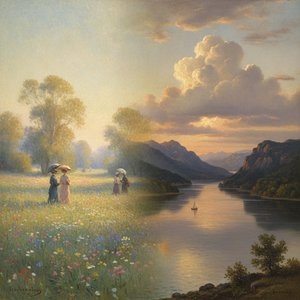
Capturing the Light: A Journey Through the Soul of American Impressionism and the Hudson River School
Explore the luminous beauty of American Impressionism and the Hudson River School. Discover a curated journey through light, landscape, and history, celebrating the enduring legacy of masters through exquisite, hand-painted oil reproductions for the discerning art lover.

Frederick Childe Hassam: American Impressionism's Chronicler of Light & Modern Life
Explore the captivating world of Frederick Childe Hassam, a pioneer of American Impressionism. Discover his iconic paintings capturing light, urban life & coastal beauty. Learn about his legacy and influence on American art history.
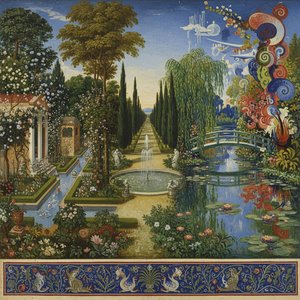
Cultivating Paradise: A Historical & Artistic Exploration of Gardens in Painting
Explore the rich history of gardens in painting! Discover masterpieces from Renaissance to Impressionism & beyond. Learn about symbolism, artists like Monet & Klimt, and find your perfect artwork at OriginalUniqueArt.
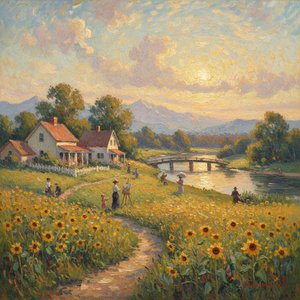
Capturing a Nation's Light: Exploring the American Impressionist Movement
Explore the captivating world of American Impressionism! Discover key artists, techniques & its lasting impact on art history. Find museum-quality reproductions and expert guidance at OriginalUniqueArt.