Expressionism
Prophet (Έμιλ Νόλντε)
Ο/Η Έμιλ Νόλντε (1867–1956) δημιούργησε το Prophet. Ανήκει στο κίνημα Expressionism. Είναι φτιαγμένο σε Woodcut.
- Woodcut

 Προεπισκόπηση σε πραγματική κλίμακα

 Ελαιογραφικό Χειροποίητο Έργο
 Αποστολή
 Κοινοποίηση
 Οδηγός


 Λήψη
 Παρόμοια αντικείμενα συλλογής
 Ακτινογραφία
 Παρουσίαση
 Ερωτήσεις & Απαντήσεις

 Στατιστικά
Prophet: τα βασικά
- Τίτλος
- Prophet
- Καλλιτέχνης
- Έμιλ Νόλντε (1867–1956)
- Γεννημένος/η το
- Νόλτε, Δανία
- Μέσο
- Woodcut
- Κίνηση
- Expressionism
- Εποχή
- Modern
- Θέμα
- man, face, beard, black and white, portrait, eyes
Τι απεικονίζει το Prophet;
The Portrait of Prophet by Emil Nolde
In Prophet, the German Expressionist painter Emil Nolde captures a man who exists between the physical and the divine. The subject is a portrait of a man likely intended to represent a prophet, a figure carved from shadow and light. His beard and hairstyle suggest a man from a distant past or a religious leader, a person shaped by the weight of revelation. The face is a landscape of heavy lines and stark contrasts.
The man’s intense gaze pierces through the grain of the medium. A furrowed brow carries the imprint of deep emotion, perhaps a mixture of sadness, concern, or a singular, driving determination. This is not a likeness of a person in repose, but a study of a soul under pressure. The features are simplified, stripped of unnecessary detail to reveal the raw essence of the subject's internal state.
Emil Nolde uses the starkness of the form to emphasize this spiritual tension. Every line serves the gravity of the man's expression. The eyes do not merely look; they witness. The stillness of the portrait holds a quiet, heavy ache.
Composition and Visual Elements
The man's face occupies the center, a heavy presence that fills most of the frame. His head tilts slightly, caught in a moment of quiet anguish or deep contemplation. Around him, the background remains largely empty, a void that forces the eye back to the subject's features. There is no horizon, only the weight of the gaze.
Bold, thick lines carve the anatomy of the man. They define the coarse texture of his beard, the sharp ridge of his nose, and the deep-set hollows of his eyes. These lines are not smooth; they are angular and sharp, cutting through the space to shape his hair and facial structure. The geometry is simplified, reducing the man to essential, striking forms.
The color palette is stripped of all distraction. It exists in a narrow world of black and white, bridged only by subtle shades of grey. This lack of color heightens the dramatic tension, turning the portrait into a study of light and shadow. The starkness leaves no room for anything but the raw emotion of the expression.
Technique and Artistic Medium
The work emerges from the physical resistance of wood. This woodcut print relies on the deliberate act of carving lines into a solid block to define its form. Each stroke is a subtraction, a removal of material that leaves behind a sharp, angular topography. The artist works with wood, ink, and paper to translate a vision into a permanent, tactile presence.
Ink meets the paper through the pressure of the press. This contact creates a grainy texture across the surface, a subtle roughness that speaks of the material's origin. The depth of the shadows and the brightness of the highlights depend entirely on the variation of the lines. Thicker cuts hold more ink to create heavy shadows, while thinner, delicate lines allow the paper to breathe through the composition. The result is a stark, high-contrast landscape of light and dark.
The medium demands a directness of hand. There is no blending here, only the immediate impact of the carved edge. The grain of the wood and the weight of the ink settle into the fibers of the paper, creating a surface that feels both raw and finished. It is a quiet collision of tool and grain.
Prophet σε υψηλή ανάλυση
Δημόσιος τομέας: ο καλλιτέχνης απεβίωσε το 1956.
Έμιλ Νόλντε, Prophet. Δημόσιο περιουσιακό δικαίωμα
Ένας ειδικός ψηφιακών εικόνων ελέγχει τα χρώματα σε σχέση με το πρωτότυπο έργο και επεξεργάζεται το αρχείο, διατηρώντας την πιστότητα των πινελιάδων του καλλιτέχνη.
Αγοράστε την εικόνα υψηλής ανάλυσηςΕρωτήσεις για το Prophet
Με ποιο υλικό έχει εκτελεστεί το έργο "Prophet" του Έμιλ Νόλντε;
Ο/Η Έμιλ Νόλντε χρησιμοποίησε την τεχνική του/της Woodcut για το έργο "Prophet". Η τεχνική αυτή ορίζει τη υλική φύση του πρωτότυπου έργου.
Περί τι αφορά το "Prophet";
Τα θέματα του "Prophet" είναι τα man, face, beard, black and white, portrait, eyes.
Το έργο "Prophet" ανήκει στο δημόσιο περιουσιακό αγαθό;
Το έργο "Prophet" του Έμιλ Νόλντε ανήκει στο δημόσιο κτήμα - τα δικαιώματα αυτορության έχουν λήξει. Η κατάσταση αυτή διέπει τον τρόπο με τον οποίο μπορεί να αναπαραχθεί η εικόνα του έργου.
Ποιος δημιούργησε το "Prophet";
Το έργο "Prophet" δημιουργήθηκε από τον/την Έμιλ Νόλντε. Οι πληροφορίες σε αυτή τη σελίδα περιγράφουν το πρωτότυπο έργο του/της Έμιλ Νόλντε.
Σε ποιο καλλιτεχνικό ρεύμα ανήκει το "Prophet" του Έμιλ Νόλντε;
Το έργο "Prophet" του Έμιλ Νόλντε ανήκει στο καλλιτεχνικό κίνημα Expressionism. Αυτό το κίνημα παρέχει το στυλιστικό πλαίσιο του έργου.
Γιατί η κατάσταση των πνευματικών δικαιωμάτων του "Prophet" είναι αυτή που είναι;
Το έργο "Prophet" του Έμιλ Νόλντε ανήκει στο δημόσιο κτήμα - τα δικαιώματα αυτορության έχουν λήξει. Οι όροι πνευματικών δικαιωμάτων υπολογίζονται από το έτος θανάτου του καλλιτέχνη, και ο/η Έμιλ Νόλντε απεβίωσε το 1956.
Πώς συνδέεται το "Prophet" με το υπόλοιπο έργο του/της Έμιλ Νόλντε;
Στο συνολικό έργο του/της Έμιλ Νόλντε, το "Prophet" εντάσσεται στο στυλ του/της Expressionism, συνδέοντας τα θέματα του/της post-impressionism, die brücke, religious themes, expressionist style.
Πού τοποθετείται το "Prophet" ανάμεσα στα επαναλαμβανόμενα θέματα του Έμιλ Νόλντε;
Ανάμεσα στα αναγνωρισμένα θέματα του/της Έμιλ Νόλντε - post-impressionism, die brücke, religious themes, expressionist style - το "Prophet" εστιάζει ιδιαίτερα στα man, face, beard, black and white, portrait, eyes.
Σχετικά με τον καλλιτέχνη, Έμιλ Νόλντε
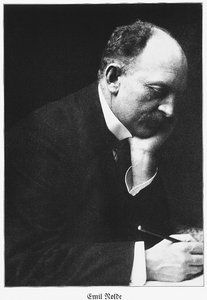
1867–1956, Δανία
Έμιλ Νόλντε
Early Life and Artistic Beginnings Ο Έμιλ Νόλντε, ένας διάσημος Γερμανός-Δανικός ζωγράφος, γεννήθηκε ως Χάινς Έμιλ Χάνσεν στις 7 Αυγούστου 1867 στην πόλη Νόλντε, στο Σλέσβιχ-Χολστάιν της Γερμανίας. Προερχόταν μιας οικογένειας με ισχυρούς δεσμούς με την αγροτική ζωή και θρησκευτικές πεποιθήσεις, παράγοντες που επηρέασαν βαθιά το καλλιτεχνικό του οράμα. Παρά την αρχική αντίσταση των γονιών του, οι οποίοι προτιμούσαν να ακολουθήσει μια πιο παραδοσιακή καριέρα, ο Νόλντε κυρίως επιδίωξε τον πάθος του για τέχνη. Αρχικά εργάστηκε ως ξυλουργός και διακοσμητής επίπλων πριν αφιερωθεί πλήρως στη ζωγραφική στα τέλη της δεκαετίας του 1920.
Εργασίες του Έμιλ Νόλντε
 Sunset
 Sea with Red Sky
 Couple on the beach1903
 Masks1911
Μελέτες γύρω από το Prophet
 Stone and Sinew: The Sculptural Foundations of Modigliani’s PortraitsExplore the sculptural roots and structural mastery of Modigliani's portraits. Discover the secrets behind his iconic, carved style now.
 Expressionism vs. New Objectivity: Emotion vs. Precision in German ArtMaster the tension between Expressionist emotion and New Objectivity precision. Explore the soul of German modern art now.
 Emile Nolde: A Journey into Expressionist Nature & the Primal SelfExplore the powerful Expressionism of Emile Nolde – a pioneer of emotive landscapes & spiritual themes. Discover his journey, influences, a…