Expressionism · 1893
Storm (Έντβαρντ Μουνχ, 1893)
Ο/Η Έντβαρντ Μουνχ (1863–1944) δημιούργησε το Storm. Χρονολογείται στο 1893. Ανήκει στο κίνημα Expressionism. Είναι φτιαγμένο σε Oil On Canvas.
- 1893
- Oil On Canvas

 Προεπισκόπηση σε πραγματική κλίμακα

 Ελαιογραφικό Χειροποίητο Έργο
 Αποστολή
 Κοινοποίηση
 Πληροφοριακό φύλλο


 Λήψη
 Παρόμοια αντικείμενα συλλογής
 Ακτινογραφία
 Παρουσίαση
 Ερωτήσεις & Απαντήσεις

 Στατιστικά
Storm, εν συντομία
- Τίτλος
- Storm
- Καλλιτέχνης
- Έντβαρντ Μουνχ (1863–1944)
- Γεννημένος/η το
- Άνταλσμπρουκ, Νορβηγία
- Ημερομηνία
- 1893
- Μέσο
- Oil On Canvas
- Κίνηση
- Expressionism
- Θέμα
- storm, anxiety, darkness, landscape, emotion, turmoil
Τι απεικονίζει το Storm;
A Tempestuous Soul: Edvard Munch’s “The Storm”
Edvard Munch's "The Storm," painted in 1893, isn’t merely a depiction of a raging tempest; it’s a visceral embodiment of inner turmoil—a profound exploration of anxiety and the fragility of human existence. This iconic work, currently residing within the esteemed collection of the Museum of Modern Art (MoMA) in New York City, stands as a cornerstone of Expressionism, a movement that sought to capture not just external reality but the raw, unfiltered emotions simmering beneath the surface. Munch, already grappling with personal tragedies including the early deaths of his mother and sister, channeled these profound experiences into a visual language characterized by bold color, distorted forms, and an unsettling sense of unease—elements powerfully realized in “The Storm.” The painting’s power resides not just in its dramatic subject matter but in its ability to evoke a deeply felt emotional response within the viewer, mirroring the artist's own turbulent inner world.
Visualizing Inner Chaos: Style and Technique
Munch’s technique is deliberately unsettling. The composition immediately plunges the viewer into a scene of chaotic energy. Thick, swirling brushstrokes dominate the canvas, conveying the relentless force of the wind and rain. These aren't delicate lines; they are aggressive marks, imbued with an almost frantic quality. The color palette contributes significantly to this sense of unease. Muted tones—primarily deep blues, grays, and ochres—create a somber atmosphere, punctuated by jarring flashes of intense yellow in the clouds and the distant light. This contrast isn’t merely aesthetic; it represents the struggle between darkness and hope, despair and perhaps a fleeting glimpse of resilience. The figure in the foreground, rendered with simplified forms and a slightly elongated face, seems to be caught within this maelstrom, her posture suggesting both vulnerability and a desperate attempt to maintain composure. Note how Munch uses perspective—the receding road and distant house create a sense of isolation and emphasize the overwhelming power of nature.
Symbolism and Psychological Depth
“The Storm” is rich in symbolic meaning, deeply rooted in Munch’s personal experiences and his exploration of psychological themes. The storm itself represents not just meteorological conditions but also the internal storms raging within the human psyche—fear, grief, anxiety, and a sense of impending doom. The woman standing on the road has been interpreted as representing humanity confronting these forces, perhaps even succumbing to them. Some scholars connect her posture and gaze to depictions of women awaiting news from loved ones lost at sea – a poignant reflection of Munch’s own anxieties about loss and mortality. The distant house, barely visible through the storm clouds, symbolizes a fragile sense of security, threatened by the overwhelming power of nature. The overall composition can be viewed as an allegory for the human condition—a constant struggle against forces beyond our control.
A Legacy of Emotional Intensity
Edvard Munch’s “The Storm” remains a profoundly moving and influential work of art, solidifying his place as a pioneer of Expressionism. Its enduring appeal lies in its ability to tap into universal emotions—fear, anxiety, and the awareness of our own mortality. Reproductions of this masterpiece offer an opportunity to experience the raw emotional power of Munch’s vision firsthand. Whether displayed in a grand salon or a more intimate setting, “The Storm” continues to resonate with viewers, reminding us of the complexities of the human spirit and the enduring beauty—and terror—of the natural world. For those seeking a high-quality reproduction, OriginalUniqueArt.com offers meticulously crafted hand-painted versions that faithfully capture the essence of this iconic artwork. Further exploration into Munch’s life and artistic journey can be found on platforms like Edvard Munch on OriginalUniqueArt.com and through resources such as Smarthistory and the Metropolitan Museum of Art.
Εικόνες υψηλής ανάλυσης του Storm

Δημόσιος τομέας: ο καλλιτέχνης απεβίωσε το 1944.
Άλλες διαστάσεις, καρέττες και αναφορά →Έντβαρντ Μουνχ, Storm (1893). Δημόσιο περιουσιακό δικαίωμα
Ερωτήσεις για το Storm, απαντημένες
Σε ποια χρονική περίοδο δημιουργήθηκε το "Storm" του Έντβαρντ Μουνχ;
Το έργο "Storm" του Έντβαρντ Μουνχ δημιουργήθηκε το έτος 1893.
Με τι τεχνική έχει δημιουργηθεί το "Storm";
Ο/Η Έντβαρντ Μουνχ χρησιμοποίησε την τεχνική του/της Oil On Canvas για το έργο "Storm". Η τεχνική αυτή ορίζει τη υλική φύση του πρωτότυπου έργου.
Τι απεικονίζει το "Storm" του Έντβαρντ Μουνχ;
Τα θέματα του "Storm" είναι τα storm, anxiety, darkness, landscape, emotion, turmoil, night.
Το έργο "Storm" ανήκει στο δημόσιο περιουσιακό αγαθό;
Το έργο "Storm" του Έντβαρντ Μουνχ ανήκει στο δημόσιο κτήμα - τα δικαιώματα αυτορության έχουν λήξει. Η κατάσταση αυτή διέπει τον τρόπο με τον οποίο μπορεί να αναπαραχθεί η εικόνα του έργου.
Ποιος δημιούργησε το "Storm";
Ο καλλιτέχνης πίσω από το "Storm" είναι ο/η Έντβαρντ Μουνχ. Το έργο καταχωρείται υπό το όνομα του/της Έντβαρντ Μουνχ.
Προς ποιο καλλιτεχνικό ρεύμα ανήκει το έργο "Storm" του Έντβαρντ Μουνχ;
Το καλλιτεχνικό ρεύμα που συνδέεται με το "Storm" του Έντβαρντ Μουνχ είναι το Expressionism. Αυτή η ταξινόμηση τοποθετεί το έργο ανάμεσα σε σχετικούς καλλιτέχνες και έργα τέχνης.
Ποια εποχή της καριέρας του/της Έντβαρντ Μουνχ αντιπροσωπεύει το έργο "Storm";
Στο πλαίσιο της καριέρας του/της Έντβαρντ Μουνχ, το έργο "Storm" ανήκει στην περίοδο Late Period. Αυτή η φάση διευκολύνει τη σύγκρισή του με άλλα έργα του/της καλλιτέχνη/της.
Σε τι ηλικία δημιούργησε ο/η Έντβαρντ Μουνχ το "Storm";
Ο/Η Έντβαρντ Μουνχ δημιούργησε το έργο "Storm" στην ηλικία των 30 ετών. Ο/Η καλλιτέχνης γεννήθηκε το 1863 και το έργο χρονολογείται στο 1893.
Γιατί η κατάσταση των πνευματικών δικαιωμάτων του "Storm" είναι αυτή που είναι;
Το έργο "Storm" του Έντβαρντ Μουνχ ανήκει στο δημόσιο κτήμα - τα δικαιώματα αυτορության έχουν λήξει. Η διάρκεια της προστασίας των πνευματικών δικαιωμάτων υπολογίζεται από το έτος θανάτου του καλλιτέχνη, ο οποίος συνέβη το 1944.
Σχετικά με τον καλλιτέχνη, Έντβαρντ Μουνχ

1863–1944, Νορβηγία
Έντβαρντ Μουνχ
Μια Ζωή Σκιασμένη: Ο Κόσμος του Έντβαρντ Μουνχ Ο Έντβαρντ Μουνχ, γεννημένος το 1863 στα αυστηρά τοπία της Νορβηγίας, ήταν ένας καλλιτέχνης του οποίου το έργο έγινε συνώνυμο με τις ανησυχίες και την συναισθηματική αναταραχή της σύγχρονης εποχής. Η ζωή του, βαθιά σημαδεμένη από απώλειες και μια διάχυτη αίσθηση μελαγχολίας, υπήρξε η πηγή της βαθιά εκφραστικής τέχνης του. Από την παιδική του ηλικία που σκιάστηκε από τους πρόωρους θανάτους της μητέρας και της αδελφής του – και οι δύο θύματα της φυματίωσης – ο Μουνχ ανέπτυξε μια στοιχειώδη εμμονή με τη θνητότητα, την ασθένεια και την εύθραυστη ύπαρξη του ανθρώπου. Αυτές οι εμπειρίες δεν ήταν απλώς βιογραφικές λεπτομέρειες· έγιναν ο πυρήνας του καλλιτεχνικού του οράματος, τροφοδοτώντας μια αδιάκοπη εξερεύνηση του εσωτερικού τοπίου του φόβου, της θλίψης και της λαχτάρας.
Σχετικά με τον Έντβαρντ Μουνχ Σημαντικά έργα του Έντβαρντ Μουνχ
Εργασίες του Έντβαρντ Μουνχ
 Η Σκύλη (Η Σκύλη)1893
 Το Βαμπύρ του Ένσπεργκ Μουνχ
 Πουμπέρτα1914
 Αγωνία 21894

Μελέτες γύρω από το Storm
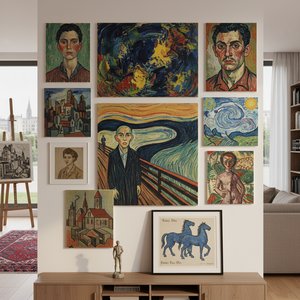 Τα 10 Κορυφαία Έργα που Όρισαν τον Εξπρεσιονισμό | OriginalUniqueArt.grΑνακαλύψτε τα 10 κορυφαία έργα του Εξπρεσιονισμού! Μάθετε για τους Munch, Van Gogh & άλλους σπουδαίους καλλιτέχνες. Βρείτε αναπαραγωγές πιν…
 Echoes of Anxiety: The 25 Most Iconic Masterpieces by Edvard MunchJourney through the raw emotion of Expressionism with our curated guide to Edvard Munch's top 25 masterpieces. Explore the stories behind h…
 Unveiling the Masterpieces: Top 25 Must-See Artworks at the Munch Museum in OsloExplore 25 iconic Edvard Munch masterpieces from Oslo's Munch Museum. Discover timeless Expressionist art on OriginalUniqueArt.com.