Fauvism · 1911
Vegetable fields (Αουγκούστ Μάκε, 1911)
Ο/Η Αουγκούστ Μάκε (1887–1914) δημιούργησε το Vegetable fields. Χρονολογείται στο 1911. Ανήκει στο κίνημα Fauvism. Είναι φτιαγμένο σε Oil On Canvas. Αποθηκεύεται στο Kunstmuseum Bonn στο Μπόνν, Γερμανία. Οι διαστάσεις είναι 47 × 64 cm.
- 1911
- Oil On Canvas
- 47 × 64 cm
- Kunstmuseum Bonn, Μπόνν

 Προεπισκόπηση σε πραγματική κλίμακα

 Ελαιογραφικό Χειροποίητο Έργο
 Αποστολή
 Κοινοποίηση
 Πληροφοριακό φύλλο


 Λήψη
 Παρόμοια αντικείμενα συλλογής
 Ακτινογραφία
 Παρουσίαση
 Ερωτήσεις & Απαντήσεις

 Στατιστικά
Vegetable fields, εν συντομία
- Τίτλος
- Vegetable fields
- Καλλιτέχνης
- Αουγκούστ Μάκε (1887–1914)
- Γεννημένος/η το
- Μέσεντε, Γερμανία
- Ημερομηνία
- 1911
- Μέσο
- Oil On Canvas
- Διαστάσεις
- 47 × 64 cm
- Πού εκτίθεται
- Kunstmuseum Bonn, Μπόνν, Γερμανία
- Κίνηση
- Fauvism
- Θέμα
- rural landscape, haystacks, blue flowers, path, roads, color field
Τι απεικονίζει το Vegetable fields;
August Macke’s ‘Vegetable Fields’: A Fauvist Echo of Rural Melancholy
This captivating oil painting, “Vegetable Fields,” created in 1911 by August Macke, offers a potent glimpse into the burgeoning world of German Expressionism. Measuring 47 x 64 cm, this work transcends a simple depiction of a rural landscape; it’s an intensely felt experience rendered through bold color and simplified forms – hallmarks of the Fauvist movement. Macke, tragically cut short by the First World War at just 27, was already producing art that resonated with a raw emotionality, anticipating the full force of Expressionism while still retaining traces of Impressionist influence.
- Subject Matter: The scene unfolds in a stylized countryside, dominated by haystacks, fields ablaze with blue flowers, and a prominent pathway leading the viewer’s eye into the distance. This isn't a meticulous rendering of reality; rather, it’s an interpretation filtered through Macke’s emotional lens.
- Style & Technique: The painting firmly embraces Fauvist principles – prioritizing color over precise representation. Thick impasto brushstrokes build texture and physicality onto the canvas, creating a vibrant, almost tactile surface. Lines are deliberately expressive, guiding the viewer's gaze and contributing to the overall sense of movement.
Decoding the Emotional Landscape
Macke’s use of color is particularly striking. The dominant blues and greens evoke a feeling of tranquility, yet they’re punctuated by jarring yellows and reds, creating an underlying tension. This deliberate dissonance reflects the anxieties and uncertainties of the era – a world on the cusp of profound change. The flattened perspective, prioritizing emotional impact over realistic spatial illusion, further intensifies this effect. It's as if Macke is inviting us to step into his subjective experience, rather than simply observing a landscape.
- Symbolism: The diverging paths in the distance are rich with symbolic potential, representing choices, journeys, or perhaps the fragmented nature of modern life. The isolated setting contributes to a sense of melancholy, hinting at themes of loneliness and contemplation.
- Historical Context: Created in 1911, “Vegetable Fields” sits squarely within the period of experimentation that preceded the full flowering of German Expressionism. Macke’s work foreshadowed the movement's emphasis on subjective emotion and distorted form, while still retaining a connection to earlier artistic traditions.
A Masterclass in Texture and Light
The painting’s technical brilliance lies not just in its color palette but also in Macke’s masterful manipulation of light and texture. The diffuse lighting suggests an overcast day, eliminating harsh shadows and contributing to the overall mood of quiet contemplation. The thick impasto technique – applying paint thickly to create a textured surface – is particularly evident in the haystacks and fields, adding a remarkable physicality to the composition. This deliberate roughness further emphasizes the emotional intensity of the work.
Collecting this Powerful Image
A hand-painted reproduction of “Vegetable Fields” offers an exceptional opportunity to bring this evocative artwork into your home or office. OriginalUniqueArt’s meticulous reproductions capture the essence of Macke's vision, faithfully recreating the painting’s vibrant colors and expressive brushwork. This piece is more than just a decoration; it’s a window into the soul of a brilliant artist and a poignant reflection on the human condition.
Σε ποιο μουσείο βρίσκεται το Vegetable fields;
Kunstmuseum Bonn
Μπόνν, Γερμανία
Ένα Καταφύγιο Έκφρασης: Η Ψυχή του Kunstmuseum Bonn Κ𝘦ιμένο στο ιστορικό κέντρο του Μπόν, μιας πόλης όπου οι ηχώι των συνθέσεων του Μπετόβεν παραμένουν ζωντανές στον αέρα, βρίσκεται το Kunstmuseum Bonn —ένα βαθύ καταφύγιο για εκείνους που αναζητούν την ωμή, συναισθηματική δύναμη του μοντερνισμού. Η είσοδος σε αυτό το ίδρυμα αποτελεί μια περιπλάνηση μέσα στην ταραγμένη αλλά πανέμορφη ψυχή του εικοστού αιώνα. Γεννημένο από την ανάγκη να ανακατασκευαστούν όχι μόνο τοίχοι, αλλά και μια πολιτιστική ταυτότητα κατά την μεταμορφωτική εποχή της μεταπολεμικής ανασυγκρότησης, το μουσείο έχει εξελιχθεί από τότε σε έναν παγκόσμιο φάρο για τον Ρηνο-Εκφρασιονισμό .

Εικόνες υψηλής ανάλυσης του Vegetable fields

Δημόσιος τομέας: ο καλλιτέχνης απεβίωσε το 1914.
Άλλες διαστάσεις, καρέττες και αναφορά →Αουγκούστ Μάκε, Vegetable fields (1911), Kunstmuseum Bonn. Δημόσιο περιουσιακό δικαίωμα
Ερωτήσεις για το Vegetable fields, απαντημένες
Πού εκτίθεται σήμερα το "Vegetable fields" του Αουγκούστ Μάκε;
Το πρωτότυπο έργο "Vegetable fields" εκτίθεται στο Kunstmuseum Bonn, Μπόνν, Γερμανία.
Σε ποια χρονιά δημιουργήθηκε το "Vegetable fields" του Αουγκούστ Μάκε;
Το έργο "Vegetable fields" χρονολογείται από το 1911. Η ημερομηνία αυτό το έργο το τοποθετεί μέσα στην καριέρα του/της Αουγκούστ Μάκε και την εποχή του/της.
Με ποιο υλικό έχει εκτελεστεί το έργο "Vegetable fields" του Αουγκούστ Μάκε;
Η τεχνική του έργου "Vegetable fields" του Αουγκούστ Μάκε είναι το Oil On Canvas. Οι αναπαραγωγές στοχεύουν στην πιστή απόδοση της εμφάνισης αυτής της τεχνικής.
Ποια είναι οι πραγματικές διαστάσεις του έργου "Vegetable fields" του Αουγκούστ Μάκε;
Οι διαστάσεις του πρωτότυπου έργου "Vegetable fields" του Αουγκούστ Μάκε είναι 47 x 64 cm.
Τι απεικονίζει το "Vegetable fields" του Αουγκούστ Μάκε;
Το έργο "Vegetable fields" του Αουγκούστ Μάκε απεικονίζει: rural landscape, haystacks, blue flowers, path, roads, color field, expressionism, geometric forms.
Το έργο "Vegetable fields" ανήκει στο δημόσιο περιουσιακό αγαθό;
Όσον αφορά τα πνευματικά δικαιώματα, το "Vegetable fields" ανήκει στο δημόσιο κτήμα - τα δικαιώματα αυτορության έχουν λήξει.
Ποιον καλλιτέχνη αποδίδεται το "Vegetable fields";
Ο καλλιτέχνης πίσω από το "Vegetable fields" είναι ο/η Αουγκούστ Μάκε. Το έργο καταχωρείται υπό το όνομα του/της Αουγκούστ Μάκε.
Προς ποιο καλλιτεχνικό ρεύμα ανήκει το έργο "Vegetable fields" του Αουγκούστ Μάκε;
Το έργο "Vegetable fields" ανήκει στο καλλιτεχνικό ρεύμα Fauvism, το οποίο ορίζει την καλλιτεχνική παράδοση στην οποία εντάσσεται.
Σε ποια περίοδο της καριέρας του/της Αουγκούστ Μάκε ανήκει το "Vegetable fields";
Το "Vegetable fields" αντιπροσωπεύει την περίοδο Mature Period του Αουγκούστ Μάκε.
Σχετικά με τον καλλιτέχνη, Αουγκούστ Μάκε
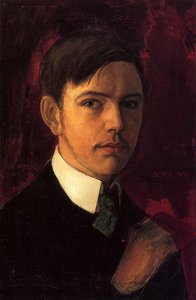
1887–1914, Γερμανία
Αουγκούστ Μάκε
Early Life, Family and Training The story of August Macke begins in the town of Meschede, Germany, where he was born on January 3, 1887. He was the only son born to August Friedrich Hermann Macke, a building contractor and amateur artist, and Maria Florentine. His childhood was shaped by the shifting fortunes of his father’s company, which brought the family to Cologne and later to Bonn. Even as a young boy, the pull of visual expression was evident; he spent his early years sketching and designing sets for school plays, finding a way to translate his surroundings onto paper long before he ever stepped into a formal academy.
Σχετικά με τον Αουγκούστ Μάκε Σημαντικά έργα του Αουγκούστ Μάκε
Εργασίες του Αουγκούστ Μάκε
 Η Γυναίκα με το Πράσινο Γιλέκο1913
 Βαθμωτές με τον τόπο στο υπόβαθρο1913
 Το Καταστημα Ηλιάτου1913
 Portrait of the Artist's Wife with Hat1909

Μελέτες γύρω από το Vegetable fields
 August Macke: Expressionist Visions of Harmony & Modern LifeExplore the vibrant Expressionist paintings of August Macke (1887-1914). Discover his key role in Der Blaue Reiter, Fauvist influences, and…
 Τα 10 Κορυφαία Έργα που Όρισαν τον Εξπρεσιονισμό | OriginalUniqueArt.grΑνακαλύψτε τα 10 κορυφαία έργα του Εξπρεσιονισμού! Μάθετε για τους Munch, Van Gogh & άλλους σπουδαίους καλλιτέχνες. Βρείτε αναπαραγωγές πιν…
 Brushes of Anguish: The Psychological Landscape of Emotional Distress in Post-Impressionist ArtExplore the profound psychological depth of Post-Impressionist masters. Discover how color and form mirror human emotion.