In echtem Maßstab anzeigen
 Versenden als Grußkarte
 Teilen
 Details anzeigen
 Leitfaden öffnen

 Herunterladen
 Ähnliche Objekte
 Röntgenaufnahme
 Diashow
 Besucherstatistiken
Ceres and Phytalus


 Mehr anzeigen
Handgefertigte Ölreproduktion
Handgemaltes Ölgemälde auf Leinwand in Ihrer Wunschgröße und mit Rahmen, auf Bestellung von unseren Künstlern angefertigt. ( Zum Druck wechseln Zum digitalen Bild wechseln)




P118B €10

P118H €10

P118W €10

P438Z €10

P508JH €12

P508YH €12

P805H €10

P805Z €10

P919BZ €10

P919G €10

P919XJ €10

P959ZH €10

P968JZ €12

W106C €8

W218G €10

W218JH €8

W218Y €10

W307PJ €10

W316G €10

W316PJ €8

W316Y €10

W398PJ €8

W4111J €10

W500HY €15

W500JH €15

W692G €12

W849H €8

W940BG €15

W953PJ €8




Wählen Sie aus unseren vordefinierten Formaten, die den ursprünglichen Proportionen des Kunstwerks entsprechen.

Sie können Ihre eigenen Maße eingeben, um einen bestimmten Rahmen oder Platz auszufüllen. Wenn die gewählte Größe nicht den Proportionen des Originalbildes entspricht, werden wir das Kunstwerk entweder beschneiden oder das Gemälde durch zusätzliche, handgemalte Elemente erweitern. Ein digitales Mockup wird Ihnen zur Genehmigung zugesandt, bevor die Produktion beginnt.
Bitte beachten Sie, dass die Bildschirmvorschau nicht die tatsächliche Beschneidung oder Erweiterung widerspiegelt. Nur das Mockup zeigt die endgültige Komposition exakt an.
Obwohl Sondermaße verfügbar sind, empfehlen wir, eine Größe aus der vordefinierten Liste zu wählen, um die ursprünglichen Proportionen beizubehalten.
Nach der Bestellung wird das OriginalUniqueArt.com-Team dem Kunden Anweisungen per E-Mail zusenden und eine Mockup-Vorschau bereitstellen.
Weltweiter Versand () in nur 3 bis 4 Wochen statt der üblichen 5 Wochen. (13 Oktober). Keine Kompromisse bei der Qualität.

Kostenloser weltweiter Expressversand

Hochwertige Leinenleinwand

Vollständiger Versicherungsschutz beim Versand

Zollgebühren-Rückerstattungsgarantie

Garantie für exakte Farbtreue

100-tägiges Rückgaberecht (nur bei Mängeln)

100% Geld-zurück-Garantie

Angebot für Mengenrabatt
 Die Glasoption ist nur für Größen unter 110 cm verfügbar.

Ceres and Phytalus
Reproduktionsmedium
Format der Reproduktion
-


Gesamtpreis
€ 280
A Mythological Encounter in Shadow and Line
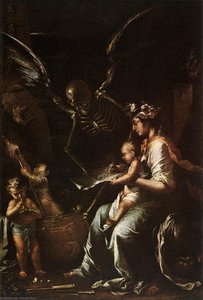
In the evocative depths of Salvator Rosa’s 1662 masterpiece, Ceres and Phytalus, we are transported into a realm where the boundaries between the divine and the mortal dissolve. This exquisite etching captures a pivotal moment of mythological encounter, rendered through the masterful use of monochromatic linework. The scene centers upon Ceres, the Roman goddess of agriculture and fertility, and the mortal Phytalus, whose kneeling posture radiates a profound sense of reverence and supplication. Through the delicate interplay of light and shadow, Rosa invites the viewer into a dense, primordial forest where every etched line breathes life into the surrounding foliage. The composition is not merely a depiction of a story, but an immersive experience of texture and atmosphere, where the organic curves of the human forms emerge from a rugged, untamed landscape.
The technical brilliance of this work lies in Rosa’s command over the medium of printmaking. Utilizing the intricate techniques of hatching and cross-hatching, the artist achieves a remarkable range of tonal variations that simulate depth and dimension without the need for color. These dense networks of lines create areas of profound darkness within the thickets, contrasting sharply with the lighter, more delicate strokes that define the figures' skin and the soft highlights on the leaves. This method lends the piece a tactile quality; one can almost feel the rough bark of the ancient trees and the dampness of the forest floor. The lack of a singular, piercing light source creates a diffused, ethereal glow, contributing to the dreamlike, somewhat ambiguous perspective that characterizes the Baroque fascination with the mysterious and the sublime.
The Baroque Spirit and Symbolic Resonance
As a prominent figure of the Italian Baroque, Salvator Rosa was renowned for his refusal to conform to the rigid classical standards of his era. In Ceres and Phytalus, we see his signature blend of naturalism and dramatic tension. The subject matter—a goddess descending to interact with humanity—carries heavy symbolic weight, touching upon themes of abundance, the cycle of life, and the sacred connection between the earth and its inhabitants. For the discerning collector or interior designer, this piece offers more than just visual beauty; it provides a window into the philosophical inquiries of the 17th century. The tension held in Phytalus’s bowed head and the commanding yet nurturing presence of Ceres creates an emotional resonance that lingers long after the first glance.
Integrating a high-quality reproduction of such a work into a contemporary space allows for a sophisticated dialogue between historical depth and modern elegance. Whether placed in a study filled with leather-bound books or as a focal point in a minimalist gallery-style living room, the monochromatic intensity of Rosa’s vision commands attention. It serves as an intellectual anchor, sparking conversation about mythology, the artistry of the etching needle, and the enduring power of the Baroque aesthetic. To possess such a work is to hold a fragment of history, capturing the very essence of a period defined by its passion, its shadows, and its profound reverence for the natural world.
Fragen & Antworten
Kann ich "Ceres and Phytalus" genauer untersuchen?
Die Röntgenaufnahme-Seite von "Ceres and Phytalus" von Salvator Rosa ist ein interaktiver Viewer, der es Ihnen ermöglicht, durch elf optische Schichten des Kunstwerks zu gleiten, einschließlich einer Ansicht im Röntgenstil.
Befindet sich "Ceres and Phytalus" von Salvator Rosa im Heimatland des Künstlers?
Nein – das Kunstwerk wird im Ausland aufbewahrt. Salvator Rosa wurde in Italien geboren, und das Original von „Ceres and Phytalus“ befindet sich in einem Museum in Vereinigte Staaten von Amerika.
Wann wurde "Ceres and Phytalus" geschaffen und welcher Stilrichtung lässt es sich zuordnen?
"Ceres and Phytalus" entstand im Jahr 1662 innerhalb der Baroque-Bewegung.
Für welche Verwendung wird "Ceres and Phytalus" von Salvator Rosa empfohlen?
Die empfohlene Verwendung für "Ceres and Phytalus" von Salvator Rosa ist Accent. Es kann jedoch auch für andere Zwecke genutzt werden.
Welche Farben dominieren "Ceres and Phytalus" von Salvator Rosa?
"Ceres and Phytalus" von Salvator Rosa verwendet eine Monochrome-Palette, wobei Putty (#c7c7c3) die dominierende Farbe ist.
Ist ein Download für "Ceres and Phytalus" verfügbar?
"Ceres and Phytalus" von Salvator Rosa kann auf der Download-Seite des Kunstwerks als ein hochauflösender digitaler Bild-Download heruntergeladen werden.
Welchen Kontrast weist "Ceres and Phytalus" von Salvator Rosa auf?
"Ceres and Phytalus" von Salvator Rosa zeigt einen Serene Kontrast zwischen seinen hellen und dunklen Bereichen.
Ist "Ceres and Phytalus" von Salvator Rosa gemeinfrei?
Was das Urheberrecht betrifft, so ist "Ceres and Phytalus" gemeinfrei – das Urheberrecht ist abgelaufen.
Biografie des Künstlers
Frühes Leben und Ausbildung
Salvator Rosa, ein italienischer Barockmaler, Dichter und Grafiker, wurde am 20. Juni oder 21. Juli 1615 in Arenella, Neapel, geboren. Seine Mutter, Giulia Greca Rosa, entstammte einer griechischen Familie aus Sizilien. Trotz seines Vaters Wunsches, dass er Jurist oder Priester wird, zeigte Salvator schon früh eine Vorliebe für die Künste.Künstlerische Karriere
Salvators künstlerische Karriere war geprägt von seinem unkonventionellen und extravaganten Stil, der ihn von seinen Zeitgenossen abhob. Er war in Neapel, Rom und Florenz tätig und seine Arbeit wurde sowohl vom Naturalismus des Ribera als auch vom Klassizismus des Poussin beeinflusst. Dennoch weigerte er sich, sich an einen bestimmten Stil oder eine bestimmte Bewegung zu binden.- Pythagoras, der aus der Unterwelt hervorkommt (Kimbell Art Museum, Fort Worth, USA), eines seiner berühmtesten Werke, zeigt seine einzigartige Mischung aus philosophischen und künstlerischen Themen.
- Seine Taufe des Eunuchen (Chrysler Museum of Art, Norfolk, USA) demonstriert seine Fähigkeit, selbst in kleinere biblische Geschichten dramatische Elemente einzufügen.
Einflüsse und Vermächtnis
Salvators Werk hatte einen bedeutenden Einfluss auf die Entwicklung der Barockkunst. Sein Einfluss ist in den Werken späterer Künstler wie Luca Giordano zu erkennen, der die Grenzen künstlerischen Ausdrucks weiter verschob. Wichtige Links: Salvator Rosas Profil auf OriginalUniqueArt Wikipedia: Salvator Rosa Pythagoras, der aus der Unterwelt hervorkommt auf OriginalUniqueArtEntwicklung und Bedeutung
Salvator Rosa war ein Rebell gegen die Konventionen seiner Zeit. Seine Landschaften waren oft wild und ungezähmt, seine Figuren dramatisch dargestellt und seine Kompositionen dynamisch. Er schuf Werke, die sowohl religiöse als auch mythologische Themen behandelten, aber immer mit einer persönlichen Note der Rebellion und des Zweifelhaften. Er war ein Pionier in der Darstellung von Landschaften als eigenständige Elemente seiner Gemälde, nicht nur als Kulisse für Figuren. Seine Arbeiten spiegeln oft eine pessimistische Weltsicht wider, die sich in düsteren Farben und dramatischen Szenarien manifestiert.Schlussfolgerung
Salvators Leben und Werk faszinieren Kunstliebhaber und Historiker gleichermaßen bis heute. Sein unkonventioneller Stil und seine ständige Rebellion gegen die Normen seiner Zeit haben seinen Platz in den Annalen der Barockkunst gefestigt. Als Maler, Dichter und Grafiker bleibt er eine enigmatische Figur, und seine Arbeit inspiriert weiterhin neue Generationen von Künstlern und Kunstenthusiasten.
Salvator Rosa
1615 - 1673 , Italien
Eckdaten zum Künstler
- Bemerkenswerte Kunstwerke:
- Pythagoras entsteigt der Unterwelt
- Die Taufe des Eunuchen
- Geburtsdatum: 20./21. Juni 1615
- Geburtsort (Stadt, Land): Arenella, Italien
- Künstler Oder Bewegungen, Die Von Diesem Künstler Beeinflusst Wurden: ['Luca Giordano']
- Künstler, Die Diesen Künstler Beeinflussten:
- Ribera
- Poussin
- Künstlerische Bewegung/Stil: Barockmalerei
- Nationalität: Italienisch
- Sterbedatum: 1673
- Vollständiger Name: Salvator Rosa
Verwandte Artikel
Shadow, Light, and Spectacle: The Dramatic Evolution of Baroque Landscape Painting
Explore the breathtaking drama of Baroque landscapes. Our expert guide delves into the interplay of light and shadow in 17th-century masterpieces. Discover art history and find museum-quality, hand-painted oil reproductions to bring classical grandeur to your home.

Drama in Nature: The Captivating Grandeur of Baroque Landscapes and the Art of Emotional Spectacle
Explore the breathtaking drama of Baroque landscapes. From Rubens's grand vistas to the mastery of chiaroscuro, discover how 17th-century artists transformed nature into a theatrical stage of emotion and light. A deep dive for true art enthusiasts.

Die 10 legendärsten Radierungen: Meisterwerke, die Kunstgeschichte schrieben | OriginalUniqueArt
Entdecken Sie die 10 legendärsten Radierungen von Rembrandt, Dürer & Goya! Erfahren Sie die Geschichten hinter diesen Meisterwerken der Kunstgeschichte und lassen Sie sich für Ihre Wohnräume inspirieren. Hochwertige Kunstdrucke auf OriginalUniqueArt.com.

Baroque Classicism: The Grandeur of Order and Drama in 17th-Century Art History
Explore the profound elegance of Baroque Classicism. Discover how 17th-century masters synthesized dramatic emotion with classical order through the lens of the Counter-Reformation and the works of legends like Carlo Maratta and Andrea Sacchi.

Salvator Rosa: Visionen der Landschaft und die Allegorie des Barock
Entdecken Sie das faszinierende Werk von Salvator Rosa! Unsere Expertenanalyse beleuchtet Leben, Stil und die tiefgründigen Botschaften des Barockmalers. Jetzt lesen!