 Zum Druck wechseln
 Weiterlesen







































 Bei Kunstwerken oder Reproduktionen, die an einer Seite größer als 105 cm (ca. 41 Zoll) sind, wird der Rahmen zerlegt als Bausatz geliefert. Diese Methode gewährleistet eine sichere Zustellung und verhindert Schäden während des Transports.


Pythagoras Emerging from the Underworld – Eine Reise ins Reich der Mythologie und Philosophie
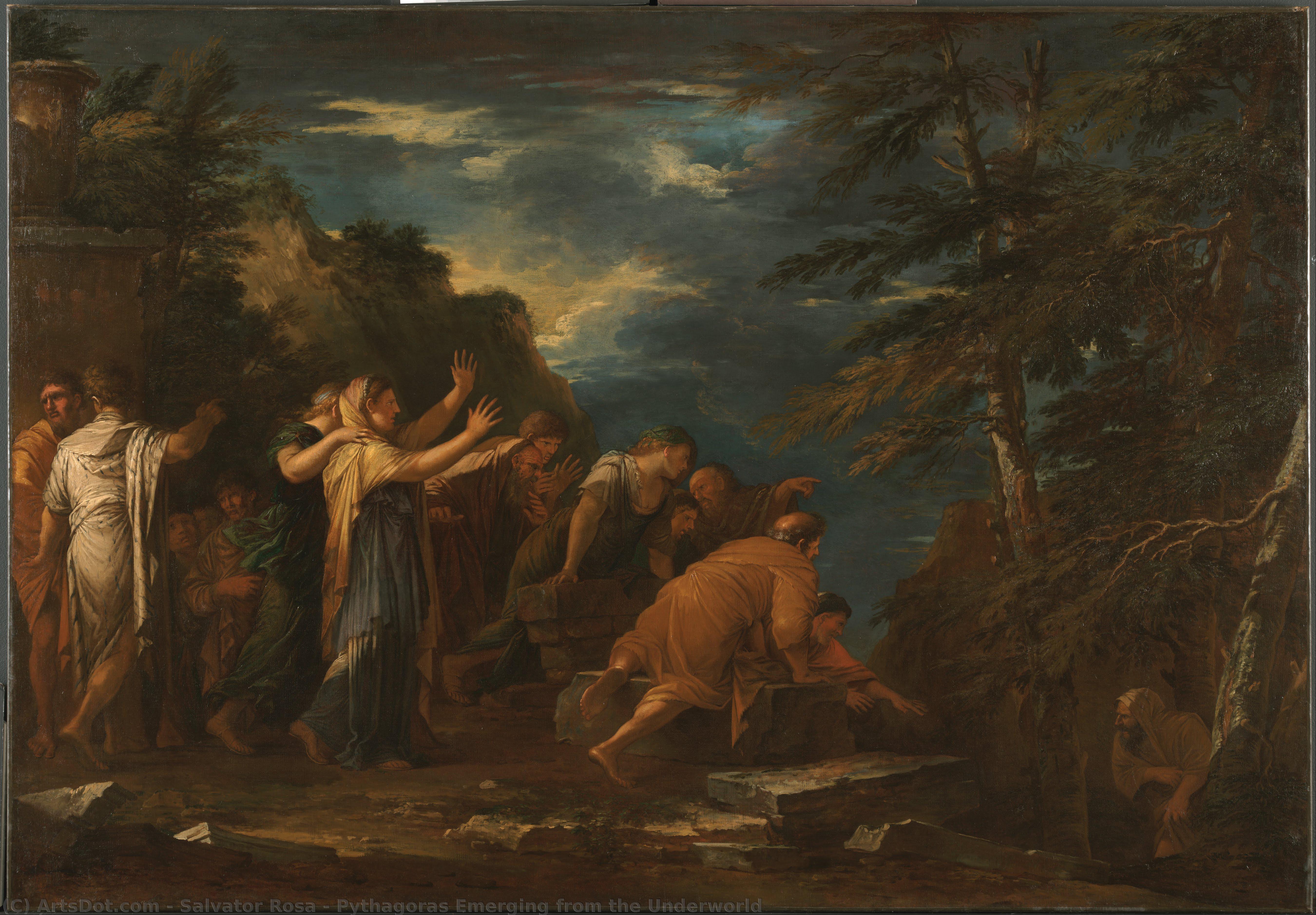
Salvator Rosa’s “Pythagoras Emerging from the Underworld” is more than just a painting; it's a profound meditation on mortality, enlightenment, and the enduring power of myth. Executed in 1662 during Rosa’s prolific period in Rome – a city buzzing with artistic innovation and intellectual ferment – this baroque masterpiece transcends mere visual representation to convey complex philosophical ideas. The artwork’s dramatic composition immediately draws the viewer into a subterranean scene dominated by shadowy figures, symbolizing the realm of Hades and the arduous journey towards spiritual rebirth. Rosa's distinctive style is characterized by an unparalleled sensitivity to naturalism combined with theatrical grandeur. He meticulously captures the textures of stone and earth, grounding the fantastical elements of the underworld in tangible reality. This juxtaposition underscores the painting’s central theme: that even within darkness and despair lies the potential for illumination – mirroring Pythagoras’s own belief that he had witnessed the souls of poets ascending to heaven after death. The artist skillfully employs chiaroscuro—the dramatic interplay of light and shadow—to heighten emotional impact, guiding our gaze across the canvas and emphasizing the figures' expressions of awe and wonder. The painting’s historical context is inextricably linked to the burgeoning interest in Neoplatonism during Rosa’s time. Pythagoras himself was revered as a prophet who had attained divine knowledge through contemplation and ascetic practice. Rosa’s depiction reflects this intellectual climate, portraying Pythagoras not merely as a philosopher but as a heroic figure undertaking a perilous quest for spiritual transcendence. The inclusion of two women – believed to represent souls guiding Pythagoras – reinforces the symbolism of feminine wisdom and compassion as essential components of the path to enlightenment. Rosa's masterful technique—primarily oil paint on canvas—allowed him to achieve remarkable detail and luminosity, capturing the ethereal quality of the underworld’s atmosphere. He meticulously blended pigments to create subtle gradations of color, enhancing the painting’s visual richness and conveying a sense of palpable emotion. The artist’s unwavering commitment to portraying human experience with unflinching honesty cemented his reputation as one of the foremost Baroque painters of his era. Ultimately, “Pythagoras Emerging from the Underworld” resonates deeply with viewers because it speaks to universal anxieties about death and rebirth. Rosa's artwork invites contemplation on the nature of existence and encourages us to embrace the transformative potential inherent in confronting our fears. It remains a testament to the enduring influence of Greek mythology and philosophy—and a stunning demonstration of Salvator Rosa’s artistic genius.Fragen & Antworten
Für welche Verwendung und welchen Raum wird "Pythagoras Aus Der Unterwelt" von Salvator Rosa empfohlen?
"Pythagoras Aus Der Unterwelt" von Salvator Rosa wird für Akzentuierung empfohlen, idealerweise in einem Wohnbereich. Die Verwendung und die Raumgestaltung geben gemeinsam Aufschluss darüber, wo eine Reproduktion am besten zur Geltung kommt.
Welche Technik und welcher Stil charakterisieren "Pythagoras Aus Der Unterwelt" von Salvator Rosa?
"Pythagoras Aus Der Unterwelt" von Salvator Rosa verbindet die Technik der Acryl auf Leinwand mit dem Stil der Baroque Style. Technik und Epoche beschreiben die Herstellung sowie die künstlerische Ausrichtung des Werkes.
Wer hat "Pythagoras Aus Der Unterwelt" geschaffen und in welchem Stil ist es gehalten?
"Pythagoras Aus Der Unterwelt" ist das Werk von Salvator Rosa aus der Epoche des Baroque Style.
 Vorschau anzeigen
 Versenden
 Teilen
 Details anzeigen
 Leitfaden

 Herunterladen
 Ähnliche Objekte
 Röntgenaufnahme
 Diashow
 Fragen & Antworten
 Statistiken