
 Vorschau anzeigen
 Versenden
 Teilen
 Details anzeigen

 Herunterladen
 Ähnliche Objekte
 Röntgenaufnahme
 Diashow
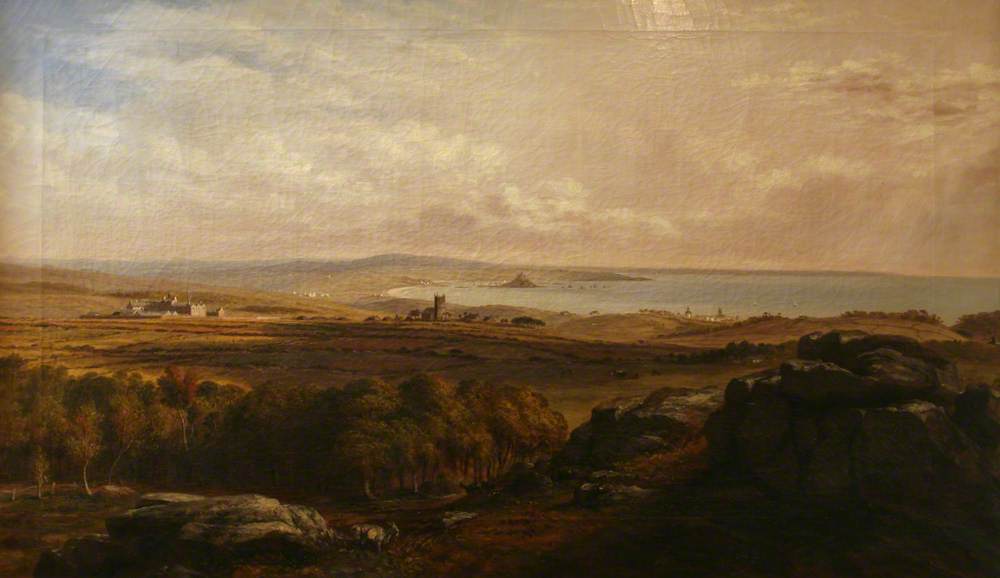
View from Madron Carn
 Romanticism
 1839
1839 87.0 x 136.0 cm
 Penlee House Galerie – Museum
 Weiterlesen
Giclée / Kunstdruck
Giclée- oder Leinwanddruck in Museumsqualität mit schneller Produktion und flexiblen Veredelungsoptionen. ( Handgemalte Reproduktion bestellen Bild kaufen)




































Wählen Sie aus unseren vordefinierten Formaten, die den ursprünglichen Proportionen des Kunstwerks entsprechen.

Sie können Ihre eigenen Maße eingeben, um ein bestimmtes Format oder einen speziellen Platz einzupassen. Wenn das von Ihnen gewählte Format nicht den Proportionen des Originalbildes entspricht, werden wir das Kunstwerk entweder beschneiden oder das Bild mit einem gespiegelten oder einfarbigen Rand erweitern. Ein digitaler Entwurf wird Ihnen zur Genehmigung zugesandt, bevor die Produktion beginnt.
Bitte beachten Sie, dass die Vorschau auf dem Bildschirm nicht den tatsächlichen Zuschnitt oder die Erweiterung widerspiegelt. Nur der Entwurf zeigt die endgültige Komposition präzise an.
Obwohl Sondermaße verfügbar sind, empfehlen wir die Auswahl eines Maßes aus der vordefinierten Liste, um die ursprünglichen Proportionen zu bewahren.
Weltweiter Versand () innerhalb von 2 Wochen statt der üblichen 4/5 Wochen. (22 August)

Kostenloser weltweiter Expressversand

Hochwertige Leinenleinwand

Umfassender Versicherungsschutz beim Versand

Zollgebühren-Rückerstattungsgarantie

Garantie für exakte Farbtreue

60 Tage Rückgaberecht (nur bei Mängeln)

100% Geld-zurück-Garantie

Mengenrabatt verfügbar
 Die Glasoption ist nur für Größen unter 110 cm verfügbar.

View from Madron Carn
Giclée / Kunstdruck
Format der Reproduktion
-


Gesamtpreis
$ 80
Über den Künstler
Richard Thomas Pentreath (1806 – 1869): Bridging Romantic Landscape and Cornish Folklore
Richard Thomas Pentreath (1806 – 1869) stands as a pivotal figure in British landscape painting during the Victorian era, blending meticulous observation with an infusion of Cornish folklore and mythology. Born in Cornwall, Pentreath’s artistic journey was shaped by his upbringing amidst the rugged coastline and ancient traditions of West Cornwall, influences that permeate his evocative canvases—a testament to his ability to capture both the grandeur of nature and the spirit of a disappearing culture.- Early Life & Education: Pentreath received his initial artistic training from his father, William Pentreath, a noted watercolorist who instilled in him a deep appreciation for tonal harmony and atmospheric perspective—techniques that would become hallmarks of Pentreath’s distinctive style.
- Parisian Influences: Recognizing the importance of formal education, Pentreath traveled to Paris in 1827 where he studied under Jean-Hippolyte Michaud, absorbing the Impressionist ideals championed by artists like Claude Monet and Frédéric Bazille. This exposure broadened his artistic horizons and encouraged him to experiment with looser brushstrokes and brighter palettes.
A Cornish Vision: Landscape Painting Rooted in Myth & Legend
Pentreath’s oeuvre is characterized by a profound engagement with the Cornish landscape—specifically, the dramatic coastline of Cornwall. Unlike many artists of his time who sought idealized representations of pastoral beauty, Pentreath deliberately incorporated elements of Cornish folklore and mythology into his paintings. Recurring motifs include depictions of Kernow y Werdh (The Old Cornwall), the mythical Cornish kingdom ruled by King Arthur, and references to ancient pagan rituals—reflecting a desire to preserve the cultural heritage of Cornwall as it faced increasing urbanization and industrialization.Technique & Style: Mastering Atmospheric Perspective
Pentreath’s artistic technique was rooted in the principles of tonal harmony and atmospheric perspective, honed during his formative years under William Turner. He meticulously studied Turner's masterful use of light and shadow to convey depth and mood—a skill he skillfully applied to his own landscapes. Pentreath favored oil paints on canvas, employing a layering process that allowed him to build up rich textures and create luminous effects. His brushstrokes were often loose and expressive, capturing the dynamism of the Cornish windswept coastlines.Notable Works & Recognition
Among Pentreath’s most celebrated paintings are “View from Madron Carn” (1839), a breathtaking depiction of Cornwall's rugged cliffs and turbulent seas—considered by many critics to be one of the finest landscapes produced in Britain during the Victorian period. He also created “Reverend B. A. Simmons,” a portrait capturing the solemn dignity of Cornish clergyman Reverend Simmons, demonstrating Pentreath’s versatility as an artist.Legacy & Historical Significance
Richard Thomas Pentreath's contribution to British landscape painting extends beyond mere aesthetic beauty; he served as a conduit for preserving Cornwall’s cultural identity. His paintings continue to inspire admiration for their masterful execution and profound connection to Cornish folklore—a reminder of the importance of artistic engagement with local traditions and landscapes. He remains an influential figure in Victorian art history, embodying the Romantic spirit's fascination with both sublime natural grandeur and the enduring power of myth.
richard thomas pentreath
1806 - 1869
Kurzinfos
- Artistic Movement Or Style: Romanticism
- Artists Who Influenced This Artist:
- John Constable
- George Caleb Bingham
- Date Of Birth: 1806
- Date Of Death: 1869
- Full Name: Richard Thomas Pentreath
- Nationality: British
- Notable Artworks:
- View from Madron Carn
- Reverend B. A. Simmons
- Place Of Birth: Cornwall
Ähnliche Artikel

Romantische Landschaften: Die 10 Meisterwerke, die eine Epoche prägten | OriginalUniqueArt
Entdecken Sie die 10 Meisterwerke der Romantischen Landschaftsmalerei! Von Caspar David Friedrich bis Turner – erleben Sie die Kunst, Emotion & Natur. Hochwertige Reproduktionen auf OriginalUniqueArt.com

Evocations of Place: A Historical Journey Through Landscape Art
Explore the rich history of landscape art with OriginalUniqueArt. Discover renowned artists, movements like Impressionism & Romanticism, and expert guidance for collecting timeless pieces. Find your perfect serene escape today!

The Sublime and the Picturesque: Exploring Emotion & Nature in Romantic Landscape Painting
Explore the emotional power of Romantic landscape painting! Discover the sublime & picturesque traditions, key artists like Friedrich & Cole, and find your perfect artwork at OriginalUniqueArt.

Evocations of Place: A Historical Journey Through Landscape Art
Explore the rich history of landscape art with OriginalUniqueArt. Discover renowned artists, movements like Impressionism & tonalism, and expert guidance for collecting timeless pieces. Find your perfect serene escape today!

John Constable: Die 25 Meisterwerke des englischen Landschaftsgenies – OriginalUniqueArt
Entdecken Sie die 25 Meisterwerke von John Constable! Erleben Sie englische Landschaftsmalerei vom Hay Wain bis zur Stour Valley. Hochwertige Reproduktionen & Kunst für Ihr Zuhause auf OriginalUniqueArt.com.

