
 Vorschau anzeigen
 Versenden
 Teilen
 Details anzeigen
 Leitfaden

 Herunterladen
 Ähnliche Objekte
 Röntgenaufnahme
 Diashow
 Q&A
Q&A Statistiken
Mrs.George Watson (Elizabeth Oliver)

- 101.0 x 126.0 cm


 Weiterlesen
Giclée / Kunstdruck
Giclée- oder Leinwanddruck in Museumsqualität mit schneller Produktion und flexiblen Veredelungsoptionen. ( Handgemalte Reproduktion bestellen Zum digitalen Bild wechseln)




P118B €10

P118H €10

P118W €10

P438Z €10

P508JH €12

P508YH €12

P805H €10

P805Z €10

P919BZ €10

P919G €10

P919XJ €10

P959ZH €10

P968JZ €12

W106C €8

W218G €10

W218JH €8

W218Y €10

W307PJ €10

W316G €10

W316PJ €8

W316Y €10

W398PJ €8

W4111J €10

W500HY €15

W500JH €15

W692G €12

W849H €8

W940BG €15

W953PJ €8




Wählen Sie aus unseren vordefinierten Formaten, die den ursprünglichen Proportionen des Kunstwerks entsprechen.

Geben Sie die benötigte Breite und Höhe an, damit der Druck perfekt in Ihren Rahmen oder an Ihre Wand passt. Ein Druck kann nur beschnitten, aber niemals größer als das Originalbild angefertigt werden; daher verliert ein Format mit anderen Proportionen einen Teil des Bildes. Wir senden Ihnen ein digitales Mockup zur Freigabe, bevor wir den Druck ausführen. Das auf dieser Seite gezeigte Bild zeigt nicht den tatsächlichen Beschnitt – dies ist nur im Mockup ersichtlich.
Weltweiter Versand () innerhalb von 2 Wochen statt der üblichen 4/5 Wochen. (1 November)

Kostenloser weltweiter Expressversand

Hochwertige Leinenleinwand

Umfassender Versicherungsschutz beim Versand

Zollgebühren-Rückerstattungsgarantie

Garantie für exakte Farbtreue

100 Tage Rückgaberecht (nur bei Mängeln)

100% Geld-zurück-Garantie

Mengenrabatt verfügbar
 Die Glasoption ist nur für Größen unter 110 cm verfügbar.

Mrs.George Watson (Elizabeth Oliver)
Giclée / Kunstdruck
Format der Reproduktion
-


Endpreis
€ 71
Mrs. George Watson (Elizabeth Oliver): A Neo-Classical Portrait of Refined Grace
John Singleton Copley’s “Mrs. George Watson (Elizabeth Oliver),” completed in 1765, stands as a cornerstone of American Neoclassical portraiture – a testament to the burgeoning artistic identity taking shape across the Atlantic. This exquisite painting, measuring 101 x 126 cm and executed in oil on canvas, transcends mere representation; it’s an immersive experience of elegance, poised serenity, and the subtle complexities of early 18th-century society. Copley, a Boston native born in 1738, was a true innovator, bridging the gap between European artistic traditions and the developing sensibilities of his American contemporaries. His meticulous attention to detail – evident in the delicate folds of Elizabeth Oliver’s pink silk gown adorned with white lace, the realistic rendering of her flowers, and the carefully considered composition – speaks volumes about his dedication to capturing not just a likeness, but the very soul of his subject.
Neo-Classicism: Echoes of Antiquity
Copley’s work is firmly rooted in the principles of Neo-Classicism, a style that swept through Europe and America during this period. Inspired by the art and architecture of ancient Greece and Rome, Neo-Classicism championed order, balance, and moral virtue. Notice how Copley employs clean lines, symmetrical proportions, and a restrained palette to evoke a sense of timeless beauty and intellectual seriousness. The composition itself – Elizabeth Oliver standing beside a wall, a symbol of domesticity and societal status – aligns perfectly with the movement’s emphasis on idealized forms and rational thought. This wasn't simply about depicting a fashionable woman; it was about presenting an image of refined virtue, reflecting the values prized within the upper echelons of colonial society.
Technique and Detail: Copley’s Masterful Brushwork
Copley's technical skill is immediately apparent in the painting’s remarkable detail. He employed a technique known as “impasto,” applying thick layers of paint to create texture and depth, particularly noticeable in the fabric of Elizabeth Oliver’s dress. The subtle gradations of light and shadow – achieved through careful observation and masterful brushwork – lend a luminous quality to the portrait, enhancing the subject's beauty and creating an illusion of three-dimensionality. The artist’s ability to capture the sheen of silk, the delicate petals of the flowers, and the soft texture of Elizabeth Oliver’s skin demonstrates his profound understanding of materials and their effects under light.
Symbolism and Context: A Window into 1765 Boston
Beyond its aesthetic qualities, “Mrs. George Watson” offers a fascinating glimpse into the social and cultural landscape of 1765 Boston. Elizabeth Oliver’s attire – the pink silk gown, the white lace, the flowers – were all indicators of wealth and status within colonial society. The setting itself, a simple wall, suggests a domestic scene, emphasizing her role as a wife and homemaker. Copley's portrait was commissioned by George Watson, reflecting the importance of social connections and familial alliances in this era. The painting’s eventual acquisition by the Smithsonian American Art Museum underscores its significance not just as an artistic masterpiece, but also as a valuable historical document.
Own a Piece of History: High-Quality Reproductions Available
Experience the timeless beauty and artistry of “Mrs. George Watson (Elizabeth Oliver)” with a meticulously crafted hand-painted reproduction from OriginalUniqueArt.com. Our reproductions are created using traditional techniques, ensuring exceptional detail and color accuracy, faithfully capturing Copley’s original vision. Perfect for adorning your home or office, this artwork is more than just decoration; it's an investment in art history.
Fragen & Antworten
Wie kann ich eine Vorschau einer Reproduktion von "Mrs.George Watson (Elizabeth Oliver)" von John Singleton Copley aufrufen?
Um eine Vorschau einer Reproduktion von "Mrs.George Watson (Elizabeth Oliver)" von John Singleton Copley zu erhalten, öffnen Sie die Vorschau im Raum-Seite des Kunstwerks.
Wie harmonisch ist die Farbgestaltung von "Mrs.George Watson (Elizabeth Oliver)" von John Singleton Copley?
Die Farben von "Mrs.George Watson (Elizabeth Oliver)" von John Singleton Copley weisen eine Softly Mixed Palette Harmonie auf. Harmonie beschreibt das Zusammenspiel der Farben untereinander.
In welcher Phase der Karriere von John Singleton Copley lässt sich „Mrs.George Watson (Elizabeth Oliver)“ angesichts seines Entstehungsdatums einordnen?
Angesichts seiner Datierung auf 1765 fällt "Mrs.George Watson (Elizabeth Oliver)" in die Mature Period von John Singleton Copley.
Künstlerbiografie
Ein Pionier der anglo-amerikanischen Malerei (1738–1815)
John Singleton Copley, ein renommierter anglo-amerikanischer Maler, hat mit seinen fesselnden Porträts und Landschaftsbildern bleibende Spuren in der Kunstwelt hinterlassen. Geboren in Boston, Massachusetts, für Richard und Mary Singleton Copley, beide englisch-irischer Abstammung, ist Johns künstlerische Reise ein Beweis für sein angeborenes Talent und seine Hingabe.Frühes Leben und Ausbildung
Obwohl es nur wenige Informationen über Johns formelle Ausbildung gibt, wird angenommen, dass er sich weitgehend autodidaktisch entwickelte und schon in jungen Jahren eine Neigung zur Kunst zeigte. Sein Stiefvater, Peter Pelham, ein Graveur und Maler, mag ihm einige Hinweise gegeben haben, doch der Großteil von Johns künstlerischer Entwicklung ist seinem eigenen Fleiß zuzuschreiben.Künstlerische Beiträge
John Singleton Copleys Werk zeichnet sich durch Folgendes aus:- Porträtmalerei: Seine Porträts wohlhabender und einflussreicher Persönlichkeiten Neuenglands sind für ihre Detailgenauigkeit und die Einbeziehung von Artefakten bekannt, die das Leben der dargestellten Personen widerspiegeln.
- Innovativer Stil: Copleys Tendenz, bürgerliche Subjekte mit Fokus auf ihren Alltag darzustellen, unterschied sich von der traditionellen Porträtmalerei seiner Zeit.
- Künstlerische Bandbreite: Von Selbstporträts bis hin zu historischen Szenen demonstriert Johns Werk seine Vielseitigkeit und sein Können, eine breite Palette von Themen einzufangen.
Bemerkenswerte Werke und ihre Bedeutung
Zu John Singleton Copleys bekanntesten Werken gehören:- Der Zusammenbruch des Earl of Chatham im House of Lords (Tate Gallery (London, Großbritannien), Öl auf Leinwand), eine ergreifende Darstellung eines entscheidenden Moments in der britischen Geschichte.
- Mr. und Mrs. Ralph Izard (Alice Delancey) (Museum of Fine Arts (Boston, USA), Öl auf Leinwand), ein beispielhaftes Porträt, das Johns Detailgenauigkeit und seine Fähigkeit, die Essenz seiner Sujets einzufangen, demonstriert.
Vermächtnis und Einfluss
John Singleton Copleys Einfluss auf die Kunstwelt ist unbestreitbar. Sein innovativer Ansatz in der Porträtmalerei und seine Beiträge zur anglo-amerikanischen Malerei haben Generationen von Künstlern beeinflusst. Für ein tieferes Verständnis von Johns Werk und seiner Bedeutung besuchen Sie Wahoos John Singleton Copley Seite, die eine umfangreiche Sammlung seiner Kunstwerke bietet.Weiterführende Informationen
Für weitere Informationen zur Geschichte der Malerei und ihrer Entwicklung konsultieren Sie bitte Wikipedias Artikel über die Geschichte der Malerei. Um Wahoos umfangreiche Sammlung zu erkunden, einschließlich Werke aus verschiedenen Epochen und Stilen, navigieren Sie durch Wahoos Burghley House (Stamford, USA) – ein verstecktes Juwel der amerikanischen Kunst und die Entdeckung der Kunstwerke des St Hilda’s College, Oxford, Großbritannien.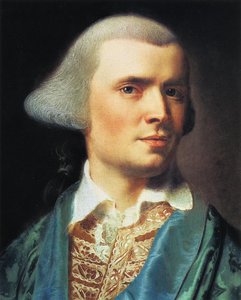
John Singleton Copley
1738 - 1815 , Vereinigtes Königreich
Kurzinfos
- Bemerkenswerte Werke:
- Der Zusammenbruch des Earl of Chatham
- Herr und Frau Ralph Izard
- Geburtsdatum: 1738
- Geburtsort (Stadt Und Land): Boston, Vereinigtes Königreich
- Künstlerische Bewegung Oder Stil: Porträtmalerei, Realismus
- Nationalität: Anglo-Amerikanisch
- Sterbedatum: 1815
- Vollständiger Name: John Singleton Copley
Ähnliche Artikel
Die zartesten Meisterwerke: Top 10 Gemälde in Lichtrosa & ihre Geschichte |
Entdecken Sie die Top 10 berühmter Gemälde in zarten Rosatönen! Von impressionistischen Meisterwerken bis hin zu romantischen Ikonen – erfahren Sie mehr über Künstler, Techniken & Geschichte. Hochwertige Kunstdrucke auf .
Timeless Resonance: Exploring Classic Vibe in Art – A Historical & Aesthetic Analysis
Explore the rich history & enduring aesthetic of Classicism art! Discover key movements, iconic artists like Raphael & David, and its lasting influence on Western art. Deepen your appreciation today.

Neo-Classicism Reimagined: The Bold Return of Order, Power, and Timeless Aesthetic Authority
Explore the resurgence of Neo-Classicism. Discover how the bold return of order, symmetry, and mythic power is redefining modern luxury interiors through museum-quality, hand-painted reproductions and bespoke classical commissions for the discerning art collector.
The Enduring Legacy of Classicism: Principles, Evolution & Influence in Western Art
Explore the enduring legacy of Classicism in Western art! Discover its historical context, key principles, iconic masterpieces & lasting influence. Learn about Renaissance and Neoclassical movements with OriginalUniqueArt.

Die 10 Meisterwerke des Neoklassizismus: Kunst für Ihr Zuhause |
Entdecken Sie die 10 Meisterwerke des Neoklassizismus! Von David bis Canova – erleben Sie Kunstgeschichte, elegante Ästhetik & zeitlose Schönheit. Hochwertige Reproduktionen auf .


