

 In echtem Maßstab anzeigen
 Versenden als Grußkarte
 Teilen
 Details anzeigen
 Leitfaden öffnen

 Herunterladen
 Ähnliche Objekte
 Röntgenaufnahme
 Diashow
 Besucherstatistiken
Virtue


 Mehr anzeigen
Handgefertigte Ölreproduktion
Handgemaltes Ölgemälde auf Leinwand in Ihrer Wunschgröße und mit Rahmen, auf Bestellung von unseren Künstlern angefertigt. ( Zum Druck wechseln Zum digitalen Bild wechseln)




P118B €10

P118H €10

P118W €10

P438Z €10

P508JH €12

P508YH €12

P805H €10

P805Z €10

P919BZ €10

P919G €10

P919XJ €10

P959ZH €10

P968JZ €12

W106C €8

W218G €10

W218JH €8

W218Y €10

W307PJ €10

W316G €10

W316PJ €8

W316Y €10

W398PJ €8

W4111J €10

W500HY €15

W500JH €15

W692G €12

W849H €8

W940BG €15

W953PJ €8




Wählen Sie aus unseren vordefinierten Formaten, die den ursprünglichen Proportionen des Kunstwerks entsprechen.

Sie können Ihre eigenen Maße eingeben, um einen bestimmten Rahmen oder Platz auszufüllen. Wenn die gewählte Größe nicht den Proportionen des Originalbildes entspricht, werden wir das Kunstwerk entweder beschneiden oder das Gemälde durch zusätzliche, handgemalte Elemente erweitern. Ein digitales Mockup wird Ihnen zur Genehmigung zugesandt, bevor die Produktion beginnt.
Bitte beachten Sie, dass die Bildschirmvorschau nicht die tatsächliche Beschneidung oder Erweiterung widerspiegelt. Nur das Mockup zeigt die endgültige Komposition exakt an.
Obwohl Sondermaße verfügbar sind, empfehlen wir, eine Größe aus der vordefinierten Liste zu wählen, um die ursprünglichen Proportionen beizubehalten.
Nach der Bestellung wird das OriginalUniqueArt.com-Team dem Kunden Anweisungen per E-Mail zusenden und eine Mockup-Vorschau bereitstellen.
Weltweiter Versand () in nur 3 bis 4 Wochen statt der üblichen 5 Wochen. (7 Oktober). Keine Kompromisse bei der Qualität.

Kostenloser weltweiter Expressversand

Hochwertige Leinenleinwand

Vollständiger Versicherungsschutz beim Versand

Zollgebühren-Rückerstattungsgarantie

Garantie für exakte Farbtreue

100-tägiges Rückgaberecht (nur bei Mängeln)

100% Geld-zurück-Garantie

Angebot für Mengenrabatt
 Die Glasoption ist nur für Größen unter 110 cm verfügbar.

Virtue
Reproduktionsmedium
Format der Reproduktion
-


Gesamtpreis
€ 258
Virtue: A Testament to Renaissance Idealism
Jacopo della Quercia’s “Virtue,” sculpted around 1414, stands as an emblem of the burgeoning humanist spirit that characterized early Renaissance Florence—a moment where classical ideals wrestled with Christian theology to forge a new aesthetic vision. This marble sculpture, housed in Siena Cathedral's Fonte Gaia fountain complex, isn’t merely a depiction of a woman; it’s a carefully crafted embodiment of Temperance, one of the Cardinal Virtues revered throughout Christendom and championed by philosophers like Pico della Mirandola as essential for achieving human flourishing. The sculpture itself is remarkably restrained in its composition. A seated female figure dominates the frame, positioned within an architectural niche that lends depth to the scene. Her gaze directs upwards, conveying a sense of serene contemplation—a deliberate choice reflecting the Renaissance fascination with inner reflection and moral virtue. The drapery clings to her form, rendered with flowing lines that contrast subtly with the angularity of her face and hands, demonstrating Quercia’s mastery of sculptural technique. Circular shapes are present in the folds of fabric, mirroring the harmonious balance sought by artists of the period. The artist skillfully employed subtractive sculpting—removing material from a block of Carrara marble—to reveal the idealized form he envisioned. The surface texture captures the subtle imperfections inherent in natural stone, yet maintains an overall smoothness that underscores the sculpture’s polished appearance. Light emanates from above and slightly to the left, casting shadows that accentuate the three-dimensionality of the figure and niche walls, creating a convincing illusion of space. This masterful use of lighting aligns perfectly with Renaissance artistic conventions, prioritizing realism while elevating the subject matter to spiritual significance. Beyond its technical prowess, “Virtue” resonates deeply with symbolic meaning. The book held by the woman symbolizes knowledge—a cornerstone of humanist thought—and represents divine guidance, mirroring the theological framework underpinning the sculpture’s creation. Her posture exudes dignity and wisdom, reflecting the Renaissance aspiration for moral excellence and intellectual enlightenment. Viewing this artwork evokes feelings of reverence and contemplation—a reminder that beauty can serve as a conduit to profound ethical considerations. The Fonte Gaia fountain complex itself is a testament to Siena's artistic ambition during the Quattrocento. Commissioned by Pope Pius II, it represents an extraordinary undertaking in civic art, aiming to elevate Siena’s prestige and commemorate its patron saint, Saint Catherine of Siena. Jacopo della Quercia’s contribution—along with other prominent sculptors—was intended to inspire piety and reinforce moral values within the city's populace. “Virtue,” therefore, isn’t just a standalone masterpiece; it’s an integral part of a larger artistic project designed to shape the cultural landscape of Renaissance Italy.- Artist: Jacopo della Quercia
- Born Year: 1374
- Death Year: 1438
- Birth City: Monteroni di Lecce
- Birth Country: Italy
- Material: Marble
- Technique: Subtractive Sculpting
- Style: Early Renaissance Sculpture
Fragen & Antworten
Welche Größe und Ausrichtung werden für einen Druck von "Virtue" von Jacopo Della Quercia empfohlen?
Format Large, Ausrichtung Portrait: Dies ist die empfohlene Druckeinstellung für "Virtue" von Jacopo Della Quercia.
Ist "Virtue" als Kunstdruck erhältlich?
Um einen Druck von "Virtue" von Jacopo Della Quercia zu erhalten, bestellen Sie ihn einfach auf diese Seite: ein Fine Art Print auf Baumwollkanvas oder Archiv-Leinwandpapier.
Was ist das Entstehungsdatum von "Virtue" von Jacopo Della Quercia?
"Virtue" stammt aus dem Jahr 1414. Dieses Datum ordnet das Werk in die Schaffensperiode von Jacopo Della Quercia sowie in dessen Epoche ein.
In welchem Alter schuf Jacopo Della Quercia „Virtue"?
Als "Virtue" im Jahr 1414 entstand, war Jacopo Della Quercia – geboren 1374 – 40 Jahre alt.
Wer ist der Künstler hinter "Virtue"?
Der Künstler hinter „Virtue“ ist Jacopo Della Quercia. Das Werk ist unter dem Namen von Jacopo Della Quercia katalogisiert.
Ist "Virtue" im Heimatland seines Künstlers verblieben?
Ja – das Kunstwerk befindet sich im Heimatland der Künstlerin / des Künstlers. Der Künstler wurde in Italien geboren; das Originalwerk befindet sich in Italien.
Welche Stimmung würde "Virtue" in einen Raum bringen?
"Virtue" von Jacopo Della Quercia besitzt eine Serene Atmosphäre und wird für ein Living Room empfohlen. Die Stimmung beschreibt das Gefühl, das das Werk in den umgebenden Raum bringt.
Biografie des Künstlers
Jacopo della Quercia: Bridging the Gothic and Embracing Renaissance Vision
Jacopo della Quercia, a name inextricably linked to the transformative period of 15th-century Italy, stands as a pivotal figure – a master craftsman who skillfully bridged the lingering shadows of the Gothic era with the burgeoning brilliance of the Italian Renaissance. Born in Monteroni di Lecce around 1374 and tragically passing away in Bologna in 1438, his life unfolded as a rich tapestry woven from commissions, artistic rivalries, and an unwavering engagement with both the enduring wisdom of classical antiquity and the evolving sensibilities of his time. He wasn’t merely a sculptor; he was an architect of style, a translator between traditions, and ultimately, a harbinger of the revolutionary artistic shifts that would define the Renaissance.
His formative years were meticulously shaped under the guidance of his father, Piero d'Angelo – a highly skilled woodcarver and goldsmith. This early apprenticeship instilled within him not just technical proficiency but also an acute appreciation for craftsmanship, the meticulous detail required to bring form to stone, and the enduring power of traditional techniques. However, Jacopo’s artistic journey took on a profound dimension through his exposure to the monumental works adorning the pulpit of Siena Cathedral – specifically, the sculptures by Nicola Pisano and Arnolfo di Cambio. These encounters ignited within him a fervent fascination with narrative sculpture, dynamic composition, and the expressive potential inherent in human form – elements that would become defining characteristics of his distinctive style.
The Early Years: Lucca and the Seeds of Innovation
Jacopo’s career truly blossomed in Lucca, a strategically positioned city at the heart of Italy's artistic crossroads. His relocation to Lucca with his father in 1386, driven by political instability, proved to be a catalyst for significant artistic development. It was here that he began to establish himself as a sculptor of considerable promise, undertaking projects such as the poignant “Man of Sorrows” for the altar of the Sacrament and a relief depicting St. Aniello on a tomb. These early works already demonstrated a nascent ability to imbue stone with emotional depth – a characteristic that would become increasingly pronounced in his later career. The "Man of Sorrows," in particular, showcased a remarkable sensitivity to human suffering, foreshadowing the profound psychological realism that would characterize Renaissance sculpture.
A defining moment arrived in 1401 when Jacopo entered the prestigious competition to design the bronze doors for Florence’s Baptistery – a contest fiercely contested by some of Italy's most celebrated artists. While he ultimately didn’t secure the commission itself, this experience served as an invaluable crucible, exposing him to the highest standards of Florentine artistry and fueling his ambition. The designs themselves remain lost to history, adding an intriguing layer to his already fascinating story.
Ferrara and the Influence of Roman Antiquity
Jacopo’s artistic trajectory continued eastward to Ferrara in 1403, where he was entrusted with a significant commission: the creation of a marble sculpture of the Virgin and Child for the city's cathedral. This work marked a decisive shift towards greater naturalism and a profound engagement with the legacy of classical antiquity. He immersed himself in the study of Roman sculptures and sarcophagi, absorbing their elegance, proportion, and narrative power – elements that would profoundly shape his artistic vision.
The city of Ferrara provided him with unparalleled access to an extraordinary collection of Roman artifacts, sparking a deep appreciation for the beauty and intellectual depth of the ancient world. This encounter fueled his desire to integrate classical motifs into his own work, subtly yet decisively transforming the Gothic style he had inherited. He began to incorporate elements of classical drapery, anatomy, and composition – creating sculptures that possessed both a distinctly humanistic sensibility and a subtle echo of antiquity.
Fonte Gaia: A Masterpiece of Civic Pride and Artistic Innovation
Perhaps Jacopo della Quercia’s most enduring legacy is undoubtedly Fonte Gaia, a monumental fountain commissioned in 1406 by Paolo Guinigi, the ruler of Lucca. This ambitious project represented not only a significant civic investment but also a bold artistic statement – a deliberate rejection of the pagan Venus statue that had previously adorned the square and been blamed for outbreaks of plague. The fountain itself is a marvel of engineering and artistry, constructed from gleaming white marble and adorned with numerous statues and spouts, creating a vibrant spectacle of water and light.
Fonte Gaia stands as a testament to Jacopo’s ability to synthesize diverse influences – Gothic elegance, classical proportion, and the burgeoning spirit of the Renaissance. The inclusion of nude putti flanking the fountain's base—a daring departure from traditional sculptural conventions—clearly signaled his embrace of classical ideals while retaining a distinctly humanistic sensibility. The project, however, was a protracted undertaking, spanning over a decade and reflecting the challenges inherent in managing multiple commissions simultaneously.
Later Works and a Legacy of Transition
Throughout the remainder of his career, Jacopo della Quercia continued to work on a diverse range of projects, including the Trenta Chapel in San Frediano, Lucca, and tomb slabs for Lorenzo Trenta and his wife. His involvement in the design of a hexagonal basin with bronze panels for Siena’s Baptistery, alongside his rival Ghiberti, resulted in the completion of only one relief – “The Annunciation to Zacharias” – due to his simultaneous commitments to other projects. This episode highlights his cautious approach to working with bronze and his preference for the more manageable medium of marble.
Jacopo della Quercia’s life was tragically cut short in 1438, but his artistic legacy endures as a bridge between the Gothic and Renaissance worlds. He wasn't simply a skilled craftsman; he was an innovator, a visionary, and a key figure in shaping the trajectory of Italian art. His work foreshadowed the revolutionary developments championed by Michelangelo, solidifying his place as one of the most important sculptors of the Early Renaissance.

Jacopo Della Quercia
1374 - 1438 , Italien
Eckdaten zum Künstler
- Artistic Movement Or Style: Frührenaissance
- Artists Or Movements Influenced By This Artist: ['Michelangelo']
- Artists Who Influenced This Artist:
- Pisano
- Arnolfo
- Date Of Birth: c. 1374
- Date Of Death: 1438
- Full Name: Jacopo della Quercia
- Nationality: Italiener
- Notable Artworks:
- Fonte Gaia
- Tomb Ilaria
- Zacharias
- Place Of Birth: Siena, Italien
Verwandte Artikel

The Enduring Allure of Marble in Art History: From Classical Sculpture to Modern Abstraction
Explore the captivating history of marble sculpture from ancient Greece to modern art. Discover renowned artists like Canova & Michelangelo, carving techniques, and investment insights at OriginalUniqueArt.

Die 10 legendärsten Bronzestatuen: Meisterwerke, die Kunstgeschichte schrieben | OriginalUniqueArt
Entdecken Sie die 10 legendärsten Bronzestatuen der Kunstgeschichte! Von Rodin bis Michelangelo – erfahren Sie die Geschichten hinter ikonischen Skulpturen und finden Sie hochwertige Reproduktionen für Ihr Zuhause. Jetzt bei OriginalUniqueArt entdecken!
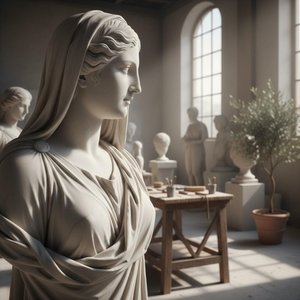
Timeless Elegance: A Complete Guide to the Sublime Beauty and Artistry of Marble Sculpture
Discover the sublime beauty of marble art through an expert exploration of Renaissance and Neoclassical masterpieces. From the delicate textures of Carpeaux to the grandeur of Sansovino, immerse yourself in a guide to timeless elegance and sculptural perfection.

Bronze-Meisterwerke: Die 10 Skulpturen, die Kunstgeschichte schrieben | OriginalUniqueArt
Entdecken Sie die 10 legendärsten Bronze Skulpturen der Kunstgeschichte! Von Michelangelo bis Rodin – erfahren Sie die Geschichten hinter den Meisterwerken und lassen Sie sich von Wanddeko-Ideen inspirieren. Hochwertige Kunstdrucke auf OriginalUniqueArt.com.
Jacopo Tintoretto: Die 25 Meisterwerke des venezianischen Dramatikers | OriginalUniqueArt
Entdecken Sie die 25 Meisterwerke von Jacopo Tintoretto! Tauchen Sie ein in die dramatische Welt der venezianischen Renaissance. Hochwertige Kunst-Reproduktionen & Inspiration für Ihr Zuhause – jetzt auf OriginalUniqueArt.com.


