Neo-Romanticism · 1973
Hände I (Henry Moore, 1973)
Henry Moore (1898–1986) schuf Hände I. Es stammt aus dem Jahr 1973. Es gehört zur Neo-Romanticism-Strömung. Es ist aus Lithografie gefertigt. Es befindet sich im Tate Britain in London, Vereinigtes Königreich. Die Maße sind 22 × 24 cm.
- 1973
- Lithografie
- 22 × 24 cm
- Tate Britain, London

 Vorschau anzeigen

 Handgemaltes Ölgemälde
 Versenden
 Teilen
 Datenblatt


 Herunterladen
 Ähnliche Objekte
 Röntgenaufnahme
 Diashow
 Fragen & Antworten

 Statistiken
Hände I im Überblick
- Titel
- Hände I
- Künstler
- Henry Moore (1898–1986)
- Geburtsjahr des Künstlers
- Castleford, Vereinigtes Königreich
- Datum
- 1973
- Medium
- Lithografie
- Maße
- 22 × 24 cm
- Ausstellungsort
- Tate Britain, London, Vereinigtes Königreich
- Bewegung
- Neo-Romanticism
- Motiv
- hands, connection, gesture, intimacy, lithograph, moore
Was stellt Hände I dar?
Henry Moore’s ‘Hands I’: A Silent Dialogue of Connection
Henry Moore's lithograph 'Hands I', created in 1973, is far more than a simple depiction of two hands clasped together. It’s a profoundly intimate meditation on human connection, vulnerability, and the enduring power of touch – a theme that resonates deeply within Moore’s entire oeuvre. Born in Yorkshire during a period of significant social upheaval, Moore's work consistently explored the relationship between the individual and their environment, often focusing on the female form as a symbol of both strength and fragility. This particular image, rendered in stark black and white, strips away any superfluous detail, leaving us with an almost unbearably direct portrayal of two hands reaching out to one another.
The lithograph’s technical execution is deceptively simple. Moore masterfully utilizes the limitations of the medium – the smooth, velvety texture of the stone, the precise lines of the etching – to create a sense of palpable warmth and immediacy. The hands are not idealized; they possess a certain roughness, a slight imperfection that imbues them with a remarkable sense of realism and humanity. The positioning is crucial: the fingers intertwined suggest a gentle embrace, a silent exchange of reassurance. It’s a gesture both familiar and deeply moving, evoking memories of comfort, support, and shared experience.
Exploring Moore's Artistic Journey
To fully appreciate ‘Hands I’, it’s essential to understand Henry Moore’s broader artistic trajectory. Initially drawn to sculpture, he moved into drawing and printmaking later in his career, finding new ways to explore the same fundamental concerns – form, space, and human emotion. His early work was heavily influenced by Primitivism and African masks, which instilled in him a fascination with simplified forms and powerful symbolism. As he matured, Moore’s style evolved, becoming increasingly abstract while retaining a deep sensitivity to the natural world. The Yorkshire landscape, with its rolling hills and dramatic light, remained a constant source of inspiration throughout his life.
Moore's journey from humble beginnings in Castleford to international acclaim is itself a remarkable story. His father, a self-taught man who valued education above all else, steered him away from the family’s traditional mining occupation and towards formal artistic training. This early emphasis on learning shaped Moore’s lifelong dedication to his craft and fueled his relentless pursuit of artistic innovation. His later years were marked by significant commissions, including monumental sculptures for public spaces around the world – works that continue to captivate viewers with their scale and emotional resonance.
Symbolism and Emotional Resonance
The symbolism within ‘Hands I’ is subtle yet profound. The act of holding hands represents a fundamental human need: connection, empathy, and mutual support. In a world often characterized by isolation and division, this simple gesture speaks volumes about the importance of human relationships. Moore frequently explored themes of vulnerability and resilience in his work, suggesting that even in the face of adversity, there is always room for compassion and understanding.
Furthermore, the monochrome palette – the stark contrast between black and white – amplifies the emotional impact of the image. It removes any distractions, focusing our attention entirely on the hands themselves and their silent dialogue. The lack of color evokes a sense of timelessness, suggesting that this fundamental human need for connection transcends cultural boundaries and historical periods. The image invites contemplation, prompting us to reflect on our own relationships and the ways in which we connect with others.
A Timeless Masterpiece for Reproduction
OriginalUniqueArt offers meticulously crafted hand-painted reproductions of ‘Hands I’ that capture the essence of Moore's original lithograph. Our skilled artists faithfully recreate the subtle nuances of texture, line, and tone, ensuring that your reproduction is a faithful representation of this iconic work. Whether you are an art collector, interior designer, or simply someone who appreciates beautiful art, our reproductions provide a stunning way to bring Moore’s powerful vision into your home or office.
Consider the impact of ‘Hands I’ in your space – its ability to evoke feelings of warmth, connection, and quiet contemplation. It's a piece that speaks to the enduring human need for intimacy and belonging, a timeless reminder of the power of touch and the beauty of simple gestures.
In welchem Museum befindet sich Hände I?
Tate Britain
London, Vereinigtes Königreich
Die Ursprünge und Geschichte der Tate Britain Die Grundsteine für die Tate Britain wurden von Sir Henry Tate gelegt, dessen Vision einen ganz eigenen Raum für das künstlerische Schaffen der Nation schuf. Am 21. Juli 1897 öffnete die Institution ihre Pforten, wobei sie zunächst unter dem Namen National Gallery of British Art operierte.


Hochauflösende Bilder von Hände I

Protected by copyright: these files are for personal reference, not a licence to republish.
Henry Moore, Hände I (1973), Tate Britain.
Fragen zu Hände I, beantwortet
Wo kann ich das Original von "Hände I" von Henry Moore sehen?
Das Originalwerk „Hände I“ können Sie im Tate Britain, London, Vereinigtes Königreich bewundern.
Wann wurde "Hände I" geschaffen?
"Hände I" stammt aus dem Jahr 1973. Dieses Datum ordnet das Werk in die Schaffensperiode von Henry Moore sowie in dessen Epoche ein.
Welche Technik wurde für "Hände I" von Henry Moore verwendet?
"Hände I" wurde in Lithografie ausgeführt.
Welche Maße hat das Originalwerk "Hände I"?
Das Originalwerk "Hände I" hat die Maße 24 x 22 cm. Die Originalmaße dienen als hilfreiche Orientierungshilfe bei der Wahl der Reproduktionsgröße.
Was stellt "Hände I" von Henry Moore dar?
"Hände I" von Henry Moore zeigt: hands, connection, gesture, intimacy, lithograph, moore, black and white, interaction.
Ist "Hände I" von Henry Moore gemeinfrei?
Die urheberrechtliche Situation für "Hände I" von Henry Moore: Das Werk ist noch urheberrechtlich geschützt. Dies bestimmt, ob Reproduktionen des Bildes frei erstellt werden dürfen.
Wer ist der Künstler hinter "Hände I"?
Der Künstler hinter „Hände I“ ist Henry Moore. Das Werk ist unter dem Namen von Henry Moore katalogisiert.
Zu welcher Stilrichtung gehört "Hände I"?
„Hände I“ ist ein Werk der Neo-Romanticism. Die Stilrichtung gibt die künstlerische Tradition an, der das Werk angehört.
In welche Phase von Henry Moores Schaffen lässt sich "Hände I" einordnen?
"Hände I" repräsentiert die Mature Period von Henry Moore.
Über den Künstler, Henry Moore

1898–1986, Vereinigtes Königreich
Henry Moore
Frühes Leben und Ausbildung Moore wurde in Castleford, West Riding von Yorkshire, England, als Sohn von Mary Baker und Raymond Spencer Moore geboren. Sein Vater, ein Autodidakt mit einer Leidenschaft für Musik und Literatur, ermutigte seine Söhne zu formaler Bildung. Henry Moore besuchte die Grund- und Elementarschule in Castleford, wo er begann, Ton zu modellieren und Holz zu schnitzen. Künstlerische Entwicklung und Stil Moores früheste dokumentierten Schnitzereien, wie die Plakette für die Scott Society an der Castleford Secondary School, stammen aus seiner frühen Jugend.
Ebenfalls von Henry Moore
 Liegende Figur
 Fallender Krieger1957
 Skulpturale Objekte (Cramer 47)
 Schaf 1
Essays zu Hände I
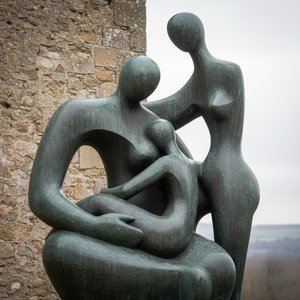 Henry Moore: Formgebung der Moderne – Gestalt, Emotion und die menschliche ExistenzEntdecken Sie das Werk von Henry Moore – Pionier der modernen Skulptur! Analysen zu seiner Bildsprache, Einflüssen und bleibendem Einfluss.…
 The Human Form as Narrative: Decoding the Language of Gesture and Anatomy in Figurative ArtMaster the language of gesture through an expert analysis of anatomy and light in figurative art. Explore the evolution of the human form n…
 Jenseits der Reproduktion: Ein handgemaltes Porträt als bleibendes FamilienerbeVerwirklichen Sie Ihre Familiengeschichte mit einem handgemalten Porträt von OriginalUniqueArt! Erfahrene Künstler, höchste Qualität & indi…