In echtem Maßstab anzeigen
 Versenden als Grußkarte
 Teilen
 Details anzeigen
 Leitfaden öffnen

 Herunterladen
 Ähnliche Objekte
 Röntgenaufnahme
 Diashow
 Besucherstatistiken
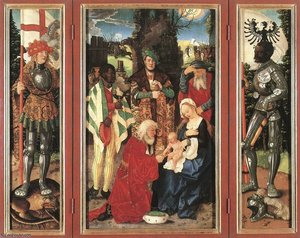
The Trinity and Mystic Pietà
 Oil On Panel
- WallArt
- Northern Renaissance
 1512
1512- Renaissance
 112.0 x 89.0 cm
 National Gallery
 Mehr anzeigen
Handgefertigte Ölreproduktion
Handgemaltes Ölgemälde auf Leinwand in Ihrer Wunschgröße und mit Rahmen, auf Bestellung von unseren Künstlern angefertigt. ( Zum Druck wechseln Zum digitalen Bild wechseln)




P118B $10

P118H $10

P118W $10

P438Z $10

P508JH $12

P508YH $12

P805H $10

P805Z $10

P919BZ $10

P919G $10

P919XJ $10

P959ZH $10

P968JZ $12

W106C $8

W218G $10

W218JH $8

W218Y $10

W307PJ $10

W316G $10

W316PJ $8

W316Y $10

W398PJ $8

W4111J $10

W500HY $15

W500JH $15

W692G $12

W849H $8

W940BG $15

W953PJ $8




Wählen Sie aus unseren vordefinierten Formaten, die den ursprünglichen Proportionen des Kunstwerks entsprechen.

Sie können Ihre eigenen Maße eingeben, um einen bestimmten Rahmen oder Platz auszufüllen. Wenn die gewählte Größe nicht den Proportionen des Originalbildes entspricht, werden wir das Kunstwerk entweder beschneiden oder das Gemälde durch zusätzliche, handgemalte Elemente erweitern. Ein digitales Mockup wird Ihnen zur Genehmigung zugesandt, bevor die Produktion beginnt.
Bitte beachten Sie, dass die Bildschirmvorschau nicht die tatsächliche Beschneidung oder Erweiterung widerspiegelt. Nur das Mockup zeigt die endgültige Komposition exakt an.
Obwohl Sondermaße verfügbar sind, empfehlen wir, eine Größe aus der vordefinierten Liste zu wählen, um die ursprünglichen Proportionen beizubehalten.
Nach der Bestellung wird das OriginalUniqueArt.com-Team dem Kunden Anweisungen per E-Mail zusenden und eine Mockup-Vorschau bereitstellen.
Weltweiter Versand () in nur 3 bis 4 Wochen statt der üblichen 5 Wochen. (25 September). Keine Kompromisse bei der Qualität.

Kostenloser weltweiter Expressversand

Hochwertige Leinenleinwand

Vollständiger Versicherungsschutz beim Versand

Zollgebühren-Rückerstattungsgarantie

Garantie für exakte Farbtreue

100-tägiges Rückgaberecht (nur bei Mängeln)

100% Geld-zurück-Garantie

Angebot für Mengenrabatt
 Die Glasoption ist nur für Größen unter 110 cm verfügbar.

The Trinity and Mystic Pietà
Reproduktionsmedium
Format der Reproduktion
-


Gesamtpreis
$ 300
A Divine Encounter: The Soul of Hans Baldung’s Masterpiece
In the quiet, contemplative corners of art history, few works command the room with as much spiritual gravity as Hans Baldung Grien’s “The Trinity and Mystic Pietà.” Completed in 1512, this monumental oil-on-oak painting serves as a profound window into the High Renaissance in Bavaria, capturing a moment where the earthly and the divine collide. At its heart, the composition is a masterclass in sacred geometry, utilizing a triangular arrangement to guide the viewer’s eye toward the wounded figure of Christ. As the light breaks through ethereal clouds, we witness God the Father supporting His son, while the Holy Spirit descends in the form of a delicate dove. This is not merely a religious icon; it is an emotional journey that invites the observer into a state of deep, meditative devotion.
The painting’s power lies in its ability to balance the monumental with the intimate. While the central figures represent the cosmic scale of the Christian Trinity, Baldung surrounds them with the raw, human reality of grief. The weeping presence of the Virgin Mary and Saint John the Evangelist provides a poignant emotional anchor, their sorrow mirroring the viewer's own capacity for empathy. For the discerning collector or interior designer, this piece offers more than just visual splendor; it brings a sense of historical weight and narrative depth to any space, acting as a focal point that encourages stillness and reflection.
The Mastery of Mannerist Technique and Light
To gaze upon this work is to witness the technical brilliance of a painter who was not afraid to embrace the unsettling. Baldung Grien, a gifted student of Albrecht Dürer, moved beyond the idealized perfection of his contemporaries to explore the expressive potential of Mannerism. He employs a sophisticated glazing technique, layering translucent pigments over opaque underlayers to create a luminous, almost supernatural glow that seems to emanate from within the figures themselves. This luminosity is heightened by his masterful use of chiaroscuro—the dramatic interplay between deep, velvety shadows and piercing highlights.
Every brushstroke serves a purpose in building the painting's psychological tension. The artist meticulously renders the intricate folds of drapery and the subtle, agonizing expressions on the faces of the mourners, ensuring that the texture of the paint contributes to the overall sense of solemnity. For those seeking a high-quality reproduction, these fine details—the way light catches a tear or the soft sheen of a saint's robe—are what make a hand-painted version so captivating. It is this meticulous attention to detail that allows the artwork to transcend its era, offering a timeless aesthetic that complements both classical and contemporary sophisticated interiors.
A Legacy of Symbolism and Spiritual Depth
Beyond its visual allure, “The Trinity and Mystic Pietà” is an intricate tapestry of theological symbolism. The inclusion of God the Father physically supporting the dead Christ is a rare and striking iconographic choice, evoking the "Mystic Pietà" theme that resonates with themes of sacrifice and eternal love. This arrangement serves as a powerful metaphor for the continuity of life and the strength found in divine providence. The presence of smaller, kneeling figures at the base of the composition suggests a bridge between the celestial realm and the human congregation, making the painting feel accessible and deeply personal.
For the art lover, this work represents the pinnacle of German Renaissance innovation. It captures a period of intense intellectual fervor, where humanist ideals began to intertwine with traditional piety. Owning or displaying a reproduction of such a significant piece is an opportunity to celebrate this historical intersection. Whether placed in a private study, a grand gallery, or a curated living space, Baldung’s masterpiece continues to provoke thought, inspire awe, and serve as a testament to the enduring power of sacred art.
Biografie des Künstlers
Frühe Jahre und Ausbildung
Hans Baldung, ein deutscher Maler und Grafiker, wurde um 1484 in Schwäbisch Gmünd (damals eine freie Reichsstadt) geboren. Er war der erste Mann seiner Familie, der kein Universitätsstudium aufnahm, sondern sich stattdessen dem künstlerischen Beruf widmete. Seine Ausbildung begann gegen 1500 im Oberrheinland bei einem Straßburger Künstler.Meisterlehre bei Albrecht Dürer
Im Jahr 1503 wurde Hans Baldung Lehrling in der Werkstatt von Albrecht Dürer in Nürnberg. Diese Zeit hatte einen tiefgreifenden Einfluss auf seine künstlerische Entwicklung. Er eignete sich schnell Dürers Stil und Techniken an und die beiden wurden enge Freunde. Während Dürers zweiter Reise nach Venedig leitete Baldung dessen Werkstatt.Künstlerischer Stil und Themen
Hans Baldung entwickelte einen unverwechselbaren Stil, der sich durch Farbenreichtum, Ausdruckskraft und Vorstellungskraft auszeichnete. Seine Talente waren vielfältig, und er schuf eine große Bandbreite an Werken, darunter:- Porträts
- Holzschnitte
- Altarbilder
- Zeichnungen
- Tapestries
- Allegorien
- mythologische Motive
Hauptwerke und Vermächtnis
Viele von Hans Baldungs Gemälden sind kleinformatig und zeigen rätselhafte, oft erotische Allegorien und mythologische Szenen. Seine Arbeit am Hochaltar in Münster zeigt seine Unterstützung für die Reformation.Museen und Sammlungen
Die Gemäldegalerie Alte Meister in Deutschland beherbergt eine bedeutende Sammlung europäischer Gemälde aus dem 15. bis 18. Jahrhundert. Sie bietet einen Kontext für das Verständnis der Epoche, in der Baldung lebte und wirkte. erfahren Sie mehr über die Gemäldegalerie Alte Meister auf OriginalUniqueArtSchlussfolgerung
Hans Baldung Grien oder Grün bleibt eine bedeutende Figur in der deutschen Kunstgeschichte, dank seiner einzigartigen Mischung aus Farbe, Ausdruckskraft und Vorstellungskraft. Seine Auseinandersetzung mit Themen wie Hexerei und dem Übernatürlichen verleiht seinem Werk eine faszinierende Dimension.
Hans Baldung
1485 - 1545 , Deutschland
Eckdaten zum Künstler
- Beeinflusste Künstler: ['Albrecht Dürer']
- Bemerkenswerte Werke:
- Tod und die Weise
- Grien Johannes auf Patmos
- Dreikönigsaltar (offen)
- Geburtsdatum: ca. 1484
- Geburtsort: Schwäbisch Gmünd, Deutschland
- Künstlerische Bewegung: Deutsche Renaissance
- Nationalität: Deutsch
- Todatum: 1545
- Vollständiger Name: Hans Baldung Grien
Verwandte Artikel
The Timeless Charm of Oil on Board: Reimagining Texture and Light through the Impressionist Lens
Discover the profound intimacy of oil on panel. Explore how Impressionist masters used rigid supports to capture light, texture, and impasto depth through exquisite, handmade oil reproductions for discerning collectors.
Oil on Panel: A Historical Survey of Technique, Support & Aesthetic Evolution
Explore the rich history of oil on panel painting! Discover Renaissance techniques, support structures & aesthetic evolution. Expert insights for art collectors and enthusiasts.
Hans Baldung Grien: Allegorie, Innovation und das Groteske – Ein Renaissance-Meister zwischen Reformation und Mystik
Entdecken Sie das faszinierende Werk von Hans Baldung Grien! Analysieren Sie mit uns die allegorischen Gemälde, grotesken Motive und den einzigartigen Stil dieses Renaissance-Meisters. Expertenwissen zur deutschen Kunstgeschichte.
Mastering the Surface: A Historical and Technical Guide to the Art of Oil on Panel Painting
Explore the profound history and technical brilliance of oil on panel painting. From Renaissance masters to modern techniques, discover why this rigid support offers unparalleled precision and permanence for fine art lovers and collectors.
Öl auf Holz: 10 Meisterwerke, die Kunstgeschichte veränderten |
Entdecken Sie die 10 legendärsten Gemälde auf Holz – von Renaissance bis Impressionismus! Erfahren Sie die Geschichten der Künstler & ihre Meisterwerke. Hochwertige Reproduktionen bei .