In echtem Maßstab anzeigen
 Versenden als Grußkarte
 Teilen
 Details anzeigen
 Leitfaden öffnen

 Herunterladen
 Ähnliche Objekte
 Röntgenaufnahme
 Diashow
 Besucherstatistiken
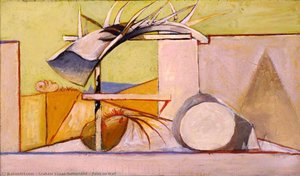
The Deposition
 Oil On Canvas
- WallArt
- Expressionism
 1947
1947- Renaissance
 50.0 x 45.0 cm
 Oxford Brookes University
 Mehr anzeigen
Die auf dieser Seite dargestellten Kunstwerke sind urheberrechtlich geschützt, was bedeutet, dass wir keine identische Reproduktion rechtmäßig erstellen oder verkaufen dürfen. Dieser Schutz wird durch internationale Abkommen wie die Berner Übereinkunft und durch nationale Gesetze, einschließlich derer, die von den ... festgelegt wurden US-Urheberrecht – Titel 17.
Als respektvolle und rechtlich einwandfreie Alternative bieten wir individuelle, handgemalte Kunstwerke an, die vom Original inspiriert sind. Unsere geschickten und professionellen Künstler studieren sorgfältig den Stil, die Stimmung und das künstlerische Wesen des Originals, um ein neues, einzigartiges Werk zu schaffen, das dasselbe Gefühl hervorruft – während es zugleich eine eigenständige Originalschöpfung bleibt.
Diese Methode entspricht vollumfänglich den Urheberrechtsbestimmungen, da sie keine Kopie oder Vervielfältigung des geschützten Kunstwerks darstellt. Stattdessen handelt es sich um eine kreative Neuinterpretation – ein neues Gemälde, das vom Original inspiriert, aber nicht identisch mit ihm ist.
Handgefertigte Ölreproduktion
Handgemaltes Ölgemälde auf Leinwand in Ihrer Wunschgröße und mit Rahmen, auf Bestellung von unseren Künstlern angefertigt. ( Zum Druck wechseln Zum digitalen Bild wechseln)




P118B €10

P118H €10

P118W €10

P438Z €10

P508JH €12

P508YH €12

P805H €10

P805Z €10

P919BZ €10

P919G €10

P919XJ €10

P959ZH €10

P968JZ €12

W106C €8

W218G €10

W218JH €8

W218Y €10

W307PJ €10

W316G €10

W316PJ €8

W316Y €10

W398PJ €8

W4111J €10

W500HY €15

W500JH €15

W692G €12

W849H €8

W940BG €15

W953PJ €8




Wählen Sie aus unseren vordefinierten Formaten, die den ursprünglichen Proportionen des Kunstwerks entsprechen.

Geben Sie die Breite und die Höhe an, die Sie für Ihren Rahmen oder Ihre Wand benötigen. Da dieses Werk handgemalt ist, kann der Künstler bei einer anderen Form etwas mehr um das Bild herum malen oder etwas abschneiden – Sie entscheiden. Wir senden Ihnen ein digitales Mockup zur Freigabe, bevor mit dem Malen begonnen wird. Das auf dieser Seite gezeigte Bild stellt nicht das tatsächliche Ergebnis dar – dies tut nur das Mockup.
Nach der Bestellung wird das OriginalUniqueArt.com-Team dem Kunden Anweisungen per E-Mail zusenden und eine Mockup-Vorschau bereitstellen.
Weltweiter Versand () in nur 3 bis 4 Wochen statt der üblichen 5 Wochen. (24 Oktober). Keine Kompromisse bei der Qualität.

Kostenloser weltweiter Expressversand

Hochwertige Leinenleinwand

Vollständiger Versicherungsschutz beim Versand

Zollgebühren-Rückerstattungsgarantie

Garantie für exakte Farbtreue

100-tägiges Rückgaberecht (nur bei Mängeln)

100% Geld-zurück-Garantie

Angebot für Mengenrabatt
 Die Glasoption ist nur für Größen unter 110 cm verfügbar.

The Deposition
Reproduktionsmedium
Format der Reproduktion
-


Gesamtpreis
€ 263
The Deposition: A Study in Grief and Hope
Graham Vivian Sutherland’s “The Deposition,” painted in 1947, is not merely a depiction of a biblical scene; it's a profoundly moving meditation on loss, sacrifice, and the enduring promise of redemption. This oil painting, now meticulously reproduced as a hand-painted artwork by OriginalUniqueArt, transcends its religious subject matter to become a universal symbol of human suffering and the quiet strength found within grief. Sutherland, a master of subtly shifting styles – from the precise detail of his early engravings to the evocative abstraction of his later landscapes – here fuses elements of Surrealism and Expressionism, creating an image that is both unsettlingly realistic and deeply symbolic.
The painting’s genesis lies in a period of immense upheaval. Created in the immediate aftermath of World War II, Sutherland was grappling with the horrors he had witnessed and the profound sense of loss felt across Europe. The influence of the Holocaust, particularly the images of emaciated survivors emerging from concentration camps, is undeniably present. The stark simplicity of the figures – Christ’s body draped over a rough-hewn wooden structure resembling a tomb or sarcophagus – immediately evokes the skeletal remains seen in photographs of those liberated from Belsen. The pallid skin tone, devoid of detail and rendered with a deliberate lack of emotional expression, amplifies this sense of profound absence. Yet, within this bleakness, Sutherland introduces subtle gestures that hint at an underlying current of hope: Mary’s outstretched hand reaching towards her son, Joseph’s stoic support, and the faint suggestion of a halo around Christ's head.
A Palette of Somber Reflection
Sutherland’s masterful use of color contributes significantly to the painting’s emotional impact. The palette is dominated by muted earth tones – ochre, browns, and grays – creating an atmosphere of quiet melancholy and introspection. These somber hues are punctuated by flashes of blue in Mary's garment, a subtle reminder of her maternal grief and the Virgin’s enduring sorrow. The background, rendered in a warm yellowish-brown, provides a sense of depth and anchors the scene within an enclosed space – perhaps a tomb or a simple chapel – intensifying the feeling of confinement and despair. The deliberate lack of strong light sources further enhances this mood, casting the figures in a perpetual twilight that mirrors the spiritual darkness surrounding them.
Symbolism and Historical Context
Beyond its immediate depiction of “The Deposition,” the painting is rich with symbolic meaning. The inclusion of Adam’s skull at the base of the cross references the biblical narrative of humanity's fall from grace, suggesting that Christ’s sacrifice represents not only redemption but also a restoration of lost innocence. Sutherland’s decision to strip away extraneous details and focus on the essential forms – the body, the hands, the faces – is reminiscent of the work of Grünewald, a German painter known for his emotionally charged depictions of the Passion. The painting's creation coincided with a period of intense theological reflection within the Catholic Church, grappling with questions of faith in the face of unimaginable suffering. Sutherland’s work can be seen as a poignant response to these challenges, offering a visual meditation on the complexities of human existence and the enduring power of spiritual belief.
The Reproduction: Bringing Sutherland's Vision to Life
OriginalUniqueArt’s meticulous hand-painted reproductions capture the essence of Sutherland’s original vision with remarkable fidelity. Each brushstroke, each subtle shift in color, is faithfully recreated, ensuring that the emotional depth and symbolic richness of “The Deposition” are preserved for contemporary audiences. The textured surface of the reproduction evokes the physicality of oil paint, creating a tangible connection to the artist's studio. This isn’t simply a print; it’s an immersive experience—a window into the heart of one of Britain’s most significant modern artists. Whether adorning a grand salon or a contemplative study, this artwork offers a powerful reminder of humanity’s capacity for both profound suffering and enduring hope.
- Size:** 50 x 45 cm
- Date:** 1947
- Artist:** Graham Vivian Sutherland
Fragen & Antworten
Wie viele Personen sehen "The Deposition"?
Statistiken zu "The Deposition" von Graham Vivian Sutherland finden Sie auf der Statistiken-Seite des Kunstwerks: monatliche Aufrufe des Kunstwerks, Aufrufe der Werke des Künstlers sowie eine Aufschlüsselung der jüngsten Besucher nach Land und Sprache.
Wie wird die Farbpalette von "The Deposition" von Graham Vivian Sutherland beschrieben?
Die Farbpalette von "The Deposition" von Graham Vivian Sutherland wird als Earthy beschrieben. Es handelt sich um eine kompakte Beschreibung der Farben des Werkes.
Welche Atmosphäre vermittelt "The Deposition"?
"The Deposition" hat eine Dramatic Atmosphäre.
Biografie des Künstlers
Die visionären Landschaften von Graham Vivian Sutherland
Graham Vivian Sutherland, ein Titan der britischen Moderne, besaß die seltene Fähigkeit, die vertrauten Konturen der natürlichen Welt in etwas zutiefst Beunruhigendes und tief Spirituelles zu verwandeln. Geboren 1903 in Streatham, London, war Sutherlands Weg von ständiger Metamorphose geprägt. Während seine frühen Jahre durch eine klassische Ausbildung am Epsom College geformt wurden, trat seine wahre Berufung weit abseits der juristischen Kreise seiner Familie zutage. Sein erster Vorstoß in die technische Welt einer Lehre in den Midland Railway Locomotive Works schuf ein Fundament der Präzision, das sich später in seinen komplizierter Druckgrafik und seinen texturierten Ölgemälden manifestieren sollte. Mit dem Wechsel an die Goldsmiths' School of Art begann Sutherland, sich von der traditionellen Darstellung zu entfernen und fühlte sich der evokativen Kraft des Kupferstichs und der Radierung zugewandt.
Die frühe Ästhetik des Künstlers war tief in der Romantik eines Samuel Palmer verwurzelt, doch er weigerte sich, an der Vergangenheit festzuhalten. Stattdessen fungierte Sutherland als Brücke zwischen der englischen pastoralen Tradition und der radikalen Energie der europäischen Avantgarde-Bewegungen. Indem er die traumhafte Logik des Surrealismus und die rohe Emotionalität des Expressionismus in sich aufnahm, entwickelte er eine visuelle Sprache, die sowohl die physische Landschaft als auch den psychischen Zustand einfangen konnte. Seine frühen Drucke, die durch ein Gefühl von Mysterium und organischen Formen charakterisiert waren, legten den Grundstein für eine Karriere, die von einer Obsession mit der „Fremdartigkeit“ der Natur definiert war – ein Thema, das sein beständigstes Vermächtnis werden sollte.
Der Schatten der Natur und die Kriegsjahre
Die 1940er Jahre markierten eine entscheidende Ära in Sutherlands Entwicklung, als sich sein Fokus von dem feinen Medium der Druckgrafik hin zu den viszeralen, pastosen Texturen der Ölmalerei verschob. In dieser Zeit wurden die rauen, windgepeitschten Landschaften von Pembrokeschaft zu seiner primären Muse. In Werken wie Thorn Tree kann man die Meisterschaft des Künstlers erleben, botanische Realität mit surrealistischer Verzerrung zu verschmelzen. Er malte nicht bloß Bäume; er malte die Spannung, den Kampf und die skelettartige Architektur des Lebens selbst. Diese Periode führte ihn zu einer abstrakteren, aber zutiefst symbolischen Sichtweise, in der Dornen, Wurzeln und verdrehte Zweige als Metaphern für menschliche Verletzlichkeit und Widerstandsfähigkeit dienten.
Der Zweite Weltkrieg brachte eine andere, düsterere Dimension in sein Schaffen. In seiner Funktion als offizieller Kriegskünstler richtete Sutherland seinen Blick auf die industriellen und oft eindringlichen Szenen der britischen Heimatfront. Seine Gemälde aus dieser Ära, wie etwa Flying Bomb Depot The Caunverns, sind Meisterwerke der Atmosphäre. Durch schwere Texturen und eine Palette, die sowohl Verfall als auch Grauen evoziert, fing er die unheimliche Trostlosigkeit der Kriegsinterieurs ein. Diese Werke waren nicht bloße Dokumentation; sie waren psychologische Porträts einer Ära, die von Angst und der drohenden Präsenz der Zerstörung geprägt war und die zerbrochene Realität einer Welt im Krieg widerspiegelten.
Ein Vermächtnis aus Symbolismus und Erhabenheit
In den Nachkriegsjahren stiegen Sutherlands Arbeiten zu neuen Höhen spiritueller und öffentlicher Bedeutung auf. Er begann, religiöse Symbolik mit seinen organischen Motiven zu integrieren und schuf so eine kraftvolle Synthese aus dem Heiligen und dem Natürlichen. Dies gipfelte in einer seiner monumentalsten Errungenschaften: dem Entwurf des gewaltigen zentralen Wandteppichs für die neue Kathedrale von Coventry mit dem Titel Christ in Glory in the Tetramorph. Dieses Werk, das seine Fähigkeit zur Manipulation von Form und Farbe in großem Maßstab nutzte, steht als Zeugnis für seine Rolle beim kulturellen Wiederaufbau des Nachkriegsbritanniens.
Im Laufe seiner produktiven Karriere ermöglichte Sutherland seine Vielseitigkeit, einen unauslöschlichen Eindruck in mehreren Disziplinen zu hinterlassen:
- Porträtmalerei: Seine Fähigkeit, die psychologische Tiefe öffentlicher Persönlichkeiten einzufangen, wie etwa in seinem würdevollen und melancholischen Somerset Maugham.
- Druckgrafik: Eine lebenslange Hingabe an die Präzision von Radierung und Kupferstich, die sein Verständnis von Linie und Struktur prägte.
- Dekorative Kunst: Seine Beiträge zum Teppichdesign und zur Glaskunst, die moderne Abstraktion in den Bereich der funktionalen Schönheit brachten.
Letztendlich bleibt Graham Sutherland ein Eckpfeiler der Kunst des 20. Jahrhunderts, weil er es wagte, unter die Oberfläche der Landschaft zu blicken. Er fand das Surreale im Realen und das Göttliche im Organischen. Sein Vermächtnis findet sich nicht nur in Museen, sondern in der Art und Weise, wie wir die verborgene, oft gezackte Schönheit der Welt um uns herum wahrnehmen – eine Welt, in der jeder Dorn eine Geschichte birgt und jeder Schatten ein Geheimnis enthält.

Graham Vivian Sutherland
1903 - 1980 , Vereinigtes Königreich
Eckdaten zum Künstler
- Artistic Movement Or Style: Surrealism
- Artists Or Movements Influenced By This Artist: ['Paul Nash']
- Artists Who Influenced This Artist:
- Samuel Palmer
- F.L. Griggs
- Date Of Birth: August 24, 1903
- Date Of Death: February 17, 1980
- Full Name: Graham Vivian Sutherland
- Nationality: British
- Notable Artworks:
- Flying Bomb Depot
- Entrance to a Lane
- Place Of Birth: London, England
Verwandte Artikel

Evocations of Place: A Historical Journey Through Landscape Art
Explore the rich history of landscape art with OriginalUniqueArt. Discover renowned artists, movements like Impressionism & tonalism, and expert guidance for collecting timeless pieces. Find your perfect serene escape today!

Evocations of Place: A Historical Journey Through Landscape Art
Explore the rich history of landscape art with OriginalUniqueArt. Discover renowned artists, movements like Impressionism & Romanticism, and expert guidance for collecting timeless pieces. Find your perfect serene escape today!

John Constable: Die 25 Meisterwerke des englischen Landschaftsgenies – OriginalUniqueArt
Entdecken Sie die 25 Meisterwerke von John Constable! Erleben Sie englische Landschaftsmalerei vom Hay Wain bis zur Stour Valley. Hochwertige Reproduktionen & Kunst für Ihr Zuhause auf OriginalUniqueArt.com.

Romantische Landschaften: Die 10 Meisterwerke, die eine Epoche prägten | OriginalUniqueArt
Entdecken Sie die 10 Meisterwerke der Romantischen Landschaftsmalerei! Von Caspar David Friedrich bis Turner – erleben Sie die Kunst, Emotion & Natur. Hochwertige Reproduktionen auf OriginalUniqueArt.com

Evoking Atmosphere & Identity: A Journey Through Landscape Painting's History
Explore the rich history of landscape painting! Discover renowned artists, movements like Romanticism, & techniques such as atmospheric perspective. Find inspiration and quality reproductions at OriginalUniqueArt.