

 In echtem Maßstab anzeigen
 Versenden als Grußkarte
 Teilen
 Details anzeigen
 Leitfaden öffnen

 Herunterladen
 Ähnliche Objekte
 Röntgenaufnahme
 Diashow
 Besucherstatistiken
Façade and courtyard view


 Mehr anzeigen
Handgefertigte Ölreproduktion
Handgemaltes Ölgemälde auf Leinwand in Ihrer Wunschgröße und mit Rahmen, auf Bestellung von unseren Künstlern angefertigt. ( Zum Druck wechseln Zum digitalen Bild wechseln)




P118B €10

P118H €10

P118W €10

P438Z €10

P508JH €12

P508YH €12

P805H €10

P805Z €10

P919BZ €10

P919G €10

P919XJ €10

P959ZH €10

P968JZ €12

W106C €8

W218G €10

W218JH €8

W218Y €10

W307PJ €10

W316G €10

W316PJ €8

W316Y €10

W398PJ €8

W4111J €10

W500HY €15

W500JH €15

W692G €12

W849H €8

W940BG €15

W953PJ €8




Wählen Sie aus unseren vordefinierten Formaten, die den ursprünglichen Proportionen des Kunstwerks entsprechen.

Sie können Ihre eigenen Maße eingeben, um einen bestimmten Rahmen oder Platz auszufüllen. Wenn die gewählte Größe nicht den Proportionen des Originalbildes entspricht, werden wir das Kunstwerk entweder beschneiden oder das Gemälde durch zusätzliche, handgemalte Elemente erweitern. Ein digitales Mockup wird Ihnen zur Genehmigung zugesandt, bevor die Produktion beginnt.
Bitte beachten Sie, dass die Bildschirmvorschau nicht die tatsächliche Beschneidung oder Erweiterung widerspiegelt. Nur das Mockup zeigt die endgültige Komposition exakt an.
Obwohl Sondermaße verfügbar sind, empfehlen wir, eine Größe aus der vordefinierten Liste zu wählen, um die ursprünglichen Proportionen beizubehalten.
Nach der Bestellung wird das OriginalUniqueArt.com-Team dem Kunden Anweisungen per E-Mail zusenden und eine Mockup-Vorschau bereitstellen.
Weltweiter Versand () in nur 3 bis 4 Wochen statt der üblichen 5 Wochen. (11 Oktober). Keine Kompromisse bei der Qualität.

Kostenloser weltweiter Expressversand

Hochwertige Leinenleinwand

Vollständiger Versicherungsschutz beim Versand

Zollgebühren-Rückerstattungsgarantie

Garantie für exakte Farbtreue

100-tägiges Rückgaberecht (nur bei Mängeln)

100% Geld-zurück-Garantie

Angebot für Mengenrabatt
 Die Glasoption ist nur für Größen unter 110 cm verfügbar.

Façade and courtyard view
Reproduktionsmedium
Format der Reproduktion
-


Gesamtpreis
€ 259
A Frozen Moment of Renaissance Grandeur: Exploring Giulio Romano’s “Façade and Courtyard View”
Giulio Romano's "Façade and Courtyard View," painted in 1526, isn’t merely a depiction of architecture; it’s a meticulously crafted illusion, a testament to the burgeoning Mannerist style that challenged the established harmony of the High Renaissance. This remarkable work, now available as a stunning reproduction, offers a captivating glimpse into the world of Federico II Gonzaga and his court in Mantua – a realm where art, architecture, and theatrical spectacle converged with breathtaking ambition. The image itself presents a carefully constructed dialogue between two perspectives: a monochrome, almost ghostly view of an older building alongside a vibrant, color-infused representation of its restored state. This juxtaposition immediately invites contemplation on the passage of time, the nature of preservation, and the enduring power of artistic vision.
The original painting, housed in the Palazzo Te, Mantua, was conceived as part of a larger decorative program for the villa’s expansive grounds. Romano, having been summoned to Mantua by Federico Gonzaga after his time with Raphael in Rome, quickly established himself as the court's principal artist and architect. The palazzo itself—a sprawling complex of interconnected buildings, gardens, and fountains—became a showcase for Romano’s innovative style, blending classical influences with a distinctly Mannerist sensibility. “Façade and Courtyard View” captures this spirit perfectly, demonstrating Romano’s mastery of illusionistic painting and his willingness to push the boundaries of artistic convention.
Mannerism: A Dance of Distortion and Drama
To understand "Façade and Courtyard View," one must grasp the essence of Mannerism. Emerging in the wake of Raphael’s death, it rejected the balanced proportions and serene idealism of the High Renaissance in favor of a more subjective, emotionally charged approach. Mannerist artists sought to create works that were unsettling, ambiguous, and often deliberately distorted – a deliberate departure from the classical ideals of beauty and harmony. Romano embraced this aesthetic with gusto, employing techniques such as elongated figures, exaggerated poses, vibrant colors, and complex spatial arrangements. The painting’s monochrome top image immediately establishes this sense of unease, hinting at decay and neglect, while the color rendition offers a stark contrast – a carefully staged restoration that attempts to recapture a lost grandeur.
Notice how Romano utilizes *trompe-l'oeil* techniques—the art of creating an illusion of three-dimensionality on a two-dimensional surface. The rusticated masonry, with its rough, uneven texture, contrasts sharply with the smooth, polished surfaces of the pilasters and windows. This deliberate juxtaposition creates a dynamic visual tension, drawing the viewer’s eye to specific details and inviting them to question what is real and what is merely an illusion. The subtle shifts in perspective between the two images further enhance this effect, suggesting that we are witnessing not just a building but also a carefully constructed narrative.
Symbolism and the Gonzaga Court
The Palazzo Te itself was designed as a lavish pleasure palace for Federico II Gonzaga, reflecting his wealth, power, and refined taste. The “Façade and Courtyard View” is therefore deeply intertwined with the symbolism of the Gonzaga court. The building’s elaborate decoration—including frescoes depicting mythological scenes, allegorical figures, and portraits of Federico’s ancestors—served to reinforce his authority and celebrate his lineage. The choice of a monochrome image for the older façade suggests a sense of loss and decline, while the color rendition of the restored building symbolizes the Gonzaga family's continued patronage of the arts and their commitment to preserving the legacy of Mantua.
The inclusion of both images—the weathered facade and its vibrant restoration—is particularly significant. It speaks to the cyclical nature of time, the impermanence of beauty, and the enduring human desire to recapture the past. It’s a poignant reminder that art, like memory, can be both cherished and reconstructed.
Bringing Romano's Vision Home
A high-quality reproduction of “Façade and Courtyard View” offers a unique opportunity to bring this extraordinary work into your own space. Whether adorning a formal dining room or a study, this image will serve as a constant source of inspiration—a reminder of the power of artistic vision, the beauty of Mannerist style, and the enduring legacy of Giulio Romano. It’s more than just a painting; it's a portal to a bygone era, a testament to the artistry and ambition of the Gonzaga court.
Fragen & Antworten
Wo kann ich einen Druck von "Façade and courtyard view" von Giulio Romano kaufen?
Um einen Druck von "Façade and courtyard view" von Giulio Romano zu erhalten, bestellen Sie ihn einfach auf diese Seite: ein Fine Art Print auf Baumwollkanvas oder Archiv-Leinwandpapier.
In welchem Raum des Zuhauses lässt sich eine Reproduktion von "Façade and courtyard view" gut platzieren?
"Façade and courtyard view" von Giulio Romano wird für ein Living Room empfohlen. Dieser Vorschlag basiert auf dem Motiv, den Farben und der Stimmung des Werkes.
Wo kann ich eine Vorschau von „Façade and courtyard view“ sehen?
Eine Vorschau von "Façade and courtyard view" von Giulio Romano ist auf der Vorschau-Seite des Kunstwerks verfügbar.
Wer hat "Façade and courtyard view" erschaffen?
Der Künstler hinter „Façade and courtyard view“ ist Giulio Romano. Das Werk ist unter dem Namen von Giulio Romano katalogisiert.
In welchem Jahr wurde "Façade and courtyard view" von Giulio Romano geschaffen?
Die Entstehung von "Façade and courtyard view" von Giulio Romano wird auf 1526 datiert.
Wie alt war Giulio Romano, als „Façade and courtyard view“ geschaffen wurde?
Giulio Romano schuf „Façade and courtyard view“ im Alter von 27. Der Künstler wurde 1499 geboren, und das Werk datiert auf 1526.
Ist "Façade and courtyard view" typisch für das, was Giulio Romano üblicherweise geschaffen hat?
"Façade and courtyard view" stellt architecture, palazzo te, giulio romano, renaissance, fresco, italy, mantua, mannerism dar, während die dokumentierten Themen von Giulio Romano raphael’s influence, mannerist style, gonzaga court, lavish patronage, roman antiquity, classical motifs, palazzo te, architectural design sind. Ein Vergleich der beiden zeigt, wie das Werk mit den üblichen Sujets des Künstlers in Verbindung steht.
Biografie des Künstlers
Frühes Leben und Ausbildung
- Geboren: Rom, Italien (ca. 1499)
- Gestorben: 1. November 1546
- Details aus dem frühen Leben sind spärlich, aber er begann seine künstlerische Karriere in Rom.
- Er war Schüler von Raphael und wurde zu einem talentierten Maler und Architekten.
- Nach Raffaels Tod im Jahr 1520 übernahm Giulio Romano viele unfertige Projekte, darunter die Dekoration der Villa Madama für Kardinal Giuliano de’ Medici.
Entwicklung des Manierismus
- Giulio Romano ist am besten bekannt für seine Beiträge zum Manierismus.
- Sein Stil wich vom Klassizismus der Hochrenaissance ab.
- Gemälde und Fresken weisen oft Asymmetrie, Spannung und Instabilität anstelle von Balance und Harmonie auf.
- Beeinflusst von Michelangelo und anderen Künstlern seiner Zeit.
- Er wurde zunehmend für Raphael unverzichtbar, modifizierte Pläne und schuf die erste Aussage des Manierismus im großen Stil in Rom.
Hauptwerke und Errungenschaften
- Das Feuer im Borgo: Ein Fresko gemalt für Raffaels Stanze Vaticane.
- Gewölbte Decke (Detail): Ein Fresko im Palazzo Te.
- Palazzo del Tè (Mantua): Entworfen und dekoriert mit illusionistischen Fresken, die seine architektonischen und künstlerischen Fähigkeiten zeigen. Dies gilt als sein wichtigstes Werk.
- Villa Madama: Dekorierte diese Renaissance-Villa für Kardinal Giuliano de' Medici.
- Er wurde 1524 Hofmaler und Architekt von Federigo Gonzaga und leitete praktisch alle künstlerischen Aktivitäten in Mantua.
Einflüsse und historische Bedeutung
- Raphael: Giulio Romanos frühe Ausbildung unter Raphael prägte seine künstlerische Grundlage maßgeblich.
- Michelangelo: Der Einfluss von Michelangelos Werk trug zur Entwicklung seines manieristischen Stils bei.
- Er gilt als eine Schlüsselfigur im Übergang von der Hochrenaissance zum Manierismus.
- Seine Zeichnungen wurden hoch geschätzt, und zeitgenössische Drucke, die von Marcantonio Raimondi graviert wurden, halfen dabei, italienische Kunststile in ganz Europa zu verbreiten.
- Giulio Romanos Vermächtnis kann bei späteren Künstlern gesehen werden, die seinen Stil und seine Techniken übernahmen.
Späteres Leben und Nachlass
- Nach Raffaels Tod erbte Giulio die Leitung der Werkstatt des Meisters und vollendete viele seiner Projekte.
- Er war nach seinem Tod so berühmt, dass er der einzige "moderne" Künstler ist, der von Shakespeare in einem Stück erwähnt wird.
- Seine Arbeit demonstriert einen Wandel von Renaissance-Idealen hin zu dynamischeren und ausdrucksstärkeren Formen.
- Giulio Romanos Beiträge zum Manierismus festigten seinen Platz als einflussreiche Figur in der Kunstgeschichte.

Giulio Romano
1499 - 1546 , Italien
Eckdaten zum Künstler
- Beeinflusste Künstler:
- Raphael
- Michelangelo
- Bemerkenswerte Werke:
- Das Feuer im Borgo
- Deckenfresko (Detail)
- Palazzo del Tè Fresken
- Geburtsdatum: 1499
- Geburtsort: Rom, Italien
- Künstlerischer Stil: Manierismus
- Nationalität: Italienisch
- Todatum: 1546
- Vollständiger Name: Giulio Romano
- Von Künstlern Beeinflusst: ['Spätere Manieristen']
Verwandte Artikel
Kunst, die mit Ihnen lebt: Emotionale Kraft individueller Innenraumfresken
Entdecken Sie die emotionale Kraft individueller Innenraumfresken! Expertenberatung & hochwertige Wandmalerei für Hotels, Wohnräume & mehr. – Ihr Partner für einzigartige Kunst.

The Enduring Legacy of Fresco Painting: Techniques, History & Contemporary Relevance
Explore the rich history & enduring artistry of fresco painting – from Giotto to Michelangelo! Discover techniques, conservation efforts, & modern applications. Learn how OriginalUniqueArt brings this timeless art form to your home.

The Enduring Legacy of Fresco: Technique, History & Artistic Expression Across Cultures
Explore the rich history & enduring legacy of fresco painting! Discover ancient techniques, Giotto's masterpieces, and modern applications. Expert insights for art lovers & professionals.

Das Familienerbe an die Wand bringen: Wandgemälde als Generationenschatz
Verwandeln Sie Ihre Familiengeschichte in ein beeindruckendes Wandgemälde! Expertenrat & hochwertige Handwerkskunst für einzigartige Kunstwerke, die Generationen verbinden. Entdecken Sie jetzt!
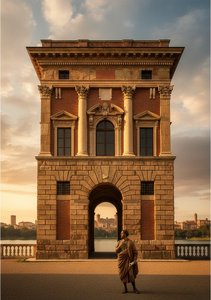
Giulio Romano: A Master of Mannerism & the Palazzo Te Legacy
Explore the revolutionary art of Giulio Romano, master of Mannerism & architect of Palazzo Te. Discover his influence, investment potential, and stunning frescoes – a guide for discerning collectors.


