In echtem Maßstab anzeigen
 Versenden als Grußkarte
 Teilen
 Details anzeigen
 Leitfaden öffnen

 Herunterladen
 Ähnliche Objekte
 Röntgenaufnahme
 Diashow
 Besucherstatistiken
The Cowboy


 Mehr anzeigen
Giclée / Kunstdruck
Giclée- oder Leinwanddruck in Museumsqualität mit schneller Produktion und flexiblen Veredelungsoptionen. ( Handgemalte Reproduktion kaufen Zum digitalen Bild wechseln)




P118B €10

P118H €10

P118W €10

P438Z €10

P508JH €12

P508YH €12

P805H €10

P805Z €10

P919BZ €10

P919G €10

P919XJ €10

P959ZH €10

P968JZ €12

W106C €8

W218G €10

W218JH €8

W218Y €10

W307PJ €10

W316G €10

W316PJ €8

W316Y €10

W398PJ €8

W4111J €10

W500HY €15

W500JH €15

W692G €12

W849H €8

W940BG €15

W953PJ €8




Wählen Sie aus unseren vordefinierten Formaten, die den ursprünglichen Proportionen des Kunstwerks entsprechen.

Geben Sie die Breite und die Höhe an, die Sie benötigen, damit der Druck perfekt in Ihren Rahmen oder an Ihre Wand passt. Ein Druck kann nur beschnitten werden und niemals größer als das Originalbild gemacht werden; daher verliert ein Format mit einer anderen Proportion einen Teil des Bildes. Wir senden Ihnen ein digitales Mockup zur Freigabe, bevor wir den Druck ausführen. Das auf dieser Seite gezeigte Bild zeigt nicht den tatsächlichen Beschnitt – dies ist nur im Mockup ersichtlich.
Weltweiter Versand () innerhalb von 2 Wochen statt der üblichen 4/5 Wochen. (21 Oktober)

Kostenloser weltweiter Expressversand

Hochwertige Leinenleinwand

Vollständiger Versicherungsschutz beim Versand

Zollgebühren-Rückerstattungsgarantie

Garantie für exakte Farbtreue

100-tägiges Rückgaberecht (nur bei Mängeln)

100% Geld-zurück-Garantie

Angebot für Mengenrabatt
 Die Glasoption ist nur für Größen unter 110 cm verfügbar.

The Cowboy
Giclée / Kunstdruck
Format der Reproduktion
-


Gesamtpreis
€ 70
A Pioneer's Vision: Frederic Remington’s “The Cowboy”
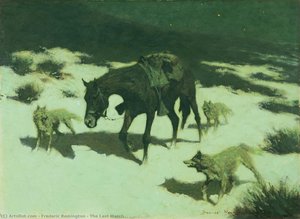
Frederic Sackrider Remington (1861-1909) wasn’t merely an artist; he was a chronicler of the vanishing West, capturing its rugged beauty and spirit with unparalleled conviction. Born in Canton, New York, his artistic journey began not amidst the sprawling plains but within the confines of Eastern academia – a surprising contrast that fueled his fascination for the frontier experience. His lineage traced back to French Basque ancestry blended with Republican New England values, shaping him into an individual driven by both intellectual curiosity and a profound connection to the American landscape. This formative influence would ultimately propel him to become arguably the most recognizable artist of his era, cementing his legacy as a pivotal figure in Western art history. Early exposure to military themes instilled within Remington a disciplined eye for detail and storytelling—skills he honed during his service in Cuba and later as a cavalry officer – experiences that profoundly impacted his artistic sensibilities. He moved to Bloomington, Illinois, then Ogdensburg, New York, establishing himself as a family man while simultaneously nurturing his burgeoning passion for capturing the essence of the American West. Remington’s artistic breakthrough arrived with “The Cowboy,” painted in 1902 and now housed prominently within the Frederic Remington Art Museum in Ogdensburg, New York—a monumental canvas that encapsulates the grandeur and drama of the era.Style and Technique: Romantic Realism
Remington's approach to painting defied easy categorization; he embraced what is often termed “Romantic Realism.” Unlike Impressionists who sought fleeting moments of light and color, Remington meticulously rendered his subjects with painstaking accuracy—a testament to his unwavering commitment to portraying the West as it truly appeared. He employed a technique characterized by thick impasto brushstrokes – applying paint thickly onto the canvas – creating palpable texture that conveyed the physicality of the landscape and its inhabitants. This deliberate layering of pigment allowed him to capture not only visual details but also emotional resonance, conveying the ruggedness of the terrain and the determination of the cowboy figure. Remington’s masterful use of color—primarily earthy tones—further enhanced the painting's atmosphere, immersing viewers in the stark beauty of the American frontier.Historical Context: The Twilight Years of Cowboy Culture
“The Cowboy” emerged during a period of significant transformation within the United States – the waning days of the Wild West era. Remington’s depiction reflects the anxieties and aspirations surrounding this transition, portraying a cowboy poised for action amidst a vast expanse of prairie land. The painting captures the spirit of a bygone age—a time when cowboys represented independence, resilience, and mastery over the natural world. Simultaneously, it acknowledges the encroaching influence of civilization, symbolized by the distant mountains looming in the background – a subtle reminder that even the most iconic symbols of freedom were inevitably destined to fade into history. Remington’s work served as a poignant commentary on this pivotal moment in American cultural identity.Symbolism and Emotional Impact: Courage and Isolation
Beyond its technical brilliance, “The Cowboy” resonates deeply with viewers due to its potent symbolism. The cowboy himself embodies courage, perseverance, and unwavering resolve—qualities admired throughout the West’s history. His posture exudes confidence as he prepares for a ride, conveying a sense of mastery over his surroundings and an acceptance of the challenges inherent in frontier life. Furthermore, the solitary figure against the expansive landscape underscores themes of isolation and vulnerability – highlighting the profound connection between humans and nature while simultaneously acknowledging the hardships faced by those who dared to inhabit this untamed wilderness. Remington’s masterful composition evokes a feeling of awe and wonder—inspiring contemplation on the enduring spirit of adventure and the beauty of the American West.Conclusion: An Enduring Legacy
Frederic Remington's “The Cowboy” remains an unforgettable masterpiece, securing its place as one of the most iconic images of the American West. Its meticulous realism combined with emotive brushstrokes continues to captivate audiences today—a testament to Remington’s unparalleled ability to translate experience into art. Reproductions of this monumental painting are treasured by collectors and interior designers alike, serving as a tangible reminder of a bygone era and an enduring celebration of the spirit of exploration and resilience that defined the American frontier.Fragen & Antworten
Kann ich "The Cowboy" genauer untersuchen?
„The Cowboy“ kann Schicht für Schicht auf der Röntgenaufnahme-Seite des Kunstwerks untersucht werden – ein Viewer, inspiriert von der Leuchttisch eines Restaurators, mit elf optischen Ebenen des Bildes.
Wer hat "The Cowboy" geschaffen und in welchem Jahr?
Frederic Remington schuf „The Cowboy“ im Jahr 1902.
Ist "The Cowboy" ein berühmtes Kunstwerk der Impressionistic Realism-Epoche?
"The Cowboy" von Frederic Remington wird als Iconic klassifiziert und gehört zur Impressionistic Realism-Strömung.
Biografie des Künstlers
Frühe Jahre und Ausbildung
- Geburt und Familie: Frederic Sackrider Remington wurde am 4. Oktober 1861 in Canton, New York, geboren. Seine Familie hatte französisch-baskische Wurzeln.
- Militärische Prägung: Sein Vater, Colonel Seth Pierrepont Remington, ein Hardwarehändler und Bürgerkriegsveteran, beeinflusste sein frühes Leben maßgeblich. Die Exposition gegenüber militärischen Themen sollte später seine Kunst prägen.
- Frühe Ausbildung: Er besuchte das Vermont Episcopal Institute, eine Militärschule, wo er mit dem Zeichnen begann. Später wechselte er an eine andere Militärakademie, verfolgte aber schließlich aufgrund mangelnder Konzentration die Kunst statt einer militärischen Karriere.
Künstlerische Laufbahn und Stil
- Frühe Illustrationen: Remingtons erste veröffentlichte Illustration war eine Karikatur für das Yale Courant, die ein frühes Talent für die Darstellung von Actionszenen demonstrierte.
- Fokus auf den Westen: Eine entscheidende Reise nach Montana im Jahr 1881 weckte seine Faszination für den amerikanischen Westen, der zum zentralen Thema seiner künstlerischen Karriere wurde.
- Themenwahl: Seine Werke zeigten prominent Cowboys, Native Americans und die US Cavalry und fingen den Geist und die Herausforderungen des Frontier-Lebens ein.
- Künstlerischer Stil: Remington entwickelte einen unverwechselbaren Stil, der sich durch dynamische Kompositionen, energiegeladene Pinselstriche und einen Fokus auf Realismus gepaart mit dramatischem Flair auszeichnete. Er nutzte oft schnelle Skizzen, um Bewegung und Emotion einzufangen.
Wichtige Werke und Errungenschaften
- Bemerkenswerte Gemälde: Mehrere Werke stechen als bedeutende Beispiele seines Talents hervor:
- My Ranch – Zeigt Remingtons einzigartige Perspektive auf den Westen.
- Waiting in the Moonlight – Demonstriert seine Fähigkeit, das Wesen des amerikanischen Westens durch eindringliche Bilder einzufangen.
- Ridden Down (1905) - Eine kraftvolle Darstellung eines Kavallerieangriffs.
- The Long-Horn Cattle Sign (1908) – Fängt die Lebendigkeit des Cowboy-Lebens ein.
- Illustrationen und Skulpturen: Neben der Malerei war Remington auch ein produktiver Illustrator für Zeitschriften wie Harper’s Weekly und Collier’s. Er schuf auch Skulpturen, die seine künstlerische Vielseitigkeit weiter demonstrierten.
- Anerkennung: Seine Arbeit erlangte zu Lebzeiten weite Anerkennung und etablierte ihn als führende Figur in der Kunst des amerikanischen Westens.
Vermächtnis und Einfluss
- Einfluss auf die Western-Kunst: Frederic Remingtons Beiträge zur Darstellung des amerikanischen Westens sind unbestreitbar. Er half, das Genre zu definieren und Bilder von Cowboys, Native Americans und Frontier-Leben populär zu machen.
- Einfluss auf andere Künstler: Seine Arbeit inspirierte zahlreiche Künstler, darunter N.C. Wyeth und Zane Grey.
- Frederic Remington Art Museum: Das Frederic Remington Art Museum in Ogdensburg, New York, bewahrt sein Erbe durch eine umfangreiche Sammlung von Gemälden, Skizzen und Skulpturen.
- Historische Bedeutung: Remingtons Kunst bietet wertvolle Einblicke in die Geschichte, Kultur und Mythologie des amerikanischen Westens während einer Zeit bedeutender Veränderungen und Konflikte. Seine Darstellungen bieten einen Einblick in eine entscheidende Ära der amerikanischen Geschichte, auch wenn sie manchmal romantisiert sind.
Späte Jahre und Tod
- Fortsetzung der künstlerischen Produktion: Remington produzierte bis zu seinem Tod weiterhin produktiv Kunstwerke.
- Gesundheitsverschlechterung: Im Jahr 1909 litt er an Blinddarmentzündung, während er sich auf einer Mission in Florida befand.
- Tod: Frederic Remington starb am 26. Oktober 1909 in Bronxville, New York, im Alter von 48 Jahren. Sein Erbe als bedeutender amerikanischer Künstler inspiriert und fesselt das Publikum bis heute.

Frederic Remington
1861 - 1909 , Vereinigte Staaten von Amerika
Eckdaten zum Künstler
- Beeinflusste Künstler:
- N. C. Wyeth
- Zane Grey
- Bemerkenswerte Werke:
- My Ranch
- Waiting in the Moonlight
- Ridden Down
- The Long-Horn Cattle Sign
- The Trooper
- The Smoke Signal
- Geburtsdatum: 4. Oktober 1861
- Geburtsort: Canton, Vereinigte Staaten
- Künstlerische Richtung: Realismus Malerei
- Nationalität: Amerikanisch
- Todatum: 26. Dezember 1909
- Vollständiger Name: Frederic Sackrider Remington
Verwandte Artikel

Albert Bierstadt: Lichtmalerei der amerikanischen Landschaft und die Idealisierung des Westens
Entdecken Sie die beeindruckende Welt von Albert Bierstadt und der Hudson River School! Erfahren Sie mehr über Lichtmalerei, Idealisierung des Westens und den Einfluss dieser Künstler auf die amerikanische Kunstgeschichte. Jetzt lesen!
Charles Marion Russell: Der Romantische Chronist des Wilden Westens – Leben, Werk und Vermächtnis eines Cowboy-Künstlers
Entdecken Sie das Leben und Werk von Charles Marion Russell, dem berühmtesten Cowboy-Künstler des amerikanischen Westens. Erfahren Sie mehr über seine ikonischen Gemälde, sein Vermächtnis und wo Sie seine Kunst bewundern können.

Grant Wood und der amerikanische Regionalismus: Identität, Mythos und die ländliche Landschaft
Entdecken Sie Grant Wood und den amerikanischen Regionalismus! Erfahren Sie mehr über 'American Gothic', Woods Leben, Einflüsse und sein Vermächtnis in der Kunstgeschichte. Expertenwissen & hochwertige Reproduktionen.

Evocations of Place: A Historical Journey Through Landscape Art
Explore the rich history of landscape art with OriginalUniqueArt. Discover renowned artists, movements like Impressionism & Romanticism, and expert guidance for collecting timeless pieces. Find your perfect serene escape today!

Alfred Jacob Miller: Chronicling the American West Through Artistic Observation & Narrative
Explore the captivating art of Alfred Jacob Miller, chronicler of the American West. Discover his iconic paintings, techniques & lasting legacy – a valuable addition to any serious collection. Learn more at OriginalUniqueArt.