

 Vorschau anzeigen
 Versenden
 Teilen
 Details anzeigen
 Leitfaden

 Herunterladen
 Ähnliche Objekte
 Röntgenaufnahme
 Diashow
 Statistiken
The Reaper


 Weiterlesen
Die auf dieser Seite dargestellten Kunstwerke sind urheberrechtlich geschützt, was bedeutet, dass wir keine identische Reproduktion rechtmäßig erstellen oder verkaufen dürfen. Dieser Schutz wird durch internationale Abkommen wie die Berner Übereinkunft und durch nationale Gesetze, einschließlich derer, die von den US-Urheberrecht – Titel 17.
Diese Methode entspricht vollumfänglich den Urheberrechtsbestimmungen, da sie keine Kopie oder Vervielfältigung des geschützten Kunstwerks darstellt. Stattdessen handelt es sich um eine kreative Neuinterpretation – ein neues Gemälde, das vom Original inspiriert, aber nicht identisch mit ihm ist.
Giclée / Kunstdruck
Giclée- oder Leinwanddruck in Museumsqualität mit schneller Produktion und flexiblen Veredelungsoptionen. ( Handgemalte Reproduktion bestellen Zum digitalen Bild wechseln)




P118B €10

P118H €10

P118W €10

P438Z €10

P508JH €12

P508YH €12

P805H €10

P805Z €10

P919BZ €10

P919G €10

P919XJ €10

P959ZH €10

P968JZ €12

W106C €8

W218G €10

W218JH €8

W218Y €10

W307PJ €10

W316G €10

W316PJ €8

W316Y €10

W398PJ €8

W4111J €10

W500HY €15

W500JH €15

W692G €12

W849H €8

W940BG €15

W953PJ €8




Wählen Sie aus unseren vordefinierten Formaten, die den ursprünglichen Proportionen des Kunstwerks entsprechen.

Geben Sie die benötigte Breite und Höhe an, damit der Druck perfekt in Ihren Rahmen oder an Ihre Wand passt. Ein Druck kann nur beschnitten, aber niemals größer als das Originalbild angefertigt werden; daher verliert ein Format mit anderen Proportionen einen Teil des Bildes. Wir senden Ihnen ein digitales Mockup zur Freigabe, bevor wir den Druck ausführen. Das auf dieser Seite gezeigte Bild zeigt nicht den tatsächlichen Beschnitt – dies ist nur im Mockup ersichtlich.
Weltweiter Versand () innerhalb von 2 Wochen statt der üblichen 4/5 Wochen. (25 Oktober)

Kostenloser weltweiter Expressversand

Hochwertige Leinenleinwand

Umfassender Versicherungsschutz beim Versand

Zollgebühren-Rückerstattungsgarantie

Garantie für exakte Farbtreue

100 Tage Rückgaberecht (nur bei Mängeln)

100% Geld-zurück-Garantie

Mengenrabatt verfügbar
 Die Glasoption ist nur für Größen unter 110 cm verfügbar.

The Reaper
Giclée / Kunstdruck
Format der Reproduktion
-


Endpreis
€ 70
A Surrealist Dreamscape: Unveiling The Reaper
In the vast, evocative landscape of twentieth-century Surrealism, few works capture the enigmatic tension between the organic and the abstract as poignantly as Eileen Agar’s The Reaper. Created in 1938, this masterpiece serves as a profound window into the subconscious mind, inviting viewers to step beyond the boundaries of tangible reality. At first glance, the composition presents a striking, almost dreamlike arrangement of forms that defy conventional logic. A central, textured heart-shaped figure anchors the piece, its earthy brown tones and rugged surface acting as a visceral focal point amidst a sea of ethereal white space. This central totem is surrounded by a constellation of symbolic elements: a curious yellow mask-like shape that peers out with hollow eyes, delicate red geometric connections, and sweeping black lines that suggest a rhythmic, cosmic energy. It is a work that does not merely ask to be seen, but demands to be felt.
The technique employed by Agar in The Reaper is a testament to her experimental spirit and her mastery of mixed media. Utilizing gouache and even incorporating organic elements like leaves on paper, she achieved a tactile depth that breathes life into the flat surface. This layering of materials creates a fascinating interplay of textures—where the smoothness of the white background contrasts sharply with the gritty, sculptural quality of the central heart. The use of color is both deliberate and emotive; the sudden punctuations of primary red and bright yellow act as visual pulses against the more muted grays and blues. For the discerning collector or interior designer, this piece offers a sophisticated balance of minimalist negative space and intricate detail, making it an ideal centerpiece for a gallery-inspired room or a modern, avant-garde living space.
Symbolism and the Cycle of Existence
Beyond its striking visual architecture, The Reaper is steeped in profound metaphorical meaning. While the title might evoke the chilling imagery of the Grim Reaper, Agar’s interpretation is far more nuanced and layered with biological and agricultural symbolism. Some interpretations suggest the collage represents a mechanical reaper harvesting a crop, serving as a poignant metaphor for the inevitable end of life and the cyclical nature of existence. The heart, often a symbol of vitality and emotion, sits at the center of this cosmic harvest, perhaps representing the soul or the essence of life being processed by the forces of time. This duality—the tenderness of the heart versus the cold finality of the reaper—creates an emotional resonance that lingers long after one has turned away from the canvas.
For those seeking to infuse their surroundings with art that provokes thought and conversation, this reproduction offers more than mere decoration; it provides a gateway to introspection. The work embodies the very essence of the Surrealist movement—the quest to bridge the gap between the waking world and the dream state. By bringing The Reaper into a contemporary interior, one introduces an element of mystery and intellectual depth. It is a piece that rewards repeated viewing, as new shapes and hidden narratives reveal themselves with every glance, much like the unfolding layers of a dream itself.
Fragen & Antworten
Welchen Stellenwert nimmt "The Reaper" innerhalb der Surrealist Art ein?
"The Reaper" von Eileen Agar wird als Recognized klassifiziert und gehört zur Surrealist Art-Strömung.
Wie intensiv und gesättigt sind die Farben von "The Reaper" von Eileen Agar?
"The Reaper" von Eileen Agar zeichnet sich durch eine Sättigung von Balanced Soft und eine Intensität von Balanced aus.
Gehört "The Reaper" zu den beliebtesten Werken von Eileen Agar?
"The Reaper" von Eileen Agar weist ein Recognized Popularitätsniveau auf. Diese Klassifizierung spiegelt die weite Verbreitung und Bekanntheit des Werkes wider.
Künstlerbiografie
Frühes Leben und Ausbildung
- Geboren: Buenos Aires, Argentinien (1899)
- Gestorben: 1991
- Eileen Forrester Agar wurde in Buenos Aires als Tochter eines schottischen Vaters und einer amerikanischen Mutter geboren. Ihre Familie zog 1911 nach London.
- Sie besuchte die Heathfield St Mary's School und studierte später an der Byam Shaw School of Art (1919) und der Slade School of Fine Art (1925-1926).
- Von 1928 bis 1930 setzte sie ihr Studium in Paris fort.
- Frühe Einflüsse waren Edmund Dulac und Arthur Rackham, sowie Künstler wie Charles Sims und Paul Nash.
Surrealistische Einflüsse und künstlerische Entwicklung
- In den späten 1920er Jahren schloss sich Agar der Surrealistischen Bewegung an, nachdem sie André Breton und Paul Éluard in Paris getroffen hatte.
- Sie war ab 1934 Mitglied der London Group.
- Ihre Arbeit in den 1930er Jahren erforschte natürliche Objekte auf spielerische Weise, wie beispielsweise durch Fotografien wie "Bum-Thumb Rock" zu sehen ist.
- Agar begann mit automatischen Techniken und neuen Materialien zu experimentieren und integrierte Fotografie, Collage und Objektkunst in ihre Praxis.
- Eine bedeutende Zusammenarbeit fand Mitte der 1930er Jahre mit Paul Nash statt, was zu Werken wie "Seashore Monster at Swanage" führte, die den Einfluss von gefundenen Objekten demonstrierten.
Wichtige Werke und künstlerischer Stil
- "The Flying Pillar/Three Symbols" (1930): Ein frühes surrealistisches Gemälde, das Agars Auseinandersetzung mit Bretons Manifest widerspiegelt.
- "Angel of Anarchy" (1936-40): Ein Gipskopf bedeckt mit Stoff und Medien, der sich heute in der Tate Collection befindet und ihre innovative Materialverwendung zeigt.
- Ihr künstlerischer Stil war durch eine Mischung aus biomorphen Formen, persönlicher Symbolik und traumähnlicher Bildsprache gekennzeichnet.
- Agars Werk enthielt oft Elemente der Mythologie, Natur und Autobiografie.
- Sie kombinierte gekonnt Malerei, Collage, Fotografie und Objektkunst, um einzigartige und eindringliche Kompositionen zu schaffen.
Spätere Karriere und Vermächtnis
- Nach dem Zweiten Weltkrieg erlebte Agar eine erneute Periode künstlerischer Produktivität mit zahlreichen Einzelstellungen ab 1946.
- Ihre späteren Werke erforschten Tachisten-Maltechniken mit surrealistischen Elementen.
- Agar veröffentlichte 1988 ihre Autobiografie "A Look at My Life".
- Sie wurde 1990 als Associate der Royal Academy gewählt.
- Eileen Agars Werk wird heute für seine Pionierrolle im britischen Surrealismus und seinen innovativen Umgang mit Materialien und Bildern anerkannt. Ihr Vermächtnis inspiriert weiterhin Künstlerinnen und Künstler.
Historische Bedeutung
- Agar war die einzige britische Frau, die 1936 auf der Internationalen Surrealistischen Ausstellung in London Werke ausstellte.
- Ihre Beiträge trugen dazu bei, die Entwicklung des Surrealismus in Großbritannien zu prägen und konventionelle künstlerische Grenzen herauszufordern.
- Sie wird als bedeutende Figur der Kunst des 20. Jahrhunderts in Erinnerung behalten, bekannt für ihre einzigartige Vision und ihren experimentellen Ansatz.
- Agars Werk wurde in wichtigen Museen auf der ganzen Welt ausgestellt und hat so ihren Platz in der Kunstgeschichte gefestigt.

Eileen Agar
1899 - 1991 , Argentinien
Kurzinfos
- Beeinflusste Künstler:
- Edmund Dulac
- Arthur Rackham
- Charles Sims
- Paul Nash
- Bemerkenswerte Werke:
- Fliegende Säule
- Drei Symbole
- Engel der Anarchie
- Geburtsdatum: 1. Dezember 1899
- Geburtsort: Buenos Aires, Argentinien
- Künstlerische Richtung: Surrealismus
- Nationalität: Britisch-argentinisch
- Todatum: 17. November 1991
- Vollständiger Name: Eileen Forrester Agar
Ähnliche Artikel

Geometrische Abstraktion: Die 10 Meisterwerke, die Kunstgeschichte prägten | OriginalUniqueArt.com
Entdecken Sie die 10 Meisterwerke der geometrischen Abstraktion! Von Kandinsky bis Mondrian – erleben Sie die Geschichte, Farben & Formen dieser revolutionären Kunstrichtung. Hochwertige Kunstreproduktionen auf OriginalUniqueArt.com

Beyond Form & Color: Geometric Abstraction's Evolution in 20th/21st Century Art
Explore the evolution of geometric abstraction from Cubism to contemporary art. Discover key artists like Malevich & Mondrian, investment insights, and expert collecting advice at OriginalUniqueArt.

Neo-Abstract Art: The High-Impact Evolution of Modern Visual Energy and Geometric Sophistication
Discover the power of Neo-Abstract art. Explore how bold geometric forms and high-impact visual energy are redefining modern design. Learn to curate sophisticated, high-energy spaces with the latest trends in contemporary abstraction and structural color.

The Enduring Appeal of Geometric Patterns in Art: A Historical & Contemporary Exploration
Explore the captivating history of geometric abstraction in art, from ancient roots to contemporary masters. Expert insights for collectors & enthusiasts. Discover key artists, movements & investment potential.
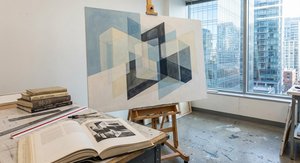
Beyond Form & Color: Geometric Abstraction's Enduring Legacy in Art History
Explore the captivating world of geometric abstraction! Discover its origins, key artists like Malevich & Mondrian, and why this movement remains highly valued by art collectors today. Expert insights at OriginalUniqueArt.

