Vorschau anzeigen
 Versenden
 Teilen
 Details anzeigen
 Leitfaden

 Herunterladen
 Ähnliche Objekte
 Röntgenaufnahme
 Diashow
 Q&A
Q&A Statistiken
St John the Evangelist


 Weiterlesen
Giclée / Kunstdruck
Giclée- oder Leinwanddruck in Museumsqualität mit schneller Produktion und flexiblen Veredelungsoptionen. ( Handgemalte Reproduktion bestellen Zum digitalen Bild wechseln)




P118B €10

P118H €10

P118W €10

P438Z €10

P508JH €12

P508YH €12

P805H €10

P805Z €10

P919BZ €10

P919G €10

P919XJ €10

P959ZH €10

P968JZ €12

W106C €8

W218G €10

W218JH €8

W218Y €10

W307PJ €10

W316G €10

W316PJ €8

W316Y €10

W398PJ €8

W4111J €10

W500HY €15

W500JH €15

W692G €12

W849H €8

W940BG €15

W953PJ €8




Wählen Sie aus unseren vordefinierten Formaten, die den ursprünglichen Proportionen des Kunstwerks entsprechen.

Geben Sie die benötigte Breite und Höhe an, damit der Druck perfekt in Ihren Rahmen oder an Ihre Wand passt. Ein Druck kann nur beschnitten, aber niemals größer als das Originalbild angefertigt werden; daher verliert ein Format mit anderen Proportionen einen Teil des Bildes. Wir senden Ihnen ein digitales Mockup zur Freigabe, bevor wir den Druck ausführen. Das auf dieser Seite gezeigte Bild zeigt nicht den tatsächlichen Beschnitt – dies ist nur im Mockup ersichtlich.
Weltweiter Versand () innerhalb von 2 Wochen statt der üblichen 4/5 Wochen. (2 November)

Kostenloser weltweiter Expressversand

Hochwertige Leinenleinwand

Umfassender Versicherungsschutz beim Versand

Zollgebühren-Rückerstattungsgarantie

Garantie für exakte Farbtreue

100 Tage Rückgaberecht (nur bei Mängeln)

100% Geld-zurück-Garantie

Mengenrabatt verfügbar
 Die Glasoption ist nur für Größen unter 110 cm verfügbar.

St John the Evangelist
Giclée / Kunstdruck
Format der Reproduktion
-


Endpreis
€ 71
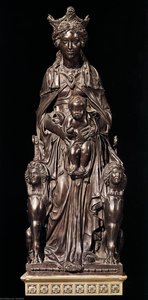
Donatello’s St John the Evangelist: A Portrait of Doubt Amidst Renaissance Majesty
Donatello’s *St John the Evangelist*, sculpted between 1409 and 1411, stands as a cornerstone of Florentine Renaissance art—a testament to humanist ideals blended with masterful technical skill. Initially destined for Santa Maria del Fiore’s Duomo façade, its subsequent relocation to the Museo dell’Opera del Duomo cemented its place in artistic history and continues to captivate viewers today.
- Subject Matter: The statue depicts St John the Evangelist, one of Jesus' twelve apostles, embodying wisdom and contemplation. Donatello deliberately chose an elderly figure—a departure from prevailing artistic conventions—to convey a profound sense of inner turmoil and questioning faith.
- Style & Technique: Donatello’s style is characterized by its groundbreaking naturalism, achieved through meticulous anatomical observation and expressive drapery. He employed the technique of *contrapposto*, positioning John's weight on one leg while subtly shifting his torso to create a dynamic pose that belies the statue’s stillness. The sculptor skillfully utilized marble—a material prized for its luminosity and ability to capture detail—to render textures with astonishing accuracy.
- Historical Context: Created during Florence’s artistic zenith, *St John* reflects the humanist spirit of the era, prioritizing human emotion and intellect alongside classical ideals. It emerged from a broader movement toward portraying figures as psychologically complex individuals rather than idealized representations.
- Symbolism: The statue's symbolism extends beyond its depiction of St John—a revered saint known for his Gospels and Epistles. Donatello’s deliberate choice to portray an aged apostle speaks to the contemplation of mortality and the questioning of divine providence, themes central to Renaissance spirituality.
- Emotional Impact: Viewing *St John* evokes a powerful response – one of quiet reverence mingled with palpable unease. The sculptor's masterful rendering of John’s gaze—searching, troubled, yet imbued with an unwavering conviction—captures the essence of human experience confronting existential dilemmas. It is this profound psychological depth that elevates *St John* beyond mere sculptural representation, transforming it into a timeless meditation on faith and doubt.
The statue’s placement alongside Nanni di Banco’s *St Luke*, and Bernardo Ciuffagni’s *St Mark*, within Santa Maria del Fiore’s Duomo underscores Donatello's role in shaping the aesthetic vision of Renaissance Florence. The sculpture’s enduring legacy testifies to Donatello’s unparalleled ability to fuse classical ideals with humanist sensibilities—a feat that continues to inspire artists and collectors alike.
Donatello’s *St John* remains a poignant reminder of humanity's capacity for introspection and the beauty found in confronting profound questions about existence. Its meticulous craftsmanship and emotive portrayal solidify its position as one of the most celebrated artworks of the Renaissance—a masterpiece that transcends time and speaks to the universal human condition.
Fragen & Antworten
In welcher Ausrichtung liegt "St John the Evangelist" von Donatello vor?
Das Format von „St John the Evangelist“ ist Tall. Dies ist hilfreich bei der Planung, wo eine Reproduktion platziert werden soll.
Wie kann ich eine Vorschau einer Reproduktion von "St John the Evangelist" von Donatello aufrufen?
Um eine Vorschau einer Reproduktion von "St John the Evangelist" von Donatello zu erhalten, öffnen Sie die Vorschau im Raum-Seite des Kunstwerks.
Welche Farben dominieren in "St John the Evangelist" von Donatello?
"St John the Evangelist" zeichnet sich durch eine Neutrals-Palette aus, die von White (#f9f8f8) dominiert wird.
Künstlerbiografie
Frühes Leben und Karriere
Donato di Niccolò di Betto Bardi, bekannt als Donatello, wurde um 1386 in Florenz, Italien geboren. Er studierte klassische Bildhauerei, was seine Entwicklung eines frühen Renaissance-Stils stark beeinflusste. Dieser neue Ansatz für Kunst und Kultur sollte schließlich zum Kennzeichen der florentinischen Renaissance werden.Schlüsselwerke und Innovationen
Donatellos berühmtestes Werk, David, war seit der Antike die erste freistehende nackte männliche Skulptur. Sie wurde von der Familie Medici in Auftrag gegeben und zeigte seinen innovativen Stil und seine technische Expertise. Zu den anderen bemerkenswerten Werken gehören:- St. Louis von Toulouse (jetzt im Museum der Basilika di Santa Croce), das einen klassischen Rahmen aufwies, der von Donatello entworfen wurde.
- Das Opfer des Isaak, geschaffen für den Campanile von Santa Maria del Fiore in Florenz, zeichnete sich durch starke Porträtdetails aus.
- Kreuzifix (1425) für Santa Croce, das Christus in einem Moment der Agonie darstellte.
Künstlerischer Stil und Vermächtnis
Donatellos Stil lässt sich in breite Phasen einteilen, beginnend mit der Entwicklung von Ausdruckskraft und klassischer Monumentalität. Seine Arbeit wurde nicht sofort von der Gemeinschaft akzeptiert, entwickelte sich aber schließlich zum beliebtesten und beeinflusste andere italienische Höfe und europäische Künstler. Wichtige Kunstbewegungen:Persönliches Leben und Arbeitsweise
Donatello war bekannt dafür, liebenswert und gutmütig zu sein, aber schlecht in der geschäftlichen Seite seiner Karriere. Er nahm oft mehr Aufträge an, als er bewältigen konnte, und vollendete Werke häufig verspätet oder übergab sie anderen Bildhauern. Bemerkenswerte Kunstwerke und Künstler:- Leonardo da Vinci: Ankündigung (Detail)
- Amico Aspertini: Statua di Pan/Leone che azzanna un cavallo
- Michelangelo Buonarroti: Tondo Pitt
Museen und Kunstsammlungen:
- Museo della Collegiata (Empoli, Italien): Ein verstecktes Juwel der Renaissance mit Werken von Francesco Botticini und Raffaello Botticini.
- Die frühe italienische Kunstbewegung der Renaissance

Donatello
1386 - 1466 , Italien
Kurzinfos
- Beeinflusste Künstler:
- Leonardo da Vinci
- Michelangelo Buonarroti
- Bemerkenswerte Werke:
- David
- St. Louis von Toulouse
- Das Opfer des Isaak
- Kreuzifix (1425)
- Geburtsdatum: ca. 1386
- Geburtsort: Florenz, Italien
- Künstlerische Bewegung:
- Frührenaissance
- Florentiner Renaissance
- Künstlerische Einflüsse: ['Antike Skulptur']
- Nationalität: Italiener
- Sterbedatum: 1466
- Vollständiger Name: Donatello (Donato di Niccolò)
Ähnliche Artikel

John Singer Sargent: Die 25 Meisterwerke des Porträts – Kunst für Ihr Zuhause | OriginalUniqueArt
Entdecken Sie die 25 Meisterwerke von John Singer Sargent! Tauchen Sie ein in die Welt der Porträtmalerei, des Impressionismus & der Belle Époque. Hochwertige Kunstdrucke & Reproduktionen für Ihr Zuhause – jetzt auf OriginalUniqueArt.com!

Bronze-Meisterwerke: Die 10 Skulpturen, die Kunstgeschichte schrieben | OriginalUniqueArt
Entdecken Sie die 10 legendärsten Bronze Skulpturen der Kunstgeschichte! Von Michelangelo bis Rodin – erfahren Sie die Geschichten hinter den Meisterwerken und lassen Sie sich von Wanddeko-Ideen inspirieren. Hochwertige Kunstdrucke auf OriginalUniqueArt.com.

The Enduring Form: Exploring Themes & Techniques in Sculpture Across Historical Periods
Explore the rich history of sculpture from ancient masterpieces to contemporary innovations. Discover key techniques, influential artists & investment potential for discerning art collectors.

Die 25 besten Kunstwerke von John Constable: Meisterwerke der englischen Landschaft
Entdecken Sie die 25 besten Werke von John Constable. Erleben Sie englische Romantik auf OriginalUniqueArt.com. Jetzt Meisterwerke online entdecken!

Die 10 legendärsten Bronzestatuen: Meisterwerke, die Kunstgeschichte schrieben | OriginalUniqueArt
Entdecken Sie die 10 legendärsten Bronzestatuen der Kunstgeschichte! Von Rodin bis Michelangelo – erfahren Sie die Geschichten hinter ikonischen Skulpturen und finden Sie hochwertige Reproduktionen für Ihr Zuhause. Jetzt bei OriginalUniqueArt entdecken!