Zum Druck wechseln
 Weiterlesen







































 Bei Kunstwerken oder Reproduktionen, die an einer Seite größer als 105 cm (ca. 41 Zoll) sind, wird der Rahmen zerlegt als Bausatz geliefert. Diese Methode gewährleistet eine sichere Zustellung und verhindert Schäden während des Transports.


Donatello’s St John the Evangelist: A Portrait of Doubt Amidst Renaissance Majesty
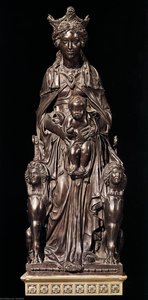
Donatello’s *St John the Evangelist*, sculpted between 1409 and 1411, stands as a cornerstone of Florentine Renaissance art—a testament to humanist ideals blended with masterful technical skill. Initially destined for Santa Maria del Fiore’s Duomo façade, its subsequent relocation to the Museo dell’Opera del Duomo cemented its place in artistic history and continues to captivate viewers today.
- Subject Matter: The statue depicts St John the Evangelist, one of Jesus' twelve apostles, embodying wisdom and contemplation. Donatello deliberately chose an elderly figure—a departure from prevailing artistic conventions—to convey a profound sense of inner turmoil and questioning faith.
- Style & Technique: Donatello’s style is characterized by its groundbreaking naturalism, achieved through meticulous anatomical observation and expressive drapery. He employed the technique of *contrapposto*, positioning John's weight on one leg while subtly shifting his torso to create a dynamic pose that belies the statue’s stillness. The sculptor skillfully utilized marble—a material prized for its luminosity and ability to capture detail—to render textures with astonishing accuracy.
- Historical Context: Created during Florence’s artistic zenith, *St John* reflects the humanist spirit of the era, prioritizing human emotion and intellect alongside classical ideals. It emerged from a broader movement toward portraying figures as psychologically complex individuals rather than idealized representations.
- Symbolism: The statue's symbolism extends beyond its depiction of St John—a revered saint known for his Gospels and Epistles. Donatello’s deliberate choice to portray an aged apostle speaks to the contemplation of mortality and the questioning of divine providence, themes central to Renaissance spirituality.
- Emotional Impact: Viewing *St John* evokes a powerful response – one of quiet reverence mingled with palpable unease. The sculptor's masterful rendering of John’s gaze—searching, troubled, yet imbued with an unwavering conviction—captures the essence of human experience confronting existential dilemmas. It is this profound psychological depth that elevates *St John* beyond mere sculptural representation, transforming it into a timeless meditation on faith and doubt.
The statue’s placement alongside Nanni di Banco’s *St Luke*, and Bernardo Ciuffagni’s *St Mark*, within Santa Maria del Fiore’s Duomo underscores Donatello's role in shaping the aesthetic vision of Renaissance Florence. The sculpture’s enduring legacy testifies to Donatello’s unparalleled ability to fuse classical ideals with humanist sensibilities—a feat that continues to inspire artists and collectors alike.
Donatello’s *St John* remains a poignant reminder of humanity's capacity for introspection and the beauty found in confronting profound questions about existence. Its meticulous craftsmanship and emotive portrayal solidify its position as one of the most celebrated artworks of the Renaissance—a masterpiece that transcends time and speaks to the universal human condition.
Fragen & Antworten
In welcher Ausrichtung liegt "St John the Evangelist" von Donatello vor?
Das Format von „St John the Evangelist“ ist Tall. Dies ist hilfreich bei der Planung, wo eine Reproduktion platziert werden soll.
Wie kann ich eine Vorschau einer Reproduktion von "St John the Evangelist" von Donatello aufrufen?
Um eine Vorschau einer Reproduktion von "St John the Evangelist" von Donatello zu erhalten, öffnen Sie die Vorschau im Raum-Seite des Kunstwerks.
Welche Farben dominieren in "St John the Evangelist" von Donatello?
"St John the Evangelist" zeichnet sich durch eine Neutrals-Palette aus, die von White (#f9f8f8) dominiert wird.
 Vorschau anzeigen
 Versenden
 Teilen
 Details anzeigen
 Leitfaden

 Herunterladen
 Ähnliche Objekte
 Röntgenaufnahme
 Diashow
 Q&A
Q&A Statistiken