
 Vorschau anzeigen
 Versenden
 Teilen
 Details anzeigen
 Leitfaden

 Herunterladen
 Ähnliche Objekte
 Röntgenaufnahme
 Diashow
 Fragen & Antworten
 Statistiken
Hunter in a Blizzard


 Weiterlesen
Giclée / Kunstdruck
Giclée- oder Leinwanddruck in Museumsqualität mit schneller Produktion und flexiblen Veredelungsoptionen. ( Handgemalte Reproduktion bestellen Zum digitalen Bild wechseln)




P118B €10

P118H €10

P118W €10

P438Z €10

P508JH €12

P508YH €12

P805H €10

P805Z €10

P919BZ €10

P919G €10

P919XJ €10

P959ZH €10

P968JZ €12

W106C €8

W218G €10

W218JH €8

W218Y €10

W307PJ €10

W316G €10

W316PJ €8

W316Y €10

W398PJ €8

W4111J €10

W500HY €15

W500JH €15

W692G €12

W849H €8

W940BG €15

W953PJ €8




Wählen Sie aus unseren vordefinierten Formaten, die den ursprünglichen Proportionen des Kunstwerks entsprechen.

Geben Sie die benötigte Breite und Höhe an, damit der Druck perfekt in Ihren Rahmen oder an Ihre Wand passt. Ein Druck kann nur beschnitten, aber niemals größer als das Originalbild angefertigt werden; daher verliert ein Format mit anderen Proportionen einen Teil des Bildes. Wir senden Ihnen ein digitales Mockup zur Freigabe, bevor wir den Druck ausführen. Das auf dieser Seite gezeigte Bild zeigt nicht den tatsächlichen Beschnitt – dies ist nur im Mockup ersichtlich.
Weltweiter Versand () innerhalb von 2 Wochen statt der üblichen 4/5 Wochen. (7 November)

Kostenloser weltweiter Expressversand

Hochwertige Leinenleinwand

Umfassender Versicherungsschutz beim Versand

Zollgebühren-Rückerstattungsgarantie

Garantie für exakte Farbtreue

100 Tage Rückgaberecht (nur bei Mängeln)

100% Geld-zurück-Garantie

Mengenrabatt verfügbar
 Die Glasoption ist nur für Größen unter 110 cm verfügbar.

Hunter in a Blizzard
Giclée / Kunstdruck
Format der Reproduktion
-


Endpreis
€ 72
A Frozen Moment in Time: The Solitude of the Hunter
In the heart of a biting Canadian winter, where the wind howls through ancient pines and the horizon vanishes beneath a shroud of white, stands a figure of quiet resilience. Cornelius David Krieghoff’s 1858 masterpiece, Hunter in a Blizzard, captures more than just a seasonal landscape; it captures a profound sense of human endurance against the overwhelming forces of nature. The painting presents us with a man navigating a treacherous, snow-choked woodland, his silhouette heavy with winter gear and the weight of two axes gripped firmly in his hands. As he moves through the swirling flakes, there is an undeniable tension in the air—a feeling of isolation that is both haunting and deeply intimate. The presence of a shadowy figure lurking in the distant background adds a layer of mystery, suggesting that even in this desolate expanse, the hunter is never truly alone, yet remains profoundly solitary in his struggle against the elements.
The technical brilliance of Krieghoff lies in his ability to translate the tactile sensation of cold onto a wooden panel. Using oil on panel, the artist achieves a unique, dense texture that lends a physical presence to the falling snow and the rugged bark of the surrounding trees. The palette is a masterful study in whites, greys, and muted earth tones, punctuated only by the dark, heavy textures of the hunter's clothing. This restrained use of color serves to heighten the atmospheric pressure of the blizzard, making the viewer feel the damp chill and the biting wind. For the discerning collector or interior designer, this piece offers a sophisticated interplay of light and shadow, providing a focal point that commands attention through its atmospheric depth rather than mere chromatic intensity.
A Legacy of Canadian Identity and Artistic Mastery
To understand Hunter in a Blizzard, one must look to the life of the man who painted it. Born in Amsterdam, Krieghoff brought a refined European academic training to the rugged landscapes of North America. His journey from the prestigious academies of Germany to the wild frontiers of Canada allowed him to bridge two worlds, blending Old World technique with New World subject matter. This painting stands as a testament to his role as one of the most significant chroniclers of 19th-century Canadian life. Through his eyes, we see the daily struggles and the quiet dignity of those navigating the untamed wilderness. The work is not merely a landscape; it is a historical document that captures the spirit of an era defined by survival, exploration, and a deep connection to the land.
For those looking to bring a sense of history and contemplative beauty into a living space, a high-quality reproduction of this work offers an unparalleled opportunity. Whether placed in a grand library or a modern, minimalist study, the painting’s themes of resilience and quiet strength resonate deeply. It serves as a window into a lost era, inviting conversation and reflection. Owning a piece inspired by Krieghoff is more than an aesthetic choice; it is an embrace of the enduring human spirit that continues to find its way through even the most daunting storms.
Fragen & Antworten
Wie harmonieren die Farben von "Hunter in a Blizzard" miteinander?
Die Farbharmonie von „Hunter in a Blizzard“ wird als Strong Color Unity beschrieben.
Wo kann man handgemalte Reproduktionen von "Hunter in a Blizzard" von Cornelius David Krieghoff kaufen?
"Hunter in a Blizzard" ist als eine handgemalte Ölreproduktion auf Leinenleinwand erhältlich. Die Bestellung kann auf der Seite Handgemalte Ölreproduktion in verschiedenen Größen vorgenommen werden.
Wie schafft "Hunter in a Blizzard" das Gleichgewicht zwischen Hell und Dunkel?
Die aufgezeichneten Werte für "Hunter in a Blizzard" von Cornelius David Krieghoff sind: brilliant Helligkeit, Bright Balance Luminanz.
Künstlerbiografie
Frühes Leben und Hintergrund
- Geboren: 19. Juni 1815, Amsterdam, Niederlande
- Gestorben: 5. März 1872, Chicago, Illinois
- Eltern: Johann Ernst Krieghoff (Vater), Isabella Ludivica Wauters (Mutter)
- Die frühe Ausbildung umfasste Musik und Malerei von seinem Vater. Er besuchte später die Akademie der Schönen Künste in Deutschland um 1830.
- Familienverbindungen zu Sattler, einem Fabrikbesitzer für Tapeten, boten Unterkünfte im Schloss Mainberg.
Militärdienst und frühe Reisen
- Im Jahr 1836 wanderte Krieghoff nach New York aus.
- Er trat 1837 in die United States Army ein und nahm am Zweiten Seminolenkrieg teil. Er fertigte während dieser Zeit Skizzen an.
- Er wurde 1840 mit dem Rang eines Unteroffiziers aus der Armee entlassen.
- Reiste 1844 nach Paris, wo er Meisterwerke im Louvre unter der Leitung von Michel Martin Drolling kopierte.
Karriere und künstlerische Entwicklung in Kanada
- Um 1846 ließ Krieghoff sich mit seiner Frau Louise Gauthier (dit Saint-Germain) und Tochter Emily in Longueuil, Québec, nieder.
- Er nahm 1847 an der Gründung der Montreal Society of Artists teil.
- Bekannt dafür, seine Gemälde zu bescheidenen Preisen (5–10 Dollar) von Haus zu Haus zu verkaufen.
- Seine Motive umfassten lokale Landschaften, Porträts, das Leben indigener Völker (insbesondere aus Interaktionen mit der Mohawk-Gemeinschaft in Kahnawake) und Landschaften.
- Zog 1853 nach Québec City, eine Zeit produktiver künstlerischer Arbeit.
- Kehrte kurzzeitig nach Europa zurück (1863–1868), bevor er sich 1870 zur Rente in Chicago niederließ.
Stil, Einflüsse und Hauptwerke
- Stil: Krieghoffs Stil zeichnet sich durch seinen Realismus und seine Liebe zum Detail aus, insbesondere bei der Darstellung kanadischer Landschaften und Szenen des täglichen Lebens. Seine Winterlandschaften sind besonders bekannt.
- Einflüsse: Wahrscheinlich beeinflusst von der deutschen Genremalerei (Wilhelm von Schadow) und der Hudson River School Landschaftstradition.
- Hauptwerke: Indianischer Fallensteller auf Schneeschuhen, Caughnawaga Indianerlager an einer Furt, Eine Caughnawage Frau, Die Mautstelle (verschiedene Versionen). Diese Werke veranschaulichen seinen Fokus auf das kanadische Leben und die Landschaften.
Vermächtnis und historische Bedeutung
- Krieghoff gilt als einer der wichtigsten kanadischen Künstler des 19. Jahrhunderts.
- Seine Gemälde geben wertvolle Einblicke in die soziale, kulturelle und geografische Landschaft Kanadas während einer Zeit bedeutender Veränderungen (vor der Konföderation).
- Er trug dazu bei, eine unverwechselbare kanadische künstlerische Identität zu etablieren, weg von rein europäischen Einflüssen.
- Seine Werke befinden sich heute in wichtigen Museen in ganz Kanada und international und zeugen von seinem bleibenden Reiz und seiner historischen Bedeutung.

Cornelius David Krieghoff
1815 - 1872 , Niederlande
Kurzinfos
- Bemerkenswerte Werke:
- Indian Trapper auf Schneeschuhen
- Caughnawaga Lager
- Eine Caughnawage Frau
- Das Pfandtor
- Einflussreiche Künstler: ['Wilhelm von Schadow']
- Geburtsdatum: 19. Juni 1815
- Geburtsort: Amsterdam, Niederlande
- Künstlerische Richtung: Kanadische Genremalerei
- Nationalität: Niederländisch-Kanadisch
- Sterbedatum: 5. März 1872
- Vollständiger Name: Cornelius David Krieghoff
Ähnliche Artikel

Die 25 besten Kunstwerke von John Constable: Meisterwerke der englischen Landschaft
Entdecken Sie die 25 besten Werke von John Constable. Erleben Sie englische Romantik auf OriginalUniqueArt.com. Jetzt Meisterwerke online entdecken!
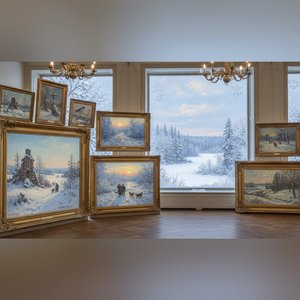
Schneezauber in der Kunst: Die 10 berühmtesten Gemälde – OriginalUniqueArt
Entdecken Sie die 10 berühmtesten Gemälde, die von Schnee und Winterlandschaften inspiriert sind! Von Monet bis Caspar David Friedrich – erleben Sie Kunstgeschichte. Hochwertige Reproduktionen auf OriginalUniqueArt.com

Romantische Landschaften: Die 10 Meisterwerke, die eine Epoche prägten | OriginalUniqueArt
Entdecken Sie die 10 Meisterwerke der Romantischen Landschaftsmalerei! Von Caspar David Friedrich bis Turner – erleben Sie die Kunst, Emotion & Natur. Hochwertige Reproduktionen auf OriginalUniqueArt.com

Evocations of Place: A Historical Journey Through Landscape Art
Explore the rich history of landscape art with OriginalUniqueArt. Discover renowned artists, movements like Impressionism & Romanticism, and expert guidance for collecting timeless pieces. Find your perfect serene escape today!

Evocations of Place: A Historical Journey Through Landscape Art
Explore the rich history of landscape art with OriginalUniqueArt. Discover renowned artists, movements like Impressionism & tonalism, and expert guidance for collecting timeless pieces. Find your perfect serene escape today!
