- Startseite

- Auf Leinwand drucken
- Carlo Carrà
- Florence

 Preview
 Gemälde kaufen Bild kaufen
 Versenden
 Teilen
 Details anzeigen
 Zu Favoriten hinzufügen

 Herunterladen
 Ähnliche Objekte
 Röntgenaufnahme
 Diashow anzeigen
Florence
 Oil On Canvas
- WallArt
- Futurist Painting
 Modern
 50.0 x 60.0 cm
 MAGA Museo Arte Gallarate
 Weiterlesen
Giclée / Kunstdruck
Giclée- oder Leinwanddruck in Museumsqualität mit schneller Produktion und flexiblen Veredelungsoptionen.




P118B $10

P118H $10

P118W $10

P438Z $10

P508JH $12

P508YH $12

P805H $10

P805Z $10

P919BZ $10

P919G $10

P919XJ $10

P959ZH $10

P968JZ $12

W106C $8

W218G $10

W218JH $8

W218Y $10

W307PJ $10

W316G $10

W316PJ $8

W316Y $10

W398PJ $8

W4111J $10

W500HY $15

W500JH $15

W692G $12

W849H $8

W940BG $15

W953PJ $8




Wählen Sie aus unseren vordefinierten Größen, die den ursprünglichen Proportionen des Kunstwerks entsprechen.

Sie können Ihre eigenen Maße eingeben, um ein bestimmtes Format oder einen speziellen Platz einzupassen. Wenn das von Ihnen gewählte Format nicht den Proportionen des Originalbildes entspricht, werden wir das Kunstwerk entweder beschneiden oder das Bild mit einem gespiegelten oder einfarbigen Rand erweitern. Ein digitaler Entwurf wird Ihnen zur Genehmigung zugesandt, bevor die Produktion beginnt.
Bitte beachten Sie, dass die Vorschau auf dem Bildschirm nicht den tatsächlichen Zuschnitt oder die Erweiterung widerspiegelt. Nur der Entwurf zeigt die endgültige Komposition präzise an.
Obwohl Sondermaße verfügbar sind, empfehlen wir die Auswahl eines Maßes aus der vordefinierten Liste, um die ursprünglichen Proportionen zu bewahren.
Weltweiter Versand () innerhalb von 2 Wochen statt der üblichen 4/5 Wochen. (26 Juli)

Kostenloser weltweiter Expressversand

Hochwertige Leinenleinwand

Umfassender Versicherungsschutz beim Versand

Zollsteuer-Rückerstattungsgarantie

Garantie für echte Farbtreue

60-Tage-Rückgaberecht (nur bei Mängeln)

100% Geld-zurück-Garantie

Mengenrabatt verfügbar
 Die Glasoption ist nur in Größen unter 110 cm verfügbar.

Florence
Giclée / Kunstdruck
Größe der Reproduktion
-


Endpreis aller Optionen
-
Beschreibung des Sammlerstücks
A Vision of Eternal Florence
To gaze upon this depiction of Florence is to step through a veil of time, into a moment suspended between vibrant history and quiet contemplation. Carlo Carrà’s vision captures more than just the magnificent dome of Santa Maria del Fiore; it encapsulates the very soul of Florentine artistry—a spirit rooted in the rigorous beauty of the Quattrocento. The composition itself feels like an archaeological discovery rendered in paint, presenting the city not as a mere collection of buildings, but as a unified, breathing volume. Carrà masterfully guides the eye across this aerial panorama, where every overlapping block and delicate curve speaks to centuries of human endeavor and artistic devotion.
Mastery in Light and Line: Technique and Form
Technically, the painting is a profound study in restraint. Carrà employs a technique characterized by light, quick brushstrokes and the exquisite layering of transparent glazes, or velature. This process allows the color to build up luminosity from within, giving the entire scene an ethereal, almost spiritual glow that seems to emanate from the very stone of the city. The structure is defined by thin, delicate black outlines—lines that are structural rather than restrictive. These lines serve to delineate the cubic forms of the architecture, suggesting a geometric order beneath the soft wash of color. It is this interplay between the rigid geometry suggested by the outlines and the atmospheric softness achieved through glazing that gives the piece its unique visual tension.
Historical Echoes: Carrà’s Late Period Synthesis
This work stands as a beautiful testament to the breadth of Carrà's artistic journey. Having navigated the turbulent waters of Futurism, Metaphysics, and various avant-garde movements throughout the twentieth century, here he finds a profound synthesis. In this later period, his focus turns inward, toward essential forms and pictorial simplicity. The painting moves away from overt naturalism or dramatic impressionism, instead achieving an equilibrium between concrete reality and sublime abstraction. It is Carrà distilling the monumental into its most fundamental visual components—a mature artist finding quiet power in elegant reduction.
Symbolism of Place and Spirit
The subject matter itself carries immense symbolic weight. Florence, particularly viewed through the lens of Brunelleschi’s dome, represents the pinnacle of Renaissance humanism and artistic revival. For Carrà, this city was not just a backdrop; it was a cultural touchstone. The muted palette—of soft blues, earthy grays, and pale terracotta—contributes to an overwhelming sense of tranquility. It invites the viewer into a meditative state, suggesting that true beauty lies in the enduring structure of culture itself. Owning this piece is acquiring not just art, but a tangible connection to the deep, abiding spirit of Italian artistic heritage.
Bringing the Masterpiece Home
For collectors and designers seeking an object imbued with history and quiet grandeur, this reproduction offers unparalleled depth. The soft luminosity achieved through Carrà’s glazing technique translates beautifully into interior spaces, acting as a focal point that uplifts any room without overwhelming it. It speaks to those who appreciate art that rewards close looking—a piece where the eye can wander from the defined geometry of the foreground blocks to the hazy, luminous expanse of the sky, finding continuous beauty in every subtle shift of tone.
Biografie des Künstlers
Frühes Leben und Karriere
Carlo Dalmazzo Carrà, ein renommierter italienischer Maler, wurde am 11. Februar 1881 in Quargnento, nahe Alessandria (Piemont), geboren. Im Alter von 12 Jahren verließ er sein Zuhause, um als Wandmaler zu arbeiten. Diese frühe Auseinandersetzung mit Kunst prägte seine zukünftige Karriere.Künstlerische Entwicklung
In den Jahren 1899-1900 befand sich Carrà in Paris und dekorierte Pavillons auf der Weltausstellung, wo er mit zeitgenössischer französischer Kunst bekannt wurde. Anschließend verbrachte er einige Monate in London, wo er mit im Exil lebenden italienischen Anarchisten interagierte, bevor er 1901 nach Mailand zurückkehrte. Im Jahr 1906 schrieb er sich an der Brera-Akademie (*Accademia di Brera*) unter Cesare Tallone ein.Futurismus
Im Jahr 1910 unterschrieb Carrà das Manifest der futuristischen Maler, zusammen mit Umberto Boccioni, Luigi Russolo und Giacomo Balla. Dies markierte den Beginn seiner einflussreichen futuristischen Phase, die durch Dynamik, Geschwindigkeit, Technologie, Jugend, Gewalt und Industrieprodukte gekennzeichnet war.- Carràs bemerkenswerte Werke aus dieser Zeit umfassen: Futuristische Phase
- Die Beerdigung des Anarchisten Galli (1911), Öl auf Leinwand, Museum of Modern Art, New York
- Rhythmen von Objekten (Ritmi d'oggetti) (1911), Öl auf Leinwand, Pinacoteca di Brera
- Seine Arbeit wurde in verschiedenen Ausstellungen gezeigt, darunter die Futurismus Kunstbewegung.
Metaphysische und archaische Perioden
Ab 1917 begann Carràs Stil, Mannequin-Bilder zu integrieren, beeinflusst von Giorgio de Chirico. Seine Arbeit Die Töchter des Lots (1919) veranschaulicht diese neue Richtung. In den 1920er und 1930er Jahren konzentrierte er sich auf Landschaftsmalerei und entwickelte einen atmosphärischeren Stil.- Morgen am Meer (1928), Öl auf Leinwand
- Teil der Sammlung La Carrozzela
Vermächtnis und spätere Jahre
Carràs späteres Werk war von ultra-nationalistischen und irredentistischen Ansichten geprägt, die die Unterstützung des Faschismus nach 1918 beinhalteten. Er verstarb am 13. April 1966 in Mailand.- Erkunden Sie weitere Werke von Carlo Carrà auf Carlo Carrà | OriginalUniqueArt.com
- Erfahren Sie mehr über die Futurismus Bewegung und ihre wichtigsten Vertreter, darunter Ernesto Michahelles, auf der Futurismus Kunstbewegung

Carlo Carrà
1881 - 1966 , Italien
Kurzinfos
- Beeinflusste Künstler/Bewegungen: ['Surrealismus']
- Bemerkenswerte Werke:
- Die Beerdigung des Anarchisten Galli
- Rhythmen von Objekten
- Die Töchter des Lots
- Morgen am Meer
- Geburtsdatum: 11. Februar 1881
- Geburtsort: Agrigento, Italien
- Künstlerische Bewegung: Futurismus, Metaphysische Malerei
- Künstlerische Einflüsse:
- Giorgio de Chirico
- Henri Rousseau
- Nationalität: Italiener
- Sterbedatum: 13. April 1966
- Vollständiger Name: Carlo Carrà
Ähnliche Artikel

Alfred Worthington: Bridging Victorian Realism & Early Modern Landscape Painting
Explore the captivating landscapes of Alfred Worthington (1834-1927), a pivotal figure bridging Victorian realism & early Impressionism. Discover his Welsh hunting scenes, artistic evolution, and collecting guide.

Carlo Carrà: Futuristische Visionen und metaphysische Transformationen der italienischen Malerei des frühen 20. Jahrhunderts
Entdecken Sie Carlo Carràs revolutionäre Kunst! Wir analysieren seine futuristischen Werke, die Entwicklung zur Metaphysik und seinen Einfluss auf die moderne Malerei. Expertenwissen & tiefe Einblicke.

Concrete Visions: Exploring the Urban Landscape in Painting – From Realism to Contemporary Art
Explore the evolution of cityscape painting from Realism to contemporary art with OriginalUniqueArt. Discover key artists & invest in timeless urban visions. Expert guidance, museum-quality reproductions.

Evocations of Place: A Historical Journey Through Landscape Art
Explore the rich history of landscape art with OriginalUniqueArt. Discover renowned artists, movements like Impressionism & tonalism, and expert guidance for collecting timeless pieces. Find your perfect serene escape today!
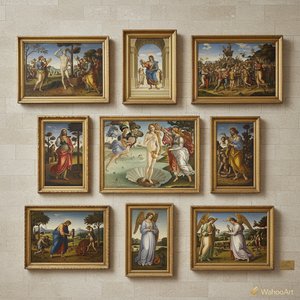
Frührenaissance: Die 10 Meisterwerke, die eine Epoche prägten – Kunst für Ihr Zuhause
Entdecken Sie die 10 prägendsten Meisterwerke der Frührenaissance! Von Giotto bis Botticelli – erleben Sie Kunstgeschichte hautnah. Hochwertige Reproduktionen für Ihr Zuhause auf .


