Vorschau anzeigen
 Versenden
 Teilen
 Details anzeigen
 Leitfaden

 Herunterladen
 Ähnliche Objekte
 Röntgenaufnahme
 Diashow
 Q&A
Q&A Statistiken
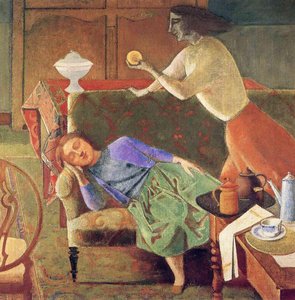
The white skirt

- 130.0 x 162.0 cm


 Weiterlesen
Die auf dieser Seite dargestellten Kunstwerke sind urheberrechtlich geschützt, was bedeutet, dass wir keine identische Reproduktion rechtmäßig erstellen oder verkaufen dürfen. Dieser Schutz wird durch internationale Abkommen wie die Berner Übereinkunft und durch nationale Gesetze, einschließlich derer, die von den US-Urheberrecht – Titel 17.
Diese Methode entspricht vollumfänglich den Urheberrechtsbestimmungen, da sie keine Kopie oder Vervielfältigung des geschützten Kunstwerks darstellt. Stattdessen handelt es sich um eine kreative Neuinterpretation – ein neues Gemälde, das vom Original inspiriert, aber nicht identisch mit ihm ist.
Giclée / Kunstdruck
Giclée- oder Leinwanddruck in Museumsqualität mit schneller Produktion und flexiblen Veredelungsoptionen. ( Handgemalte Reproduktion bestellen Zum digitalen Bild wechseln)




P118B €10

P118H €10

P118W €10

P438Z €10

P508JH €12

P508YH €12

P805H €10

P805Z €10

P919BZ €10

P919G €10

P919XJ €10

P959ZH €10

P968JZ €12

W106C €8

W218G €10

W218JH €8

W218Y €10

W307PJ €10

W316G €10

W316PJ €8

W316Y €10

W398PJ €8

W4111J €10

W500HY €15

W500JH €15

W692G €12

W849H €8

W940BG €15

W953PJ €8




Wählen Sie aus unseren vordefinierten Formaten, die den ursprünglichen Proportionen des Kunstwerks entsprechen.

Geben Sie die benötigte Breite und Höhe an, damit der Druck perfekt in Ihren Rahmen oder an Ihre Wand passt. Ein Druck kann nur beschnitten, aber niemals größer als das Originalbild angefertigt werden; daher verliert ein Format mit anderen Proportionen einen Teil des Bildes. Wir senden Ihnen ein digitales Mockup zur Freigabe, bevor wir den Druck ausführen. Das auf dieser Seite gezeigte Bild zeigt nicht den tatsächlichen Beschnitt – dies ist nur im Mockup ersichtlich.
Weltweiter Versand () innerhalb von 2 Wochen statt der üblichen 4/5 Wochen. (1 November)

Kostenloser weltweiter Expressversand

Hochwertige Leinenleinwand

Umfassender Versicherungsschutz beim Versand

Zollgebühren-Rückerstattungsgarantie

Garantie für exakte Farbtreue

100 Tage Rückgaberecht (nur bei Mängeln)

100% Geld-zurück-Garantie

Mengenrabatt verfügbar
 Die Glasoption ist nur für Größen unter 110 cm verfügbar.

The white skirt
Giclée / Kunstdruck
Format der Reproduktion
-


Endpreis
€ 71
A Quiet Encounter with Balthus
In the hushed atmosphere of Balthus’s 1937 masterpiece, The White Skirt, we are invited into a moment of profound stillness. The painting presents a solitary young woman seated within the embrace of an armchair, her presence commanding yet deeply introspective. There is an undeniable gravity to the composition; the figure does not merely sit, she exists in a state of quiet contemplation that seems to suspend time itself. As one gazes upon this portrait, the viewer is drawn into a private world where the boundaries between the subject and the observer blur, creating an intimate connection that is both haunting and deeply dignified.
The artist’s mastery of light and shadow serves as the heartbeat of the work. Emerging from a soft illumination directed from above and slightly to the left, the light dances across the textures of the scene, carving out the delicate curves of the woman's form and the heavy folds of her attire. This interplay of light creates a sense of three-dimensional depth, pulling the subject forward from the muted, somber background. The palette, a sophisticated arrangement of whites, beiges, and earthy browns, avoids the distraction of vibrant color to focus instead on the subtle nuances of tone, evoking a mood that is at once melancholic and serene.
Technique and the Language of Texture
Balthus, a painter deeply reverent of the Old Masters, utilizes an oil on canvas technique that bridges the gap between classical realism and a modern, almost impressionistic, sensibility. Upon closer inspection, the surface of the painting reveals a rich tapestry of brushstrokes. These are not merely marks of pigment but are deliberate gestures that suggest the tactile reality of the world: the smoothness of porcelain-like skin, the coarse grain of wooden furniture, and the heavy, flowing drapery of the white fabric. This meticulous attention to texture lends the piece an organic vitality, making the stillness of the subject feel even more palpable.
The composition is a masterclass in balance and organic form. The rounded contours of the chair and the fluid, sweeping lines of the woman's clothing create a rhythmic harmony that guides the eye throughout the frame. There is no jarring movement here; instead, the viewer’s gaze wanders softly through the layers of fabric and shadow, mirroring the slow, meditative pace of the subject herself. For the collector or interior designer, this piece offers a sophisticated anchor for a room, providing a focal point that commands respect without overwhelming its surroundings.
Symbolism and Emotional Resonance
Beyond its technical brilliance, The White Skirt is a vessel for profound symbolic meaning. The heavy, draped fabric that dominates the lower portion of the composition can be interpreted as a symbol of modesty, concealment, or perhaps the protective layers we wrap around our inner selves. The subject’s gaze, while not directly meeting the viewer's, suggests a deep interiority—a vulnerability shielded by a stoic exterior. This tension between what is revealed and what is hidden is what gives the painting its enduring psychological power.
For those seeking to bring a sense of history and intellectual depth into their living spaces, this reproduction offers more than just aesthetic beauty; it offers an emotional journey. It is a piece that invites conversation, prompting reflections on solitude, identity, and the quiet strength found in moments of introspection. Whether placed in a contemporary gallery-style setting or a classic study, The White Skirt serves as a timeless window into the enigmatic vision of one of the 20th century's most captivating artists.
Fragen & Antworten
Kann ich "The white skirt" als Vollbild-Diashow ansehen?
Eine Diashow ist verfügbar: die Seite Diashow von "The white skirt" von Balthus.
Woher kommen die Besucher von "The white skirt" von Balthus?
Auf der Besucherzahlen-Seite des Kunstwerks finden Sie Statistiken zu "The white skirt" von Balthus: monatliche Aufrufe des Kunstwerks, Aufrufe der Werke des Künstlers sowie eine Aufschlüsselung der jüngsten Besucher nach Land und Sprache.
Kann "The white skirt" in Augmented Reality vorab betrachtet werden?
"The white skirt" von Balthus kann mithilfe der AR-Vorschau-Seite des Kunstwerks mit Augmented Reality auf einem kompatiblen Gerät direkt an Ihrer eigenen Wand vorab betrachtet werden.
Künstlerbiografie
Frühe Jahre und Einflüsse
Balthasar Klossowski de Rola, bekannt unter dem Pseudonym Balthus, wurde am 29. Februar 1908 in Paris geboren. Seine frühen Jahre waren geprägt von den Einflüssen seiner Familie, die zur kulturellen Elite gehörte. Balthus' Vater, Erich Klossowski, war Kunsthistoriker und Autor eines Buches über Daumier, und seine Mutter Elisabeth Dorothea Spiro (bekannt als Malerin Baladine Klossowska) war Teil der Pariser Kulturszene.Künstlerische Laufbahn
Balthus’ künstlerische Karriere begann im Jahr 1934 mit seiner ersten Ausstellung in Paris, die Werke wie „Die Gitarrenstunde“ zeigte, welche aufgrund ihrer sexuellen Darstellung Kontroversen auslöste. Diese frühen Arbeiten wurden von der Kunst des Frührenaissance und den Schriften von Emily Brontë, Lewis Carroll und Simone Martini beeinflusst.- „La Rue“ (1933) und „La Toilette de Cathy“ (1933) sind bemerkenswerte Werke aus dieser Zeit, die Balthus' einzigartigen Stil zeigen.
- Sein Lieblingskomponist war Wolfgang Amadeus Mozart, was seine Wertschätzung für das Klassische und die sinnlichen Aspekte der Kunst widerspiegelt.
Kontroversen und Späteres Leben
Balthus’ späteres Leben war von Kontroversen um seinen familiären Hintergrund geprägt. Trotz Behauptungen, keine jüdischen Vorfahren zu haben, bleibt die wahre Abstammung seiner Mutter ein Diskussionspunkt.- Balthus' Beziehung zu seiner japanischen Frau Setsuko Ideta, die er 1967 heiratete, trug zum Mysterium um seine Person bei.
- Die Balthus-Stiftung, die 1998 von seiner Witwe, Gräfin Setsuko Klossowska de Rola, gegründet wurde, fördert weiterhin sein Werk und sein Erbe.
Vermächtnis und Einfluss
Balthus' Einfluss ist in verschiedenen zeitgenössischen Künstlern sichtbar, darunter Jan Saudek, Will Barnet, Duane Michals, John Currin, Eli Levin, Emile Chambon und Elena Zolotnitsky.- Sein Stil, vorwiegend klassisch, wurde von zahlreichen Künstlern beeinflusst, darunter Masaccio, Piero della Francesca, Simone Martini, Poussin, Jean-Étienne Liotard, Joseph Reinhardt, Géricault, Ingres, Goya, Jean-Baptiste Camille Corot, Courbet, Edgar Degas, Félix Vallotton und Paul Cézanne.
- Als wichtiger Künstler des 20. Jahrhunderts wird Balthus' Werk weiterhin weithin anerkannt und geschätzt.
Bemerkenswerte Werke und Ausstellungen
- „Mädchen am Fenster“ (1957), das in François Truffauts Film „Domicile Conjugal“ (1970) zu sehen war.
- Ausstellungen im Museum of Modern Art (1956) und der Galerie Pierre Matisse (1934) zeigten Balthus' einzigartigen Stil.
- Erfahren Sie mehr über die Werke von Balthus auf OriginalUniqueArt: https://OriginalUniqueArt.com/@/balthasar-klossowski
- Entdecken Sie die Sammlung des Museum of Modern Art auf OriginalUniqueArt: https://OriginalUniqueArt.com/@@/a@d3aqwm-the-museum-of-modern-art-(united-states)-a-comprehensive-overview
- Erfahren Sie mehr über Balthus' Leben und Werk auf Wikipedia: https://en.wikipedia.org/wiki/balthazar_klossowski

Balthus
1908 - 2001 , Frankreich
Kurzinfos
- Bemerkenswerte Kunstwerke:
- Mädchen mit Katze
- Die Straße
- Roberte im Spiegel
- Geburtsdatum: 29. Februar 1908
- Geburtsort (Stadt, Land): Paris, Frankreich
- Künstler Oder Bewegungen, Die Von Diesem Künstler Beeinflusst Wurden:
- Jan Saudek
- Will Barnet
- Künstler, Die Diesen Künstler Beeinflussten:
- Masaccio
- Piero della Francesca
- Simone Martini
- Künstlerische Bewegung Oder Stil: Figurative Malerei, Klassizismus
- Nationalität: Französisch
- Sterbedatum: 18. Februar 2001
- Vollständiger Name: Balthasar Klossowski de Rola
Ähnliche Artikel

Die 10 Meisterwerke des Neoklassizismus: Kunst für Ihr Zuhause |
Entdecken Sie die 10 Meisterwerke des Neoklassizismus! Von David bis Canova – erleben Sie Kunstgeschichte, elegante Ästhetik & zeitlose Schönheit. Hochwertige Reproduktionen auf .

The Poetic Truth of Observation: Exploring 19th-Century Realism in Painting
Explore the captivating world of 19th-century Realism! Discover key artists like Courbet & Millet, masterpieces, and the powerful social commentary behind this influential art movement. Expert insights at OriginalUniqueArt.

10 Meisterwerke des Romantischen Realismus: Wenn Emotion auf Wahrheit trifft
Entdecken Sie 10 Meisterwerke des Romantischen Realismus. Erleben Sie die emotionale Tiefe von Künstlern wie Constable und Friedrich – perfekt als Inspiration für Ihre Kunstsammlung oder Wandgestaltung. Finden Sie museale Reproduktionen auf OriginalUniqueArt.com.
The Enduring Legacy of Classicism: Principles, Evolution & Influence in Western Art
Explore the enduring legacy of Classicism in Western art! Discover its historical context, key principles, iconic masterpieces & lasting influence. Learn about Renaissance and Neoclassical movements with OriginalUniqueArt.

Weiße Meisterwerke: Die Top 10 berühmtesten Gemälde und ihre zeitlose Eleganz
Entdecken Sie die Top 10 berühmter Gemälde, dominiert von Weiß! Von Malewitsch bis Rothko – erfahren Sie Geschichten hinter ikonischen Kunstwerke und lassen Sie sich für Ihre Wohnraumgestaltung inspirieren. Kunstreproduktionen in Museumsqualiät auf