Vorschau anzeigen
 Versenden
 Teilen
 Details anzeigen
 Leitfaden

 Herunterladen
 Ähnliche Objekte
 Röntgenaufnahme
 Diashow
 Statistiken
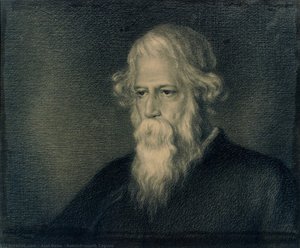
Rabindranath Tagore
 Acryl auf Leinwand
- Wandkunst
- Graphic art
 1944
1944 56.0 x 68.0 cm
 Victoria-Gedenkstätte
 Weiterlesen
Die auf dieser Seite dargestellten Kunstwerke sind urheberrechtlich geschützt, was bedeutet, dass wir keine identische Reproduktion rechtmäßig erstellen oder verkaufen dürfen. Dieser Schutz wird durch internationale Abkommen wie die Berner Übereinkunft und durch nationale Gesetze, einschließlich derer, die von den US-Urheberrecht – Titel 17.
Diese Methode entspricht vollumfänglich den Urheberrechtsbestimmungen, da sie keine Kopie oder Vervielfältigung des geschützten Kunstwerks darstellt. Stattdessen handelt es sich um eine kreative Neuinterpretation – ein neues Gemälde, das vom Original inspiriert, aber nicht identisch mit ihm ist.
Giclée / Kunstdruck
Giclée- oder Leinwanddruck in Museumsqualität mit schneller Produktion und flexiblen Veredelungsoptionen. ( Handgemalte Reproduktion bestellen Zum digitalen Bild wechseln)




P118B €10

P118H €10

P118W €10

P438Z €10

P508JH €12

P508YH €12

P805H €10

P805Z €10

P919BZ €10

P919G €10

P919XJ €10

P959ZH €10

P968JZ €12

W106C €8

W218G €10

W218JH €8

W218Y €10

W307PJ €10

W316G €10

W316PJ €8

W316Y €10

W398PJ €8

W4111J €10

W500HY €15

W500JH €15

W692G €12

W849H €8

W940BG €15

W953PJ €8




Wählen Sie aus unseren vordefinierten Formaten, die den ursprünglichen Proportionen des Kunstwerks entsprechen.

Geben Sie die benötigte Breite und Höhe an, damit der Druck perfekt in Ihren Rahmen oder an Ihre Wand passt. Ein Druck kann nur beschnitten, aber niemals größer als das Originalbild angefertigt werden; daher verliert ein Format mit anderen Proportionen einen Teil des Bildes. Wir senden Ihnen ein digitales Mockup zur Freigabe, bevor wir den Druck ausführen. Das auf dieser Seite gezeigte Bild zeigt nicht den tatsächlichen Beschnitt – dies ist nur im Mockup ersichtlich.
Weltweiter Versand () innerhalb von 2 Wochen statt der üblichen 4/5 Wochen. (25 Oktober)

Kostenloser weltweiter Expressversand

Hochwertige Leinenleinwand

Umfassender Versicherungsschutz beim Versand

Zollgebühren-Rückerstattungsgarantie

Garantie für exakte Farbtreue

100 Tage Rückgaberecht (nur bei Mängeln)

100% Geld-zurück-Garantie

Mengenrabatt verfügbar
 Die Glasoption ist nur für Größen unter 110 cm verfügbar.

Rabindranath Tagore
Giclée / Kunstdruck
Format der Reproduktion
-


Endpreis
€ 70
Rabindranath Tagore: A Portrait of Wisdom and Reflection
The painting “Rabindranath Tagore” by Atul Basu is more than just an image; it’s a distillation of intellect, compassion, and the enduring spirit of Bengali culture. Executed in 1944, during a period marked by significant political upheaval in India – specifically the waning days of British rule – Basu's artwork transcends mere representation, delving into the psychological depth of its subject. It captures Tagore not as a grand figure of history, but as a man wrestling with profound questions about humanity and spirituality.- Style: Basu’s approach leans heavily toward graphic art, prioritizing clarity and precision in line and form. This stylistic choice reflects the influence of René Magritte and Martin Gardner, artists who championed conceptual art and challenged viewers to engage actively with visual stimuli.
- Technique: The painting utilizes oil paints on plywood – a relatively inexpensive medium that allowed Basu to focus on capturing subtle nuances of expression. His meticulous brushstrokes convey a remarkable level of detail, particularly in the rendering of Tagore’s facial features and hair style, highlighting his distinctive appearance.
- Historical Context: Created amidst the tumultuous backdrop of India's independence movement, “Rabindranath Tagore” speaks to the anxieties and aspirations of a nation striving for self-determination. The painting subtly embodies the humanist ideals championed by Tagore himself – values rooted in Upanishadic philosophy that emphasized inner contemplation and ethical conduct.
- Symbolism: Beyond mere likeness, the painting embodies symbolic representations of wisdom and contemplation. Tagore’s beard and mustache serve as visual anchors for his intellectual stature, while his hairstyle reflects the traditions of Bengal.
- Emotional Impact: Basu's artwork evokes a feeling of serenity mingled with thoughtfulness. It invites viewers to contemplate the profound questions posed by Tagore’s gaze – questions about morality, spirituality, and the human condition.
Fragen & Antworten
Welches Format hat "Rabindranath Tagore"?
Das Format von „Rabindranath Tagore“ ist Querformat. Dies ist hilfreich bei der Planung, wo eine Reproduktion platziert werden soll.
Wie intensiv sind die Farben von "Rabindranath Tagore" von Atul Basu?
Die Farben in "Rabindranath Tagore" von Atul Basu besitzen eine Einfarbig Intensität.
Ist eine rechtmäßige Reproduktion von "Rabindranath Tagore" von Atul Basu aus dem Bestand des Victoria-Gedenkstätte zulässig?
"Rabindranath Tagore" von Atul Basu, aufbewahrt im Victoria-Gedenkstätte, ist noch urheberrechtlich geschützt. Dieser Status bestimmt, ob Reproduktionen des Bildes angefertigt werden dürfen.
Künstlerbiografie
Frühes Leben und Ausbildung
Atul Basu, ein renommierter indischer Maler, wurde am 22. Februar 1898 in Mymensingh geboren, das damals zur Präsidentschaft Bengalen gehörte. Seine Kindheit in der Stadt Mymensingh legte den Grundstein für sein späteres künstlerisches Schaffen. Basus primäre Ausbildung begann am National Council of Education, Zweigstelle Mymensingh, gefolgt von seinem Studium an der Jubilee Art Academy in Kalkutta.Karriere und Einflüsse
Durch ein Stipendium der Universität Kalkutta erhielt Basu die Möglichkeit, seine Kunst an der Royal Academy in London (1924–1926) zu studieren, wo er maßgeblich vom Post-Impressionisten Walter Sickert beeinflusst wurde. Bemerkenswert ist, dass Basu eine Einladung ablehnte, den Pavillon der British Empire Exhibition zu dekorieren, was seine tiefe Verbundenheit mit seiner eigenen künstlerischen Vision unterstreicht. Im Jahr 1921 gründete er gemeinsam mit Bhabani Charan Laha die Indian School of Oriental Art und wurde später Direktor des Government College of Art & Craft. Zu seinen bedeutendsten Werken zählen Sphinx (Öl auf Sperrholz) und sein Selbstporträt (1945), die seine meisterhafte Beherrschung der Ölfarben eindrucksvoll demonstrieren.Bedeutende Werke und Sammlungen
- Sphinx (Öl auf Sperrholz)
- Selbstporträt (1945)
- Porträts aus den Originalsammlungen von Windsor Castle und dem Buckingham Palace, in Auftrag gegeben von der indischen Regierung
Auszeichnungen und Anerkennung
Basu wurde im Jahr 1970 mit dem Ehrendoktortitel (D.Litt.) der Rabindra Bharati University in Kalkutta geehrt. Weitere Kunstwerke von Atul Basu auf OriginalUniqueArt.com ansehen: Entdecken Sie weitere indische Künstler und ihre Werke auf OriginalUniqueArt.com:
Atul Basu
1898 - 1977 , Indien
Kurzinfos
- Artistic Movement Or Style: Grafische Kunst, Druckgrafik
- Artists Or Movements Influenced By This Artist:
- René Magritte
- Martin Gardner
- Artists Who Influenced This Artist:
- George Arnold Escher
- Frank Reaugh
- Date Of Birth: 17. Juni 1898
- Date Of Death: 27. März 1972
- Full Name: Maurits Cornelis Escher
- Nationality: Niederländisch
- Notable Artworks:
- Hand mit reflektierender Kugel
- Zeichnende Hände
- Relativität
- Wasserfall
- Aufsteigend und absteigend
- Place Of Birth: Leeuwarden, Niederlande
Ähnliche Artikel

Die handgemalte Reproduktion: Woran der Maler tatsächlich arbeitet
Experten handgemalte Reproduktionen und individuelle Porträtaufträge, die klassische Techniken ehren. Zuverlässiges Handwerk, transparente Beschaffung und echter Wert für Wohnräume und Sammlungen gleichermaßen. Die Berührung des Malers, verfeinert für heutige anspruchsvolle Käufer.

Eine Reproduktion unter der Lupe: Was das Auge selbst prüfen kann
Erfahren Sie, wie Sie echte Reproduktionen in Museumsqualität von bloßen Drucken unterscheiden können. Unsere Kunstexperten zeigen Ihnen, wie Sie über technische Daten hinausgehen, um Farbgenauigkeit und künstlerische Integrität mit professionellen Techniken der weltweit führenden Museen zu bewerten.

Architektonische Resonanz: Wie Kunst Reproduktionen Räume gestalten und ästhetische Harmonie schaffen
Entdecken Sie, wie Kunst Reproduktionen Räume transformieren! Experten-Tipps für Innenarchitektur & Hoteldesign. Hochwertige Qualität, individuelle Lösungen – schaffen Sie Atmosphäre mit OriginalUniqueArt.
Jenseits der Imitation: Die strategische Rolle hochwertiger Kunst-Reproduktionen in der zeitgenössischen Galeriepraxis
Entdecken Sie hochwertige Kunst-Reproduktionen in Galeriequalität! Handgemalte Gemälde & Giclée Drucke von Experten gefertigt. Individuelle Beratung, sichere Investition – OriginalUniqueArt.

F.A.Q.: Reproduktionen vs. Poster – Warum keine Drucke von geringer Qualität verkauft
Entdecken Sie handgemalte Reproduktionen von Meisterwerken bei ! Exklusive Qualität, individuelle Anpassung & Expertenberatung für anspruchsvolle Kunstsammler.