Arts and Crafts
Comus 20 (Artúr Lajos Halmi)
Artúr Lajos Halmi (1866–1939) schuf Comus 20. Es gehört zur Arts and Crafts-Strömung. Es ist aus Ink On Paper gefertigt.
- Ink On Paper

 Vorschau anzeigen

 Handgemaltes Ölgemälde
 Versenden
 Teilen
 Datenblatt


 Herunterladen
 Ähnliche Objekte
 Röntgenaufnahme
 Diashow
 Fragen & Antworten

 Statistiken
Comus 20 im Überblick
- Titel
- Comus 20
- Künstler
- Artúr Lajos Halmi (1866–1939)
- Geburtsjahr des Künstlers
- Pest, Ungarn
- Medium
- Ink On Paper
- Bewegung
- Arts and Crafts
- Epoche
- 19th Century
- Motiv
- woman, rocks, waves, mountains, water, hair
Was stellt Comus 20 dar?
The Depiction of Comus 20 by Artúr Lajos Halmi
In Comus 20, Artúr Lajos Halmi captures a moment of quietude amidst a landscape of movement. A single female figure sits upon a jagged, rocky outcrop, her presence anchored against the restless energy of the natural world. This scene draws its inspiration from the poem Comus, translating its allegorical weight into a visual encounter. The figure remains still, a solitary point of focus against the spray of crashing waves that surge below her perch.
The subject matter leans into the mythological, presenting a scene of introspection or perhaps a quiet despair. Behind the woman, the world stretches toward distant, pale mountains that fade into the horizon. The scale of the landscape emphasizes her isolation. She is a small, delicate presence caught between the solid stone of the cliff and the liquid chaos of the sea. The atmosphere carries a sense of melancholy, as if the air itself holds the weight of the story being told.
Nature provides the primary drama in this depiction. The water breaks in white crests against the dark stone, creating a rhythmic tension that surrounds the central figure. There is a sense of vulnerability in her posture, a stillness that contrasts with the eternal motion of the tide. The mountains loom in the distance, silent and unmoving. The scene remains suspended in a moment of profound solitude.
Composition and Visual Elements of the Artwork
The female figure occupies the lower-middle portion of the frame, a solitary presence amidst the elements. She sits upon a rocky outcrop that acts as a visual anchor, grounding the composition against the surrounding movement. Her posture and expression convey sadness and vulnerability, a quiet stillness held against the weight of the scene. The turbulent water crashes around her, a rhythmic chaos that suggests emotional turmoil.
Light falls softly across the scene, diffused as if through an overcast sky or a fading twilight. This muted illumination avoids harsh shadows, instead casting a somber glow over the textures of stone and spray. The distant mountains appear pale and less defined, receding into a soft atmospheric perspective that deepens the sense of isolation. Everything is held in a delicate balance of shadow and grey.
Technique and Artistic Style of the Piece
The piece is executed in a highly detailed, illustrative style. It functions primarily as a pen-and-ink drawing, where the artist’s hand is felt through the precision of every stroke. Fine, delicate lines trace the movement of the flowing water and the individual strands of the figure's hair. These thin marks create a sense of constant, quiet motion. Subtle layers of light watercolor or graphite may be present, adding a soft weight to the linework.
Texture emerges from the disciplined application of hatching and cross-hatching. These overlapping lines build depth within the rocks and the churning surface of the water. The color palette remains predominantly monochromatic. Shades of grey, beige, and muted browns define the landscape. This restraint in color focuses the eye on the interplay of light and shadow. The atmosphere feels heavy and still.
Hochauflösende Bilder von Comus 20
Gemeinfrei: Der Künstler verstarb im Jahr 1939.
Artúr Lajos Halmi, Comus 20.
Artúr Lajos Halmi (1866–1939), Comus 20, ink on paper. Gemeinfreiheit Bild: OriginalUniqueArt.com.
Fragen zu Comus 20, beantwortet
Mit welcher Technik wurde "Comus 20" erstellt?
"Comus 20" wurde in Ink On Paper ausgeführt.
Was stellt "Comus 20" dar?
Die Motive von "Comus 20" sind woman, rocks, waves, mountains, water, hair, grey, brown.
Ist "Comus 20" von Artúr Lajos Halmi gemeinfrei?
Die urheberrechtliche Situation für "Comus 20" von Artúr Lajos Halmi: Das Werk ist gemeinfrei – das Urheberrecht ist abgelaufen. Dies bestimmt, ob Reproduktionen des Bildes frei erstellt werden dürfen.
Welchem Künstler wird "Comus 20" zugeschrieben?
"Comus 20" wurde von Artúr Lajos Halmi geschaffen. Die Informationen auf dieser Seite beschreiben das Originalwerk von Artúr Lajos Halmi.
Welcher künstlerischen Strömung ist "Comus 20" von Artúr Lajos Halmi zuzuordnen?
Die mit "Comus 20" von Artúr Lajos Halmi verbundene Stilrichtung ist Arts and Crafts. Diese Klassifizierung ordnet das Werk in den Kontext verwandter Künstler und Kunstwerke ein.
Welcher Phase in der künstlerischen Entwicklung von Artúr Lajos Halmi lässt sich "Comus 20" zuordnen?
„Comus 20“ entstammt der Mature Period von Artúr Lajos Halmi. Diese Einordnung setzt das Werk in Bezug zur künstlerischen Entwicklung des Künstlers.
Ist "Comus 20" von Artúr Lajos Halmi gemeinfrei, und warum?
"Comus 20" von Artúr Lajos Halmi ist gemeinfrei – das Urheberrecht ist abgelaufen. Die Urheberrechtsfristen werden ab dem Todesjahr des Künstlers berechnet, und Artúr Lajos Halmi verstarb im Jahr 1939.
Wie lässt sich "Comus 20" in das Gesamtwerk von Artúr Lajos Halmi einordnen?
"Comus 20" gehört zu Artúr Lajos Halmis Werk der Arts and Crafts-Epoche, dessen dokumentierte Themen unter anderem mihály munkácsy, golden age illustration, mythological/allegorical scene umfassen.
Welche Stellung nimmt „Comus 20“ unter den wiederkehrenden Motiven von Artúr Lajos Halmi ein?
Zu den wiederkehrenden Themen von Artúr Lajos Halmi gehören mihály munkácsy, golden age illustration, mythological/allegorical scene; „Comus 20“ konzentriert sich auf woman, rocks, waves, mountains, water, hair, grey, brown.
Über den Künstler, Artúr Lajos Halmi

1866–1939, Ungarn
Artúr Lajos Halmi
Frühes Leben und KarriereArthur F. Rackham, ein renommierter englischer Buchillustrator, wurde am 19. September 1867 in Lewisham als eines von zwölf Kindern geboren. Um seine brüchige Gesundheit zu verbessern, wurde er 1884 im Alter von 17 Jahren zusammen mit zwei Tanten auf eine Ozeanreise nach Australien geschickt.
Über Artúr Lajos Halmi Bemerkenswerte Werke von Artúr Lajos Halmi
Ebenfalls von Artúr Lajos Halmi
 Fee mit Schirm
 Jack der Riesenjäger 4
 Hansel hob die glitzernden weißen Kieselsteine auf und füllte seine Taschen damit.
 Es gibt fast nichts, das einen so ausgeprägten Sinn für Spaß hat wie ein gefallenes Blatt (auch bekannt als Freude eines gefallenen Blattes)1906
Essays zu Comus 20
 Hendrik Goltzius: 25 bedeutende Werke und seine revolutionäre Technik der SchwelllinieEntdecken Sie 25 ikonische Werke von Hendrik Goltzius und den nordischen Manierismus. Jetzt die ganze Kollektion auf OriginalUniqueArt.com …
 25 bedeutende Werke von Vilhelm Hammershøi: Die stille Kraft dänischer InterieursEntdecken Sie 25 ikonische Werke von Vilhelm Hammershøi. Erfahren Sie alles über seine stille Ästhetik. Jetzt die Kollektion auf OriginalUn…
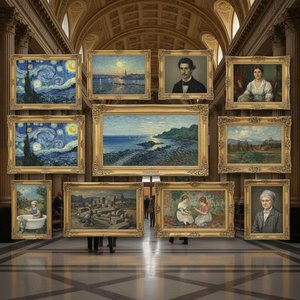 Meisterwerke des 19. Jahrhunderts: Kunst für Ihr Zuhause | OriginalUniqueArtEntdecken Sie die 10 bedeutendsten Kunstwerke des 19. Jahrhunderts! Von Impressionismus bis Realismus – erleben Sie die Geschichten berühmt…