

 In echtem Maßstab anzeigen
 Versenden als Grußkarte
 Teilen
 Details anzeigen
 Leitfaden öffnen

 Herunterladen
 Ähnliche Objekte
 Röntgenaufnahme
 Diashow
 Besucherstatistiken
Red Gaze
 Acrylic On Canvas
- WallArt
- Expressionist Modernism
 1910
1910- 19th Century
 22.0 x 28.0 cm
 Arnold Schönberg Zentrum
 Mehr anzeigen
Handgefertigte Ölreproduktion
Handgemaltes Ölgemälde auf Leinwand in Ihrer Wunschgröße und mit Rahmen, auf Bestellung von unseren Künstlern angefertigt. ( Zum Druck wechseln Zum digitalen Bild wechseln)




P118B €10

P118H €10

P118W €10

P438Z €10

P508JH €12

P508YH €12

P805H €10

P805Z €10

P919BZ €10

P919G €10

P919XJ €10

P959ZH €10

P968JZ €12

W106C €8

W218G €10

W218JH €8

W218Y €10

W307PJ €10

W316G €10

W316PJ €8

W316Y €10

W398PJ €8

W4111J €10

W500HY €15

W500JH €15

W692G €12

W849H €8

W940BG €15

W953PJ €8




Wählen Sie aus unseren vordefinierten Formaten, die den ursprünglichen Proportionen des Kunstwerks entsprechen.

Geben Sie die Breite und die Höhe an, die Sie für Ihren Rahmen oder Ihre Wand benötigen. Da dieses Werk handgemalt ist, kann der Künstler bei einer anderen Form etwas mehr um das Bild herum malen oder etwas abschneiden – Sie entscheiden. Wir senden Ihnen ein digitales Mockup zur Freigabe, bevor mit dem Malen begonnen wird. Das auf dieser Seite gezeigte Bild stellt nicht das tatsächliche Ergebnis dar – dies tut nur das Mockup.
Nach der Bestellung wird das OriginalUniqueArt.com-Team dem Kunden Anweisungen per E-Mail zusenden und eine Mockup-Vorschau bereitstellen.
Weltweiter Versand () in nur 3 bis 4 Wochen statt der üblichen 5 Wochen. (21 Oktober). Keine Kompromisse bei der Qualität.

Kostenloser weltweiter Expressversand

Hochwertige Leinenleinwand

Vollständiger Versicherungsschutz beim Versand

Zollgebühren-Rückerstattungsgarantie

Garantie für exakte Farbtreue

100-tägiges Rückgaberecht (nur bei Mängeln)

100% Geld-zurück-Garantie

Angebot für Mengenrabatt
 Die Glasoption ist nur für Größen unter 110 cm verfügbar.

Red Gaze
Reproduktionsmedium
Format der Reproduktion
-


Gesamtpreis
€ 262
A Descent into Torment: Unveiling Schönberg’s “Red Gaze”
Arnold Schönberg's "Red Gaze," painted in 1910, isn't merely a portrait; it’s a visceral plunge into the heart of human anguish. Executed during a period of radical artistic experimentation, this work embodies the composer’s intensely personal and often unsettling vision – a vision he sought to translate directly onto canvas with startling immediacy. The painting, currently residing within the hallowed halls of the Arnold Schönberg Center in Vienna, Austria, immediately commands attention with its arresting focus on a face dominated by a searing red gaze. This isn't a gentle observation; it’s an intrusion, a direct confrontation with a state of profound distress.
- Subject & Composition: The central figure is rendered in a strikingly simplified manner, prioritizing emotional impact over realistic representation. The close-up perspective intensifies the feeling of claustrophobia and vulnerability, drawing the viewer into the subject’s tormented experience.
- Color Palette: Predominantly red and yellow hues dominate the canvas, creating an atmosphere of feverish intensity. The strategic use of these colors – traditionally associated with passion, danger, and even madness – amplifies the painting's unsettling effect.
The Roots of Atonality: Contextualizing Schönberg’s Vision
To fully appreciate “Red Gaze,” one must understand the artistic climate in which it was created. Schönberg, a pivotal figure in the development of atonality – music devoid of traditional tonal centers – was pushing boundaries with his compositions like "Pierrot Lunaire." This experimentation extended to his visual art, where he rejected conventional representational techniques in favor of conveying raw emotion and psychological states. Elsa Bienenfeld’s observation that Schönberg aimed for “a fulgurant clarity” – a sudden flash of insight – perfectly encapsulates this approach. He wasn't striving for beauty or harmony; he was attempting to capture the unsettling, almost unbearable truth of human experience.
- Musical Influence: Schönberg’s musical innovations directly informed his painting style. The fragmented harmonies and dissonances found in works like the Fourth Quartet are mirrored in the fractured composition and jarring color choices of “Red Gaze.”
- The Second Viennese School: This painting represents a key element of the Second Viennese School, alongside artists such as Gustav Klimt and Egon Schiele, who sought to express psychological realities through unconventional forms.
Symbolism & Emotional Resonance
"Red Gaze" is profoundly unsettling, evoking a sense of dread and vulnerability. The phrase “a vein bursts in the brain” – Schönberg’s own description of one of his quartet movements – speaks volumes about the painting's intended effect. It suggests an overwhelming surge of emotion, a moment of catastrophic breakdown. The painting doesn’t offer answers; it presents a raw, unfiltered glimpse into a tormented soul. The use of quick, hastily veiled lights adds to this sense of urgency and instability, as if the subject is struggling to maintain control against forces beyond their comprehension.
- Interpretation: Some scholars interpret the red gaze as representing suppressed rage or unacknowledged guilt, while others see it as a symbol of existential anxiety. The ambiguity is deliberate, inviting viewers to project their own fears and anxieties onto the canvas.
- Technique: Schönberg’s technique involved rapid brushstrokes and a layering of colors, creating a textured surface that further enhances the painting's sense of urgency and movement.
A Timeless Expression of Human Suffering
"Red Gaze" remains a powerfully evocative work, demonstrating Schönberg’s extraordinary ability to translate his musical innovations into a visual language of intense emotion. Its unsettling beauty and profound psychological depth continue to captivate viewers over a century later. This meticulously crafted reproduction offers an unparalleled opportunity to experience this seminal artwork firsthand, bringing its haunting intensity into your space.
Fragen & Antworten
Inwiefern lässt sich der Stil von "Red Gaze" mit der Epoche seines Schöpfers in Verbindung bringen?
In "Red Gaze" von Arnold Schönberg trifft die Expressionist Modernism-Strömung auf die Ära der Moderne.
Welche Farbe sticht in "Red Gaze" am meisten hervor?
Quinacridone Magenta (#75534c) ist die dominierende Farbe von "Red Gaze" von Arnold Schönberg.
Welche Maße hat das Originalwerk "Red Gaze"?
Das Originalwerk "Red Gaze" hat die Maße 22 x 28 cm. Die Originalmaße dienen als hilfreiche Orientierungshilfe bei der Wahl der Reproduktionsgröße.
Biografie des Künstlers
Frühe Jahre und musikalische Anfänge
Arnold Schönberg, ein deutsch-österreichisch-amerikanischer Komponist, wurde am 13. September 1874 in Wien geboren. Seine frühen Jahre waren von bescheidenen Verhältnissen geprägt, da sein Vater ein Schuhhändler war. Ungeachtet dessen führte Schönbergs angeborene Leidenschaft für die Musik dazu, dass er sich weitgehend autodidaktisch auf diesem Gebiet weiterbildete.Musikalische Entwicklung und bedeutende Werke
Schönbergs frühe Werke, wie etwa Verklärte Nacht (1899), zeigten eine Synthese aus Brahms’schem und Wagner’schem Stil. Im Laufe seiner Entwicklung wurde er zur zentralen Figur der Zweiten Wiener Schule, an der Seite von Anton Webern und Alban Berg. Seine Kompositionen, darunter das Streichquartett Nr. 2 (1907–1908), Erwartung (1909) und Pierrot Lunaire (1912), verkörperten seinen innovativen Ansatz der Atonalität.Lehrtätigkeit, Emigration und spätes Leben
Aufgrund des Aufstiegs der Nationalsozialisten trat Schönberg 1933 von der Preußischen Akademie der Künste zurück, nachdem seine Musik als „entartet“ gebrandmarkt worden war. Er lehrte daraufhin in den USA, unter anderem an der University of California, Los Angeles (1936–1944), wo Einrichtungen zu seinen Ehren benannt wurden. [https://OriginalUniqueArt.com/@/arnold-schoenberg](Entdecken Sie mehr über Schönbergs Leben und Werk auf OriginalUniqueArt).- Schönberg erkundete die Filmmusik und schrieb wieder tonale Musik, wobei er seine Kammersinfonie Nr. 2 im Jahr 1939 vollendete.
- Er parodierte faschistische Tyrannen in der Ode an Napoleon (1942), nach dem Vorbild von Byron.
- Das Nachkriegswien bot ihm die Ehrenbürgerschaft an, doch er war bereits krank, wie in seinem Streichtrio (1946) dargestellt wird.
Vermächtnis und Einfluss
Als die Welt vom Holocaust erfuhr, gedachte Schönberg seiner Opfer in A Survivor from Warsaw (1947). Das Israel Conservatory and Academy of Music wählte ihn 1951 zum Ehrenpräsidenten. [https://OriginalUniqueArt.com/@@/a@d3bqc7-the-museum-destroyed-by-fire-(united-states)](Erfahren Sie mehr über die Auswirkungen seines Werkes auf OriginalUniqueArt). Wichtige Punkte:- Schönbergs innovative Musik gehörte zu den einflussreichsten und umstrittensten der klassischen Musik des 20. Jahrhunderts.
- Mindestens drei Generationen von Komponisten entwickelten seine eher formalen Prinzipien weiter.
- Seine ästhetischen und musikgeschichtlichen Ansichten beeinflussten die Musikwissenschaftler Theodor W. Adorno und Carl Dahlhaus.

Arnold Schönberg
1874 - 1951 , Österreich
Eckdaten zum Künstler
- Artistic Movement Or Style: Zwölftontechnik; Expressionismus
- Artists Or Movements Influenced By This Artist:
- Anton Webern
- Alban Berg
- Artists Who Influenced This Artist:
- Johannes Brahms
- Richard Wagner
- Date Of Birth: 13. September 1874
- Date Of Death: 13. Juli 1951
- Full Name: Arnold Schoenberg
- Nationality: Österreichisch-Amerikanisch
- Notable Artworks:
- Suite Nr. 2
- Musikschreiber
- Streichquartett Nr. 2
- Place Of Birth: Wien, Österreich
Verwandte Artikel

Geometrische Abstraktion: Die 10 Meisterwerke, die Kunstgeschichte prägten | OriginalUniqueArt.com
Entdecken Sie die 10 Meisterwerke der geometrischen Abstraktion! Von Kandinsky bis Mondrian – erleben Sie die Geschichte, Farben & Formen dieser revolutionären Kunstrichtung. Hochwertige Kunstreproduktionen auf OriginalUniqueArt.com

Kandinsky: Die 25 Meisterwerke des Abstrakten – Kunst für Ihr Zuhause | OriginalUniqueArt
Entdecken Sie die 25 bedeutendsten Gemälde von Wassily Kandinsky! Tauchen Sie ein in die Welt der abstrakten Kunst, des Expressionismus und der Farbkomposition. Hochwertige Kunstdrucke & Inspiration für Ihr Zuhause auf OriginalUniqueArt.com.
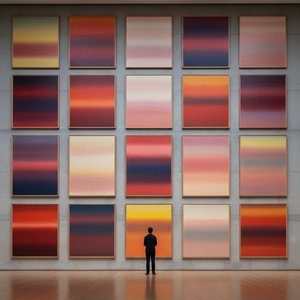
Mark Rothkos Meisterwerke: Die Top 25 für Kunstliebhaber | OriginalUniqueArt
Entdecken Sie die 25 Meisterwerke von Mark Rothko! Tauchen Sie ein in die Welt der abstrakten Kunst, des Expressionismus und der Farbfeldmalerei. Hochwertige Kunstdrucke & Reproduktionen auf OriginalUniqueArt.com – für Ihre Wohnräume.

Abstrakter Expressionismus: Die 10 Meisterwerke, die eine Kunstbewegung prägten |
Entdecken Sie die 10 Meisterwerke des Abstrakten Expressionismus! Von Jackson Pollock bis Mark Rothko – erfahren Sie die Geschichten hinter ikonischen Gemälde und finden Sie hochwertige Reproduktionen für Ihr Zuhause. Jetzt bei entdecken!

Beyond Form & Color: Geometric Abstraction's Evolution in 20th/21st Century Art
Explore the evolution of geometric abstraction from Cubism to contemporary art. Discover key artists like Malevich & Mondrian, investment insights, and expert collecting advice at OriginalUniqueArt.


