

 In echtem Maßstab anzeigen
 Versenden als Grußkarte
 Teilen
 Details anzeigen
 Leitfaden öffnen

 Herunterladen
 Ähnliche Objekte
 Röntgenaufnahme
 Diashow
 Besucherstatistiken
Critic I
 Oil On Panel
- Expressionism
 1910
1910- 19th Century
 31.0 x 45.0 cm
 Arnold Schönberg Zentrum
 Mehr anzeigen
Giclée / Kunstdruck
Giclée- oder Leinwanddruck in Museumsqualität mit schneller Produktion und flexiblen Veredelungsoptionen. ( Handgemalte Reproduktion kaufen Zum digitalen Bild wechseln)




P118B €10

P118H €10

P118W €10

P438Z €10

P508JH €12

P508YH €12

P805H €10

P805Z €10

P919BZ €10

P919G €10

P919XJ €10

P959ZH €10

P968JZ €12

W106C €8

W218G €10

W218JH €8

W218Y €10

W307PJ €10

W316G €10

W316PJ €8

W316Y €10

W398PJ €8

W4111J €10

W500HY €15

W500JH €15

W692G €12

W849H €8

W940BG €15

W953PJ €8




Wählen Sie aus unseren vordefinierten Formaten, die den ursprünglichen Proportionen des Kunstwerks entsprechen.

Geben Sie die Breite und die Höhe an, die Sie benötigen, damit der Druck perfekt in Ihren Rahmen oder an Ihre Wand passt. Ein Druck kann nur beschnitten werden und niemals größer als das Originalbild gemacht werden; daher verliert ein Format mit einer anderen Proportion einen Teil des Bildes. Wir senden Ihnen ein digitales Mockup zur Freigabe, bevor wir den Druck ausführen. Das auf dieser Seite gezeigte Bild zeigt nicht den tatsächlichen Beschnitt – dies ist nur im Mockup ersichtlich.
Weltweiter Versand () innerhalb von 2 Wochen statt der üblichen 4/5 Wochen. (21 Oktober)

Kostenloser weltweiter Expressversand

Hochwertige Leinenleinwand

Vollständiger Versicherungsschutz beim Versand

Zollgebühren-Rückerstattungsgarantie

Garantie für exakte Farbtreue

100-tägiges Rückgaberecht (nur bei Mängeln)

100% Geld-zurück-Garantie

Angebot für Mengenrabatt
 Die Glasoption ist nur für Größen unter 110 cm verfügbar.

Critic I
Giclée / Kunstdruck
Format der Reproduktion
-


Gesamtpreis
€ 70
A Portrait of Disquiet: Examining Schoenberg’s “Critic I”
Arnold Schoenberg's "Critic I," painted in 1910, is not merely a portrait; it’s a visceral embodiment of the anxieties and intellectual rigor that defined one of music’s most revolutionary figures. Measuring a modest 31 x 45 cm on oil panel, this arresting image – often dubbed “Critic I” due to its unsettling depiction – transcends simple representation, offering a glimpse into the mind grappling with the very nature of artistic interpretation and judgment. The painting depicts a strikingly rendered face, dominated by a dense beard and an expression that oscillates between contemplation and something akin to demonic intensity. This deliberate distortion, far from being a stylistic flourish, speaks directly to Schönberg’s own philosophical concerns articulated in his essay, “About Music Criticism,” where he argues that artistic perception is fundamentally subjective, shaped by the listener's unconscious biases and imaginative capacity.
- The Artist’s Intention: Schoenberg, a pivotal figure in the development of atonality and serialism, was deeply invested in questioning established aesthetic norms. “Critic I” can be interpreted as a self-portrait reflecting this intellectual struggle – a confrontation with the limitations of conventional judgment and the inherent subjectivity of artistic experience.
- Technical Mastery: Executed in oil on panel, the painting demonstrates Schoenberg’s meticulous attention to detail and his command of chiaroscuro. The dramatic lighting emphasizes the contours of the face, intensifying the sense of unease and highlighting the subject's perceived scrutiny.
A Window into Viennese Modernism
"Critic I" was created during a period of immense artistic ferment in Vienna – the early 20th century. Schoenberg’s work aligned with the broader currents of Expressionism and Cubism, movements that challenged traditional representational forms and sought to convey inner emotional states through fragmented imagery and distorted perspectives. The painting's unsettling quality reflects the intellectual turbulence of the time, a period marked by rapid scientific advancements, social upheaval, and a growing questioning of established values. The work’s creation coincided with Schoenberg’s pivotal compositional achievements – including “Verklärte Nacht” and “Erwartung” – solidifying his position as a leading voice in the Second Viennese School alongside Alban Berg and Anton Webern.
Symbolism and Emotional Resonance
The painting's symbolism is deliberately ambiguous, contributing to its enduring power. The beard, often associated with wisdom and authority, here seems to mask rather than reveal. The intense gaze suggests a critical eye, perhaps reflecting Schoenberg’s own rigorous self-examination of musical theory and composition. Schönberg himself described the artwork as “dispensing warmth,” suggesting an attempt to imbue his work with emotional resonance despite its challenging nature. The overall effect is one of profound introspection – a portrait not just of a man, but of a mind wrestling with complex ideas about art, perception, and judgment.
Provenance and Significance
"Critic I" currently resides at the Arnold Schönberg Center in Vienna, Austria, a testament to its historical significance. Its creation in 1910, just as Schoenberg was establishing his revolutionary musical theories, underscores its importance within the trajectory of modern music. This hand-painted reproduction offers an unparalleled opportunity to own a piece of art history – a tangible connection to one of the most influential composers of the 20th century and a powerful meditation on the very nature of artistic interpretation.
Fragen & Antworten
Welche Verwendung und welcher Raum werden für "Critic I" von Arnold Schönberg empfohlen?
Die Verwendung (Statement) und der Raum (Office) sind die zwei Empfehlungen für "Critic I" von Arnold Schönberg.
Welche Technik wurde für "Critic I" verwendet und wann wurde es geschaffen?
"Critic I" entstand im Jahr 1910 mit der Technik Oil On Panel. Material und Datum beschreiben, wie und wann das Original geschaffen wurde.
Welche Größe und Ausrichtung werden für einen Druck von "Critic I" von Arnold Schönberg empfohlen?
Für „Critic I“ wird ein Druckformat von Large in der Ausrichtung Portrait empfohlen.
Biografie des Künstlers
Frühe Jahre und musikalische Anfänge
Arnold Schönberg, ein deutsch-österreichisch-amerikanischer Komponist, wurde am 13. September 1874 in Wien geboren. Seine frühen Jahre waren von bescheidenen Verhältnissen geprägt, da sein Vater ein Schuhhändler war. Ungeachtet dessen führte Schönbergs angeborene Leidenschaft für die Musik dazu, dass er sich weitgehend autodidaktisch auf diesem Gebiet weiterbildete.Musikalische Entwicklung und bedeutende Werke
Schönbergs frühe Werke, wie etwa Verklärte Nacht (1899), zeigten eine Synthese aus Brahms’schem und Wagner’schem Stil. Im Laufe seiner Entwicklung wurde er zur zentralen Figur der Zweiten Wiener Schule, an der Seite von Anton Webern und Alban Berg. Seine Kompositionen, darunter das Streichquartett Nr. 2 (1907–1908), Erwartung (1909) und Pierrot Lunaire (1912), verkörperten seinen innovativen Ansatz der Atonalität.Lehrtätigkeit, Emigration und spätes Leben
Aufgrund des Aufstiegs der Nationalsozialisten trat Schönberg 1933 von der Preußischen Akademie der Künste zurück, nachdem seine Musik als „entartet“ gebrandmarkt worden war. Er lehrte daraufhin in den USA, unter anderem an der University of California, Los Angeles (1936–1944), wo Einrichtungen zu seinen Ehren benannt wurden. [https://OriginalUniqueArt.com/@/arnold-schoenberg](Entdecken Sie mehr über Schönbergs Leben und Werk auf OriginalUniqueArt).- Schönberg erkundete die Filmmusik und schrieb wieder tonale Musik, wobei er seine Kammersinfonie Nr. 2 im Jahr 1939 vollendete.
- Er parodierte faschistische Tyrannen in der Ode an Napoleon (1942), nach dem Vorbild von Byron.
- Das Nachkriegswien bot ihm die Ehrenbürgerschaft an, doch er war bereits krank, wie in seinem Streichtrio (1946) dargestellt wird.
Vermächtnis und Einfluss
Als die Welt vom Holocaust erfuhr, gedachte Schönberg seiner Opfer in A Survivor from Warsaw (1947). Das Israel Conservatory and Academy of Music wählte ihn 1951 zum Ehrenpräsidenten. [https://OriginalUniqueArt.com/@@/a@d3bqc7-the-museum-destroyed-by-fire-(united-states)](Erfahren Sie mehr über die Auswirkungen seines Werkes auf OriginalUniqueArt). Wichtige Punkte:- Schönbergs innovative Musik gehörte zu den einflussreichsten und umstrittensten der klassischen Musik des 20. Jahrhunderts.
- Mindestens drei Generationen von Komponisten entwickelten seine eher formalen Prinzipien weiter.
- Seine ästhetischen und musikgeschichtlichen Ansichten beeinflussten die Musikwissenschaftler Theodor W. Adorno und Carl Dahlhaus.

Arnold Schönberg
1874 - 1951 , Österreich
Eckdaten zum Künstler
- Artistic Movement Or Style: Zwölftontechnik; Expressionismus
- Artists Or Movements Influenced By This Artist:
- Anton Webern
- Alban Berg
- Artists Who Influenced This Artist:
- Johannes Brahms
- Richard Wagner
- Date Of Birth: 13. September 1874
- Date Of Death: 13. Juli 1951
- Full Name: Arnold Schoenberg
- Nationality: Österreichisch-Amerikanisch
- Notable Artworks:
- Suite Nr. 2
- Musikschreiber
- Streichquartett Nr. 2
- Place Of Birth: Wien, Österreich
Verwandte Artikel
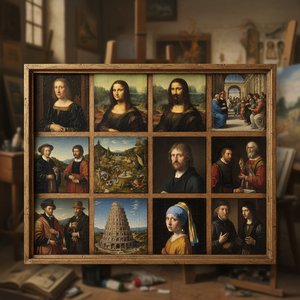
Öl auf Holz: 10 Meisterwerke, die Kunstgeschichte veränderten |
Entdecken Sie die 10 legendärsten Gemälde auf Holz – von Renaissance bis Impressionismus! Erfahren Sie die Geschichten der Künstler & ihre Meisterwerke. Hochwertige Reproduktionen bei .

Mastering the Surface: The Timeless Elegance and Technical Brilliance of Oil on Panel Painting
Discover the enduring allure of oil on panel painting. Explore the technical mastery, historical significance, and luminous depth that define this prestigious medium, from Renaissance masters to modern fine art reproductions for discerning collectors.
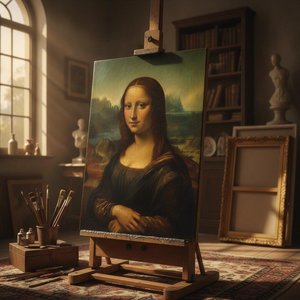
Mastering the Surface: A Historical and Technical Guide to the Art of Oil on Panel Painting
Explore the profound history and technical brilliance of oil on panel painting. From Renaissance masters to modern techniques, discover why this rigid support offers unparalleled precision and permanence for fine art lovers and collectors.
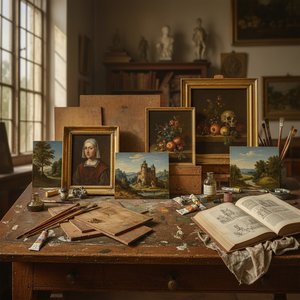
Oil on Panel: A Historical Survey of Technique, Support & Aesthetic Evolution
Explore the rich history of oil on panel painting! Discover Renaissance techniques, support structures & aesthetic evolution. Expert insights for art collectors and enthusiasts.
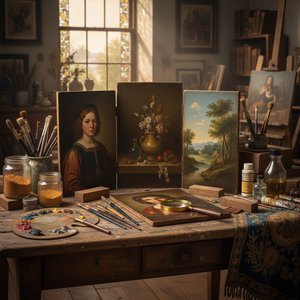
Öl auf Holz: Eine historische Untersuchung von Technik, Trägermaterial und ästhetischer Wirkung
Entdecken Sie die faszinierende Welt der Ölmalerei auf Holz! Expertenwissen zu Technik, Geschichte und Restaurierung von Meisterwerken. Für Kunstliebhaber & Sammler.


