

 In echtem Maßstab anzeigen
 Versenden als Grußkarte
 Teilen
 Details anzeigen
 Leitfaden öffnen

 Herunterladen
 Ähnliche Objekte
 Röntgenaufnahme
 Diashow
 Besucherstatistiken
Spring Evening
 Oil On Panel
- Symbolist Painting
 1879
1879 67.0 x 129.0 cm
 Szépművészeti Múzeum
 Mehr anzeigen
Giclée / Kunstdruck
Giclée- oder Leinwanddruck in Museumsqualität mit schneller Produktion und flexiblen Veredelungsoptionen. ( Handgemalte Reproduktion kaufen Zum digitalen Bild wechseln)




P118B €10

P118H €10

P118W €10

P438Z €10

P508JH €12

P508YH €12

P805H €10

P805Z €10

P919BZ €10

P919G €10

P919XJ €10

P959ZH €10

P968JZ €12

W106C €8

W218G €10

W218JH €8

W218Y €10

W307PJ €10

W316G €10

W316PJ €8

W316Y €10

W398PJ €8

W4111J €10

W500HY €15

W500JH €15

W692G €12

W849H €8

W940BG €15

W953PJ €8




Wählen Sie aus unseren vordefinierten Formaten, die den ursprünglichen Proportionen des Kunstwerks entsprechen.

Geben Sie die Breite und die Höhe an, die Sie benötigen, damit der Druck perfekt in Ihren Rahmen oder an Ihre Wand passt. Ein Druck kann nur beschnitten werden und niemals größer als das Originalbild gemacht werden; daher verliert ein Format mit einer anderen Proportion einen Teil des Bildes. Wir senden Ihnen ein digitales Mockup zur Freigabe, bevor wir den Druck ausführen. Das auf dieser Seite gezeigte Bild zeigt nicht den tatsächlichen Beschnitt – dies ist nur im Mockup ersichtlich.
Weltweiter Versand () innerhalb von 2 Wochen statt der üblichen 4/5 Wochen. (16 Oktober)

Kostenloser weltweiter Expressversand

Hochwertige Leinenleinwand

Vollständiger Versicherungsschutz beim Versand

Zollgebühren-Rückerstattungsgarantie

Garantie für exakte Farbtreue

100-tägiges Rückgaberecht (nur bei Mängeln)

100% Geld-zurück-Garantie

Angebot für Mengenrabatt
 Die Glasoption ist nur für Größen unter 110 cm verfügbar.

Spring Evening
Giclée / Kunstdruck
Format der Reproduktion
-


Gesamtpreis
€ 70
The Ethereal Embrace of Spring Evening
Arnold Böcklin’s “Spring Evening,” painted in 1879, isn't merely a depiction of a woodland scene; it’s an immersion into a realm of melancholic beauty and profound symbolism. Created during his time in Florence – a city that profoundly shaped his artistic vision – the painting captures a fleeting moment of enchantment, steeped in the atmosphere of late Romanticism and foreshadowing the rise of Symbolism. The canvas breathes with a quiet intensity, dominated by muted greens, blues, and browns, creating an almost dreamlike quality that immediately draws the viewer into its hushed world.
At the heart of the composition stands a woman, her posture suggesting both contemplation and vulnerability. Her hand gently resting on her head is a gesture simultaneously of yielding and quiet strength – she’s not passively observing but actively engaged with the scene unfolding before her. Beside her sits a man, seemingly lost in thought as he peruses a book, his presence offering a grounding element to the ethereal atmosphere. A bear, rendered with surprising tenderness, interacts playfully with both figures, blurring the lines between human and animal, nature and civilization. This carefully orchestrated tableau speaks of harmony, connection, and the delicate balance of the natural world.
A Symphony of Symbolism
Böcklin’s work is deeply rooted in mythology and folklore, drawing heavily on ancient Greek and Roman traditions. The central figure, often interpreted as Pan – the god of nature, shepherds, and wild music – plays his pipes, summoning a chorus of unseen nymphs from the surrounding forest. These dryads, with their flowing hair and graceful movements, represent the spirit of the woods, embodying both beauty and danger. The bear itself is a potent symbol, frequently associated with strength, wisdom, and primal instincts—a reminder of humanity’s connection to the earth.
The painting's muted palette contributes significantly to its symbolic weight. The cool blues and greens evoke a sense of melancholy and introspection, while the browns ground the scene in the tangible reality of the forest floor. The lighting is soft and diffused, creating an atmosphere of twilight—a liminal space between day and night, representing transition, mystery, and perhaps even mortality. Böcklin masterfully uses color not to simply depict a landscape but to convey complex emotions and ideas.
Technique and Artistic Influences
“Spring Evening” exemplifies Böcklin’s distinctive artistic style, characterized by meticulous detail, rich textures, and an almost obsessive attention to the natural world. He employed a technique of layering thin glazes of oil paint, building up color gradually to achieve remarkable depth and luminosity. The brushwork is subtle yet expressive, conveying both the smoothness of the forest floor and the intricate details of the foliage.
Böcklin’s artistic journey was profoundly influenced by his time in Düsseldorf, where he studied under Schirmer and became associated with the Düsseldorf School of Painting. However, it was in Florence that he truly developed his unique Symbolist vision, drawing inspiration from the city's rich cultural heritage and its connection to antiquity. The painting also reflects the influence of Romanticism, particularly the emphasis on emotion, imagination, and the sublime beauty of nature—themes central to the movement.
A Timeless Resonance
“Spring Evening” continues to resonate with viewers today because it taps into universal themes of longing, connection, and the search for meaning. Its evocative atmosphere and symbolic richness invite contemplation and offer a glimpse into the artist’s deeply personal vision. The painting's enduring appeal lies in its ability to transport us to another time and place—a world where myth and reality intertwine, and where the beauty of nature is inextricably linked to the mysteries of the human soul.
Fragen & Antworten
Gehört "Spring Evening" von Arnold Böcklin zu den begehrten Kunstwerken der Symbolist Painting-Epoche?
"Spring Evening" von Arnold Böcklin wird als Recognized klassifiziert und gehört zur Symbolist Painting-Strömung.
Wo kann ich einen Druck von "Spring Evening" von Arnold Böcklin kaufen?
"Spring Evening" ist als ein Fine Art Print auf Baumwollkanvas oder Archiv-Leinwandpapier erhältlich. Bestellungen können in der gewünschten Größe auf der Kunstdruck-Seite aufgegeben werden.
Wer ist der Künstler hinter "Spring Evening"?
Der Künstler hinter „Spring Evening“ ist Arnold Böcklin. Das Werk ist unter dem Namen von Arnold Böcklin katalogisiert.
Biografie des Künstlers
Frühe Jahre und Ausbildung
Arnold Böcklin, ein Schweizer Symbolistischer Maler, wurde am 16. Oktober 1827 in Basel geboren. Sein Vater, Christian Frederick Böcklin, stammte von einer alten Familie aus Schaffhausen und war im Seidenhandel tätig. Arnolds Mutter, Ursula Lippe, war ebenfalls eine Bürgerin derselben Stadt. Er studierte an der Akademie Düsseldorf unter Schirmer und freundete sich mit Anselm Feuerbach an. Böcklin wird der Düsseldorfer Malerschule zugerechnet.Künstlerische Laufbahn und Symbolismus
Böcklins künstlerischer Weg führte ihn durch verschiedene Städte, darunter Paris, wo er im Louvre arbeitete, und Rom, wo er von den dortigen Sehenswürdigkeiten beeinflusst wurde. Seine Werke zeigten oft allegorische und mythologische Figuren in Umgebungen mit klassischer Architektur und erkundeten Themen wie Tod und Sterblichkeit.- Großer Park, eines seiner frühesten Werke, stellte die antike Mythologie dar.
- Nymphe und Satyr (1858) und Sappho (1859) waren bemerkenswerte Arbeiten aus dieser Zeit.
- Böcklins Selbstbildnis mit dem Tod, der eine Geige spielt (1872), verdeutlichte seinen einzigartigen Stil.
Entwicklung und Einfluss
Böcklin entwickelte einen unverwechselbaren Stil, der sich durch düstere Landschaften, melancholische Stimmungen und die Darstellung von mythologischen Motiven auszeichnete. Er war ein wichtiger Vertreter des Symbolismus in der Kunst. Sein Werk beeinflusste jüngere Künstler wie Hans Thoma und inspirierte mehrere spätromantische Komponisten. Clement Greenberg beschrieb Böcklins Arbeit als „eine der vollkommensten Ausdrucksformen ihrer Zeit“. Böcklins Stil überschnitt sich mit den Präraffaeliten, wobei er die Welt der Träume und Mystik betonte.Hauptwerke und Vermächtnis
Böcklin ist vor allem für seine fünf Versionen der Insel der Toten (1880-1886) bekannt, die den englischen Friedhof in Florenz widerspiegelten, wo seine Tochter begraben war. Diese Werke sind ikonische Beispiele des Symbolismus und verkörpern Themen von Tod, Vergänglichkeit und Melancholie. Die Insel der Toten wurde zu einem seiner berühmtesten und am häufigsten reproduzierten Bilder.Museen und Sammlungen
Böcklins Werk ist in verschiedenen Museen zu finden, darunter:- Öffentliche Kunstsammlung (Basel, Schweiz)
- Kunstmuseum Basel (Schweiz)
- Museum Kunsthaus Zürich (Zürich, Schweiz)
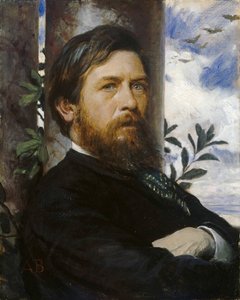
Arnold Böcklin
1827 - 1901 , Schweiz
Eckdaten zum Künstler
- Bemerkenswerte Werke:
- Großer Park
- Nymphe und Satyr
- Sappho
- Insel der Toten
- Geburtsdatum: 16. Oktober 1827
- Geburtsort (Stadt, Land): Basel, Schweiz
- Künstler Oder Bewegungen, Die Von Diesem Künstler Beeinflusst Wurden: ['Hans Thoma']
- Künstler, Die Diesen Künstler Beeinflussten: ['Anselm Feuerbach']
- Künstlerische Bewegung/Stil: Symbolismus
- Nationalität: Schweizerisch
- Sterbedatum: 16. Januar 1901
- Vollständiger Name: Arnold Böcklin
Verwandte Artikel

Evocations of Place: A Historical Journey Through Landscape Art
Explore the rich history of landscape art with OriginalUniqueArt. Discover renowned artists, movements like Impressionism & tonalism, and expert guidance for collecting timeless pieces. Find your perfect serene escape today!

John Constable: Die 25 Meisterwerke des englischen Landschaftsgenies – OriginalUniqueArt
Entdecken Sie die 25 Meisterwerke von John Constable! Erleben Sie englische Landschaftsmalerei vom Hay Wain bis zur Stour Valley. Hochwertige Reproduktionen & Kunst für Ihr Zuhause auf OriginalUniqueArt.com.

Romantische Landschaften: Die 10 Meisterwerke, die eine Epoche prägten | OriginalUniqueArt
Entdecken Sie die 10 Meisterwerke der Romantischen Landschaftsmalerei! Von Caspar David Friedrich bis Turner – erleben Sie die Kunst, Emotion & Natur. Hochwertige Reproduktionen auf OriginalUniqueArt.com

Evocations of Place: A Historical Journey Through Landscape Art
Explore the rich history of landscape art with OriginalUniqueArt. Discover renowned artists, movements like Impressionism & Romanticism, and expert guidance for collecting timeless pieces. Find your perfect serene escape today!

Nature’s Sanctuary: Curating Enchanting Forest Artworks to Transform Your Home into a Serene Woodland Retreat
Transform your home into a serene woodland retreat with enchanting forest artworks. Discover museum-quality oil reproductions and custom landscape commissions designed to bring the peaceful beauty of nature indoors.


