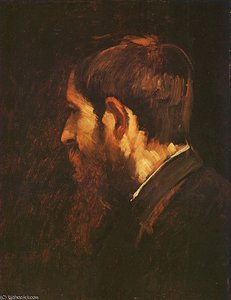
Portræt af Mihály Munkácsy

De 100 mest berømte Mihály Munkácsy-malerier, hver og en unik

Opdateret november 2026 · rangeret efter vores popularitetsscore (søgninger, besøg og ordrer for hvert værk) · 139 værker af Mihály Munkácsy i vores katalog

Kort sagt

Landscape with Lake (1881) er det maleri af Mihály Munkácsy, der vækker mest opsigt; originalen findes på Ungarns Nationalgalleri, Budapest. Derefter falder blikket på The Wrestler's Challenge (1875) og Self-Portrait II. (1881). Blandt de 139 værker af Mihály Munkácsy i vores katalog er disse 100 de mest berømte, hver især et unikt originalværk præsenteret med sit årstal, sit museum og årsagen til dets tidløse betydning.

1844 – 1900, Mukatjevo Realism Flest værker: Ungarns Nationalgalleri

Top 10 malerier af Mihály Munkácsy, set gennem galleriets øjne

1
Landscape with Lake (1881) af Mihály Munkácsy

Landscape with Lake

1881 · Oil · Ungarns Nationalgalleri, Budapest

A Quiet Observation of Light and Form Landscape with Lake There is a certain stillness in this 1881 work that invites a slower pace of observation. The composition focuses on the interplay between the terrestrial and the aquatic, capturing a moment where the landscape seems to hold its breath. The palette relies on muted, professional tones—deep blues, soft greys, and earthy tans—that suggest a specific, perhaps overcast, atmospheric condition. It…

2
The Wrestler's Challenge (1875) af Mihály Munkácsy

The Wrestler's Challenge

1875 · Oil On Panel · Art Institute of Chicago, Chicago

The Wrestler's Challenge is an oil on panel painting created by the Hungarian artist Mihály Munkácsy. The work emerged in 1875. It captures a moment of physical tension held within a dim, rustic space. The artist, Mihály Munkácsy, was born in Mukachevo, Ukraine, and brought his specific vision to this composition.

3
Self-Portrait II. (1881) af Mihály Munkácsy

Self-Portrait II.

1881 · Oil On Canvas · Ungarns Nationalgalleri, Budapest

The oil-on-canvas work titled Self-Portrait II. presents a direct encounter with the artist, Mihály Munkácsy. Painted about 1881, this intimate study captures the man behind the brush. The subject is the artist himself, looking out from the frame with a gaze that meets the viewer's own. It is a quiet confrontation of identity and presence.

4
Christ on the Cross af Mihály Munkácsy

Christ on the Cross

Oil On Canvas · Déri Museum, Debrecen

The scene unfolds with the heavy, unmistakable weight of the crucifixion of Jesus Christ. In "Christ on the Cross," the viewer finds themselves amidst a moment of profound religious significance, where the central figure hangs upon the wood, suspended between heaven and earth. This explicit portrayal of the crucifixion captures a moment of intense human suffering and spiritual gravity. The atmosphere remains thick with the solemnity of the event, drawing…

5
Apotheosis of the Renaissance (1888) af Mihály Munkácsy

Apotheosis of the Renaissance

1888 · Oil · Kunsthistorisches Museum, Wien

The ceiling of the Kunsthistorisches Museum in Vienna does not merely exist; it breathes. It is a grand, multi-layered vision of celestial triumph, where the heavy architecture of the Renaissance meets the infinite blue of the heavens. A dome, seemingly sliced open, invites the eye upward through a complex, swirling motion of light and shadow. Below, the terrestrial world is crowded and heavy, filled with the deep reds and earthy…

6
Portrait of a Little Girl (1890) af Mihály Munkácsy

Portrait of a Little Girl

1890 · Oil On Canvas · Kunsthalle Bremen, Bremen

Mihály Munkácsy’s Portrait of a Little Girl is a vertical composition focusing on the subject from the waist up. Positioned slightly off-center, the girl is set against a dark, indistinct background. This void of detail pushes the figure forward, emphasizing the stark contrast between the deep, moody tones of black and dark brown and the subject herself. A bright, creamy white blouse and a crimson skirt provide the primary points…

8
In Front of the Inn (1864) af Mihály Munkácsy

In Front of the Inn

1864 · Oil On Canvas · Ernest Zmeták Art Gallery, Nové Zámky

Mihály Munkácsy painted In Front of the Inn in 1864. This genre scene captures a lively, rustic gathering outside a tavern. The composition centers on the social interactions of rural life, focusing on a group of people assembled around a table.

9
Hay Wagon in a Grove (1868) af Mihály Munkácsy

Hay Wagon in a Grove

1868 · Oil On Canvas

In "Hay Wagon in a Grove" by Mihály Munkácsy, we find ourselves observing a quiet moment of agricultural labor. The composition is anchored by a large, central haystack, which several figures are busy loading or managing. This central activity is set against a vast, expansive sky that occupies the upper two-thirds of the canvas, creating a sense of immense space. The landscape recedes into a deep perspective, drawing the eye…

10
Making Lint (1871) af Mihály Munkácsy

Making Lint

1871 · Oil · Ungarns Nationalgalleri, Budapest

Making Lint is a genre picture by the artist Mihály Munkácsy. This work was created about 1871. The painting depicts a group of people gathered in a dimly lit, rustic interior, likely during a meal. The composition is crowded, with figures arranged around a central table. The scene focuses on a moment of quiet, weary domestic life.

Mihály Munkácsys berømte malerier, nummer 11 til 100

11The Convict (Condemned Cell) (1870) af Mihály MunkácsyThe Convict (Condemned Cell)1870 · Ungarns Nationalgalleri 12A condemned man (1870) af Mihály MunkácsyA condemned man1870 · The Mesdag Collection 13Easter Sprinkling (1865) af Mihály MunkácsyEaster Sprinkling1865 · Ungarns Nationalgalleri 14Male Study for “The Condemned Cell” (1869) af Mihály MunkácsyMale Study for “The Condemned Cell”1869 · Ungarns Nationalgalleri 15Head of girl (1869) af Mihály MunkácsyHead of girl1869 16The Condemned (1870) af Mihály MunkácsyThe Condemned1870 · Frye Art Museum 17The Village Blacksmith (1875) af Mihály MunkácsyThe Village Blacksmith1875 · Dayton Art Institute 18Study for the Pawnbroker's Shop (1874) af Mihály MunkácsyStudy for the Pawnbroker's Shop1874 · Ungarns Nationalgalleri 19Study for the Village Hero (1874) af Mihály MunkácsyStudy for the Village Hero1874 · Ungarns Nationalgalleri 20Male Study for the Pawnbroker's Shop (1873) af Mihály MunkácsyMale Study for the Pawnbroker's Shop1873 · Ungarns Nationalgalleri 21Night Wanderers I. (1872) af Mihály MunkácsyNight Wanderers I.1872 · Ungarns Nationalgalleri 22Gypsy Camp (1873) af Mihály MunkácsyGypsy Camp1873 · Alte Nationalgalerie 23Condemned cell II (1878) af Mihály MunkácsyCondemned cell II1878 · Ungarns Nationalgalleri 24In the Kitchen (1872) af Mihály MunkácsyIn the Kitchen1872 25Self-portrait (1875) af Mihály MunkácsySelf-portrait1875 26Christ before Pilate (1881) af Mihály MunkácsyChrist before Pilate1881 27Praying Leviathan (1882) af Mihály MunkácsyPraying Leviathan1882 · Dordrechts Museum 28A Male Figure Going Upwards (1882) af Mihály MunkácsyA Male Figure Going Upwards1882 · Ungarns Nationalgalleri 29Portrait of Charles Sedelmeyer (1879) af Mihály MunkácsyPortrait of Charles Sedelmeyer1879 · Ungarns Nationalgalleri 30Christ before Pilate (1881) af Mihály MunkácsyChrist before Pilate1881 · Déri Museum 31Christ on the Cross (Study painting) (1882) af Mihály MunkácsyChrist on the Cross (Study painting)1882 · Ungarns Nationalgalleri 32The Hero of the Village (reduction) (1882) af Mihály MunkácsyThe Hero of the Village (reduction)1882 · Ungarns Nationalgalleri 33Flowers in a Vase / Drawing up of bouquets (1881) af Mihály MunkácsyFlowers in a Vase / Drawing up of bouquets1881 · Pushkin State Museum of Fine Arts 34An afternoon in the park (1880) af Mihály MunkácsyAn afternoon in the park1880 35After Lunch (Maternal Happiness) (1892) af Mihály MunkácsyAfter Lunch (Maternal Happiness)1892 · Ungarns Nationalgalleri 36Study for the Painting Titled Hímző leány (1886) af Mihály MunkácsyStudy for the Painting Titled Hímző leány1886 37Embroidering Girl (1888) af Mihály MunkácsyEmbroidering Girl1888 38Ballad (1888) af Mihály MunkácsyBallad1888 39Piano-lesson (1890) af Mihály MunkácsyPiano-lesson1890 40Conquest (Settlement of the Magyars in Hungary) (1893) af Mihály MunkácsyConquest (Settlement of the Magyars in Hungary)1893 41Conquest (The entry of the Hungarians in the Carpathian Basin) (1893) af Mihály MunkácsyConquest (The entry of the Hungarians in the Carpathian Basin)1893 42The Music Room (1878) af Mihály MunkácsyThe Music Room1878 · Metropolitan Museum of Art 43A Study for "Paradise Lost (1899) af Mihály MunkácsyA Study for "Paradise Lost1899 · Brooklyn Museum 44a self portrait of the artist af Mihály Munkácsya self portrait of the artist 45The Avenger of His Honor (End of a Duel) (1869) af Mihály MunkácsyThe Avenger of His Honor (End of a Duel)1869 46Storm at the Puszta (1867) af Mihály MunkácsyStorm at the Puszta1867 · Ungarns Nationalgalleri 47The Battlefield of Isaszeg (1867) af Mihály MunkácsyThe Battlefield of Isaszeg1867 · Ungarns Nationalgalleri 48Evening Atmosphere (1870) af Mihály MunkácsyEvening Atmosphere1870 · Ungarns Nationalgalleri 49Grove (1873) af Mihály MunkácsyGrove1873 50Head Study for Milton (1877) af Mihály MunkácsyHead Study for Milton1877 · Ungarns Nationalgalleri 51Corn Field (1874) af Mihály MunkácsyCorn Field1874 · Ungarns Nationalgalleri 52The Bibulous Husband (1872) af Mihály MunkácsyThe Bibulous Husband1872 · Ungarns Nationalgalleri 53Gypsies_at_the_forest_edge (1873) af Mihály MunkácsyGypsies_at_the_forest_edge1873 54Window bay (1877) af Mihály MunkácsyWindow bay1877 · Ungarns Nationalgalleri 55Forest Detail (1872) af Mihály MunkácsyForest Detail1872 · Ungarns Nationalgalleri 56Golgotha (1883) af Mihály MunkácsyGolgotha1883 · Ungarns Nationalgalleri 57Twilight Landscape (1882) af Mihály MunkácsyTwilight Landscape1882 · Ungarns Nationalgalleri 58Still-Life with Flowers (1881) af Mihály MunkácsyStill-Life with Flowers1881 · Ungarns Nationalgalleri 59Seaside at Normandy (1880) af Mihály MunkácsySeaside at Normandy1880 · Ungarns Nationalgalleri 60Walk in the Forest (1880) af Mihály MunkácsyWalk in the Forest1880 · Ungarns Nationalgalleri 61Landscape with Alley and Building (1882) af Mihály MunkácsyLandscape with Alley and Building1882 · Ungarns Nationalgalleri 62Still Life with Flowers and Jug (1881) af Mihály MunkácsyStill Life with Flowers and Jug1881 · Ungarns Nationalgalleri 63Entrance to Colpachi Park (1888) af Mihály MunkácsyEntrance to Colpachi Park1888 64The Park at Colpach (1886) af Mihály MunkácsyThe Park at Colpach1886 · Ungarns Nationalgalleri 65The Drinker af Mihály MunkácsyThe Drinker 66Self-Portrait af Mihály MunkácsySelf-Portrait 67I Entered the Kitchen af Mihály MunkácsyI Entered the Kitchen 68Grandfather's Name Day af Mihály MunkácsyGrandfather's Name Day 69Self-contempt af Mihály MunkácsySelf-contemptNationalmuseum 70Apotheosis of the Renaissance af Mihály MunkácsyApotheosis of the RenaissanceKunsthistorisches Museum 71Farewell af Mihály MunkácsyFarewellUngarns Nationalgalleri 72Sketch for the "Milton" af Mihály MunkácsySketch for the "Milton" 73Study for the "Ecce Homo" af Mihály MunkácsyStudy for the "Ecce Homo" 74untitled (1319) af Mihály Munkácsyuntitled (1319)Ungarns Nationalgalleri 75untitled (7430) af Mihály Munkácsyuntitled (7430) 76Christ Before Pilate - af Mihály MunkácsyChrist Before Pilate - 77untitled (6571) af Mihály Munkácsyuntitled (6571) 78untitled (537) af Mihály Munkácsyuntitled (537)Déri Museum 79untitled (7526) af Mihály Munkácsyuntitled (7526)Ungarns Nationalgalleri 80Visiting the New Baby af Mihály MunkácsyVisiting the New Baby 81The faggot gatherer af Mihály MunkácsyThe faggot gatherer 82Hungarian Rider On The Evening Way Home af Mihály MunkácsyHungarian Rider On The Evening Way Home 83untitled (2598) af Mihály Munkácsyuntitled (2598) 84Enough, dear mother! af Mihály MunkácsyEnough, dear mother! 85Dark Street (1871) af Mihály MunkácsyDark Street1871 · Ungarns Nationalgalleri 86Hungarian Village Scene af Mihály MunkácsyHungarian Village Scene 87Drunkard Husband af Mihály MunkácsyDrunkard HusbandUngarns Nationalgalleri 88Luncheon in the Garden af Mihály MunkácsyLuncheon in the GardenNew York Historical Society 89untitled (22) af Mihály Munkácsyuntitled (22)Walters Art Museum 90untitled (7470) af Mihály Munkácsyuntitled (7470) 91untitled (8291) af Mihály Munkácsyuntitled (8291) 92baby's visitors af Mihály Munkácsybaby's visitors 93untitled (2243) af Mihály Munkácsyuntitled (2243) 94untitled (2090) af Mihály Munkácsyuntitled (2090)Ungarns Nationalgalleri 95Milton Dictating 'paradise Lost' af Mihály MunkácsyMilton Dictating 'paradise Lost' 96The Story Of A Battle af Mihály MunkácsyThe Story Of A Battle 97untitled (9090) af Mihály Munkácsyuntitled (9090) 98untitled (719) af Mihály Munkácsyuntitled (719)Ungarns Nationalgalleri 99untitled (8984) af Mihály Munkácsyuntitled (8984) 100Mozart Directing His Requiem On His Deathbed af Mihály MunkácsyMozart Directing His Requiem On His Deathbed

Mihály Munkácsys berømte malerier, periode for periode

Motiverne, der fangede Mihály Munkácsys blik

De fire motiver, der optræder hyppigst i disse originaler, hver med sit fineste eksempel.

De museer, der udstiller Mihály Munkácsys originalværker

De 8 museer, der rummer flest af malerierne på denne side.

Museum By Værker af Mihály Munkácsy Malerier fra denne liste
Ungarns Nationalgalleri, BudapestUngarns Nationalgalleri Budapest 46 Landscape with Lake, Self-Portrait II., In front of the Collecting Box
Déri Museum, DebrecenDéri Museum Debrecen 3 Christ on the Cross, Christ before Pilate, untitled (537)
Kunsthistorisches Museum, WienKunsthistorisches Museum Wien 2 Apotheosis of the Renaissance, Apotheosis of the Renaissance
Art Institute of Chicago, ChicagoArt Institute of Chicago Chicago 1 The Wrestler's Challenge
Kunsthalle Bremen, BremenKunsthalle Bremen Bremen 1 Portrait of a Little Girl
Ernest Zmeták Art Gallery Nové Zámky 1 In Front of the Inn
The Mesdag Collection, HaagThe Mesdag Collection Haag 1 A condemned man
Frye Art Museum, Washington, D.C.Frye Art Museum Washington, D.C. 1 The Condemned

Mihály Munkácsy gennem årtierne: ét unikt originalværk til hver

Værker per årti

Vælg et årti for at se det originale værk, der definerer det.

Mihály Munkácsys malerier: spørgsmål til galleriet

Hvad er det mest berømte værk af Mihály Munkácsy?Vis svaret

Landscape with Lake (1881), Ungarns Nationalgalleri, Budapest. Derefter følger The Wrestler's Challenge (1875) og Self-Portrait II. (1881).

Hvilken alder havde Mihály Munkácsy, da Landscape with Lake blev skabt?Vis svaret

37 år gammel: Landscape with Lake er fra 1881, og Mihály Munkácsy blev født i 1844.

Hvilke ti malerier af Mihály Munkácsy er de mest berømte?Vis svaret

Landscape with Lake, The Wrestler's Challenge, Self-Portrait II., Christ on the Cross, Apotheosis of the Renaissance, Portrait of a Little Girl, In front of the Collecting Box, In Front of the Inn, Hay Wagon in a Grove og Making Lint. Ranglisten ovenfor viser det enkelte værks årstal og museum.

Hvor mange værker af Mihály Munkácsy er kendt?Vis svaret

Vores katalog indeholder 139 værker af Mihály Munkácsy, dateret fra 1864 til 1899.

Hvor kan de mest berømte originaler af Mihály Munkácsy ses?Vis svaret

Primært i Ungarns Nationalgalleri (Budapest), Déri Museum (Debrecen) og Kunsthistorisches Museum (Wien). Museumslisten ovenfor viser dem alle.

I hvilken periode skabte Mihály Munkácsy sine mest kendte malerier?Vis svaret

I 1870s: 26 af de 100 værker på denne side blev skabt dengang, herunder The Wrestler's Challenge.

Hvilket berømt maleri af Mihály Munkácsy er det tidligste, og hvilket er det seneste?Vis svaret

På denne side er det tidligste In Front of the Inn (1864) og det seneste A Study for "Paradise Lost (1899).

Hvilke motiver foretrak Mihály Munkácsy?Vis svaret

Man (21), Woman (15) og People (12), fordelt på de 100 værker på denne side.

Hvilke materialer brugte Mihály Munkácsy mest til sine malerier?Vis svaret

Oil On Canvas, for 22 af de 100 værker på denne side.

Hvilken stilart tilhører værkerne fra Mihály Munkácsy?Vis svaret

Realism, baseret på originalerne på denne side.

Hvilke originalværker af Mihály Munkácsy kan jeg se på Ungarns Nationalgalleri?Vis svaret

Landscape with Lake, Self-Portrait II. og In front of the Collecting Box: Ungarns Nationalgalleri, Budapest har 40 af værkerne på denne side.

Mihály Munkácsy: et portræt af kunstneren

Mihály Munkácsy – The Hungarian Pioneer Painter in Genre Art

Mihály Munkácsy, født 20. februar 1844 i Mukatjevo (Munkács), Ukraine, var en ungarsk kunstner, hvis liv og kunst havde betydelig indflydelse på hans egen generation. Hans tidlige år var præget af dybtgående tab; allerede som syvårig blev han efterladt af begge forældre og stod derfor over for fremtiden med stor usikkerhed. Efter en ungarsk trællearbejdskraft fik han sig en ikke unyttig lærer, men hans iboende kunstneriske længsel kunne ikke undertrykkes. Denne søgen efter kreativ udtryk førte ham til Elek Szamossy, en vandrende maler, der erkendte og plejede den unge drengs talent, hvilket gav grundlæggende instruktion, der satte ham på kunstnerskabets vej. Et afgørende øjeblik kom med en statsgodkendelse, der gjorde det muligt for Munkácsy at udvide sine horisonter gennem studier i udlandet – først i Wien (1865), derefter München (1866) og til sidst Düsseldorf (1868). Det var inden for disse akademier, især under indflydelse af Düsseldorf kunstskolen, at han udviklede sine tekniske færdigheder og begyndte at forme en distinkt kunstnerisk stemme.

Fra Folkeliv til Bibelsk Grandeur

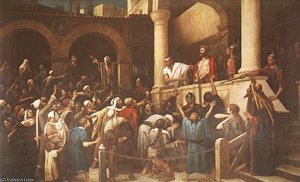
Munkácsy’s tidlige værker var dybt rodfæstet i den ungarske landsbønders virkelighed, hvilket afspejlede et engagement i at skildre fattigdommens og ærlighedens ydmyghed. Malerier som ”Kuldronet” (1864) og ”Påske Glædesfest” (1865) viste hans første stil – levende farver og teatrale kompositioner påvirket af samtidige kunstnere som Károly Lotz og János Jankó. Men en transformerende oplevelse ved 1867 Paris Universelle Udstilling fik et skift i hans kunstneriske tilgang. Omgivet af den blomstrende verden af moderne fransk kunst omfavnede han bredere penselstrøg og en lysere palet, hvilket signalerede et frafald fra Ungarns mere traditionelle æstetik. Denne udvikling kulminerede i ”Den Sidste Dag Af En Dommedag” (1869), hvorved han blev internationalt kendt og modtog en guldmedalje ved 1870 Paris Salon. Maleriet udtrykte rå følelser og samfundskritik på en unik måde, hvilket etablerede Munkácsy som en kraft til at regere i kunstverdenen. Efter denne succes flyttede han til Paris i 1872 sammen med László Paál og videreførte sin kunstneriske stil gennem genrebilleder som ”Smeltejern” (1871) og ”Kvinde Samler Brændsel” (1873). Men det var kommissionen af *Kristus Trilogi* der definerede meget af hans senere karriere. Disse monumentale bibelske malerier – ”Kristus Foran Pilatus” (1882), ”Golgotha” (1884) og ”Ecce Homo” (1896) – blev bestilt af kunsthandler Charles Sedelmeyer og blev sensationsrige på tværs af Europa og USA, hvilket opnåede både kritisk anerkendelse og enorm kommerciel succes.

En Syntese Af Påvirkninger Og En Distinkt Stil

Munkácsy’s kunstneriske udvikling var præget af en sammensmeltning af påvirkninger. Hans tidlige grundlag i ungarsk genrekunst gav ham mulighed for realistiske skildringer af dagligdagen. Düsseldorf kunstskolen indgydede ham fokus på følelsesmæssig udtryk inden for figurer, mens eksponering for fransk Realisme – især værkerne af Gustave Courbet – fremmede en interesse for samfundskritik og ærlige gengivelser af virkeligheden. Hans tid sammen med László Paál i Barbizon fremmede en dybere forståelse for *plein air* maleri og evnen til at fange lysets nuancer og atmosfære. Denne syntese førte til en stil karakteriseret af både teknisk briljans og følelsesmæssig dybde. Hans tidlige værker var præget af levende farver og dramatiske kompositioner; senere udviklede hans stil sig mod større raffinement og omhyggelig detaljeksploration samt sofistikerede tonal farveskalaer. Han besad en ekstraordinær evne til at udtrykke menneskelige følelser med overbevisende autenticitet, hvilket skabte fortællinger der resonerede dybt hos publikummet. Hans kunst var ikke blot gengivelser af scener; de var vinduer ind i sjælen.

Efterladenskab Og Varig Effekt

Mihály Munkácsy opnåede internationalt renommé under sin levetid og blev måske Ungarns mest succesfulde kunstner på hans tidspunkt. Hans *Kristus Trilogi* forbliver et monumentalt værk inden for religiøs kunst, fejret for dets skala, følelsesmæssige intensitet og historiske nøjagtighed. Kunsthandlerens kommercialiserede succes af hans malerier spillede en betydelig rolle i at udvide kunstens omfang og indflydelse blandt amerikanske publikum. Han døde i Paris den 1. maj 1900, hvilket efterlod sig et værk der står som vidnesbyrd om kunstens kraft til at lysføre menneskeligheden. Hans kunst er en ikonisk repræsentation af ungarsk Realisme og senere blev standarden for genrekunst – kunstens gengivelse af scener eller begivenheder fra hverdagen. Han var blandt de første kunstnere til at skildre menneskelige følelser med autenticitet og hans værker har haft stor betydning i kunsthistorien.