Portræt af Benozzo Gozzoli

De 100 mest berømte Benozzo Gozzoli-malerier, en galleriselektion

Opdateret november 2026 · rangeret efter vores popularitetsscore (søgninger, besøg og ordrer for hvert værk) · 229 værker af Benozzo Gozzoli i vores katalog

Kort sagt

Af alle de originale værker, som Benozzo Gozzoli efterlod, er det mest berømte Procession of the Magi. Lige efter følger Triumph of St Thomas Aquinas (1471) og Madonna della Cintola (detail) (1450). Vores katalog indeholder 229 værker af Benozzo Gozzoli; galleriet har bevaret de 100 værker, som verden beundrer mest, hver vist med sin dato, sit museum og sin historie.

1420 – 1497, Firenze Tidlig renæssance Flest værker: Biblioteca Comunale

Benozzo Gozzolis top 10 malerier: galleriets udvalg

1
Procession of the Magi af Benozzo Gozzoli

Procession of the Magi

Fresco

Fængslende motiv og rig fortælling Dette udsøgte kunstværk indfanger levende en storslået procession, som sandsynligvis skildrer de bibelske hellige tre konger eller en adelig ceremoniel begivenhed fra middelalderen eller den tidlige renæssance. Scenen er tætpakket med figurer, dyr og naturlige elementer, hvilket skaber et levende gobelin, der inviterende leder beskueren ind i en udforskning af dets komplekse historiefortælling. Figurerne er klædt i kongelig dragt og rider på heste og kameler,…

2
Triumph of St Thomas Aquinas (1471) af Benozzo Gozzoli

Triumph of St Thomas Aquinas

1471 · Tempera On Panel · Louvre, Paris

In the heart of the Florentine Renaissance, where the shadows of medieval mysticism began to dance with the emerging light of humanism, Benozzo Gozzoli captured a moment of profound spiritual and intellectual convergence. His 1471 masterpiece, Triumph of St Thomas Aquinas, is not merely a painting but a luminous window into a world where faith and reason exist in perfect, radiant harmony. As one gazes upon this tempera on wood…

3
Madonna della Cintola (detail) (1450) af Benozzo Gozzoli

Madonna della Cintola (detail)

1450 · Fresco · Vatikanets Pinacoteca, Vatikanstaten

A Celebration of Faith and Festive Splendor: Exploring Benozzo Gozzoli’s Madonna della Cintola Benozzo Gozzoli's *Madonna della Cintola*, painted around 1450, stands as a testament to the flourishing international gothic style that dominated Florentine art during the High Renaissance. More than just a depiction of Mary cradling Jesus—a motif deeply rooted in Christian iconography—the fresco embodies a vibrant celebration of pilgrimage and divine grace, capturing the spirit of its commission…

4
Madonna and Child with Sts Francis and Bernardine, and Fra Jacopo (1452) af Benozzo Gozzoli

Madonna and Child with Sts Francis and Bernardine, and Fra Jacopo

1452 · Tempera On Panel · Kunsthistorisches Museum, Wien

To stand before "Madonna and Child with Sts Francis and Bernardine, and Fra Jacopo" is to step directly into the vibrant heart of the Italian Renaissance. Created by the masterful hand of Benozzo Gozzoli in 1452, this tempera on panel artwork radiates a profound sense of serenity interwoven with rich theological narrative. The composition immediately draws the eye to the central grouping: Mary cradling the divine infant Jesus, flanked by…

5
Stigmatization of St. Francis (1452) af Benozzo Gozzoli

Stigmatization of St. Francis

1452 · Fresco

To gaze upon this fresco is to step directly into the luminous heart of the Italian Renaissance, witnessing a moment suspended between earthly devotion and divine grace. Benozzo Gozzoli’s depiction of the Stigmatization of St. Francis is not merely a religious narrative; it is an overwhelming testament to profound faith, human humility, and the sublime connection between man and the sacred. The composition immediately draws the eye into the central…

6
Expulsion of Joachim from the Temple (1491) af Benozzo Gozzoli

Expulsion of Joachim from the Temple

1491 · Fresco · Biblioteca Comunale, Castelfiorentino

To stand before Benozzo Gozzoli's depiction of The Expulsion of Joachim from the Temple is to step directly into the vibrant, charged atmosphere of the Italian Renaissance. This fresco painting, executed in 1491, is far more than a mere illustration of scripture; it is a masterful study in human drama, rendered with an almost palpable sense of tension. Gozzoli, known for his ability to infuse grand historical narratives with intimate,…

7
The Virgin and Child with Saints (1476) af Benozzo Gozzoli

The Virgin and Child with Saints

1476 · Tempera On Panel · National Gallery of Canada, Ottawa

The Virgin and Child with Saints is a sacra conversazione painted by Benozzo Gozzoli. Created between 1476 and 1477, the work functions as a formal assembly of holy figures. The tempera on wood captures a moment of spiritual stillness, where the divine presence is anchored by the central figures of the Madonna and her child.

8
Journey of the Magi af Benozzo Gozzoli

Journey of the Magi

Fresco

The work known as Journey of the Magi is a significant creation by the Florentine painter Benozzo Gozzoli. Created during the height of the Renaissance, this piece reflects the hand of an artist who lived from 1420 to 1497. The subject matter focuses on the Adoration of the Magi, or the Three Kings, depicting their arrival and the recognition of the newborn Christ.

9
Tabernacle of the Madonna delle Tosse: Maria lactans (1484) af Benozzo Gozzoli

Tabernacle of the Madonna delle Tosse: Maria lactans

1484 · Fresco

The Tabernacle of the Madonna delle Tosse: Maria Lactans is a stunning fresco painted by Benozzo Gozzoli in 1484. This beautiful work of art is a testament to the skill and craftsmanship of Benozzo Gozzoli, a renowned artist of the Early Renaissance period. The painting is set against a backdrop of an ornate gold frame, which adds to its grandeur. Composition and Style The composition of the painting is well-balanced,…

10
Preaching to the Birds and Blessing Montefalco (1452) af Benozzo Gozzoli

Preaching to the Birds and Blessing Montefalco

1452 · Fresco

The fresco titled Preaching to the Birds and Blessing Montefalco is an artwork by Benozzo Gozzoli. Created in 1452, this work belongs to the Early Renaissance and International Gothic styles. The composition focuses on themes of spirituality and the presence of a religious community. It depicts a group of monks or religious figures engaged in a specific sacred gathering.

Benozzo Gozzoli-udvalget fortsætter, fra 11 til 100

11Madonna and Child with Angels (1450) af Benozzo GozzoliMadonna and Child with Angels1450 · Barnes Foundation 12Madonna with Child (1460) af Benozzo GozzoliMadonna with Child1460 · Nationalmuseet i Kraków 13St. Augustine Departing for Milan (1465) af Benozzo GozzoliSt. Augustine Departing for Milan1465 14The Blessed Fina de' Ciardi and Saint Madeleine (1450) af Benozzo GozzoliThe Blessed Fina de' Ciardi and Saint Madeleine1450 · Musée du Petit Palais 15Mary with the child and saints (1450) af Benozzo GozzoliMary with the child and saints1450 · Gemäldegalerie 16Saint Ursula with Two Angels and Donor (1460) af Benozzo GozzoliSaint Ursula with Two Angels and Donor1460 · National Gallery of Art 17Adoration of the Magi (1445) af Benozzo GozzoliAdoration of the Magi1445 18Procession of the Middle King (1459) af Benozzo GozzoliProcession of the Middle King1459 19Saint Jerome and the blessed Bartolo Buompedoni of San Giminiano (1464) af Benozzo GozzoliSaint Jerome and the blessed Bartolo Buompedoni of San Giminiano1464 · Thyssen-Bornemisza Museum 20Totila before Saint Benedict (1468) af Benozzo GozzoliTotila before Saint Benedict1468 · Metropolitan Museum of Art 21The Conversion of Saint Paul (1468) af Benozzo GozzoliThe Conversion of Saint Paul1468 · Metropolitan Museum of Art 22The hl. Zenobius raises a dead boy (1461) af Benozzo GozzoliThe hl. Zenobius raises a dead boy1461 · Gemäldegalerie 23Tobias with Archangel Raphael (1460) af Benozzo GozzoliTobias with Archangel Raphael1460 · Nationalmuseet i Kraków 24Dream of Innocent III and the Confirmation of the Rule (detail) (1452) af Benozzo GozzoliDream of Innocent III and the Confirmation of the Rule (detail)1452 25Scenes from the Life of St. Francis (north wall) (1452) af Benozzo GozzoliScenes from the Life of St. Francis (north wall)1452 26St. Augustine Reading Rhetoric and Philosophy at the School of Rome (detail) (1465) af Benozzo GozzoliSt. Augustine Reading Rhetoric and Philosophy at the School of Rome (detail)1465 27Procession of the Middle King (detail) (1459) af Benozzo GozzoliProcession of the Middle King (detail)1459 28Procession of the Magi (1461) af Benozzo GozzoliProcession of the Magi1461 29St. Francis in Glory and Saints (1452) af Benozzo GozzoliSt. Francis in Glory and Saints1452 30Upper portions of the east (window) wall (1464) af Benozzo GozzoliUpper portions of the east (window) wall1464 31Dream of Innocent III and the Confirmation of the Rule (1452) af Benozzo GozzoliDream of Innocent III and the Confirmation of the Rule1452 32Scenes from the Life of St Francis (Scene 1, north wall) (1452) af Benozzo GozzoliScenes from the Life of St Francis (Scene 1, north wall)1452 33Painting (1500) af Benozzo GozzoliPainting1500 · Nationalmuseet for kunst, arkitektur og design 34Shrine of the Visitation (1491) af Benozzo GozzoliShrine of the Visitation1491 · Biblioteca Comunale 35Virgin and Child Enthroned between Saint Dominic and a Papal Saint (formerly attributed to Domenico di Michelino) (1430) af Benozzo GozzoliVirgin and Child Enthroned between Saint Dominic and a Papal Saint (formerly attributed to Domenico di Michelino)1430 · Courtauld Gallery 36Scenes from the Life of St Francis (Scene 8, south wall) (1452) af Benozzo GozzoliScenes from the Life of St Francis (Scene 8, south wall)1452 37St Sebastian Intercessor (1464) af Benozzo GozzoliSt Sebastian Intercessor1464 · Nave of Sant'Agostino 38Scenes from the Life of St Francis (Scene 9, north wall) (1452) af Benozzo GozzoliScenes from the Life of St Francis (Scene 9, north wall)1452 39Scenes from the Life of St Francis (Scene 2, north wall) (1452) af Benozzo GozzoliScenes from the Life of St Francis (Scene 2, north wall)1452 40View of the Church of Sant'Agostino (1280) af Benozzo GozzoliView of the Church of Sant'Agostino1280 41St Fortunatus Enthroned (1450) af Benozzo GozzoliSt Fortunatus Enthroned1450 · San Fortunato 42Adoration of the Magi (1440) af Benozzo GozzoliAdoration of the Magi1440 · Convent of San Marco 43Madonna and Child between St Francis and St Bernardine of Siena (1450) af Benozzo GozzoliMadonna and Child between St Francis and St Bernardine of Siena1450 · San Fortunato 44Procession of the Magus Caspar (Portrait Of Giuliano De Medici, detail) (1461) af Benozzo GozzoliProcession of the Magus Caspar (Portrait Of Giuliano De Medici, detail)1461 45St. Francis Giving Away His Clothes, Vision of the Church Militant and Triumphant (detail) (1452) af Benozzo GozzoliSt. Francis Giving Away His Clothes, Vision of the Church Militant and Triumphant (detail)1452 46St. Augustine Reading Rhetoric and Philosophy at the School of Rome (1465) af Benozzo GozzoliSt. Augustine Reading Rhetoric and Philosophy at the School of Rome1465 47The Parable of the Holy Trinity and the Visit to the Monks of Mount Pisano (1465) af Benozzo GozzoliThe Parable of the Holy Trinity and the Visit to the Monks of Mount Pisano1465 48Death of St Monica (detail) (1464) af Benozzo GozzoliDeath of St Monica (detail)1464 49Raphael and Tobias (on the pillar) (1464) af Benozzo GozzoliRaphael and Tobias (on the pillar)1464 50St Bartolus (on the pillar) (1464) af Benozzo GozzoliSt Bartolus (on the pillar)1464 51St Gimignano (on the pillar) (1464) af Benozzo GozzoliSt Gimignano (on the pillar)1464 52St Fina (on the pillar) (1464) af Benozzo GozzoliSt Fina (on the pillar)1464 53Angels Worshipping (detail) (1461) af Benozzo GozzoliAngels Worshipping (detail)1461 54St Monica (on the pillar) (1464) af Benozzo GozzoliSt Monica (on the pillar)1464 55Procession of the Middle King (detail) (1459) af Benozzo GozzoliProcession of the Middle King (detail)1459 56St Sebastian (on the pillar) (1464) af Benozzo GozzoliSt Sebastian (on the pillar)1464 57Procession of the Magus Caspar (detail) (1461) af Benozzo GozzoliProcession of the Magus Caspar (detail)1461 58The Vigil of the Shepherds (right wall of the apse) (1459) af Benozzo GozzoliThe Vigil of the Shepherds (right wall of the apse)1459 59Tobias and the Fish (1464) af Benozzo GozzoliTobias and the Fish1464 60St Nicholas of Tolentino (on the pillar) (1464) af Benozzo GozzoliSt Nicholas of Tolentino (on the pillar)1464 61Procession of the Magi (moved section, backfill wall) (1459) af Benozzo GozzoliProcession of the Magi (moved section, backfill wall)1459 62Procession of the Middle King (detail) (10) (1459) af Benozzo GozzoliProcession of the Middle King (detail) (10)1459 63The Vigil of the Shepherds (left wall of the apse) (1459) af Benozzo GozzoliThe Vigil of the Shepherds (left wall of the apse)1459 64Procession of the Middle King (detail) (1459) af Benozzo GozzoliProcession of the Middle King (detail)1459 65The Four Evangelists (1465) af Benozzo GozzoliThe Four Evangelists1465 66St Nicholas of Bari (on the pillar) (1464) af Benozzo GozzoliSt Nicholas of Bari (on the pillar)1464 67Tabernacle of the Condemned (1466) af Benozzo GozzoliTabernacle of the Condemned1466 68Procession of the Youngest King (detail) (1459) af Benozzo GozzoliProcession of the Youngest King (detail)1459 69St. Mark (detail of The Four Evangelists) (1465) af Benozzo GozzoliSt. Mark (detail of The Four Evangelists)1465 70Procession of the Magus Caspar (detail) (8) (1461) af Benozzo GozzoliProcession of the Magus Caspar (detail) (8)1461 71Angels Worshipping (detail) (1461) af Benozzo GozzoliAngels Worshipping (detail)1461 72Procession of the Middle King (detail) (1459) af Benozzo GozzoliProcession of the Middle King (detail)1459 73St Augustine Departing for Milan (detail) (1464) af Benozzo GozzoliSt Augustine Departing for Milan (detail)1464 74View of the apsidal chapel (1464) af Benozzo GozzoliView of the apsidal chapel1464 · Sant'Agostino 75Procession of the Youngest King (detail) (1459) af Benozzo GozzoliProcession of the Youngest King (detail)1459 76Madonna and Child Surrounded by Saints (detail) (1452) af Benozzo GozzoliMadonna and Child Surrounded by Saints (detail)1452 77St. John (detail of The Four Evangelists) (1465) af Benozzo GozzoliSt. John (detail of The Four Evangelists)1465 78View of the vaults (1464) af Benozzo GozzoliView of the vaults1464 79Procession of the Oldest King (detail) (1459) af Benozzo GozzoliProcession of the Oldest King (detail)1459 80Blessing of the Faithful at Hippo (scene 14, north wall) (1464) af Benozzo GozzoliBlessing of the Faithful at Hippo (scene 14, north wall)1464 81Procession of the Youngest King (detail) (1459) af Benozzo GozzoliProcession of the Youngest King (detail)1459 82Procession of the Magus Balthazar (detail) (9) (1461) af Benozzo GozzoliProcession of the Magus Balthazar (detail) (9)1461 83The Departure of St Jerome from Antioch (1452) af Benozzo GozzoliThe Departure of St Jerome from Antioch1452 84Funeral of St Augustine (scene 17, south wall) (1464) af Benozzo GozzoliFuneral of St Augustine (scene 17, south wall)1464 85Procession of the Magus Caspar (detail) (1461) af Benozzo GozzoliProcession of the Magus Caspar (detail)1461 86The Parable of the Holy Trinity (detail) (1464) af Benozzo GozzoliThe Parable of the Holy Trinity (detail)1464 87St. Luke (detail of The Four Evangelists) (1465) af Benozzo GozzoliSt. Luke (detail of The Four Evangelists)1465 88Saint Ursula with Angels and Donor (detail) (1455) af Benozzo GozzoliSaint Ursula with Angels and Donor (detail)1455 89Saint Ursula with Angels and Donor (detail) (1455) af Benozzo GozzoliSaint Ursula with Angels and Donor (detail)1455 90St Francis in Glory and Saints (1452) af Benozzo GozzoliSt Francis in Glory and Saints1452 91Procession of the Oldest King (detail) (8) (1459) af Benozzo GozzoliProcession of the Oldest King (detail) (8)1459 92Procession of the Youngest King (detail) (1459) af Benozzo GozzoliProcession of the Youngest King (detail)1459 93Saint Ursula with Angels and Donor (detail) (1455) af Benozzo GozzoliSaint Ursula with Angels and Donor (detail)1455 94The Dance of Salome (detail) (1462) af Benozzo GozzoliThe Dance of Salome (detail)1462 95Procession of the Magus Balthazar (detail) (1461) af Benozzo GozzoliProcession of the Magus Balthazar (detail)1461 96Saint Ursula with Angels and Donor (detail) (1455) af Benozzo GozzoliSaint Ursula with Angels and Donor (detail)1455 97Procession of the Youngest King (east wall) (1459) af Benozzo GozzoliProcession of the Youngest King (east wall)1459 98St.Matthew (detail of The Four Evangelists) (1465) af Benozzo GozzoliSt.Matthew (detail of The Four Evangelists)1465 99Procession of the Magus Balthazar (detail) (8) (1461) af Benozzo GozzoliProcession of the Magus Balthazar (detail) (8)1461 100Procession of the Magus Balthazar (detail) (1461) af Benozzo GozzoliProcession of the Magus Balthazar (detail)1461

Benozzo Gozzolis berømte malerier, periode for periode

Motiverne, der fangede Benozzo Gozzolis blik

De fire motiver, der optræder hyppigst i disse originaler, hver med sit fineste eksempel.

De museer, der udstiller Benozzo Gozzolis originalværker

De 8 museer, der rummer flest af malerierne på denne side.

Museum By Værker af Benozzo Gozzoli Malerier fra denne liste
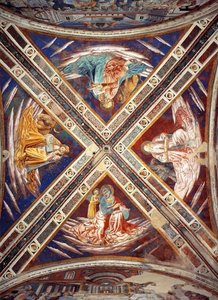
Biblioteca Comunale, CastelfiorentinoBiblioteca Comunale Castelfiorentino 6 Expulsion of Joachim from the Temple, Shrine of the Visitation
Metropolitan Museum of Art, New YorkMetropolitan Museum of Art New York 4 Totila before Saint Benedict, The Conversion of Saint Paul
San Fortunato, MontefalcoSan Fortunato Montefalco 3 St Fortunatus Enthroned, Madonna and Child between St Francis and St Bernardine of Siena
Nationalmuseet i Kraków, KrakówNationalmuseet i Kraków Kraków 2 Madonna with Child, Tobias with Archangel Raphael
Gemäldegalerie, BerlinGemäldegalerie Berlin 2 Mary with the child and saints, The hl. Zenobius raises a dead boy
National Gallery of Art, WashingtonNational Gallery of Art Washington 4 Saint Ursula with Two Angels and Donor
Convent of San Marco, FirenzeConvent of San Marco Firenze 3 Adoration of the Magi
Sant'Agostino, San GimignanoSant'Agostino San Gimignano 3 View of the apsidal chapel

Benozzo Gozzoli årti for årti: det originale værk, der definerer hvert enkelt

Værker per årti

Vælg et årti for at se det originale værk, der definerer det.

Samleres spørgsmål om Benozzo Gozzolis malerier

Hvilket værk er Benozzo Gozzoli mest kendt for?Vis svaret

Procession of the Magi. Derefter følger Triumph of St Thomas Aquinas (1471) og Madonna della Cintola (detail) (1450).

Hvad er de ti mest berømte Benozzo Gozzoli malerier?Vis svaret

Procession of the Magi, Triumph of St Thomas Aquinas, Madonna della Cintola (detail), Madonna and Child with Sts Francis and Bernardine, and Fra Jacopo, Stigmatization of St. Francis, Expulsion of Joachim from the Temple, The Virgin and Child with Saints, Journey of the Magi, Tabernacle of the Madonna delle Tosse: Maria lactans og Preaching to the Birds and Blessing Montefalco. Ranglisten ovenfor viser det enkelte værks årstal og museum.

Hvor mange malerier efterlod Benozzo Gozzoli?Vis svaret

Vores katalog indeholder 229 værker af Benozzo Gozzoli, dateret fra 1430 til 1491.

I hvilke museer udstilles Benozzo Gozzoli's mesterværker?Vis svaret

Primært i Biblioteca Comunale (Castelfiorentino), Metropolitan Museum of Art (New York) og San Fortunato (Montefalco). Museumslisten ovenfor viser dem alle.

I hvilke år malede Benozzo Gozzoli sine mest berømte værker?Vis svaret

I 1460s: 47 af de 100 værker på denne side blev skabt dengang, herunder Madonna with Child.

Hvad er de første og de sidste berømte originaler af Benozzo Gozzoli?Vis svaret

På denne side er det tidligste Virgin and Child Enthroned between Saint Dominic and a Papal Saint (formerly attributed to Domenico di Michelino) (1430) og det seneste Expulsion of Joachim from the Temple (1491).

Hvilke motiver valgte Benozzo Gozzoli oftest?Vis svaret

People (25), Man (20) og Woman (16), fordelt på de 100 værker på denne side.

Hvilken teknik brugte Benozzo Gozzoli mest?Vis svaret

Fresco, for 75 af de 100 værker på denne side.

Hvilken kunstretning tilhører Benozzo Gozzoli?Vis svaret

Tidlig renæssance, baseret på originalerne på denne side.

Hvilke værker af Benozzo Gozzoli udstilles på Biblioteca Comunale?Vis svaret

Expulsion of Joachim from the Temple og Shrine of the Visitation: Biblioteca Comunale, Castelfiorentino har 2 af værkerne på denne side.

Benozzo Gozzoli: liv og værk

Livet og uddannelsen af Benozzo Gozzoli

Født som Benozzo di Lese trådte manden, der senere skulle blive kendt som Benozzo Gozzoli, ind i verden omkring 1421. Hans tidlige år blev formet af sin families vandring, da de forlod landsbyen Sant'Ilario a Colombano for at bosætte sig i Firenze i 1427. Denne flytning placerede ham i selve hjertet af en brydningstid, hvor fortidens traditioner begyndte at møde nye måder at betragte verden på. Før han overhovedet greb penslen for at mestre det storslåede freskomaleri, lærte han guldsmedens omhyggelige disciplin. Denne tidlige træning i metalarbejde indprentede en præcision i ham, som senere skulle definere hans tilgang til enhver overflade, han rørte ved.

Hans vej som maler blev banet, da han trådte ind i værkstedet hos Fra Angelico. Som elev og assistent for mesteren gjorde Benozzo Gozzoli mere end blot at observere; han arbejdede side om side med ham og hjalp med at udføre de hellige dekorationer, der prydede sovesalene i Convent of San Marco i Firenze. Gennem dette læretid opsugede han en forfinet sans for ynde og en hengivenhed til detaljen, som ville ledsage ham gennem hele hans lange karriere. Han var en mand af stor flid, der bevægede sig mellem Firenzes værksteder og pavedømmets storstilede opgaver, altid med de lærdomme, han havde fået fra sine tidlige mestre, i rygsækken til gavn for sine mæcener.

Kunstnerisk virke i Firenze og Rom

Benozzo Gozzolis livsførelse førte ham gennem de mest betydningsfulde centre i den italienske renæssance, hvor hans evner blev formet af mestre af højeste rang. I Firenze blev hans tidlige år tilbragt i skyggen af Fra Angelico. Som elev og assistent arbejdede han i Convent of San Marco i Firenze, hvor han hjalp med at udføre de freskomalerier, der i dag pryder munkecellerne. Denne læretid handlede ikke blot om at mestre tekniske færdigheder, men om at absorbere en helt særlig måde at betragte det guddommelige på gennem en næsten overjordisk detaljerigdom. Hans tilstedeværelse i byen var konstant, idet han bevægede sig mellem Firenzes travle værksteder og de hellige, stille rum i de omkringliggende bakker.

Omkring år 1447 trak hans voksende ry og hans tætte bånd til Fra Angelico ham mod selve hjertet af den pavelige magt. Han rejste til Rom og trådte ind i en verden præget af storstilet mæcenatvirksomhed og monumentale ambitioner. Her, under det vågne øje af pave Eugenius 4., arbejdede han i Vatikanpaladset. Disse år i Rom gav ham mulighed for at udvide sin indflydelse langt ud over de toscanske grænser og etablerede ham som en maler, der kunne indfri de højeste kirkelige autoriteters krav. Hans konstante vandring mellem de florentinske klostres åndelige ro og det romerske hofs politiske pragt kom til at definere hans professionelle liv i årtier.

Kunstnerisk stil og teknisk mesterskab

Benozzo Gozzolis penselstrøg bar den efterslæbende ynde fra den internationale gotiske stil ind i det skiftende lys fra den tidlige renæssance. Han besad et særligt talent for at væve en følelse af elegance sammen med en sofistikeret forståelse for perspektiv, hvilket gjorde det muligt for hans figurer at bebo rum, der føltes både dekorative og strukturerede. Hans maleriske teknik favoriserede ofte en overdådig ornamentik, der klædte hans motiver i en stil, som talte om verdslig pragt. Dette kom tydeligst til udtryk i hans præference for en palet af dybe, kommanderende farver, hvor røde og gyldne nuancer blev brugt til at fange lyset og lede øjet gennem hans komplekse kompositioner.

I sine mest ambitiøse værker stolede han i høj grad på freskoteknikken, hvor han påførte sine pigmenter direkte på våd puds for at opnå en varig luminans. Denne metode krævede en rolig hånd og et hurtigt sind, da kunstneren måtte arbejde, mens overfladen stadig var fugtig, for at sikre, at farverne blev en permanent del af væggen. Gennem denne proces opnåede han en teksturel dybde, der bragte hans religiøse fortællinger til live, og som blandede de detaljerige detaljer fra hans tidlige uddannelse med en ny, mere naturalistisk tilgang til verden omkring ham. Hans evne til at lægge lag af lasurer og pigmenter muliggjorde subtile farveovergange, hvilket skabte en skinnende effekt, der fik det himmelske og det jordiske til at føles tæt sammenvævet.

Store bestillinger og bemærkelsesværdige værker

Kunstnerens hænder var ofte optaget af sin tids mest storslåede opgaver. Mellem 1444 og 1447 fandt han sig selv i et samarbejde med Lorenzo Ghiberti om Paradisportene på dåbskapellet i Firenze, et samarbejde der placerede hans færdigheder blandt de mest betydningsfulde bronzearbejder i denne æra. Denne periode med intens aktivitet førte ham gennem Italiens hellige rum, hvor han bragte sin helt særlige vision til forskellige altre og kapeller. I 1450 rejste han til Narni for at male en Bebudelse, et værk der fangede opmærksomheden hos dem, der søgte den raffinerede ynde, han havde lært af sin mester.

Hans mest fejrede narrative værk udfoldede sig i Magi-kapellet i Palazzo Medici-Riccardi. Fra 1459 til 1461 udfyldte han væggene med de tre vise mænds procession mod Betlehem, hvor han skabte en scene fyldt med bevægelse og liv, der spejlede Medici-familiens pragtfulde hof. Disse fresker var ikke blot religiøse scener, men var gennemstrømmet af detaljer fra det samtidige liv, hvilket gav den hellige fortælling en følelse af jordisk nærvær. Denne samme hengivenhed bragte han til klosteret San Fortunato nær Montefalco, hvor han malede Madonna med barnet, placeret mellem den hellige Frans og den hellige Bernardino af Siena.

  • Paradisportene på dåbskapellet i Firenze (1444–1447)
  • Bebudelsen i Narni (1450)
  • Freskerne i Magi-kapellet (1459–1461)
  • Madonna med barnet med den hellige Frans og den hellige Bernardino af Siena

Hvor man kan opleve hans mesterværker i dag

For at vidne om pragtfuldheden i hans mest fejrede fresker, må man rejse til Firenze. Her, i hjertet af Palazzo Medici-Riccardi, gemmer væggene i Magiets Kapel på de utrolige detaljer fra de hellige tre kongers procession. Disse vægmalerier indfanger en følelse af bevægelse og liv, som engang udfyldte Medici-familiens private gemakker. Farverne og de indviklede detaljer i figurerne står stadig, præcis som de var, da kunstneren første gang påførte pigment på den våde puds.

Uden for Italiens grænser kan hans penselstrøg findes i mange store sale og gallerier. I Paris huser Louvre værket Triumfen af den hellige Thomas Aquinas, et værk der udviser hans exceptionelle evne til at mestre tempera på træpanel. På den anden side af Atlanten præsenterer National Gallery of Art i Washington Herodes' gæstebud og Johannes Døberens halshugning, et stykke kunst, der afslører den dramatiske tyngde i hans historiefortælling. I Detroit Institute of Arts kan man finde Madonna og barnet, som giver et sjældent indblik i de andægtige værker, der definerede hans karriere.