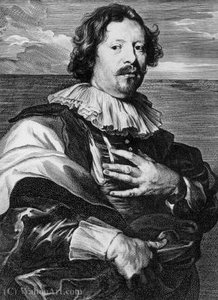
Portræt af Gaspar De Crayer

Gaspar De Crayer malerier: De 86 mest berømte, set gennem et galleris øjne

Opdateret november 2026 · rangeret efter vores popularitetsscore (søgninger, besøg og ordrer for hvert værk) · 90 værker af Gaspar De Crayer i vores katalog

Kort sagt

I galleriets øjne er Gaspar De Crayers mest berømte maleri Saint Augustine (1655), hvis original hænger på Museo del Prado i Madrid. Portrait of Nicolas Triest, Count d'Auweghem (1620) og Anne of Austria, Consort of Emperor Mathias (1650) fuldender trioen, som ethvert øje genkender. Ud af de 90 værker af Gaspar De Crayer i vores katalog præsenterer galleriet herunder de 86 mest berømte, hver som et originalværk med årstal, museum og det, der gør det unikt.

1584 – 1669, Antwerpen Baroque splendor Flest værker: Museum of Fine Arts Ghent (MSK)

Galleriets top 10 Gaspar De Crayer malerier

1
Saint Augustine (1655) af Gaspar De Crayer

Saint Augustine

1655 · Oil · Museo del Prado, Madrid

A solemn figure in full episcopal regalia dominates the composition, positioned on a rugged shoreline under a twilight sky. The saint, draped in heavy liturgical vestments, gazes downward toward a small child playing with shells at the water's edge. This encounter, set against the muted blues and greys of a receding sea, creates a sense of quiet authority and contemplative grace. The lighting follows a chiaroscuro pattern, casting a soft…

3
Anne of Austria, Consort of Emperor Mathias (1650) af Gaspar De Crayer

Anne of Austria, Consort of Emperor Mathias

1650 · Oil On Canvas · Nationalmuseum, Stockholm

The portrait depicts Anne of Austria, Consort of Emperor Mathias, positioned in a full-length vertical composition. She stands slightly off-center, her posture upright and formal. The subject wears a voluminous black patterned gown that absorbs much of the light, creating a deep contrast against the surrounding elements. A large lace ruff encircles her neck, accompanied by delicate lace ruffles at the cuffs. Multiple rows of pearls drape across her chest,…

4
Lamentation (1650) af Gaspar De Crayer

Lamentation

1650 · Oil On Canvas · Kunsthistorisches Museum, Wien

The artwork titled Lamentation, also referred to as The Lamentation of Christ, is an oil on canvas painting by the Flemish artist Gaspard De Crayer. Executed between 1649 and 1656, this large-scale figured Pietà depicts the aftermath of the crucifixion. The subject matter focuses on the physical presence of the deceased Christ and the surrounding figures of mourning.

5
Virgin with child and saints Maria Magdalen, Cecilia, Dorothea, Catharina and Augustine (1638) af Gaspar De Crayer

Virgin with child and saints Maria Magdalen, Cecilia, Dorothea, Catharina and Augustine

1638 · Oil On Canvas · Kunsthistorisches Museum, Wien

The Virgin Mary sits at the heart of a pyramid, her presence anchoring a heavy, sacred gathering. Beside her, the Christ Child rests within the folds of her garments. Around this central pair, a group of saints forms a quiet circle of devotion. Maria Magdalen, Cecilia, Dorothea, Catharina, and Augustine occupy the space with a grounded, monumental weight. Their bodies are arranged in a way that directs the eye upward,…

6
Ecce Homo (1650) af Gaspar De Crayer

Ecce Homo

1650 · Oil On Canvas · Kunsthistorisches Museum, Wien

The air feels heavy with the weight of a profound, quiet suffering. In this somber scene from 1650, Jesus Christ sits at the center of a dramatic tension that pulls the viewer toward his very wounds. He is presented to the world, a figure marked by the physical toll of his passion. A crown of thorns rests upon his brow, and the reed held in his hand serves as a…

7
The martyrdom of Saint Peter (1664) af Gaspar De Crayer

The martyrdom of Saint Peter

1664 · Oil On Panel · Museum Boijmans Van Beuningen, Rotterdam

The martyrdom of Saint Peter is an oil on panel work by the Flemish artist Gaspar de Crayer. Executed between 1646 and 1650, the painting captures a religious and tragic subject through the lens of the Counter-Reformation. The work reflects the stylistic shifts occurring in the Southern Netherlands during the mid-17th century.

9
St Theresa receiving a gold chain and a mantle embroidered with gold from the Virgin (1639) af Gaspar De Crayer

St Theresa receiving a gold chain and a mantle embroidered with gold from the Virgin

1639 · Oil On Canvas · Kunsthistorisches Museum, Wien

In this 1639 oil on canvas, we find ourselves witnessing a moment of profound spiritual intersection. The composition is structured around a dramatic verticality, pulling the eye from the earthly presence of St. Theresa toward the luminous, cloud-filled heavens. There is a palpable sense of movement here, driven by the sweeping lines of drapery and the graceful, almost weightless gestures of the figures. The light does not merely illuminate the…

10
Saint John the Baptist (1655) af Gaspar De Crayer

Saint John the Baptist

1655 · Oil On Canvas · Museo del Prado, Madrid

A rugged landscape of ochre and sienna forms the stage for a solitary figure. Saint John the Baptist rises from the earth, his body draped in the coarse texture of animal skins. He is positioned slightly off-center, a vertical pillar of devotion against a backdrop of dark rocks and weathered bark. A long wooden staff cuts a sharp diagonal across his frame, guiding the eye upward toward a face illuminated…

Gaspar De Crayers malerier, rangeret fra 11 til 86

11Saint Benedict receives Totila (1601) af Gaspar De CrayerSaint Benedict receives Totila1601 12Portrait of a Gentleman (1620) af Gaspar De CrayerPortrait of a Gentleman1620 · Gothenburg Museum of Art 13The Judgement of Salomon (1620) af Gaspar De CrayerThe Judgement of Salomon1620 · Museum of Fine Arts Ghent (MSK) 14Tobias and the Angel (1618) af Gaspar De CrayerTobias and the Angel1618 · Museum of Fine Arts Ghent (MSK) 15The ghost of Samuel appears to the witch of Endor; Saul falls prostrate to the ground (1 Samuel 28:3-20) (1619) af Gaspar De CrayerThe ghost of Samuel appears to the witch of Endor; Saul falls prostrate to the ground (1 Samuel 28:3-20)1619 · Groeningemuseum 16Veronica meets Christ (1622) af Gaspar De CrayerVeronica meets Christ1622 17Veil of Saint Veronica (1626) af Gaspar De CrayerVeil of Saint Veronica1626 · Bavarian State Painting Collections 18Christ and the Samaritan Woman (1626) af Gaspar De CrayerChrist and the Samaritan Woman1626 · Bavarian State Painting Collections 19King Philip IV of Spain (1626) af Gaspar De CrayerKing Philip IV of Spain1626 · Bavarian State Painting Collections 20Philip IV alongside two servants (1629) af Gaspar De CrayerPhilip IV alongside two servants1629 21Portrait of Peter Pecquius (1562-16265), chancellor of Brabant (1626) af Gaspar De CrayerPortrait of Peter Pecquius (1562-16265), chancellor of Brabant1626 · Bavarian State Painting Collections 22Portrait of Bishop Antonius Triest (1628) af Gaspar De CrayerPortrait of Bishop Antonius Triest1628 · Museum of Fine Arts Ghent (MSK) 23Elijah Fed by the Raven (1624) af Gaspar De CrayerElijah Fed by the Raven1624 · Det Kongelige Museum for Fin Kunst Antwerpen 24Cleopatra (1634) af Gaspar De CrayerCleopatra1634 · Statens Museum for Kunst 25The resurrection of Christ (1634) af Gaspar De CrayerThe resurrection of Christ1634 · Amsterdam Museum 26Christ in the Garden of Olives (fragment) (1633) af Gaspar De CrayerChrist in the Garden of Olives (fragment)1633 · Rubens House 27Male portrait with bust of Alexander ? (1634) af Gaspar De CrayerMale portrait with bust of Alexander ?1634 28Equestrian portrait of Gaspar de Guzmán, Count-Duke of Olivares, Grandee of Spain (1627) af Gaspar De CrayerEquestrian portrait of Gaspar de Guzmán, Count-Duke of Olivares, Grandee of Spain1627 29Thesis Painting (1646) af Gaspar De CrayerThesis Painting1646 · Bavarian State Painting Collections 30Adoration of Mary by Saints (1646) af Gaspar De CrayerAdoration of Mary by Saints1646 · Bavarian State Painting Collections 31The Virgin and Child with the Saints Dominic, Anthony, Augustine, Monica, Dorothea, and Barbara (1643) af Gaspar De CrayerThe Virgin and Child with the Saints Dominic, Anthony, Augustine, Monica, Dorothea, and Barbara1643 32The Martyrdom of Saint Lawrence (1640) af Gaspar De CrayerThe Martyrdom of Saint Lawrence1640 · Museum of Fine Arts Ghent (MSK) 33Rinaldo and Armida (1645) af Gaspar De CrayerRinaldo and Armida1645 34Saint Augustine in Ecstasy (1648) af Gaspar De CrayerSaint Augustine in Ecstasy1648 · Dulwich Picture Gallery 35The Guardian Angel (1650) af Gaspar De CrayerThe Guardian Angel1650 36The Holy Virgin and the Child Jesus Venerated by Different Saints (1650) af Gaspar De CrayerThe Holy Virgin and the Child Jesus Venerated by Different Saints1650 · Musée de Grenoble 37Saint Apollonia (1650) af Gaspar De CrayerSaint Apollonia1650 38The Resurrection of Christ (1659) af Gaspar De CrayerThe Resurrection of Christ1659 · Museum of Fine Arts Ghent (MSK) 39Saint John Evangelist writes his Revelations on the Island of Patmos (1659) af Gaspar De CrayerSaint John Evangelist writes his Revelations on the Island of Patmos1659 · Museum of Fine Arts Ghent (MSK) 40The Assumption of the Virgin (1650) af Gaspar De CrayerThe Assumption of the Virgin1650 · Museum of Fine Arts Ghent (MSK) 41Lactatio of Saint Bernard of Clairvaux (1659) af Gaspar De CrayerLactatio of Saint Bernard of Clairvaux1659 · Det Kongelige Museum for Fin Kunst Antwerpen 42Portrait of Oliver Cromwell, Lord Protector of the Commonwealth of Britain (1650) af Gaspar De CrayerPortrait of Oliver Cromwell, Lord Protector of the Commonwealth of Britain1650 43Christ on the cross surrounded by a priest, possibly Jan Mijtens, and provosts of the Grote Begijnhof in Brussel (1654) af Gaspar De CrayerChrist on the cross surrounded by a priest, possibly Jan Mijtens, and provosts of the Grote Begijnhof in Brussel1654 44Saint Augustine in Ecstasy (1650) af Gaspar De CrayerSaint Augustine in Ecstasy1650 · Musée des Beaux-Arts de Valenciennes 45The resurrection of the saints Monulph and Gondulph from their graves (1650) af Gaspar De CrayerThe resurrection of the saints Monulph and Gondulph from their graves1650 · Bonnefanten Museum 46Penitent Magdalen (1650) af Gaspar De CrayerPenitent Magdalen1650 · Musée des Beaux-Arts de Valenciennes 47Portrait of Winand de la Margelle, abbot of the Sint-Gertrudisabdij (1664) af Gaspar De CrayerPortrait of Winand de la Margelle, abbot of the Sint-Gertrudisabdij1664 48The Martyrdom of Saint Blaise (1668) af Gaspar De CrayerThe Martyrdom of Saint Blaise1668 · Museum of Fine Arts Ghent (MSK) 49The Resurrection of Christ (verso: Christ on the Cross; grisaille by another hand) (1667) af Gaspar De CrayerThe Resurrection of Christ (verso: Christ on the Cross; grisaille by another hand)1667 · Museum of Fine Arts Ghent (MSK) 50St Bruno (1669) af Gaspar De CrayerSt Bruno1669 51Saint Dominic of Guzmán (1655) af Gaspar De CrayerSaint Dominic of Guzmán1655 · Museo del Prado 52Saint Anthony of Padua with the Infant Christ (1655) af Gaspar De CrayerSaint Anthony of Padua with the Infant Christ1655 · Museo del Prado 53The Annunciation (1620) af Gaspar De CrayerThe Annunciation1620 · Kunsthistorisches Museum 54Triumph of Scipio Africanus (1634) af Gaspar De CrayerTriumph of Scipio Africanus1634 · Courtauld Gallery 55Philip IV (1605 1665) in Parade Armor (1628) af Gaspar De CrayerPhilip IV (1605 1665) in Parade Armor1628 · Metropolitan Museum of Art 56The Ascension of Saint Catherine (1641) af Gaspar De CrayerThe Ascension of Saint Catherine1641 · Scottish National Gallery 57The Cardinal Infante (1639) af Gaspar De CrayerThe Cardinal Infante1639 · Museo del Prado 58Pieta with portraits of Henry van Dongelberghe and wife af Gaspar De CrayerPieta with portraits of Henry van Dongelberghe and wifeDe Kongelige Skønkunstmuseer i Belgien 59LE CHRIST EN CROIX ENTRE SAINTE MADELEINE ET SAINT FRANCOIS af Gaspar De CrayerLE CHRIST EN CROIX ENTRE SAINTE MADELEINE ET SAINT FRANCOISLouvre 60Portrait of a young man af Gaspar De CrayerPortrait of a young manFitzwilliam Museum 61The Adoration of the Magi af Gaspar De CrayerThe Adoration of the MagiMuseum of Fine Arts Ghent (MSK) 62Last Judgment af Gaspar De CrayerLast JudgmentYekaterinburg Museum of Fine Arts 63Gaspar de Crayer af Gaspar De CrayerGaspar de Crayer 64TOBIE ET L'ANGE af Gaspar De CrayerTOBIE ET L'ANGE 65The Meeting of Alexander the Great and Diogenes af Gaspar De CrayerThe Meeting of Alexander the Great and DiogenesMetropolitan Museum of Art 66LA PECHE MIRACULEUSE af Gaspar De CrayerLA PECHE MIRACULEUSEPalais des Beaux-Arts de Lille 67L'ELEVATION EN CROIX af Gaspar De CrayerL'ELEVATION EN CROIX 68LE SAUVEUR DU MONDE af Gaspar De CrayerLE SAUVEUR DU MONDE 69Job sur le tas de fumier Job dans l'adversité af Gaspar De CrayerJob sur le tas de fumier Job dans l'adversitéMusée des Augustins 70The Virgin and Child with Saint John af Gaspar De CrayerThe Virgin and Child with Saint JohnMaidstone Museum - Bentlif Art Gallery 71The Martyrdom af Gaspar De CrayerThe Martyrdom 72The Coronation of St Rosalie af Gaspar De CrayerThe Coronation of St RosalieMuseum voor Schone Kunsten 73Van dyck de crayer. af Gaspar De CrayerVan dyck de crayer.Liechtenstein Museum 74Lille de crayer martyres. af Gaspar De CrayerLille de crayer martyres.Palais des Beaux-Arts de Lille 75LE MARTYRE DES QUATRE COURONNES (CLAUDIUS, NICOLASTRATUS, SYMPHORIANUS, CASTOR ET SIMPLICIUS) af Gaspar De CrayerLE MARTYRE DES QUATRE COURONNES (CLAUDIUS, NICOLASTRATUS, SYMPHORIANUS, CASTOR ET SIMPLICIUS) 76LE CALVAIRE AVEC SAINT FRANÇOIS D'ASSISE ET SAINT BERNARDIN DE SIENNE (ESQUISSE) af Gaspar De CrayerLE CALVAIRE AVEC SAINT FRANÇOIS D'ASSISE ET SAINT BERNARDIN DE SIENNE (ESQUISSE) 77Head Study of a Young Moor af Gaspar De CrayerHead Study of a Young MoorMuseum voor Schone Kunsten 78OLIVIER CROMWELL, LORD PROTECTEUR D'ANGLETERRE (1559 1658) , DIT AUTREFOIS LEOPOLD GUILLAUME, ARCHIDUC D'AUTRICHE, GOUVERNEUR DES PAYS BAS af Gaspar De CrayerOLIVIER CROMWELL, LORD PROTECTEUR D'ANGLETERRE (1559 1658) , DIT AUTREFOIS LEOPOLD GUILLAUME, ARCHIDUC D'AUTRICHE, GOUVERNEUR DES PAYS BAS 79Virgin and Child af Gaspar De CrayerVirgin and Child 80The Adoration of the Shepherds, Gaspar de Crayer, c. 1640 - c. 1650 (1650) af Gaspar De CrayerThe Adoration of the Shepherds, Gaspar de Crayer, c. 1640 - c. 16501650 · Rijksmuseum 81LA VIERGE ET L'ENFANT JESUS AVEC SAINT AUGUSTIN, SAINTE BARBE ET SAINT ANTOINE af Gaspar De CrayerLA VIERGE ET L'ENFANT JESUS AVEC SAINT AUGUSTIN, SAINTE BARBE ET SAINT ANTOINELouvre 82The Descent from the Cross, Gaspar de Crayer, c. 1640 - c. 1650 (1650) af Gaspar De CrayerThe Descent from the Cross, Gaspar de Crayer, c. 1640 - c. 16501650 · Rijksmuseum 83Mødet mellem Alexander den Store og Diogenes af Gaspar De CrayerMødet mellem Alexander den Store og DiogenesWallraf-Richartz-Museum 84Roman Charity (1625) af Gaspar De CrayerRoman Charity1625 · Museo del Prado 85Caritas Romana (1645) af Gaspar De CrayerCaritas Romana1645 86Portrait of a Lady (1620) af Gaspar De CrayerPortrait of a Lady1620 · Academy of Fine Arts Vienna

Gaspar De Crayers berømte malerier, periode for periode

Motiverne, der fangede Gaspar De Crayers blik

De fire motiver, der optræder hyppigst i disse originaler, hver med sit fineste eksempel.

De museer, der udstiller Gaspar De Crayers originalværker

De 8 museer, der rummer flest af malerierne på denne side.

Museum By Værker af Gaspar De Crayer Malerier fra denne liste
Museum of Fine Arts Ghent (MSK), GentMuseum of Fine Arts Ghent (MSK) Gent 10 The Judgement of Salomon, Tobias and the Angel, Portrait of Bishop Antonius Triest
Museo del Prado, MadridMuseo del Prado Madrid 6 Saint Augustine, Saint John the Baptist, Saint Dominic of Guzmán
Kunsthistorisches Museum, WienKunsthistorisches Museum Wien 6 Lamentation, Virgin with child and saints Maria Magdalen, Cecilia, Dorothea, Catharina and Augustine, Ecce Homo
Bavarian State Painting Collections, MünchenBavarian State Painting Collections München 6 Veil of Saint Veronica, Christ and the Samaritan Woman, King Philip IV of Spain
Det Kongelige Museum for Fin Kunst Antwerpen, AntwerpenDet Kongelige Museum for Fin Kunst Antwerpen Antwerpen 2 Elijah Fed by the Raven, Lactatio of Saint Bernard of Clairvaux
Musée des Beaux-Arts de Valenciennes, ValenciennesMusée des Beaux-Arts de Valenciennes Valenciennes 2 Saint Augustine in Ecstasy, Penitent Magdalen
Metropolitan Museum of Art, New YorkMetropolitan Museum of Art New York 2 Philip IV (1605 1665) in Parade Armor, The Meeting of Alexander the Great and Diogenes
Louvre, ParisLouvre Paris 2 LE CHRIST EN CROIX ENTRE SAINTE MADELEINE ET SAINT FRANCOIS, LA VIERGE ET L'ENFANT JESUS AVEC SAINT AUGUSTIN, SAINTE BARBE ET SAINT ANTOINE

Gaspar De Crayer, ét signaturmaleri per årti

Værker per årti

Vælg et årti for at se det originale værk, der definerer det.

Gaspar De Crayer's malerier: galleriets svar

Hvilket maleri af Gaspar De Crayer er det mest berømte af alle?Vis svaret

Saint Augustine (1655), Museo del Prado, Madrid. Derefter følger Portrait of Nicolas Triest, Count d'Auweghem (1620) og Anne of Austria, Consort of Emperor Mathias (1650).

Hvor gammel var Gaspar De Crayer, da Saint Augustine blev færdiggjort?Vis svaret

71 år gammel: Saint Augustine er fra 1655, og Gaspar De Crayer blev født i 1584.

Hvilke er Gaspar De Crayers top 10 malerier?Vis svaret

Saint Augustine, Portrait of Nicolas Triest, Count d'Auweghem, Anne of Austria, Consort of Emperor Mathias, Lamentation, Virgin with child and saints Maria Magdalen, Cecilia, Dorothea, Catharina and Augustine, Ecce Homo, The martyrdom of Saint Peter, Equestrian portrait of Don Diego Messia Felipe de Guzmán, Marquis of Leganés, St Theresa receiving a gold chain and a mantle embroidered with gold from the Virgin og Saint John the Baptist. Ranglisten ovenfor viser det enkelte værks årstal og museum.

Hvor mange værker skabte Gaspar De Crayer?Vis svaret

Vores katalog indeholder 90 værker af Gaspar De Crayer, dateret fra 1601 til 1669.

Hvor hænger Gaspar De Crayers mest berømte originaler?Vis svaret

Primært i Museum of Fine Arts Ghent (MSK) (Gent), Museo del Prado (Madrid) og Kunsthistorisches Museum (Wien). Museumslisten ovenfor viser dem alle.

Hvornår skabte Gaspar De Crayer sine mest berømte malerier?Vis svaret

I 1650s: 21 af de 86 værker på denne side blev skabt dengang, herunder Saint Augustine.

Hvilke er Gaspar De Crayers tidligste og seneste berømte værker?Vis svaret

På denne side er det tidligste Saint Benedict receives Totila (1601) og det seneste St Bruno (1669).

Hvilke motiver vendte Gaspar De Crayer oftest tilbage til?Vis svaret

Man (32), Woman (19) og Drapery (14), fordelt på de 86 værker på denne side.

Hvilket medie arbejdede Gaspar De Crayer mest med?Vis svaret

Oil On Canvas, for 40 af de 86 værker på denne side.

Hvilken stilart er Gaspar De Crayer associeret med?Vis svaret

Baroque splendor, baseret på originalerne på denne side.

Hvilke originalværker af Gaspar De Crayer findes i Museum of Fine Arts Ghent (MSK)?Vis svaret

The Judgement of Salomon, Tobias and the Angel og Portrait of Bishop Antonius Triest: Museum of Fine Arts Ghent (MSK), Gent har 10 af værkerne på denne side.

Gaspar De Crayer: kunstneren

Gaspar de Crayer: En flamsk mester af modreformationens pragt

Gaspar de Crayer er et navn, der måske ikke er lige så velkendt som hans samtidige Rubens eller Van Dyck, men han står alligevel som en central skikkelse i det 17. århundredes flamske kunst. Han blev født i Antwerpen i 1584 og gik bort i Gent i 1669, og gennem sit liv navigerede han i det turbulente politiske landskab i de spanske Nederlande. Her blev han hofmaler, lavmester og en flittig skaber af både portrætter og monumentale altertavler. Hans værk afspejler ikke blot sin tids kunstneriske strømninger, men også de dybe religiøse forskydninger, som modreformationen medførte, hvilket gør ham til et afgørende bindeled mellem fortidens manieristiske traditioner og den fremspirende barokstil.

De Crayers tidlige liv var gennemsyret af kunst. Han var søn af Gaspard de Crayer den Ældre, en respekteret dekorativ maler, illuminator og kunsthandler – en slægt, der indpodede i ham en kærlighed til håndværket og en dyb forståelse for kunstneriske materialer. I stedet for at blive i sin fødeby, Antwerpen, søgte han lykken i Bruxelles, en by der hurtigt var ved at blive et centrum for kunstnerisk mæcenat under de spanske guvernører. Det var her, omkring 1607, at han opnåede mesterstatus i Sankt Lukas-lavet, en betydelig bedrift, der vidnede om hans tekniske dygtighed og dedikation til faget.

Hans tidlige karriere var præget af bestillingsarbejder fra det spanske hof og lokale stormænd. Han etablerede sig hurtigt som portrætmaler og indfangede ligheden hos konger, guvernører og medlemmer af byrådet i Bruxelles – værker, der fremviste både hans evne til at gengive realistiske træk og hans voksende beherskelse af komposition. Rytterportrættet af Don Diego Messia Felipe de Guzmán (nu placeret på Kunsthistorisches Museum i Wien) er et glimrende eksempel på denne tidlige periode, da det udviser en sofistikeret forståelse for perspektiv og en nitidig opmærksomhed på detaljen. Det var dog hans arbejde med altertavler, der for alvor cementerede hans ry og etablerede ham som en førende kunstner i sin generation.

Modreformationen og den religiøse kunst

De Crayers karriere faldt sammen med fremvæksten af modreformationen, en periode med intens religiøs reform inden for den katolske kirke. Kirken søgte aktivt at bruge kunsten som et redskab til propaganda og åndelig undervisning ved at bestille overdådige altertavler og fromhedsmalerier, der skulle inspirere til gudfrygtighed og styrke den katolske lære. De Crayer greb denne mulighed og producerede et enormt antal værker til kirker og klostre i hele Flandern, Tyskland og Spanien. Disse altertavler var ikke blot dekorative; de var omhyggeligt konstruerede fortællinger, designet til at formidle religiøse budskaber gennem levende billedsprog og dramatisk komposition.

Hans tilgang var dybt påvirket af tidens herskende kunstneriske tendenser, især dem, der blev fremmet af Peter Paul Rubens. Ligesom Rubens foretrak De Crayer dynamiske kompositioner, rige farver og en følelse af bevægelse – kvaliteter, der gav hans værker en emotionel intensitet og teatralsk flair. Han formåede på mesterlig vis at blande elementer fra manierismen med de frembrydende barokke principper, hvilket skabte en særpræget stil karakteriseret ved elegance, ynde og en dyb åndelig tyngde.

Hofmaler og kunstnerisk mæcenat

De Crayers indflydelse rakte langt ud over den religiøse sfære. I 1635 blev han udnævnt til hofmaler af kardinal-infanten Ferdinand af Østrig, bror til kong Filip 4. af Spanien – en prestigefyldt stilling, der bragte ham betydelig velstand og adgang til indflydelsesrige mæcener. Denne udnævnelse markerede et vendepunkt i hans karriere, da den bragte ham i tæt kontakt med det spanske kongehus og gav ham muligheder for at skabe storslåede værker til offentlige bygninger og religiøse institutioner.

Efter Ferdinands afrejse fortsatte ærkehertug Leopold Wilhelm af Østrig mæcenatet over for De Crayer, da han bosatte sig i Bruxelles. Han engagerede også De Crayer til en opgave med at dekorere Huis ten Bosch-paladset i Haag, hvilket viste kunstnerens alsidighed og evne til at tilpasse sig forskellige stilarter. Hans værksted blomstrede i denne periode og beskæftigede adskillige assistenter, der hjalp ham med at løfte den konstante strøm af bestillinger – fra portrætter af fremtrædende borgere til detaljerede altertavler til kirker over hele Europa.

Hovedværker og eftermæle

Blandt De Crayers mest fejrede værker finder man "Jomfru Marias død" (nu i Madrid), en kraftfuld skildring af den bibelske scene, samt hans talrige altertavler, herunder "Sankt Blas' martyrdød og "Caritas Romana". Sidstnævnte, malet i 1645, er særligt bemærkelsesværdig for sin dramatiske komposition og sin evokative fremstilling af den kristne næstekærlighed. Det står som et vidnesbyrd om hans evne til at gennemtrænge religiøse temaer med emotionel resonans.

De Crayers eftermæle ligger ikke kun i skønheden af hans enkelte værker, men også i hans rolle som en brobygger mellem kunstneriske traditioner. Han absorberede lærdommen fra Raphael Coxie og Rubens, mens han samtidig udviklede sin egen unikke stil – en stil defineret ved elegance, dynamik og dyb åndelig indsigt. Selvom han ofte er blevet overskygget af sine mere berømte samtidige, forbliver Gaspar de Crayer en vigtig skikkelse i flamsk kunsthistorie; et bevis på troens, skønhedens og det kunstneriske håndværks vedvarende kraft.

Hans sidste år blev tilbragt i Gent, hvor han fortsatte med at modtage bestillinger indtil sin død i 1669. Hans værksted fortsatte med at fungere i flere år efter hans bortgang, hvilket sikrede, at hans kunstneriske arv kunne leve videre.